
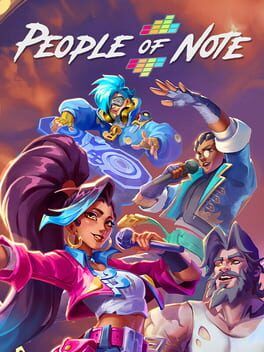

How People of Note weaves classic turn-based RPG systems into fully choreographed musical numbers, why “Under the Lights” stole the show at Day of the Devs, and what sets this musical RPG apart from anything else in the genre.
People of Note did not just show another trailer at Day of the Devs, it staged a number. Annapurna Interactive and Iridium Studios brought a full in-game performance called “Under the Lights” to the showcase, and it instantly reframed what a musical game can look like. Rather than cutting from cutscene to combat to music video, People of Note tries to make those three things the same moment.
Set in a world on the brink of crisis, People of Note follows Cadence and her troupe of performers as they tour across countries and cultures. The Day of the Devs trailer locks in on Cadence’s perspective, letting “Under the Lights” play out as both a character-defining solo and a live combat scenario. The result is something that feels more like a stage show than a traditional RPG battle, yet it is still built on familiar turn-based foundations.
Iridium Studios frames every battle as a musical performance. When a fight begins, the camera and choreography shift like the curtain going up on a new scene. Turn order, abilities and status effects are all present, but they are expressed as vocal runs, instrumental flourishes and lighting cues instead of abstract menus. You are not just choosing skills from a list, you are deciding how Cadence phrases a line or how the band hits a crescendo, with each tactical choice folding back into the rhythm of the song.
“Under the Lights” is the clearest look so far at how that design works in practice. The number flows between spoken dialogue and sung lyrics, with the game never fully pausing control. As Cadence steps into the literal and figurative spotlight, you queue abilities in time with the beat, stack buffs and debuffs as harmonies and countermelodies, and react to incoming threats through quick, rhythm-synced prompts. The structure is turn-based, but it pulses with the momentum of a live performance instead of the stop-start cadence of a typical RPG.
A big part of why it works is the dual performance at the center of the game. Cadence has two performers, with Heather Gonzalez handling spoken dialogue and pop artist LEXXE providing the singing voice. That split gives conversations a grounded, almost TV drama energy, then lets the musical numbers explode into more stylized, pop-forward performances. When the transition into a song hits, you feel the tone shift in the acting, and the gameplay rides along with it as combat quietly fades into choreography.
Unlike many rhythm and musical games that bolt songs onto a linear series of stages, People of Note builds its narrative like a touring production. The story moves across multiple countries and cultures, and the musical style of each set piece adapts to the setting. That changes more than the soundtrack. It affects the flow of combat, which has to account for new time signatures, instrumentation and ensemble dynamics. A number in one region might focus on tight vocal interplay, encouraging synergy between party members, while another leans on big instrumental breaks that allow for high risk, high reward attacks.
Most games that play with music either live in pure rhythm mechanics or relegate songs to cutscenes. Even genre experiments like rhythm platformers, band sims or dialogue-driven musicals tend to separate gameplay and performance. People of Note tries to erase that line. Every verse, bridge and key change has mechanical weight. Miss a cue and the choreography falters, which might translate into a dropped combo or an opening for enemies to steal the spotlight, while nailing a difficult passage can unlock powerful mashup attacks that remix motifs from different characters’ themes.
That fusion of RPG math and musical structure is what makes the combat and narrative feel distinct. Experience is not just a number going up between dungeons, it is the process of building Cadence’s show. Recruiting new bandmates adds fresh instruments and vocal textures, which open up new tactical possibilities in battle and new narrative beats in performance. The party’s chemistry is expressed as literal harmony. Relationship arcs are not just handled in dialogue trees, they are staged as duets and ensemble pieces where your mechanical coordination reflects how well the characters have learned to perform together.
Because the musical numbers are full scenes, not just interludes, they also carry the story’s political and emotional weight. “Under the Lights” hints at a world where art is a pressure valve for rising global tensions, and Cadence’s songs double as both personal expression and public statement. When a track crests into a chorus, the staging and enemy behavior echo those themes, making each battle feel like a chapter of the story rather than a random encounter on the way to the next cutscene.
Within the Day of the Devs lineup, that level of integration is what makes People of Note stand out. Plenty of indie games are stylish or musically striking, but few are this committed to letting every system sing in unison. The trailer does not just show off catchy songwriting or flashy animation, it makes a case for musical theater as a viable backbone for deep, turn-based RPG design. Between the dual-actor performance, international scope and genre-bending combat numbers, Iridium Studios is not merely adding songs to an RPG, it is staging an RPG as a full musical.
If People of Note can maintain the energy of “Under the Lights” across its full tour of stages and set pieces, it will not just be one of Day of the Devs’ most memorable indies. It could become the reference point for how games use music to drive both story and strategy, letting every battle play out like a standing ovation waiting to happen.