

How Iridium Studios and Annapurna Interactive are building 2026’s most intriguing narrative RPG by fusing turn-based combat, full musical performances, and a powerhouse ensemble cast on Switch 2.
A Turn-Based RPG Where Every Fight Is A Song
People of Note is not just an RPG with some catchy tracks in the background. Iridium Studios and publisher Annapurna Interactive are aiming for a full-on musical, where battles unfold as staged performances and story beats crescendo into complete, cinematic songs. Planned for Nintendo’s Switch 2 in 2026, it is positioning itself as one of the most unusual and potentially exciting narrative RPGs on the horizon.
You play as Cadence, a pop singer whose dream of winning the Noteworthy Song Contest crashes before the opening verse. Rejected and frustrated, she realizes that going solo is holding her back. To truly stand out she needs a band, and that spark sets her on a globe-trotting tour across the world of Note. As she searches for new bandmates in rock-obsessed Durandis and neon-drenched EDM capital Lumina, she stumbles into something much bigger than a talent competition. A cosmic event called the Harmonic Convergence is throwing the world’s musical energy out of tune, and darker forces are actively trying to turn that dissonance to their advantage.
How Combat Becomes A Full Musical Number
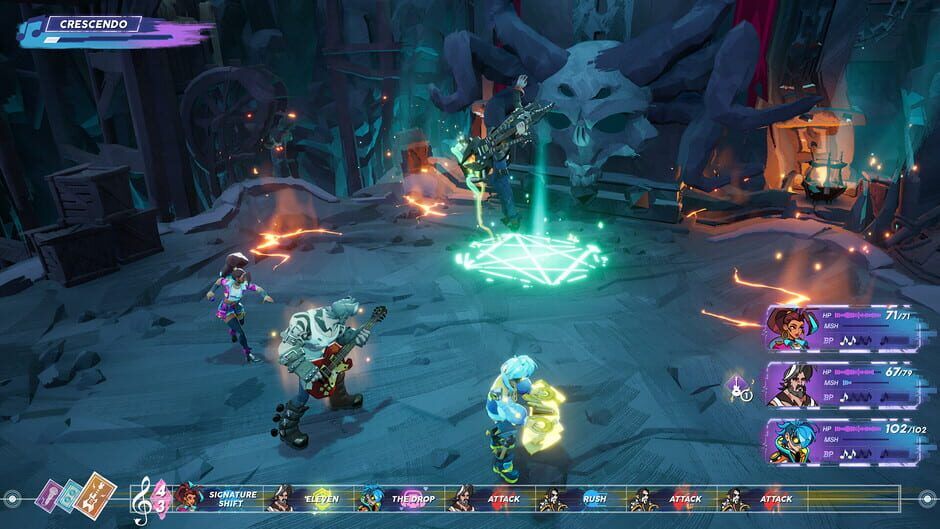
Iridium proved with Sequence that it understands how to mix mechanics and music, but People of Note goes further by structuring entire battles as evolving songs. At its core the game is a traditional party-based, turn-based RPG. You select skills, manage cooldowns, and exploit weaknesses. On top of that, every action is embedded in a live performance where tempo and rhythm directly affect your effectiveness.
Each encounter begins like a musical cue. The track kicks in, the camera frames your party like performers stepping onto a stage, and turns start flowing in time with the beat. When you choose an attack or spell, you are not just picking from a menu. You are lining up a rhythmic input that sits on top of the turn. Hit the button prompts in sync with the song’s tempo and your damage is amplified, status effects gain extra potency, or your defenses harden in time with the downbeat. Miss the rhythm and you still take your turn, but with diminished impact, like flubbing a verse in front of a crowd.
Where it gets especially interesting is how the songs themselves drive combat conditions. Fights are written as full musical pieces that can shift genres mid-encounter. A boss might start in a driving rock chorus, then pivot into a half-time EDM breakdown or a jazz bridge. Each section changes the underlying rules of the fight. Rock sections could favor aggressive physical abilities and fast, high-risk skills. An EDM drop might slow the turn cadence while layering in shield-building or area control abilities synced to pulsing synths. These genre shifts are scripted like movements in a stage musical, turning what would normally be static encounters into narrative choreography.
That design lets Iridium treat combat as both mechanical challenge and storytelling device. When Cadence argues with a bandmate or confronts a rival, the battle does not just represent a disagreement. It becomes the argument itself, staged as a song where lyrics, staging, and the flow of the music all reinforce the emotional beats. Since these are full-length musical numbers rather than short jingles, there is room for verses, key changes, call-and-response sections, and ensemble choruses that naturally map onto different phases of the fight.
Ensemble Synergy And Musical Mashups
Cadence’s journey is ultimately about building a band, and People of Note leans into that by treating each party member as a distinct musical tradition. Durandis-born rockers strike like power chords, while Lumina’s EDM artists bring looping rhythms and sweeping builds. Other regions in the world of Note promise their own flavors, from soulful vocalists to experimental composers, each one adding new musical tools and combat possibilities.
The standout system built on this idea is the musical mashup mechanic. Instead of just casting a multi-character spell, mashups explicitly blend the genres of the characters involved. Pairing Cadence’s pop sensibilities with a hard rock guitarist turns a single-target melody into a stadium-sized anthem that batters every enemy on the field. Combine an EDM producer with a classical composer and you might trigger a structured build that ramps buffs and debuffs in neatly timed measures, culminating in a synchronized finisher on the final beat.
Because the combat tracks are composed around these combinations, the soundtrack and the mechanics move in lockstep. Triggering a mashup is not only about big numbers in a damage log, it is the moment where the song itself transforms into a duet or ensemble piece. Verses pass between singers while the instrumental palette expands to reflect both characters’ styles. Done right, those sequences could create the kind of memorable character moments that traditional RPG limit breaks hint at but rarely deliver in such a theatrical form.
A Voice Cast Built For A Real Musical
All of this depends on the cast carrying musical numbers that can stand on their own, and Iridium has clearly decided to treat People of Note as a true ensemble musical. Annapurna’s reveal of the voice lineup emphasized not just recognizable names for the cutscenes but performers with serious vocal and theatrical chops.
Cadence’s actor is positioned as both a lead and a narrative anchor, but the creative pitch is that the party is more like a Broadway ensemble than a JRPG where side characters orbit the protagonist. Each recruitable musician gets room to shine with their own signature song and musical perspective, and the game’s full-length sequences are structured to give them solos, duets with Cadence, and larger ensemble numbers where everyone’s voice interlocks.
The articles outlining the cast focus on that ensemble approach. Rather than stacking the roster with only marquee names, Iridium and Annapurna are pulling in a mix of seasoned voice actors familiar with anime and games and performers with backgrounds in musical theater and recording. That balance matters for a game where performances must work both as emotionally delivered dialogue and as tight, on-tempo vocals across multiple genres.
Crucially, the cast is not restricted to a single musical lane. Rock vocalists, pop stylists, and performers who are comfortable in R&B and EDM all contribute, reflecting the genre-hopping structure of the story. Since regions like Durandis and Lumina embody distinct musical cultures, it sounds like the supporting cast is being selected with those sonic identities in mind, which should help each location land with its own flavor instead of feeling like a palette swap.
Why Switch 2 Makes It One Of 2026’s Most Interesting RPGs
On paper, People of Note would already be an intriguing project. The Switch 2 version is what elevates it into something that could define 2026’s narrative RPG conversation.
First, there is the simple hardware leap. A musical that hinges on seamless transitions between spoken dialogue, interactive combat, and fully produced music videos benefits enormously from faster loading and more memory. Switch 2’s improved specs should let Iridium keep the camera fluid during transitions so that a conversation can slide straight into choreography without hard cuts or stutters. That continuity is vital if the game wants to sell the illusion that you are living through a stage show rather than jumping between isolated game states.
Second, the system’s rumored audio and storage improvements play directly into Iridium’s strengths. Full-length songs across rock, EDM, pop, and other genres take up space. Layered harmonies, dynamic stems for combat sections, and localized lyrics multiply that footprint. With Switch 2 expected to handle larger, higher-fidelity assets more gracefully than its predecessor, People of Note can afford richer arrangements and more granular musical layering without constant compression tradeoffs.
The timing also puts the game in a compelling niche. By 2026 the industry’s first wave of next-gen RPGs will have mostly centered on visual spectacle, sprawling worlds, and familiar combat systems. People of Note instead chases a different angle: narrative immersion through performance. It aligns more with games like Hi-Fi Rush and Iridium’s own Sequence, yet its ambition in staging full musical numbers with an RPG party structure feels distinct.
Finally, Annapurna’s backing matters. The publisher has carved out a reputation for spotlighting narrative-driven projects that experiment with form, and its involvement suggests the resources and patience to let Iridium refine both storytelling and musical production. Combined with Switch 2’s broader reach and portable play, People of Note could become the sort of word-of-mouth hit that spreads as players share favorite songs and set-piece fights the same way they once traded stories about big plot twists in classic JRPGs.
If Iridium can land the tricky balance between RPG depth and musical accessibility, People of Note is poised to turn every boss fight into a showstopper and make 2026’s RPG calendar sound a lot more interesting.