
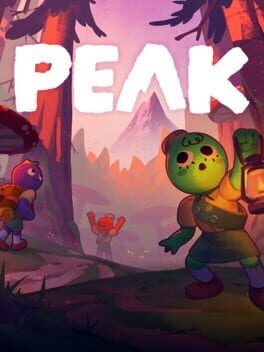
Peak’s surprise success sits at the center of 2025’s “friendslop” boom: cheap, chaotic co‑op games that care more about shared memories than prestige trophies. Here’s how Peak fits into the trend, which other 2025 releases defined it, and why prioritizing social connection is becoming a smarter design and business bet than chasing Game of the Year.
Peak was never built to crash the Game of the Year conversations. It looks modest, it launched without a years‑long hype cycle, and it is “just” a focused co‑op climbing game about some unlucky scouts trying to get off a mysterious island. Yet in a few weeks it went from odd curiosity to one of 2025’s defining multiplayer hits, sitting comfortably alongside games like R.E.P.O., Lethal Company, and a growing list of low‑friction social sandboxes.
Critics and players have started to group these games under one messy, affectionate label: “friendslop.” Peak might be the cleanest expression yet of why this wave is working.
What exactly is “friendslop”?
Friendslop is a loose term, but most people use it to describe a certain kind of co‑op experience that exploded in popularity between Phasmophobia, Lethal Company, and now the 2025 crop.
These games are usually cheap, visually simple, and a little bit janky. The important part is not fidelity or a prestige narrative. Instead, the design is built around one clear goal: get a group of friends into a voice call, drop them into a rules‑heavy playground, and let the chaos write the story.
Common traits keep coming up in discussions of the trend. The visuals tend to be low or mid fidelity, which keeps scope manageable and budgets low. Systems are readable and exaggerated rather than realistic, so you instantly understand what is funny, dangerous, or exploitable. The match structure is fast or at least repeatable, so wipes and failures feel like part of the joke instead of hard walls. Most of all, these games are designed to be socially legible. When something goes wrong, it is immediately obvious who slipped, who forgot the rope, who blew the budget, or who got greedy in the storm.
They are not prestige projects. They are story generators for Discord calls.
Why Peak became the flagship friendslop of 2025
On paper, Peak sounds like a quieter proposition than horror outings or slapstick party games. It is an online co‑op climbing sim where a group of scouts must scale a central mountain to escape an island. There are no ghosts stalking office hallways and no over‑the‑top mini‑games. Instead you get cliffs, cold, hunger, and one shared goal at the top of the map.
In practice, that simplicity is exactly why it works so well.
Peak forces players to move as a unit. If someone strays too far from the group, a skeletal creature appears and literally throws them off the mountain. It is an elegant, slightly cruel solution to a classic co‑op problem. Most multiplayer games say they are about cooperation, but the optimal play involves splitting up and doing solo tasks in parallel. Peak hard‑locks in the opposite direction. Progress is only possible if everyone communicates, plans routes together, and respects each other’s limits.
That design choice creates a steady hum of conversation. Someone needs to carry the backpack. Someone needs to remember which berries are poisonous. Someone needs to decide whether the steep shortcut is worth the stamina hit, or if the team should detour around the cliff. The game does not hand out formal roles, but informal ones emerge as you play, and they become part of the group’s ongoing story.
Mechanically, Peak is deceptively sharp. Its climbing feels immediately intuitive, and the entire survival model flows through a single stamina bar. Fall damage, hunger, poison, cold, over‑encumbrance, and risky maneuvers all push against that one resource. Instead of juggling half a dozen meters, you just feel the squeeze on this central gauge. Every greedy jump or overloaded pack becomes something the whole team talks about.
The presentation is restrained, which helps the social fiction. There is little UI clutter, few intrusive pop‑ups, and not much in the way of cinematic dressing. What you focus on is the terrain, your friends’ voices, and the dangling bodies just below a ledge. The game makes it very easy to understand how close your decisions are to killing somebody you care about, and that is fertile ground for shouting, laughter, and post‑run debriefs.
In other words, Peak is not a maximalist production. It is a tight ruleset that amplifies how people behave in groups. That is friendslop at its most refined.
The wider 2025 friendslop wave
Peak did not arrive in a vacuum. By 2025, players were already primed for this style of co‑op, thanks to an earlier generation of hits. What changed this year is how broad the category has become.
R.E.P.O. pushed the formula away from horror and into blue‑collar absurdity, turning debt collection into a dangerous, slapstick job. One moment you are carefully hauling furniture out of a client’s house, the next you are inventing new workplace safety violations while teammates shout over proximity chat. Like Peak, it wraps simple objectives in systemic hazards that are funniest when mismanaged.
Peak shows that the same philosophy works just as well in the wilderness. There are no jump scares and very few explicit jokes. Yet the emergent comedy is constant as people misjudge distances, forget to anchor ropes, or try to sneak just one more crate onto an already overloaded climber.
Alongside those two headline games, 2025 has been full of smaller co‑op projects that share the same DNA. Some experiment with vehicles or physics, others with heists, haunted malls, or cursed office jobs. The connective tissue is clear. They are priced closer to an impulse buy than a blockbuster, rarely market themselves as transformational art, and live or die on whether they produce memorable nights with friends.
Even bigger platforms have started pulling in the vibe. Live service giants are adding low‑stakes co‑op modes that feel more like friendslop experiments than traditional competitive content. Limited‑time events focus less on balance and more on wild physics, unpredictable modifiers, and tasks that are just structured enough to get a party talking.
Design philosophy: systems that serve the call, not the campaign
The core design question behind friendslop is simple: what will people be laughing or arguing about fifteen minutes into a session? Everything else is built in service of that moment.
Peak’s group‑leash monster is a good example. It exists almost entirely to shape social dynamics. Without it, the optimal strategy would be for strong climbers to scout ahead while others loot or comb side paths. With it, the group must constantly negotiate speed versus safety. If one player insists on rushing, they endanger everyone. If another is terrified of heights and slows the team down, the group has to decide whether to adapt or push them into riskier climbs. Those frictions generate stories.
The single‑meter resource design works the same way. Because so many threats push against the same stamina bar, every decision is legible to the group. When someone burns through their reserves sprinting or overloading their pack, it is obvious, and friends can react in real time. Complex simulation is traded for shared readability.
Across the trend, you can see similar priorities.
Objectives are simple enough that no one needs a wiki open, but complicated enough that you cannot sleepwalk through them. Maps are dense with opportunities for small screw‑ups instead of one or two giant failure points. Death or failure is usually fast and repeatable, so groups end up saying “one more run” for hours. Voice chat is not an optional feature bolted on at the end. It is the assumed backbone of the experience.
Narrative, in the traditional sense, usually takes a back seat. There might be lore or a light setup, but most of the emotional beats come from social interactions. The game is less a story you watch and more a stage where you and your friends improvise your own.
The economics of friendslop: small budgets, big upside
From a business perspective, the friendslop wave makes a lot of sense. The traditional AAA model revolves around long development cycles, big teams, and an expectation of cinematic polish. That means high risk. Miss your audience and you have few ways to meaningfully cut losses.
Friendslop games follow almost the opposite strategy. They keep production scope tight. Visuals are good enough rather than lavish. Audio and art direction lean into stylization and abstraction instead of photorealism. Mechanics focus on depth that emerges from player behavior, not on handcrafted set pieces that take months to build and are consumed in minutes.
Peak is a case study. It was built in a fraction of the time of a typical blockbuster by two studios collaborating, and it launched at a price point that encouraged casual experimentation. Once early streamers and friend groups discovered how much social drama its systems created, word of mouth did the rest. For every person who bought it, there were often three or four more who got to watch the chaos live on Twitch or through clipped moments on social feeds.
The commercial flywheel is powerful. A single enthusiastic player can rope their entire friend group into a purchase, because these games are at their best with a full lobby. Streamer‑friendly formats mean marketing is partially outsourced to content creators who are constantly hunting for the next great co‑op disaster generator. Updates can be relatively cheap to produce, yet significantly extend a game’s life span by adding new maps, modifiers, or gear that remixes familiar problems.
There are trade‑offs. Friendslop games can burn out quickly if they lack variety, and their low price points cap revenue per player. But for small and mid‑sized teams, the risk profile is far more forgiving than going toe‑to‑toe with monolithic blockbusters. One modest hit can fund years of experiments.
Why chasing GOTY is less important than ever
None of this means high‑budget prestige projects are going away. Big narrative campaigns and visual showcases still have a place, and awards discourse still shapes what gets greenlit at the very top of the market. What the friendslop boom does show, however, is that cultural relevance no longer depends on fitting that mold.
Peak is unlikely to sweep traditional awards in categories like narrative design or artistic achievement. It is also the kind of game that quietly dominates people’s most‑played charts, their Discord logs, and their memories of 2025. When players talk about why they loved it, they mention specific nights, specific runs, and specific mistakes that only make sense in the context of their group.
For developers, that is an attractive north star. Instead of asking “How do we make the next prestige epic?” the question becomes “How do we build a toybox that reliably produces good evenings with friends?” That reframing opens the door for smaller teams, shorter production cycles, and weirder ideas. It has also encouraged experimentation with pricing, early access, and iterative development, all of which sit more comfortably with systems‑driven co‑op than with tightly scripted campaigns.
In a year where so much of the industry conversation has been about studio closures and blockbuster risk, friendslop is a reminder that there is still plenty of room for focused, joyful projects that do one thing well. Peak does not try to be everything to everyone. It just wants to be the game you load up when your group call starts and nobody feels like learning a 40‑hour ruleset.
That might not win many trophies on stage. But for the people who spent their year dangling off its cliffs, arguing about rope placements and snack rations over voice chat, it already feels like a classic.