
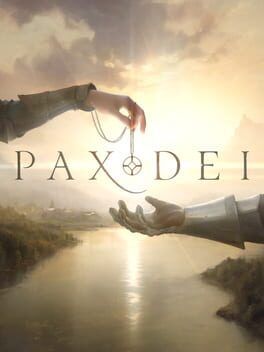

A close look at Pax Dei’s inaugural Yule event, its activities and rewards, and how Mainframe Industries is using limited-time celebrations to anchor long‑term traditions in a young persistent MMO.
Pax Dei launched this year with the pitch of being a “social sandbox MMO,” a world where players build villages first and warbands later. That kind of slow-burn structure raises a big question once the honeymoon period is over: how do you keep a crafting-and-community focused game feeling alive month after month?
For Mainframe Industries, the answer starts with Yule.
The game’s first in-game holiday is running from December 17, 2025, to January 13, 2026. It is time-limited, but the team is very clear it is not a throwaway or test run. Yule is pitched as the start of a recurring seasonal tradition, and the way this first edition is wired into Pax Dei’s systems shows how the studio wants to do events for years to come.
A holiday framed around the economy, not queues
Where many MMOs lean on instanced activities or daily login checklists to mark the winter season, Pax Dei’s Yule is almost entirely built out of the systems players already use every day. You do not queue for a special dungeon or ride a theme-park sleigh. Instead, you gather, craft and trade, just with a new set of toys.
The backbone of the event is a set of festive recipes accessible from the familiar log workbench. To touch any of it, you first need to craft a Yule Charm. Once equipped, it reveals Yule-only resources scattered across Gallia; take the charm off and those resources vanish again. The charm is a deceptively smart bit of design. It turns seasonal content into an opt-in layer over the existing world rather than a separate, fenced-off activity.
From there, the loop feels very on-brand for Pax Dei. You roam the countryside with the charm equipped, tracking down winter herbs, special woods and other event materials. You haul them back home, feed them into your production chain and slowly assemble a catalogue of seasonal goods for your clan hall or for the market.
Instead of competing for leaderboard spots, players are quietly reinforcing the core fantasy of the game: a medieval world where communities rely on shared labor and craft. Even in holiday mode, Pax Dei is still Pax Dei.
Activities on offer: gathering, crafting and the hunt for winter secrets
Under the hood, Yule introduces a temporary resource layer and a small but focused recipe set. Official notes and community guides point to three headliners, including the Little Yule Goat, along with decorative home items and themed clothing pieces.
The activity flow breaks down into a few steps that mirror the vanilla game:
You start with exploration. With the charm active, winter flora and other limited-time nodes appear in familiar regions, inviting players back into zones they might have “finished” weeks ago. Because the event runs almost a full month, there is room to learn efficient Yule farming routes and share them across guilds and Discord servers.
Back at your homestead, the log workbench becomes the centerpiece. Seasonal recipes are crafted right alongside your usual tools and furnishings. This choice matters: it keeps Yule firmly embedded in the long-term progression path instead of shunting it to a separate, ephemeral menu.
Finally, there is experimentation. Players are still mapping out exactly how the seasonal resources combine and which recipes are worth the grind. This kind of communal discovery is particularly valuable for a young sandbox MMO that is still teaching its players how to think about its economy.
Rewards: cosmetics now, collectibles forever
The most visible prize from Yule is the Little Yule Goat, a straw goat-style decorative item pulled directly from the lore short story Mainframe published to set the mood. The tale of the “First Goat” frames the goat as a guide through winter darkness, walking ahead of the goddess Meirothea and breaking the snares of shadow so souls could find their way home.
In-game, the goat becomes a bragging-rights object. It is tied to a limited-time recipe and event-only materials, and once the event ends you will not be able to craft it again until a future Yule. The same is true of the broader item set. Mainframe has confirmed that seasonal resources and their associated recipes disappear when the event wraps, but anything you have already crafted persists.
This structure pushes Yule rewards firmly into the realm of collectibles. You are not just making a cute straw animal or a festive hat; you are minting proof that you were there for Pax Dei’s first real holiday. For traders, that opens up clear opportunities. Crafted Yule goods can be hoarded and resold long after January in a player-driven economy that cares deeply about provenance and scarcity.
Even power-focused players have reasons to engage. Some Yule wearables come with combat stats and unique spell abilities, giving them a functional edge alongside their visual flair. These are not mandatory grinds, but they live in the same space as rare crafted gear and thus naturally slot into build planning for dedicated characters.
The lore of the First Goat: using story to bind a festival
Mainframe does not treat Yule as a generic “winter holiday.” It is tied explicitly to Pax Dei’s internal diegesis. The studio published a lore article about ancient winter traditions and the First Goat, and even the Steam announcement leans into the mythic tone:
“From that day, the goat walked before Meirothea in all winter journeys. Its hooves found every hidden road. Its horns broke every snare of shadow. And its bright eyes reflected every soul who sought the way home. So at Yule, we weave little straw goats to honor the First Guide.”
By placing an in-world explanation behind what is, in practice, a seasonal cosmetic, the team is doing more than just dressing up a cash shop. They are asserting that Yule is a Gallian tradition, something the people of this world already celebrate regardless of our Gregorian calendars.
For a persistent MMO, that distinction matters. If players accept Yule as a “real” holiday inside Pax Dei, then its recurrence each year becomes something to look forward to on its own terms. Veterans will remember when they first earned their goat, how their early clan homes were decorated, and how the event evolved over time. That is how virtual holidays shift from being content drops to becoming communal rituals.
Limited-time events as retention tools in a young sandbox
Structurally, Yule is a blueprint for how Mainframe wants to keep Pax Dei sticky after launch without breaking its slower, more deliberate pacing.
The use of a month-long window is a notable choice. Instead of a dense two-week sprint that pressures players to log in every single day, Yule gives almost four weeks of runway. That accommodates the very real holiday constraints of the audience while still attaching a clear expiration date that nudges lapsed players back into the world.
Tying the event to crafting rather than discrete daily tasks also fits the game’s ethos. It asks players to make medium-term plans: set up new storage for Yule resources, reconfigure production buildings and coordinate within their communities to specialize in particular seasonal items. That fits neatly into the existing loop of “log in, check your plots, tweak your village,” rather than demanding a totally different play pattern.
At the same time, the limited availability of recipes introduces what economists would call “soft FOMO.” You can participate at your own pace, but you cannot delay forever if you want those items. That tension is exactly what live-service MMOs rely on to boost concurrent user numbers without outright punishing players who miss a day.
For a new game, first-year seasonal events are also powerful return hooks. Many players will have stepped away after the initial launch rush. A clearly signposted, lore-heavy holiday with exclusive cosmetics is the perfect excuse to reinstall, revisit a village and test whatever patches have landed since they last logged out.
Lessons for future Pax Dei events
Looking at Yule as a case study, a few design patterns emerge that are likely to shape future Pax Dei seasons.
Events are layered, not siloed. The Yule Charm overlay approach suggests that Mainframe prefers to sprinkle event content across the existing world instead of building separate holiday zones. That is easier to maintain and supports the fantasy of a coherent, continuous setting.
Rewards are persistent, resources are not. By making seasonal materials disappear but crafted items stick around, the team gets the best of both worlds. There is urgency to participate this year, but the payoff lives on in social spaces and the player economy.
Lore is treated as infrastructure. The First Goat story is not just flavor text. It is a piece of scaffolding that future Yule events can hang from: new recipes that reference the goat’s journeys, quests that follow its hidden paths, or regional twists on how different communities honor it.
Finally, the event is collaborative by default. Because almost everything runs through the crafting and trade system, Yule quietly incentivizes cooperation. High-level crafters can provide recipes or finished gear to newer players who may not have the skills or materials to fully participate, echoing the real-world dynamic of communities rallying around each other in winter.
Building a tradition in a newborn MMO
Every MMO has a first winter. Some treat it as a marketing beat. Pax Dei is treating it as canon.
By centering its inaugural Yule on gathering, crafting and a small, memorable piece of mythology, Mainframe Industries is doing more than checking the “holiday event” box. It is teaching players what a festival looks like in this particular world and setting expectations for how seasonal content will work for years to come.
If Pax Dei thrives, future winters will bring their own twists: new recipes, expanded questlines, perhaps even that elusive invisible goat players joke about now. But the core memory will remain of this first Yule, when a freshly launched sandbox asked its community to weave straw goats, light up their homes and carve a new holiday into the rhythms of a very old-feeling world.