
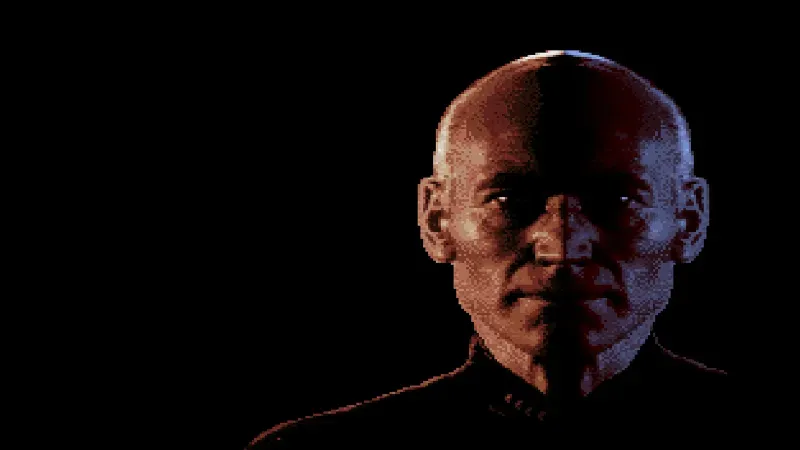

Sir Patrick Stewart has died at 86. GameLoop looks at his video game work, from Oblivion’s Emperor Uriel Septim to Star Trek, X-Men, and Castlevania roles.
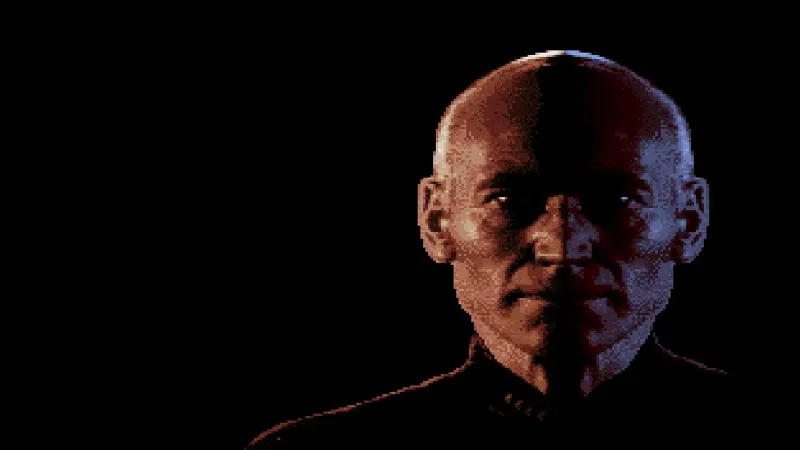
Image: gameinformer.com
Patrick Stewart’s death leaves a gaming legacy still playable
Sir Patrick Stewart has died at 86, according to a family statement reported by Polygon, GameSpot, Inven Global, Output Lag, and Insider Gaming. The statement said Stewart died at his home in Los Angeles in the care of his wife, Sunny, following what the family described as a brief journey with Alzheimer’s Disease and Lewy Body Dementia.
For film and television audiences, the first images will be Jean-Luc Picard on the bridge of the Enterprise and Charles Xavier leading the X-Men. For players, Stewart’s voice also sits at the entrance to some unusually durable game memories: Emperor Uriel Septim VII in Bethesda’s The Elder Scrolls IV: Oblivion, Picard across Star Trek games, Professor Xavier in X-Men titles, and Zobek in Konami and MercurySteam’s Castlevania: Lords of Shadow.
That is the immediate tension in the news. Stewart is gone, but several of his game performances remain in active circulation. Inven Global and Output Lag both reported that his original recordings as Uriel Septim were carried into The Elder Scrolls IV: Oblivion Remastered in 2025. In practical terms, one of the most searched parts of his game career, the answer to who the Uriel Septim voice actor was, has not been replaced, re-recorded, or softened by a new version in that remaster, according to those reports.
Oblivion gave Stewart one of gaming’s great royal voices
Among Patrick Stewart video games, Oblivion occupies a special place because it put a classically trained actor at the front of a role built around fate, authority, and impending collapse. Inven Global identifies Stewart as the voice of Emperor Uriel Septim VII in Bethesda’s 2006 RPG, while Output Lag describes him as The Elder Scrolls IV: Oblivion’s dying emperor.
That casting matters because Oblivion’s fantasy premise depends on the player accepting the weight of an empire before they have had time to understand its borders. Stewart’s screen reputation did some of that work instantly. His voice carried command without needing volume, the same quality that made Picard feel measured under pressure. In a game, that kind of performance changes the rhythm of an opening. It gives exposition a pulse. It turns a handoff of narrative responsibility into a scene with momentum.
The 2025 remaster adds another layer. Output Lag reported that Stewart’s 2006 Oblivion performance played unchanged in the remaster, and Inven Global likewise said his original recordings were carried over. That is a concrete preservation detail, not a rumor or a ratings-board signal. The sources provided do not report new Stewart material, a new publisher statement about his recordings, or any change to the performance in the remaster. What is confirmed is simpler and more important for players returning now: Patrick Stewart Oblivion remains Patrick Stewart’s original Uriel Septim.
His Star Trek game work extended Picard beyond television
Stewart’s most famous role was Captain Jean-Luc Picard, and the sources frame that performance as the center of his public legacy. Polygon reported that Stewart played Picard across seven seasons of Star Trek: The Next Generation from 1987 to 1994, then reprised the role in four feature films and in Star Trek: Picard, which ran from 2020 to 2023. Output Lag gives the television count as 178 episodes of The Next Generation, followed by the films and three additional seasons of Picard.
The gaming side of that legacy was substantial. Inven Global reports that, as Picard, Stewart lent his voice to Star Trek games from Star Trek: The Next Generation: A Final Unity in 1995 to Star Trek: Legacy in 2006. For readers searching Star Trek games Patrick Stewart, that span is the key confirmed range in the provided material.
Licensed games often live or die by the distance between the thing players recognize and the thing the game can actually deliver. Stewart narrowed that distance. When a Star Trek game used his Picard, it was not borrowing only the character model or the uniform. It was borrowing a cadence associated with diplomacy, restraint, and moral calculation. Polygon, in a separate tribute to Stewart’s Picard, described the character as embodying Starfleet’s intelligence, diplomacy, curiosity, and compassion. That description was written about television, but it helps explain why his presence in Star Trek games mattered: his voice gave interactive Trek a direct line back to the franchise’s command chair.
X-Men, Castlevania, and the wider spread of Stewart’s game credits
Stewart’s game work was not limited to Star Trek and Oblivion. Inven Global reports that he voiced Professor Xavier in several X-Men games, including X-Men Legends. Insider Gaming also lists Xavier, Emperor Uriel Septim VII, Picard, and Zobek among his notable game roles.
His Castlevania work arrived in a different register. Inven Global says Stewart played Zobek in Konami and MercurySteam’s Castlevania: Lords of Shadow and its 2014 sequel. GameSpot also named Castlevania: Lords of Shadow as one of his notable video game roles. That pairing placed him in a dark action-adventure series where narration, menace, and mythic weight are part of the combat texture. For an actor associated with clean lines of authority, Zobek gave players another flavor of command: older, stranger, and closer to the gothic machinery around him.
Insider Gaming adds several additional credits, reporting that Stewart narrated The Sims Medieval and LEGO Universe and also narrated War of the Worlds. The provided sources do not give dates, platforms, or publisher details for those additional appearances, so they should be treated here as confirmed role mentions rather than a full credits database. Still, the pattern is clear enough: Stewart’s voice moved through blockbuster licenses, fantasy RPGs, action games, strategy-flavored projects, and family-facing brands.
A screen titan whose game roles followed his strongest qualities
Polygon’s obituary places Stewart’s career across more than 60 years of stage and screen, including 16 years with the Royal Shakespeare Company, two Olivier Awards, a Grammy Award, and nominations for a Tony, three Golden Globes, four Emmys, and three Screen Actors Guild Awards. Inven Global’s report, citing the family statement, also notes his work connected to human rights, survivors of domestic violence, refugees, veterans’ mental health, and animal welfare.
That background helps explain why his game appearances did not feel like disposable celebrity casting. Stewart’s most effective interactive roles used the same strengths that defined his screen career: control, clarity, and the ability to make a line feel like a decision. In action and adventure games, pacing depends on more than enemy placement or spectacle. A voice can set the stakes before the first major fight, sharpen the player’s sense of purpose, or make a familiar license feel authored rather than assembled.
Oblivion used him for imperial gravity. Star Trek games used him for continuity and command. X-Men games used the Xavier association built through the film franchise. Castlevania used the deep-theater resonance that suited Lords of Shadow’s operatic tone. Those are different kinds of set-pieces, but they lean on the same instrument.
What players can verify now, and what remains unreported
The confirmed facts from the provided gaming sources are narrow but useful. Stewart died at 86, according to his family’s statement as reported by multiple outlets. He voiced Emperor Uriel Septim VII in The Elder Scrolls IV: Oblivion, and Inven Global and Output Lag report that those original recordings were used in The Elder Scrolls IV: Oblivion Remastered in 2025. He voiced Picard in Star Trek games from A Final Unity in 1995 to Star Trek: Legacy in 2006, according to Inven Global. He played Zobek in Castlevania: Lords of Shadow and its 2014 sequel, and he voiced Professor Xavier in several X-Men games, including X-Men Legends.
What is not established in the supplied material is equally important. There is no reported change to the availability of those games, no pricing update, no platform guidance, no new remaster roadmap, and no publisher announcement about future use of Stewart’s voice. The sources also do not report any new licensing decision from Bethesda, Paramount, Marvel, Konami, or other rights holders in response to his death.
So the practical guidance is restrained: if you are revisiting Stewart’s game work, Oblivion and its 2025 remaster are the clearest starting point in the sources because they directly preserve his Uriel Septim performance. Star Trek fans looking for his interactive Picard should look to the reported run between A Final Unity and Star Trek: Legacy. Beyond that, players should wait for storefronts or publishers to make any availability or preservation changes explicit rather than assuming a memorial sale, delisting, or update is coming.
The line that lingers after the credits
Polygon’s tribute to Stewart’s Picard centers on a line from The Next Generation episode “The Inner Light”: “Seize the time... Live now. Make now always the most precious time. Now will never come again.” The article argues that the quote endures because it reveals Picard away from command, through memory, family, loss, and the weight of a life lived inside another life.
That sentiment also fits the strange durability of games. A performance recorded for a licensed project or an RPG introduction can keep meeting new players years after release, sometimes through remasters, sometimes through old discs, sometimes through people searching a name because a voice in a scene will not leave them alone. Patrick Stewart dies as one of the defining actors of modern genre storytelling, but his gaming legacy is still there in the archive: an emperor at the edge of history, a captain in digital Starfleet, a mentor in mutant conflicts, and a shadowed figure in Castlevania’s gothic machinery.