
Breaking down the Runes of Aldur league, Atlas overhaul, new build tools, and why Grinding Gear Games is calling Return of the Ancients the final planned Early Access content update for Path of Exile 2.
Path of Exile 2’s latest update, Return of the Ancients (0.5.0), is not just another league patch. Grinding Gear Games is framing it as the final planned content update of Early Access, a turning point where PoE2 shifts from rapid-fire feature drops to marching toward its full 1.0 release.
Runes of Aldur: A League Built to Bridge Campaign and Endgame
Return of the Ancients centers on the new Runes of Aldur league, which pushes harder than past leagues to stay relevant from the first acts all the way into the Atlas. The premise is deceptively simple: you help a blacksmith recover long-lost rune-embedding techniques for weapons, then carry that system into increasingly dangerous scenarios.
In practice, it feels like a proof of concept for how PoE2 wants its temporary content to behave: self-contained narrative hooks that don’t vanish the moment you step into endgame. The league’s island-hopping structure in the late game gives it an almost mini-campaign rhythm, with escalating challenges and rewards that slot directly into your build progression instead of sitting on the sidelines as a side-dish mechanic.
For players coming from the first game, Runes of Aldur looks like an answer to the long-standing disconnect between leveling content and the Atlas. Here, the blacksmith story and rune system are deliberately wired into your path through maps, so your early-league experimentation carries forward rather than getting left behind when you hit red maps.
An Atlas That Tells a Story
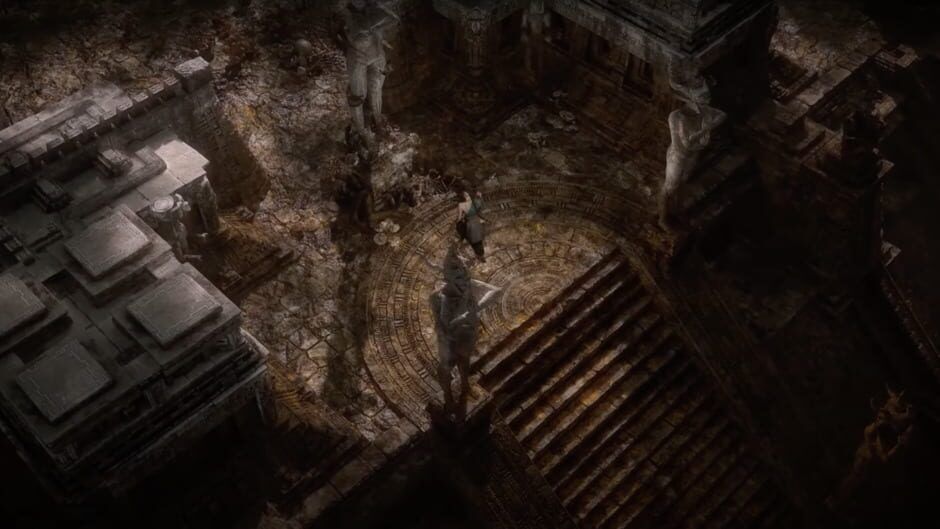
The headline structural change in Return of the Ancients is the reworked Atlas. GGG has leaned into narrative framing this time, with a new Fortress storyline and regional progression system that tries to make endgame feel less like a raw spreadsheet of maps and more like exploring hostile territory.
Regions now advance with clearer objectives and more explicit guidance. Existing endgame mechanics are tied to quest-style introductions that walk you into systems instead of dumping a dozen unfamiliar icons on your map. That onboarding is a quiet but crucial shift for PoE2: the studio clearly wants the Early Access era to be where confusion is removed, not added.
The Fortress arc in particular gives structure to what would otherwise be a broad, aimless grind. Players are gradually pointed toward specific goals and set-piece encounters that contextualize their mapping choices. The net result is an Atlas that behaves more like a late-game campaign than a loose collection of content buckets.
Progression Trees and Ascendancies: Sharpening Identity
Return of the Ancients also deepens character identity through new Atlas-style progression trees and additional Ascendancies. These systems reinforce the directional shift already visible in PoE2’s design: more specialization, but with clearer signposting and fewer feel-bad traps.
Atlas-style progression trees allow you to invest in the parts of the endgame you actually care about, whether that’s league mechanics, farming patterns, or specific encounter types. Paired with the refreshed regional structure, they make your progression path feel more intentional instead of reactive.
New or expanded Ascendancies plug holes in build archetypes and give players more mid- to long-term goals to chase. In an Early Access environment where balance is still in flux, this update is less about pure numbers and more about laying in the architectural beams that PoE2’s final meta will sit on.
In-Game Build Guides: The Most Important Quality-of-Life Feature Yet
Among veterans, the flashy selling point of Return of the Ancients might be the league and Atlas changes, but the most transformative feature for the broader audience is the new in-game build guide system.
Players can now import build guides directly into the client, turning what used to be a browser-plus-Path-of-Building dance into a mostly in-game experience. Objective markers and better UI guidance help you follow a build’s path without flipping endlessly between windows.
This is a strong signal of where GGG wants PoE2 to land at release. Instead of expecting every player to live in external tools, the game is starting to internalize the core parts of theorycrafting. That does not replace community tools, but it narrows the gap between “I saw a build on YouTube” and “I can actually play it correctly.”
For newcomers especially, this might be the single biggest step toward making PoE2 approachable without flattening its depth.
Why This Is the Final Planned Early Access Content Update
Calling Return of the Ancients the final planned Early Access content update is a strong statement about where Path of Exile 2 is in its life cycle.
First, the scope of 0.5.0 covers almost every pressure point that needed to be addressed before 1.0. There is a league that runs the length of the game, an Atlas that has been reshaped into a more guided experience, endgame systems stitched together with clearer quest lines, and foundational tools for sharing and following builds. These are not side features. They are the scaffolding for how PoE2 intends to function at launch.
Second, the studio is signaling a pivot from expansion to refinement. With major content beats in place, the remaining Early Access period is likely to focus on tuning encounters, addressing balance outliers, smoothing rough UI edges, and reacting to real-world player data rather than piling on brand new systems.
Finally, the way this update launched underscores its transitional role. It arrived alongside a free weekend with unlimited access and a heavily discounted Early Access Supporter Pack, helping push the game to over 400,000 concurrent Steam players. That surge is not just a marketing beat; it is a live stress test for the infrastructure and progression flow that will carry PoE2 into full release.
By planting a flag and labeling Return of the Ancients as the last planned content drop of Early Access, Grinding Gear Games is drawing a line under the experimental phase. The message is that the shape of Path of Exile 2 is now set. What comes next is not another radical overhaul, but the long, detailed process of getting this version of Wraeclast ready for launch.
For players, that makes 0.5.0 a perfect moment to jump in or come back. The league is built to last through endgame, the Atlas is more coherent, and the tools to follow or share builds are finally catching up with how the community actually plays. From here on out, the changes you feel are less likely to be tectonic shifts and more likely to be the polish passes that will define Path of Exile 2 at release.