
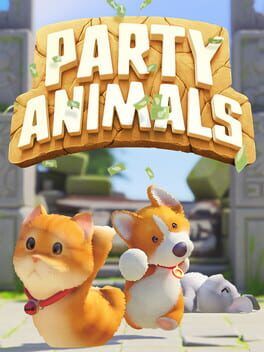

How a $75,000 AI video contest turned Party Animals’ community against it, why players see generative AI as a threat to creativity, and what this review bombing storm means for every live‑service multiplayer game.
Party Animals has always sold itself on chaos. Physics-driven brawls, ragdoll pup throws, tiny animals punching each other off moving trains. But the most chaotic moment in its life so far didn’t come from the game itself. It came from a tweet.
In mid May, developer Recreate Games announced a $75,000 AI video contest, inviting fans to “bring your ideas to life with AI.” Within hours, the studio’s feel-good party fighter was getting hammered with negative reviews on Steam. Its recent rating swung to “Mostly Negative,” with hundreds of players using the review section as a protest wall.
What might look from the outside like “gamers overreacting to a contest” is really a test case for how generative AI collides with community culture. The Party Animals backlash shows how quickly goodwill can evaporate in a live-service game when players feel their own creativity is being sidelined.
A contest that landed like a slap in the face
The broad outline is the same across reports from IGN, PCGamesN, GamingOnLinux and others. Recreate launched an AI-generated video competition with a total prize pool of $75,000 and a $15,000 grand prize. The pitch framed AI tools as a way for anyone to become a creator, even if they lacked animation or editing skills.
On paper that sounds empowering. In practice it read as a sharp turn away from the kind of fan creativity that has helped keep a smaller multiplayer title like Party Animals alive after launch. Players have been sharing clips, memes and homemade edits for months. Suddenly the studio was dangling its biggest pool of prize money in front of content that, by design, was supposed to be generated by machines.
That contrast is why PCGamesN described the contest as a “slap in the face” to the game’s own art and animation team. A lovingly animated, hand-crafted party brawler was now celebrating a toolset many artists associate with scraping human work, muddying credit and flattening style into the same glossy AI look. For a lot of fans, it felt like the studio was telling them and its own staff that the future of Party Animals’ “creative” ecosystem belonged to prompt engineering, not craft.
Why this sparked such a sharp backlash
The raw numbers tell one story. Within roughly a day of the announcement, Party Animals had racked up more than 700 to 800 new negative Steam reviews, tipping its recent score down to “Mostly Negative.” Threads on Reddit and Steam’s community page filled with players calling the contest “tone-deaf” and “AI slop.”
But it wasn’t just abstract anti-AI sentiment. Specific fears kept coming up.
Players argued that generative AI doesn’t emerge from nowhere. Image and video models are trained on vast amounts of work made by real artists, often without permission. To them, a contest that celebrates AI outputs with a giant prize pool looks like rewarding what they see as industrial-scale plagiarism.
Others fixated on the erosion of community culture. Live-service games thrive on people who sink time into making montages, memes and machinima. Those are passion projects, built on editing skills, voice performances, staging and hard-won timing. Replacing that with AI tools that spit out content from a text prompt feels like swapping community craft for disposable content mills.
Several writers also noted the optics for the studio’s own team. Party Animals is defined by expressive animations and physical comedy that only work because animators labored over timing, weight and personality. When a game with that identity trumpets AI videos instead of fan-shot clips or hand-animated shorts, it comes off as the developer undervaluing the very work that made the game appealing in the first place.
Layered on top of this is broader exhaustion with how quickly generative AI is being folded into every part of entertainment. Players cited worries about job displacement, the environmental cost of large-scale AI compute, and the general feeling that AI marketing pushes ignore those downsides. Against that backdrop, Recreate’s contest announcement was treated less like a fun promotion and more like evidence that even a cute indie party game would rather chase AI buzz than double down on human-made community content.
Review bombing as a pressure tactic
Steam’s review system became the primary outlet for that frustration. Many players explicitly said in their reviews that they liked the core game but were posting negative scores as a protest. Others wrote long explanations about why they objected to AI, linking the issue to artist rights and the future of creative work.
Critics of the backlash argued that this was an overreaction. Commenters on GamingOnLinux and Reddit pointed out that the contest did not affect gameplay, that the game’s launch experience had been strong, and that tanking its rating would mostly punish the developers who had delivered that fun. Some suggested more targeted feedback, like boycotting the contest itself or pushing for different kinds of community events.
Yet, from the perspective of those participating in the review bombing, this was one of the few levers they could meaningfully pull. Steam ratings impact recommendation algorithms and store visibility. A sharp drop to “Mostly Negative” status embarrasses a studio and forces a response faster than any forum thread. Whether that tactic is fair or healthy, it has become one of the default ways live-service communities express deep disapproval.
In other words, players were not just leaving reviews about Party Animals the product. They were reviewing Party Animals the platform and the future they saw it gesturing toward.
How the developers tried to recover
Faced with the backlash, Recreate Games quickly published a follow-up statement. The tone was conciliatory but did not fully retreat from the AI idea.
The studio said its intention was to “lower the barrier to creation” for fans. The argument was that many players had ideas for fun Party Animals videos but lacked the skills or software to animate, composite and edit. AI tools were framed as “just another tool” that could level the playing field, letting more people participate in a big community event.
Crucially, Recreate acknowledged that the announcement had “upset” many players and admitted it had not communicated well. Instead of unilaterally cancelling the contest or stubbornly pushing ahead, the team presented the community with three options and opened a poll:
Convert the contest into a traditional, non-AI event that rewards hand-made videos. Keep the contest but add a distinct handmade category alongside the AI one. Or cancel the whole thing outright.
That move reframed the situation as a choice to be made alongside the players rather than over their heads. It also implicitly recognized that trust had been damaged. In a healthy live-service relationship, you do not need to poll your community on whether they will tolerate your contests. Here, Recreate had to.
What the studio did not do, at least in its initial response, was engage with the deeper ethical criticisms of generative AI. There was no mention of dataset transparency, respect for artists’ work or environmental costs, which are exactly the points many players now bring up by default. By sidestepping those topics and focusing mainly on accessibility, the statement risked sounding like it had not really heard what the loudest critics were saying.
Creativity vs convenience in community events
The heart of the controversy is a clash between two visions of what “community creativity” should look like in a live multiplayer game.
Recreate’s pitch leans on convenience. In that vision, creativity is about having cool ideas, and any tool that lets more people turn those ideas into something watchable is a net positive. If AI tools lower the technical barrier, then more fans can feel involved. You do not need After Effects or Blender; you just need an idea and the right prompts.
Many players, especially those who already make content, see creativity very differently. For them, the time spent learning to capture footage, sync it to music, build jokes around camera movement or fine-tune animation is not a barrier to be erased. It is the craft itself. The friction and learning are what give their work value and identity.
When a studio announces that its flagship creative contest is dedicated solely to AI-generated content, it sends a clear signal about which of those visions it prioritizes. It tells traditional creators that the skills they have invested in are optional to the game’s official celebrations. It tells casual viewers that slick AI pieces are the new standard. That is why so many fans described the contest as feeling like a replacement, not a supplement.
Adding a handmade category, one of the options Recreate floated, might reduce the sting. It gives human-made work a lane of its own and acknowledges its importance. But the order of operations still matters. The studio’s first instinct was not to highlight its clip makers, editors and fan animators; it was to chase the novelty of AI.
The cost to live-service trust
Party Animals is not a typical battle pass-driven, content treadmill live-service title, but it still shares the same dependency on an active, invested community. Regular updates matter less than whether people want to invite their friends back and whether they feel good about being part of the game’s social orbit.
Incidents like this strike at the same soft underbelly that has hurt bigger live-service projects. Players already watch for signs that a game might pivot toward quick trends or cheap engagement. They worry about cosmetics shifting toward cheaper production methods or events feeling like marketing stunts instead of genuine celebrations of the community.
By centering generative AI in a marquee contest, Recreate walked right into those anxieties. Fans jumped from “AI videos are cool” to “will the next cosmetic trailer be AI-generated, while artists are sidelined?” They asked if future events would also valorize AI content instead of highlighting streamers, fan artists, or editors who had been carrying the game’s visibility.
Once that suspicion takes root, every announcement is read through a more cynical lens. A new mode feels less like a gift and more like a retention test. A new cosmetic pack becomes a potential cost-cutting experiment. Live-service games rely on players extending trust between updates, and trust is hard to win back once it has been broken by a tone-deaf decision.
Lessons for other multiplayer games
The Party Animals saga will not be the last time a game runs headfirst into generative AI backlash. It does, however, provide clear takeaways for anyone running a modern multiplayer or live-service title.
The first is that you cannot treat AI as apolitical infrastructure. In 2026, generative AI is loaded with questions about who gets paid, whose work is scraped, and what kinds of jobs disappear. If you anchor a community initiative around those tools and do not address those concerns up front, players will fill the silence with their worst assumptions.
The second is that community creativity is not just content; it is identity. Fan videos, art and memes define how a game feels to belong to. When official channels push AI-created work to the front of the stage, it is interpreted as a statement about who the studio believes represents the community. Human skill and time investment are part of that representation.
Finally, the incident shows how review systems have become de facto governance tools. Review bombing is messy and often unfair to the base game, but it is also one of the only ways a dispersed player base can exert noticeable pressure on a studio’s strategic choices. Any developer operating a live game has to factor that in when flirting with controversial tech trends.
Recreate is now in damage-control mode, letting its players vote on the fate of the contest and trying to reframe AI as a neutral tool rather than a replacement for human work. Whether that is enough to restore Party Animals’ reputation is an open question. What is clear is that the industry at large is watching.
For developers, the message from this week is blunt. If your game has built its success on human warmth and community charm, you cannot suddenly put a spotlight on machine-made creations without paying a steep price in trust. For players, Party Animals has become another reminder that even the cutest party can turn sour once AI shows up uninvited.