
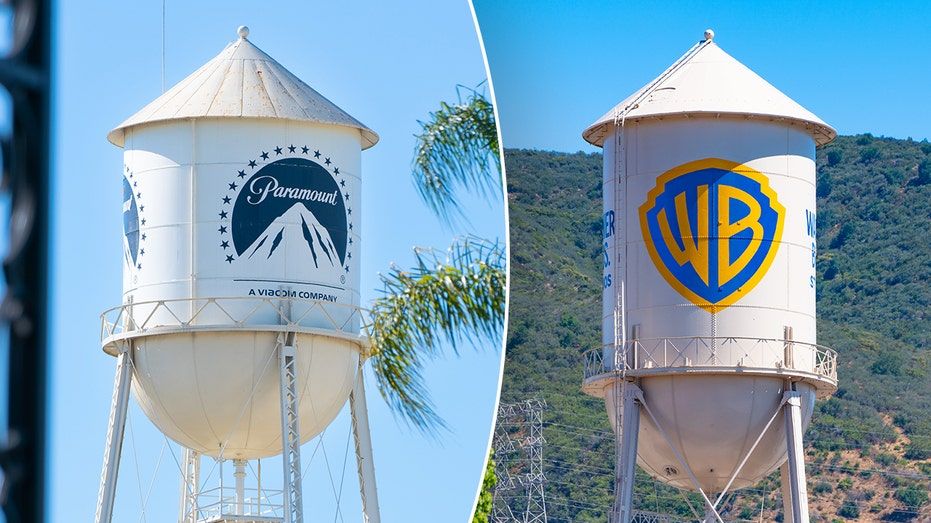

A federal judge has paused the Paramount-Warner Bros. deal for at least 14 days, leaving Warner Bros. Games, Hogwarts Legacy, Mortal Kombat, and other game operations in a holding pattern while antitrust claims are heard.
Image: foxbusiness.com
A 14-day court pause stops the deal at the door
A federal judge has temporarily stopped Paramount Skydance from closing its planned acquisition of Warner Bros. Discovery, creating a short but consequential pause in a deal that would pull film studios, streaming platforms, television networks, and Warner Bros.' games division under one corporate roof.
As reported by GamesIndustry.biz, Variety, NBC News, Deadline, CNBC, Polygon, and others, U.S. District Judge Araceli Martínez-Olguín of the Northern District of California granted a temporary restraining order on Monday after a coalition of state attorneys general sought emergency relief. The order lasts for 14 days and, according to Variety and GamesIndustry.biz, can be extended to as long as 28 days. NBC News reported that an Aug. 3 hearing has been scheduled on the states' request for a preliminary injunction, which would keep the transaction frozen while litigation continues.
The immediate tension is timing. Variety reported that Paramount had previously agreed not to close the transaction before July 22. CNBC reported that Paramount's lead trial counsel, Jeffrey Kessler, said the temporary restraining order request followed Paramount's indication that it intended to close as early as July 22, when the company expected to have all regulatory clearances. The court order now blocks that closing window.
For gaming readers searching for "Paramount Warner Bros merger halted" or "Warner Bros Games merger," the confirmed effect is corporate rather than product-specific. Deadline reported that the judge's order bars Paramount and Warner Bros. from closing or consummating the transaction and from taking steps, directly or indirectly, to integrate or consolidate their operations pursuant to the transaction. That language is broad enough to matter to any division inside the deal structure, including the games business, but none of the cited reports says the court has ordered changes to any specific game, studio roadmap, release date, patch plan, or live-service schedule.
The antitrust fight is aimed at Hollywood, but the games division is inside the frame
The lawsuit behind the pause is centered on entertainment market concentration. Polygon reported that 12 state attorneys general, including California's, sued to stop Paramount's acquisition of Warner Bros., alleging the merger would violate Section 7 of the Clayton Antitrust Act of 1914. NBC News described the plaintiffs as led by California Attorney General Rob Bonta and said their complaint argues the deal would "extinguish competition" in Hollywood. CNBC listed the participating states as Arizona, Colorado, Connecticut, Massachusetts, Minnesota, Nevada, New Jersey, New Mexico, New York, Oregon, Washington, and California.
The markets named in the reports are film and television markets rather than games. Polygon said the suit alleges the deal would lessen competition in film distribution, anticipated blockbuster film distribution, and licensing cable TV channels. Deadline likewise reported that the states claim the merger creates undue concentration in wide-release films, distribution of anticipated top-grossing theatrical films, and licensing of basic cable channels. Variety said the coalition argues the merger could lead to higher prices and fewer movies and TV shows.
That distinction matters for any WB Games Paramount deal analysis. Warner Bros. Games is not described in the source material as the core antitrust market under dispute. Still, GamesIndustry.biz reported that Netflix's earlier offer for WBD included the company's film studio, streaming business, and games division, while Polygon reported that the proposed Paramount deal would bring together two major movie studios, streaming services HBO Max and Paramount Plus, dozens of television networks, and multiple game studios. In other words, games are part of the acquisition package even if the legal complaint, as reported, is built around film, TV, cable, and theatrical distribution.
That leaves franchises such as Mortal Kombat and Hogwarts Legacy in an uncomfortable off-screen position. They are not named in the cited court coverage as targets of the lawsuit, and no source in the provided record reports a direct change to those games. But they sit in the wider Warner Bros. interactive ecosystem that gaming audiences are watching because the court order prevents the buyer and seller from integrating operations while the case moves to the next hearing.
The judge found serious questions, while Paramount says the case misses the market
Judge Martínez-Olguín's order did not decide the full antitrust case. It preserved the status quo while the court considers whether to issue a preliminary injunction. Variety quoted the judge as writing, "Plaintiff States' showing at least demonstrates that serious questions going to the merits remain, weighing in favor of preliminary injunctive relief." GamesIndustry.biz carried the same passage and added the judge's explanation that Paramount and Warner Bros. would continue operating as separate, viable companies competing in the marketplace while the case is adjudicated.
Deadline reported a sharper finding from the order: the state attorneys general "present compelling evidence that the combined firm resulting from the transaction will possess substantial market share in the wide-release theatrical distribution market." Deadline also quoted the judge as writing, "On this combined firm market share alone, the Court is persuaded that it can presume the proposed merger is likely to violate antitrust laws." CNBC reported the same point about substantial market share in wide-release theatrical distribution.
Paramount disputes the states' theory. CNBC reported that a Paramount spokesperson said the company is "confident the evidence will demonstrate that the State AGs' antitrust arguments are without merit as their alleged markets and claims of anticompetitive effects are without any basis in modern market realities." The same statement, according to CNBC, called the merger "lawful, pro-competitive" and said it would benefit consumers, creators, workers, and the entertainment industry. Kotaku also reported that Paramount said it would vigorously defend the transaction and argue the challenge is inconsistent with competition policy and the current media marketplace. CNBC reported that Warner Bros. declined to comment.
California Attorney General Rob Bonta framed the order as an early win. GamesIndustry.biz, Polygon, and Variety all quoted Bonta saying his office and attorneys general nationwide had secured an emergency order blocking what he called the "unlawful merger" of Warner Bros. and Paramount. Bonta said the states' case is meant to protect a free and fair market and a thriving film and television industry for creatives and audiences.
For players, the important line is not the rhetoric from either side. It is the court's practical instruction that the companies remain separate for now. That is the only confirmed operational change affecting the broader Warner Bros. business, including its games division.
A messy acquisition path already shaped the stakes before this order
The pause lands after months of competing bids, legal pressure, and deal mechanics that already made the Warner Bros. Discovery sale process unusually high-stakes. GamesIndustry.biz reported that WBD announced last October that it was considering a "potential sale," beginning the acquisition process. The outlet reported that Netflix offered $82.7 billion in December to acquire WBD, including its film studio, streaming business, and games division. Paramount later submitted an initial $108.4 billion bid, according to GamesIndustry.biz.
Polygon described Paramount's agreement as a $110 billion buyout, while NBC News reported the proposed deal at $110 billion and The New York Times described it as a $111 billion purchase. Those figures differ slightly across outlets, a common result of how debt, equity value, and deal terms are counted in large transactions. The shared point across the reports is that this is a massive media consolidation effort, not a small portfolio trade.
GamesIndustry.biz reported that Netflix withdrew its bid on Feb. 26, 2026, after months of negotiations and a lawsuit from Paramount. Polygon added that Paramount is on the hook for a $2.8 billion termination fee that Warner Bros. owed Netflix after backing out of that deal, and that Paramount raised the separate termination fee it would owe if the deal failed to secure regulatory approval to $7 billion, up from $5.8 billion. Polygon also reported that Paramount's offer includes $29 billion in debt, which the outlet said would ultimately mean cost-saving cuts at the combined company if the transaction succeeds.
That cost-saving question is where gaming readers should keep their eyes. The current court record cited by these reports does not say Warner Bros. Games will be cut, sold, merged, or reorganized. It also does not say Mortal Kombat, Hogwarts Legacy, or any other WB-linked game brand will change strategy. But a transaction carrying major debt, termination fees, and promised corporate combination naturally puts every division into the budgeting conversation once integration becomes legally possible. For now, the order delays that next phase.
The DOJ signal and the state lawsuit point in different directions
One reason the federal judge Paramount Warner Bros pause is worth watching is that the deal had already received a favorable federal antitrust signal before the states' emergency order. Polygon reported that Paramount's acquisition of Warner Bros. went through the U.S. Department of Justice Antitrust Division in June, with the DOJ saying "the transaction is not likely to result in harm to competition or American consumers." Polygon also reported that the DOJ said combining Paramount Plus and HBO Max was likely to increase competition by offering consumers a more robust competitor in streaming.
The states do not accept that framing. Their lawsuit, as summarized by NBC News, Variety, CNBC, Deadline, Polygon, and GamesIndustry.biz, argues that the merger would reduce competition and could lead to higher prices, lower quality, less content, fewer opportunities, and market concentration. The court has now found enough serious questions to pause the transaction before closing.
That conflict should keep readers from treating any single clearance or quote as the final boss encounter. Federal antitrust review and state antitrust litigation are moving on different tracks in the reported record. The DOJ signal suggested the transaction was not likely to harm competition. The states convinced a federal judge, at least temporarily, that their claims deserve preservation of the status quo before the companies combine.
For WB Games, that split matters because corporate strategy often depends on certainty. Studio integration, cross-divisional licensing plans, subscription bundling, shared technology decisions, and workforce planning all become harder to read when one regulator has cleared a path and another legal challenge has thrown down a temporary gate. None of the provided reports confirms any such game-side integration plan, but the pause makes clear that Paramount and WBD cannot behave as a completed combined company while the restraining order remains active.
Mortal Kombat, Hogwarts Legacy, and the practical player read
If your immediate concern is whether this changes what you can play this week, the available reporting does not support panic. No cited source reports a cancellation, delay, delisting, price change, platform removal, patch slowdown, or studio closure tied to the temporary restraining order. The confirmed development is that the merger cannot close for at least 14 days and that the companies must remain separate while the court considers the states' preliminary injunction request.
That makes this a waiting game for fans of Warner Bros. Games properties, including audiences following Mortal Kombat and Hogwarts Legacy WB Games news. The court fight is not about combat balance, downloadable content, console performance, or open-world sequel timing. It is about whether a corporate acquisition would unlawfully reduce competition in media markets. Still, large entertainment mergers can shape game publishing through budgets, licensing priorities, executive oversight, and how much pressure each division faces to generate near-term savings. Those are business risks, not confirmed product changes.
The next date to watch is Aug. 3, when NBC News and Variety reported that the court is scheduled to hear the states' motion for a preliminary injunction. If the court grants that injunction, the deal would remain frozen while litigation proceeds. If the court declines to extend the pause, Paramount could seek to move closer to closing, subject to any remaining legal and procedural constraints reported at that time.
Until then, the cleanest reader guidance is to separate courtroom facts from franchise speculation. The Paramount Warner Bros merger halted story is real, time-sensitive, and relevant to WB Games because the games division is part of the broader Warner Bros. Discovery business being pursued. But the record supplied so far does not show a direct change to Mortal Kombat, Hogwarts Legacy, or any specific Warner Bros. interactive release. Watch the injunction hearing, watch any formal statements from Paramount or Warner Bros., and be skeptical of claims that turn a 14-day corporate restraining order into an unannounced game roadmap.