
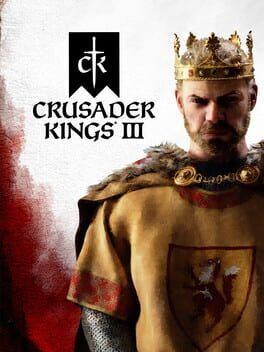

Fredrik Wester will step down as Paradox Interactive CEO in January 2027, with Mattias Lilja taking over. Here is what is confirmed, what remains unannounced, and how strategy players should read the change.
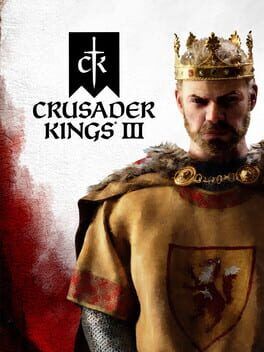
Image: IGDB
Store links: Crusader Kings III on Steam, Crusader Kings III: Chapter IV on Steam
A planned handoff arrives at a sensitive moment for Paradox
Paradox Interactive says Fredrik Wester will step down as CEO on January 4, 2027, with deputy CEO Mattias Lilja taking over the role on that date. The company’s announcement, reported by GamesIndustry.biz, Eurogamer, PCGamesN, and Inven Global, says Wester will remain CEO until the handoff to ensure an orderly transition, then continue on Paradox’s board of directors while focusing on long-term development. Wester will also remain Paradox’s largest shareholder.
That is the concrete news. The tension is in the timing. Paradox is presenting the move as a natural evolution of how the company has already been operating, with Lilja taking on more day-to-day responsibility since 2021 while Wester focused increasingly on longer-range goals. At the same time, several outlets place the handoff against a difficult recent run for the publisher, including the troubled path of Vampire: The Masquerade - Bloodlines 2, the cancellation of Life By You, an indefinite delay for Prison Architect 2, and financial pressure tied to Bloodlines 2’s poor performance.
For players of Crusader Kings 3 Paradox, Stellaris, Hearts of Iron, Europa Universalis, and the company’s management games, the important distinction is this: the CEO change is confirmed, but no source material provided here says Paradox has announced immediate changes to any live game roadmap, expansion plan, patch cadence, platform support, or pricing as part of the transition.
What Paradox says is changing, and what is staying in place
According to Paradox’s release, as quoted by GamesIndustry.biz and Inven Global, Wester said his plan was never to remain CEO for life. He framed his second tenure as a rebuilding period, saying that since returning as CEO the company had “streamlined our strategy, rebuilt our pipeline and developed our commercial offering.” Wester also said Lilja had played a central role in that work and is well positioned to take the company to its next stage.
Paradox chairman Håkan Sjunnesson described Lilja as the right person to lead the company going forward, citing his operational and commercial experience. Inven Global notes that the announcement was issued as a regulatory disclosure under the EU Market Abuse Regulation, with Paradox listed on Nasdaq Stockholm under the ticker PDX.
The company’s own framing matters because it lowers the odds of a sudden public reset. Inven Global reports that Paradox said its strategic direction “remains firm.” Wester staying on the board and retaining his position as largest shareholder also suggests continuity at the ownership and oversight level. That does not guarantee consistency in every product decision, but it does mean this is not being described by Paradox as a break with the past.
Who Mattias Lilja is inside the Paradox machine
Lilja is not an external turnaround hire parachuting into unfamiliar territory. GamesIndustry.biz reports that he joined Paradox in 2009 as the company’s first producer and later held senior roles including leading the studio and publishing organizations and serving as COO. Inven Global adds that Lilja became deputy CEO in April 2024 and credits his leadership history with launches connected to several key Paradox franchises, including Cities: Skylines, Hearts of Iron IV, and Stellaris.
That background is relevant for strategy players because Paradox’s business is unusually dependent on long-lived games, live support, expansions, modding communities, and a patient audience that will tolerate complexity but tends to punish broken trust. A CEO with production, publishing, and operations experience is likely to understand the brutal logistics behind a grand strategy calendar: feature scope, expansion timing, quality control, mod compatibility, and the commercial pressure to keep older games active while building new ones.
Lilja’s own statement points in that direction. As quoted by GamesIndustry.biz and PCGamesN, he said Paradox would make further investments in its core business, push game design, work more closely with loyal players, and develop better tools and services for modders and players. Those are broad commitments, not a Crusader Kings 3 patch note. Still, they identify the areas Paradox wants investors and players to watch: core strategy and management games, community relationship, and the support infrastructure around long-running titles.
Fredrik Wester leaves the CEO chair after two very different eras
Wester’s history with Paradox makes this handoff unusually consequential. GamesIndustry.biz reports that he first became CEO in 2009 after previously serving as EVP, stepped down in 2018 to become executive chairman of the board, then returned as CEO in 2021. Eurogamer notes that he has spent a combined decade and a half leading the company.
His return in 2021 came after Paradox had already built a powerful identity around deep PC strategy, but Wester himself has described that return as a reset. GamesIndustry.biz quotes his LinkedIn post saying that when he came back, “the company needed a reset,” and that he brought Lilja back with him to help turn things around. PCGamesN similarly reports Wester’s view that Lilja’s responsibilities increased over the following years, especially around operations and strategy execution.
The recent record is mixed. Eurogamer describes Wester’s latest period as troubled, citing Bloodlines 2’s long development problems, developer switch, multiple delays, and eventual failure to resonate with critics and audiences. GamesIndustry.biz reports that Paradox posted a 162% decline in operating profit earlier this year after the poor performance of Vampire: The Masquerade - Bloodlines 2 and wrote down the game’s costs to SEK 355.3 million, around $35.6 million. Eurogamer also points to the cancellation of Life By You and the indefinite delay of Prison Architect 2 as part of the same turbulent period.
Those problems do not erase Paradox’s strengths in grand strategy, but they help explain why the next CEO’s operational discipline will be watched closely. Strategy players understand compounding effects. A weak launch, a delayed patch, or a confused expansion plan rarely stays isolated. It affects trust, wishlist behavior, DLC attach rates, modder enthusiasm, and the willingness to buy into the next long-tail project.
How Crusader Kings 3 players should read the announcement
There is no confirmed Crusader Kings 3 roadmap change in the source material. Paradox has not, in the provided announcement or the cited reports, tied Lilja’s appointment to a new CK3 expansion model, a platform change, a new pricing structure, a technical overhaul, or a shift in update frequency. Any claim that Crusader Kings 3 will immediately speed up, slow down, or change design direction because of the CEO handoff would go beyond the available reporting.
The safer reading is strategic rather than immediate. Crusader Kings 3 sits in the kind of portfolio Lilja explicitly described as Paradox’s “core business”: deep, durable strategy and management games supported over time. His references to player value, closer work with loyal players, and better tools and services for modders are relevant to CK3 because the game’s long-term health depends on those systems. They are also relevant to Stellaris, Hearts of Iron, Europa Universalis, Victoria, and Paradox’s management catalog.
For CK3 players deciding whether to buy current content, return to a campaign, or wait for future announcements, this CEO change should not be treated as a product signal by itself. It is a leadership signal. The things to watch are future Paradox development diaries, expansion announcements, patch notes, mod tooling updates, and any official statements that connect the company’s new pace to specific games. Until those appear, the ruler has changed at the corporate level, but the succession law for Crusader Kings 3 itself has not been publicly rewritten.
The real test is execution across the strategy catalog
Lilja’s “stepping up the pace” line, quoted by PCGamesN, is the phrase that will travel furthest, but it is also the phrase most in need of careful reading. Faster output can be good if it means better pipelines, clearer production gates, improved tools, and fewer long silences between meaningful updates. It can be damaging if it means overloaded teams, rushed DLC, or technical debt that players end up testing after launch.
Paradox’s strongest games have historically depended on a different rhythm from most publishers: launch, patch, rebalance, expand, listen, revise, then repeat for years. That rhythm is powerful when the base game is stable and the community believes the next expansion will deepen the sandbox. It becomes fragile when players feel systems are being layered on too quickly, when performance suffers, or when paid content arrives before old problems feel settled.
The leadership handoff therefore raises a practical question for Paradox strategy games rather than an answer: can Lilja increase pace while improving reliability? The company’s statements emphasize investment in the core business, game design, player contact, and modder tools. Those priorities line up with what grand strategy communities usually ask for, but priorities become credible through shipped updates, clean launches, and transparent support.
What to watch between now and January 2027
The transition window runs until January 4, 2027, when Lilja is scheduled to become CEO. Wester remains in charge until then, according to Paradox and GamesIndustry.biz, which means any near-term product announcements before that date still arrive under his formal leadership. After that, Wester’s board role and shareholder position mean he remains influential, but Lilja becomes the executive responsible for running the company.
Players looking for practical signals should separate corporate language from product evidence. A Paradox investor release can say the strategy remains firm, but a game community will measure that through release quality, patch responsiveness, communication, and whether promised tools actually improve the experience for modders and players. If Paradox’s core strategy focus becomes more disciplined under Lilja, the signs should appear in production reliability before they appear in marketing language.
For now, the confirmed story is a controlled succession: Fredrik Wester steps down, Mattias Lilja Paradox leadership begins in January 2027, and the company says it will keep investing in the deep strategy and management games that define its identity. The unconfirmed part is everything players naturally want to know next: whether Crusader Kings 3, Stellaris, Europa Universalis, Hearts of Iron, Victoria, or Paradox’s management catalog will feel different in practice. That answer has to come from the games themselves.