
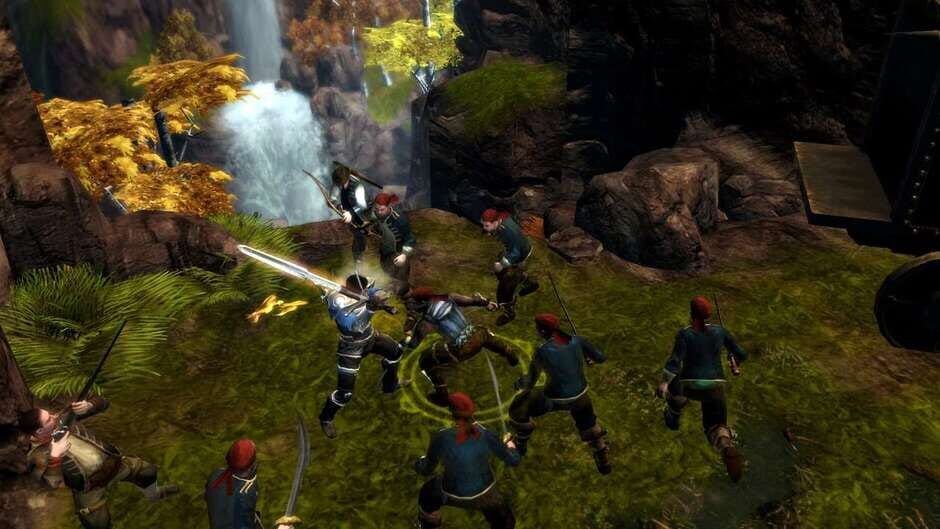

Visionary Realms is finally adding mounts and taming to Pantheon: Rise of the Fallen in December, alongside a promised roadmap. Here’s what the update actually includes, why it matters, and what it signals for the MMO’s long‑term viability in a brutally competitive market.
Pantheon: Rise of the Fallen has spent years trading on promise. In December, it finally has something more concrete to show in early access: a major update that brings mounts, a taming system, and the first hints of a more structured development plan.
For a game that is trying to carve out space in a market dominated by World of Warcraft, Final Fantasy XIV, Elder Scrolls Online, and a long tail of free to play titles, this patch is more than a fun quality of life beat. It might be the first real test of whether Pantheon can execute on its throwback, group focused MMO vision in a way that justifies its continued existence.
What the December update actually adds
Visionary Realms has reconfirmed that December’s major patch will introduce ridable horse mounts along with a taming system that fits the game’s more grounded, old school tone.
Instead of simply buying a mount from a vendor at a certain level, players will be sent out into the world to discover and tame wild horses. These mounts come in different qualities and rarities. That implies some degree of collection, progression, and perhaps a light layer of horizontal grind for people who like chasing better looking or slightly more efficient steeds.
Details are still deliberately light. The studio has only provided a high level “glimpse” of the systems and is saving a more granular breakdown for a follow up dev post. Even so, the broad strokes are clear enough to read.
Pantheon is not going for zany mount designs or instant gratification. Horses are functional tools tied to exploration, travel speed, and the game’s identity as a grounded, high fantasy world. The rarity tiers suggest incentive loops for long term players, but this looks more like EverQuest style progression than the mount stables of a modern theme park MMO.
Why mounts and taming matter so much for Pantheon
For most live MMOs, adding mounts is a basic feature milestone. For Pantheon, the timing turns it into a litmus test.
The project’s pitch has always centered on a slower, more deliberate style of play built around grouping, challenging PvE encounters, and a sense of world scale that turns travel into a meaningful decision. That pitch is much harder to sell if actually moving around the world feels tedious.
Mounts help close that loop in several ways.
First, they shorten dead travel time without eliminating travel friction. If tuned correctly, riding a horse across Terminus should sharpen the sense of distance rather than trivialize it. Players will still need to respect geography, plan routes, and commit to trips. They just will not be doing it all on foot.
Second, the taming layer gives the system some gameplay teeth. If rare horse spawns or special taming challenges appear in dangerous areas, mounts become aspirational goals that pull players into contested zones. That is the kind of organic social friction Pantheon needs, since it does not rely on heavy instancing or solo story tracks.
Third, mounts are a subtle test of Pantheon’s technical maturity. Pathing issues, server desync, animation jank, or visual clipping tend to surface quickly when you put dozens of mounted players in the same area. If the December update delivers reasonably smooth mount handling, it sends an important signal that the underlying tech is stable enough to support more complex features.
The promised roadmap and why it is critical now
Alongside mounts and taming, Visionary Realms has reiterated that a broader development roadmap is coming for the early part of next year. The studio has been talking up “major gameplay changes” to both adventuring and gathering. The roadmap is where those promises need to solidify.
Pantheon’s audience is not just judging the game as it exists today. Many of its most dedicated backers are essentially investors in a vision, some of them following since the Kickstarter era. They want to see a clear, believable arc from the current early access build to a feature complete launch.
The roadmap will be judged on three main axes.
Scope: Players need to see that core pillars are being addressed. That includes more zones with a logical progression curve, fully realized group content at multiple level bands, economies that reward gathering and crafting, and long term systems to keep max level players busy.
Specificity: Broad promises about “major changes” no longer move the needle. The community will be looking for explicit feature names, time frames, and the order in which systems will be tackled. Even if dates slip, a specific plan gives players something concrete to evaluate.
Credibility: Perhaps most important is how the roadmap lines up with Pantheon’s past track record. Overpromising and underdelivering has burned many MMO communities before. After such a long gestation period, even true believers are wary of vague milestones. Realistic pacing, visible prioritization, and follow through on the early roadmap beats will matter more than flashy concept art or aspirational stretch goals.
If the December update lands well and the roadmap follows quickly with grounded, achievable steps, Pantheon can steady its image as a slow but real project rather than a forever alpha curiosity.
How this fits into Pantheon’s design philosophy
Pantheon has always sold itself as a spiritual successor to EverQuest and other late 90s and early 2000s MMORPGs. That means group centric content, harsher death penalties, and a world that expects you to talk to other players instead of following quest markers.
The mounts and taming system can reinforce that philosophy if implemented carefully.
Requiring players to actually find and tame horses leans into discovery and social knowledge sharing. If the best horses live in certain dangerous regions, guilds will organize for taming runs. Reputation will spread about who knows the best routes or “safe” camping spots. That fits Pantheon’s goal of cultivating old school community dynamics instead of handing out movement upgrades as a checkbox reward.
At the same time, the studio will have to avoid turning mounts into a pure timesink. Excessively low spawn rates, punitive failure mechanics, or too many layers of RNG could undercut the feeling of earned progression and turn taming into a chore. Pantheon has little margin for that kind of misstep, because it does not have modern comforts like solo storylines or casual endgame loot showers to keep frustrated players busy elsewhere.
If Visionary Realms gets the tuning right, mounts will feel like an organic extension of the world’s logic instead of a late stage band aid on slow travel.
Expectations in a brutally crowded MMO market
The trickier question is what all of this says about Pantheon’s long term viability in 2025’s MMO landscape.
The top of the market is locked up by giants. World of Warcraft is in a new content cadence groove. Final Fantasy XIV has another expansion cycle underway. Elder Scrolls Online keeps humming along quietly and remains a safe home for casual MMO fans. On top of that, there is a new wave of smaller but highly polished titles, action combat sandboxes, and cross platform online RPGs all competing for attention.
Pantheon’s escape route is not to beat those games at their own strengths, but to double down on the things most of them have moved away from.
It offers slower leveling, group interdependence, a stronger emphasis on social friction, and a handcrafted high fantasy world that favors danger over convenience. That niche is not huge, but it is real. Titles like Old School RuneScape and hardcore WoW private servers have shown there is a persistent appetite for friction heavy MMO experiences, as long as they are consistent and honest about what they ask of players.
For Pantheon to survive in that niche, though, it needs three things over the next year.
First, visible progress. Systems like mounts are a strong addition, but they need to be the start of a cadence, not a rare exception. The roadmap’s near term beats will need to ship in something close to the time frames the team sets.
Second, a stable, testable core loop. Players need to come away from a few weeks in early access feeling that grouping, traveling, fighting, and gearing all hang together in a satisfying loop. Mounts and taming should slot into that as supportive systems, not distractions.
Third, sustainable monetization that does not break the game’s ethos. Pantheon has to raise enough revenue to keep development going without undermining its credibility through overly aggressive cash shop items or pay to win style mount advantages. How the team handles cosmetics around horses will be an early case study.
What this update signals about Pantheon’s future
The December mounts and taming patch is not going to magically transform Pantheon into a mainstream hit, but it might signal whether Visionary Realms is finally past the prototype stage.
If the update arrives roughly on time, functions well under real player load, and is followed quickly by a concrete roadmap, it will be the strongest argument yet that Pantheon is a real, if modestly scoped, MMORPG on a path to launch.
If, on the other hand, mounts land in a rough state, the taming system feels thin, or the promised roadmap slips again, it will reinforce a narrative that the project is stuck in perpetual early access with a shrinking window of relevance.
In a market where even polished, well funded MMOs can struggle for attention, Pantheon cannot afford many more missteps.
For early access players, the best approach this December is to treat the mount and taming update as a stress test, not just of servers and systems, but of Visionary Realms’ ability to iterate. Pay attention to how quickly bugs are fixed, how transparent the team is about issues, and how closely follow up patches match the messaging.
If Pantheon can pair its nostalgic design with modern discipline and communication, the December update might be remembered as the moment the game finally started to look like a viable long term home instead of a perpetually looming promise.