
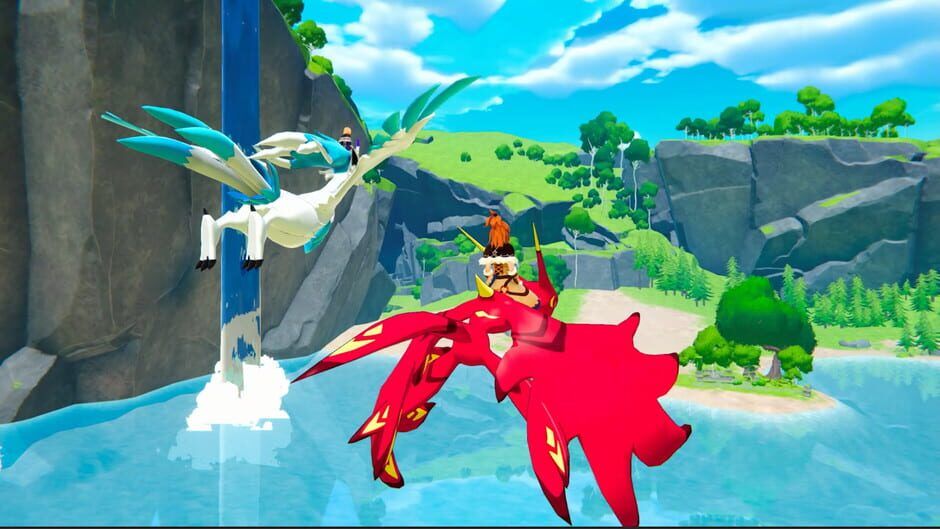
Nintendo’s patent fight over Palworld now looks set to end with a token payout and no meaningful impact on the game’s future. Here’s what actually changed in court, why Palworld’s 1.0 roadmap is safer than ever, and how patent battles differ from the copyright fights we usually see in the games industry.
Nintendo’s long running legal push against Palworld is finally crystallizing into something concrete, and it is not the existential threat many players feared. Recent reporting out of Japan and follow up coverage from sites like Rock Paper Shotgun and VGC paint a clear picture: Nintendo and The Pokémon Company are closing in on a narrow, low value patent case that mostly targets an old snapshot of Palworld rather than the beast catching survival hit that exists today.
Where the lawsuit stands now
After almost two years of filings, Nintendo’s Tokyo patent suit against Pocketpair has moved into its final phase. Written arguments and evidence are in, with an in person presentation reportedly scheduled for October 1 and a court opinion expected in November.
The most important detail for players is scope. Early on, Nintendo’s complaint read like an attack on Palworld as a whole. As the case progressed, that position has shrunk. According to the latest Japanese reporting cited by RPS and VGC, the live claims now apply only to older builds of Palworld that have since been patched. Pocketpair quietly altered or removed the mechanics Nintendo said infringed, which has pushed the dispute into the rear view mirror from a design standpoint.
Financially, the stakes have collapsed too. Because the case now concerns a limited period of alleged infringement in Japan and only those past versions, damages are reportedly capped at around 5 million yen, roughly 30,000 US dollars. That is pocket change for Nintendo, particularly after it disclosed more than 6.4 billion yen in litigation costs over the last year, a figure widely linked to the Palworld fight and other IP battles.
So Nintendo is still on course to get its day in court, but unless the judge delivers a surprise injunction the practical outcome looks like a symbolic judgment tied to a build of Palworld that no one can even buy anymore.
Why the case shrank so much
Nintendo did not suddenly decide Palworld was harmless. The shift reflects how fragile their patent theory turned out to be once it left the press release stage and collided with prior art.
The heart of Nintendo’s argument is not that Pocketpair copied Pokémon’s art or characters. Instead Nintendo tried to claim that some of Palworld’s creature battle and capture systems stepped on specific gameplay patents. One of the patents fans have focused on covered summoning companion creatures and having them fight alongside a player character under certain conditions.
In 2026 the United States Patent and Trademark Office dealt that theory a serious blow by rejecting a wide swath of related Nintendo claims as “obvious” in light of much older games, some going back to the PlayStation 2 era. Japanese authorities also scrutinized the same patent family. That kind of prior art undercuts the notion that Nintendo owns basic ideas like having AI partners fight with you or throwing something to enlist a monster.
Facing a messier evidentiary picture and strong prior art, Nintendo and The Pokémon Company narrowed the lawsuit to a handful of older Palworld implementations that were closest to the exact wording of their patents. Pocketpair then effectively mooted even that narrow theory for the future by redesigning those systems. The result is a case that lives in legal timelines and archived code rather than the current game.
What this means for Palworld’s 1.0 release and future updates
From a player’s perspective, the most important takeaway is that the lawsuit no longer threatens Palworld’s full release.
Nintendo originally signaled it would seek both an injunction and damages. Under that scenario, an aggressive win could have forced takedowns or heavy handed redesigns right as Pocketpair tried to leave early access.
Now, with the claims limited to older builds and damages capped at a modest amount, mainstream legal analysts in Japan are treating an injunction against today’s Palworld as extremely unlikely. The disputed mechanics are already gone or materially altered, which makes it hard for Nintendo to argue that ongoing harm exists.
That removes the biggest cloud hanging over Pocketpair’s roadmap. Palworld’s planned 1.0 launch can go ahead on PC and consoles without the specter of a last minute court order. It also frees the studio to pursue bigger crossover updates and system reworks without needing to tiptoe around the lawsuit.
In practical terms you should expect Pocketpair to double down on three areas.
First is content breadth. With the legal risk receding they can safely invest in new Pals, regions and late game activities that would have been risky to commit to if a shutdown was on the table. The studio has hinted for months that it treats Palworld as a long tail live service style project rather than a fire and forget early access title, and this legal momentum backs that up.
Second is mechanical differentiation. Even before the lawsuit narrowed, Pocketpair had started to push Palworld’s identity further away from the simple “Pokémon with guns” meme. The game has leaned harder into automation, factory building and darker survival themes. Expect future updates to continue stressing systems that are obviously distinct from anything in Pokémon, whether that is elaborate base logistics, MMO scale raids or deeper firearms and gadget customization.
Third is technical expansion. Some of the more experimental features that players have requested, like broader mod support or new multiplayer structures, are time intensive to build and maintain. Studios are much more willing to pour resources into those pillars when they know a catastrophic injunction is off the table. The shrinking lawsuit makes that investment easier to justify.
Pocketpair still has to live with the legal reality that a Japanese court will pronounce on older versions of their game in late 2026. But whatever the verdict, the remedies on the table are retroactive and limited. Palworld’s 1.0 launch and its next wave of updates exist on much firmer ground than they did even six months ago.
Why patents and copyright feel so different to players
Part of the confusion around Palworld’s legal troubles comes from a simple fact. Most game controversies are about copyright, but this one is largely about patents.
Copyright is what protects creative expression. In games that means exact art assets, music, dialogue, code and very specific story or character designs. If a bootleg game rips Pikachu’s model and the Pokémon battle theme, that is a textbook copyright case. You do not have to file for a copyright on your monster design; protection attaches automatically when the work is created.
Patents work differently. They protect inventions and methods, not art. In games this usually means particular control schemes, networking methods or rule systems described in precise technical language. Patents are granted for a fixed period only if an invention clears high bars for novelty and non obviousness, and the owner must actively apply for them and pay to keep them alive.
Those structural differences show up clearly in the Palworld dispute.
If Nintendo had sued on copyright, the question would be whether specific Palworld Pals are unlawfully close to particular Pokémon in visual design. That sort of claim is easier for players to understand, but harder for a plaintiff to win at a systemic level because creature designs live in a very crowded creative space. You need near one to one copying or internal evidence of asset reuse.
By focusing on patents instead, Nintendo is effectively saying, “We invented and legally own this precise kind of monster battle system, regardless of how the monsters look.” If a court agreed, that would have ripple effects far beyond Palworld and could chill entire genres.
The catch is that patent law is unforgiving once prior art appears. If other games have already used similar mechanics, or if the invention looks like an obvious combination of known techniques, the patent can be narrowed or invalidated. That is what has been unfolding here, with patent offices and analysts pointing to older titles that used comparable companion summoning and combat logic.
There is also a difference in remedies. A successful patent claim can more easily justify an injunction, because patent law assumes that unauthorized use of a protected invention is an ongoing harm. Copyright suits tend to zero in on damages or targeted takedowns of specific infringing assets. In practice that means patent battles create the kind of existential threat that got Palworld players nervous in the first place, even if the end result here looks to be much less dramatic.
The bigger industry precedent
Whatever judgment the Tokyo court enters this fall, the most impactful precedent may come from how little Nintendo stands to gain. Spending tens of millions of dollars only to walk away with a theoretical 30,000 dollar win against a game that is still on sale everywhere is not a great advertisement for aggressive gameplay patent enforcement.
For big publishers the Palworld case is a warning that patents are not a magic stick for swatting away every upstart that encroaches on their turf. Even a company with Nintendo’s resources and brand power can run into prior art, skeptical patent offices and courts that are wary of letting one firm lock up broad mechanics that have existed for years.
For smaller studios it is an equally clear lesson in risk management. Pocketpair had to burn time and money on lawyers and retroactive patches, and its designers will think long and hard about how close they sail to iconic franchises in the future. But the upside is that by leaning harder into what makes Palworld distinct, the game seems to have secured both its identity and its future.
Zooming out, the emerging compromise looks like this. You can make a monster taming game, a kart racer or a platformer that occupies a similar conceptual space to an incumbent, but you have to bring enough of your own design DNA that neither a copyright claim nor a carefully drafted patent can credibly describe you. Palworld’s long, messy court season is one more data point in how that line gets drawn.
With the lawsuit narrowed to old builds and the worst case scenario now a small damages bill, Palworld’s 1.0 release is set to be judged by players rather than by a court clerk. For a game that began its life under the shadow of a legal juggernaut, that is the most meaningful victory Pocketpair could have hoped for.