
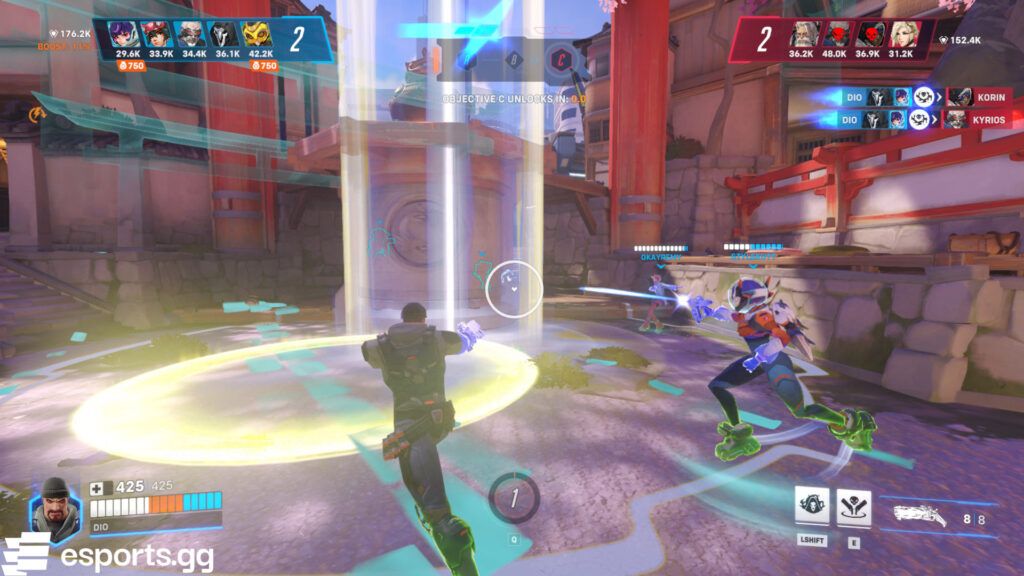

Blizzard will keep Overwatch Stadium playable with balance, ranks, and rewards, but new heroes and maps are no longer planned for the mode after low daily player numbers.
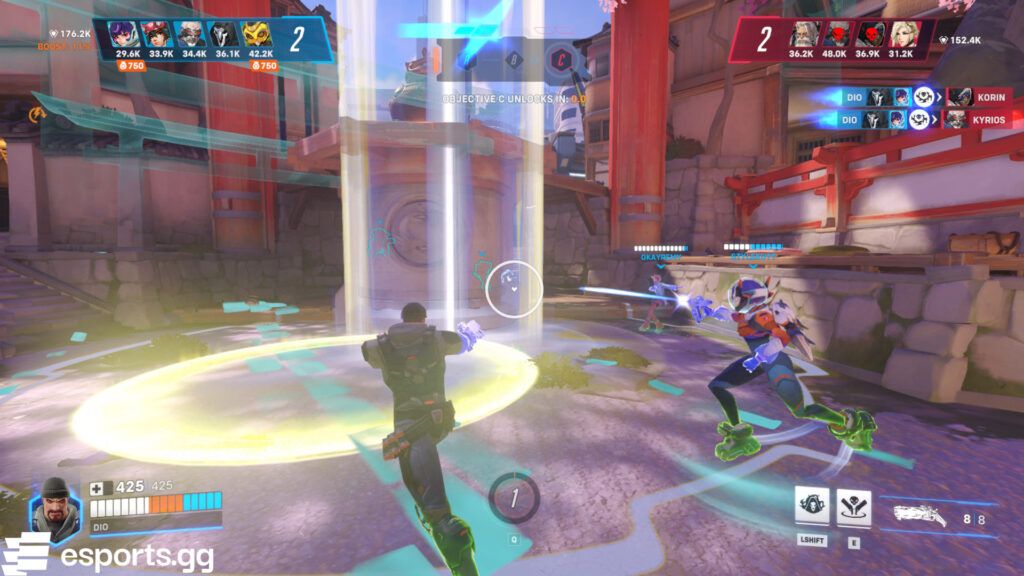
Image: esports.gg
Blizzard is stopping Stadium expansion, but not deleting the mode
Blizzard has removed the biggest pieces of Overwatch Stadium mode from its future roadmap: new heroes and new maps are no longer planned. Game director Aaron Keller confirmed the change in a Director’s Take update about Overwatch’s formats, saying Stadium will continue to receive seasonal balance updates, rank resets, and rewards, but will no longer expand its playable roster or map pool.
That is the key distinction for players who put time into the mode. Stadium is not being shut down based on the information Blizzard has shared. Ranked and unranked Stadium are still staying online, and Blizzard is still committing to maintenance-style support. The competitive problem is that maintenance support is a very different promise from growth support. For a mode built around hero builds, upgrade paths, and repeated meta refreshes, losing new heroes and maps means the ceiling stops moving.
Keller framed the decision around audience size. In Blizzard’s data, Stadium has “settled into a dedicated, smaller audience.” The mode launched on April 22, 2025, according to Polygon, which puts this shift roughly 15 months after Stadium’s debut. For a feature pitched as a major alternate way to play Overwatch, that is a fast pivot from expansion to preservation.
The player data explains Blizzard’s call, with one important caveat
The clearest reason Blizzard gave is usage. Keller’s Director’s Take lists Stadium Ranked at roughly 3% of daily players and Stadium Unranked at roughly 3%. By comparison, Unranked Role Queue 5v5 sits around 54% of daily players in the same Blizzard data, while Ranked Role Queue 5v5 is around 37%. Keller’s update also shows 6v6 formats pulling meaningful activity, including roughly 19% for Unranked Open Queue 6v6 and roughly 8% for Ranked Open Queue 6v6.
There is a small reporting wrinkle worth spelling out because it affects how readers interpret the scale of the drop-off. GameSpot describes Stadium as drawing only 3% of daily players into either ranked or unranked versions, while Polygon and Kotaku present Blizzard’s listed Stadium figures as roughly 3% for ranked and roughly 3% for unranked, or about 6% when viewed together. The safest read from the source material is that Keller’s published breakdown puts each Stadium queue at about 3%. Because daily player mode percentages can overlap if players sample multiple queues in a day, simple addition may not tell the full audience story.
Either way, Blizzard’s conclusion is unchanged. Stadium is at the bottom of the listed modes, and the core 5v5 queues are still doing the heavy lifting. For a live shooter, that matters on the production side. Every new Stadium hero requires unique build options, perk interactions, item tuning, and match pacing checks. When that work serves the smallest listed audience, Blizzard is choosing to move developers toward other Overwatch plans.
No new Stadium heroes means the roster likely stays at 33 of 52
The most painful cut for invested Stadium players is the end of new hero additions. Stadium currently supports 33 Overwatch heroes out of a full roster of 52, according to GameSpot and Polygon. Blizzard had been adding heroes gradually because Stadium versions are not simple copy-paste versions of standard Overwatch characters. The mode uses MOBA-inspired progression, with players upgrading a hero across rounds through perks, mods, altered abilities, and build-defining power spikes.
That design made Stadium interesting, but it also made every hero expensive to support. A standard balance tweak in 5v5 might involve cooldowns, damage numbers, survivability, or ultimate charge. A Stadium hero has to work inside a round-based economy, with upgrade paths that can create extreme versions of familiar kits. If a hero cannot support multiple viable builds, the mode’s premise breaks down. If a hero has one overtuned upgrade path, ranked Stadium becomes a solved problem too quickly.
For players who were waiting on a favorite hero to enter Stadium, Blizzard’s update is effectively a stop sign. The studio did not announce a final roster list in the provided source material, but the practical expectation is that the current 33 supported heroes are the mode’s long-term cast unless Blizzard reverses course later. That is especially important for players who invested time learning Stadium-specific builds rather than standard Overwatch timings. Their knowledge still applies, but the pool of matchups and counters is unlikely to widen through new character releases.
Map support ending creates a pacing issue that balance patches cannot fully solve
The end of new Overwatch Stadium maps may matter as much as the frozen roster. In a shooter, maps are not decoration. They determine sightlines, rotation timing, staging areas, choke pressure, flank value, and how quickly teams can convert a pick into objective control. Stadium already asks players to think differently because it shifts Overwatch into a third-person, MOBA-inspired structure with round-by-round upgrades. Without new arenas, the mode’s tactical vocabulary will become familiar faster.
Seasonal balance updates can still shake up hero builds. Blizzard has explicitly said those are continuing. But numbers tuning cannot replace the effect of a new layout that changes where hitscan pressure matters, where tanks can anchor, or how supports survive late-round burst windows. A tight map pool also makes ranked preparation narrower. Dedicated Stadium players will optimize routes, angles, and upgrade timings, which is good for competitive mastery, but it can also make the mode feel stale for anyone outside the hard-core audience.
That is the tension Blizzard is accepting. Stadium’s smaller community may benefit from a more stable environment, especially if balance updates keep the worst outliers in check. The tradeoff is that the mode loses the live-service signal that usually keeps players returning between seasons. No new Stadium maps means fewer fresh problems to solve, and for a mode built on experimentation, that is a real hit.
Stadium’s design asked for a bigger commitment than standard Overwatch
Stadium had a sharper learning curve than most Overwatch side modes. Polygon describes it as a MOBA-inspired mode where players upgrade a hero over as many as seven rounds with extra armor, shorter cooldowns, and transformative powers. Kotaku notes that the mode encouraged chaotic plays and strategic buildcrafting, while also requiring a higher time investment than standard play. Blizzard even offered predetermined hero builds, according to Polygon, to lower the strategy burden for players who did not want to draft every decision manually.
That helps explain the split between dedicated fans and the broader player base. Standard Overwatch is already demanding. Players track cooldowns, ult economy, hero swaps, tank pressure, support positioning, and map control in real time. Stadium added a build layer on top of that and changed the camera perspective, which GameSpot describes as pushing Overwatch closer to a third-person MOBA. For some players, that was the appeal. For others, it was friction before the match even reached its best moments.
From an FPS perspective, the mode’s challenge was always pacing. Stadium could create wild late-round power spikes, but it also asked players to stay locked in across a longer arc than a quick unranked match. That is a harder sell when the main queues remain instantly understandable: pick a role, win fights, take space, push or defend the objective. Blizzard’s own numbers suggest most daily players kept choosing that direct loop.
Blizzard is shifting attention toward other formats, especially 6v6 experiments
Keller’s update does not present Stadium’s wind-down as the end of Overwatch format experimentation. GameSpot reports that Blizzard is working on two upcoming 6v6 experimental queues. One of those experiments is aimed at the tank bottleneck in matchmaking by allowing one damage player to flex during a match and swap to a second tank if needed.
That context matters because Blizzard is not saying alternate modes failed across the board. Its own data shows 6v6 activity rising in several queues, while Stadium sits at the low end. The studio appears to be making a resource decision between a complex bespoke mode with a small audience and formats that sit closer to Overwatch’s core match language. A 6v6 test can reuse the hero roster more naturally than Stadium can, even if it brings major balance problems of its own.
For Stadium regulars, that may be cold comfort. Keller said Blizzard is taking lessons from Stadium and applying them to future plans, but the source material does not identify those plans. Players should treat that as a general design direction, not a promise that Stadium ideas will return in a specific new mode. What is confirmed is narrower: Stadium keeps balance, ranks, and rewards, while new Stadium heroes and maps are no longer planned.
Guidance for players who already invested in Stadium
If you enjoy Stadium today, there is no need to uninstall Overwatch or abandon the mode immediately. Blizzard says seasonal balance updates, rank resets, and rewards will continue, which means ranked progression and seasonal play still have a support structure. The mode remains viable for players who like buildcrafting, third-person Overwatch, and a smaller competitive community where matchup knowledge carries more weight.
If you were grinding Stadium because you expected a long roadmap of new heroes and maps, the value proposition has changed. The current hero pool is likely the pool you should plan around. The current map environment is likely the environment you should learn deeply. Future seasons may still change which builds are strongest, but the large content beats that usually refresh a mode are no longer part of Blizzard’s stated plan.
The practical read is simple: Stadium is becoming a specialist queue. It is alive, but it is no longer being grown like a pillar of the game. Players who already love it can keep chasing ranks and rewards with clearer expectations. Players waiting for their main to arrive, or for fresh Overwatch Stadium maps to reset the meta, should not bank on that happening unless Blizzard announces a reversal in a future Overwatch update.