
Blizzard’s upgraded Overwatch release gives Nintendo Switch 2 owners proper 60fps play in both handheld and docked modes, sharper presentation, and stronger onboarding. Here’s how it compares to the original Switch version and what it signals about Blizzard’s long‑term plans on Nintendo’s new hardware.
Overwatch’s original Nintendo Switch port was a fascinating compromise. It brought a full-fat hero shooter to a hybrid handheld, but the experience was capped by a 30fps target, blurry image quality, and frequent performance dips. With Nintendo Switch 2, Blizzard is taking another swing, and this time the priorities are very clear: hit 60fps everywhere, sharpen the presentation, and make sure brand-new players can actually find their footing.
60fps in handheld and docked play
The headline change for Overwatch on Switch 2 is straightforward. Blizzard is targeting up to 60 frames per second in both handheld and docked modes, a major jump from the original’s 30fps cap.
On the first Switch, the lower framerate was always at odds with Overwatch’s design. Heroes like Tracer, Genji, and Doomfist rely on animation readability and quick reactions. Playing them at 30fps worked, but aiming felt mushier, tracking aerial heroes was harder, and fast duels in tight angles often turned into a battle with the hardware as much as the opponent. Even tanking and support, where raw aim matters a bit less, felt comparatively sluggish.
Switch 2’s 60fps target goes right at that problem. Doubling the frame output smooths camera movement, cleans up input latency, and makes the motion of every projectile and ability easier to parse. That particularly helps in handheld mode, where motion and stick aiming always had to fight the old hardware’s limitations. It should also mean more stable performance during the chaos of teamfights, where particle effects and ultimates used to punish the original Switch port.
Crucially, Blizzard is not splitting performance profiles between docked and handheld. Both ways of playing are aiming for the same fluidity, which means you can swap between couch and commute without retraining your muscle memory around inconsistent performance.
Visual cleanup and higher-fidelity audio
Improving performance often comes with tradeoffs on weaker hardware, but Switch 2 gives Overwatch more room to breathe. Blizzard is pairing the framerate bump with a clearer presentation and better sound.
On the original Switch, Overwatch leaned heavily on aggressive dynamic resolution and soft image reconstruction. That kept the game functioning but left fine detail smeared and distant silhouettes hard to read. Textures were muddy, aliasing around character outlines was noticeable, and the whole presentation looked significantly downgraded compared to other platforms.
For Switch 2, Blizzard is talking about visual cleanup rather than a ground-up makeover. You should expect sharper image quality, more stable resolution, and less of that smeary look during intense moments. Characters and ability effects should pop more clearly against the environment, which has direct gameplay benefits. Being able to identify a hero at a glance as they peek an angle or slide along a sightline is a core part of Overwatch’s readability.
Audio is getting similar attention. Higher-fidelity sound means cleaner callouts, more distinct spatial cues, and less compression on ult voice lines and weapon audio. Overwatch leans heavily on those sound cues to communicate danger and opportunity, whether that is hearing a flanking Reaper, an enemy Genji deflecting shots, or a friendly Lucio shifting to speed. A more faithful audio mix on Switch 2 closes the gap with other versions and helps handheld players stay competitive even when they are relying on built-in speakers or basic earbuds.
Onboarding for new players on Nintendo’s latest hardware
Blizzard is not just using the Switch 2 release as a technical patch. It arrives alongside the broader live-service push, with Season 2: Reign of Talon – Summit, and it is clearly being positioned as a fresh entry point for players who may never have touched Overwatch elsewhere.
Onboarding has always been one of Overwatch’s quieter challenges. The roster is large, roles are specialized, and the live game has layers of seasonal systems, cosmetics, and rotating events. Dropping first-time players directly into that mix on a portable screen would be overwhelming.
Switch 2’s release bundles several changes that indirectly improve the early experience, even if they are not branded as a dedicated tutorial overhaul. The refreshed post-match accolades system, for example, puts more emphasis on recognizing good play and sportsmanship across roles. Newcomers who queue as support or off-tank are more likely to see their contributions highlighted at the end of a match, which softens the onboarding curve compared to a stat-heavy scoreboard alone.
Blizzard is also tying the launch to new narrative content and seasonal structure. Season 2 introduces a fresh DPS hero and a limited-time event that focuses on a single story thread. That kind of contained narrative arc gives new players something to latch onto beyond the sprawling Overwatch lore. For someone picking up a Switch 2 as their primary console, having a clear seasonal theme and a focal character makes stepping into the ecosystem less intimidating.
More broadly, starting on Switch 2 means jumping into a version of Overwatch that handles closer to the PC and current-gen console releases. That consistency matters for learning. Guides, videos, and coaching resources usually assume 60fps and decent image quality. With Switch 2 finally matching those baselines, new players are less likely to feel like they are fighting a uniquely compromised port while they are still figuring out role basics and hero kits.
How it compares with the original Switch release
Blizzard’s first attempt at a portable Overwatch was ambitious but constrained. The original Switch version ran at 30fps with frequent resolution drops and a generally softer presentation. It did a credible job of preserving the core gameplay, but competitive play was clearly better served elsewhere.
The Switch 2 upgrade addresses nearly every point of friction from that release. Framerate has been doubled in both play styles, clarity has been boosted, audio has been cleaned up, and the release is synchronized with a major seasonal beat instead of arriving as a late port.
Where the first Switch version always felt like a secondary option for people who already played elsewhere, Switch 2’s launch is pitched much more like a first-class entry. Performance targets, visuals, and sound all line up closer to what you get on other consoles, and the timing alongside new seasonal content makes this less of a catch-up port and more of a gateway.
There are still unanswered questions about cross-progression and feature parity. Blizzard’s modern Overwatch ecosystem relies heavily on unified accounts and the ability to carry cosmetics and unlocks between platforms. Assuming Switch 2 keeps step with those systems, it will avoid one of the biggest pain points of earlier console cycles where each platform was its own silo.
Is Blizzard treating Switch 2 as a serious long-term platform?
The bigger question behind this port is whether Blizzard plans to treat Switch 2 as a long-term home for Overwatch rather than a novelty. The signs are more encouraging this time than with the original Switch launch.
First, the release timing is deliberate. Launching alongside a major season rather than months behind other platforms suggests that Blizzard wants Switch 2 owners in the live-service rhythm from day one. That is important for matchmaking health and for keeping Nintendo’s player base integrated into the broader community.
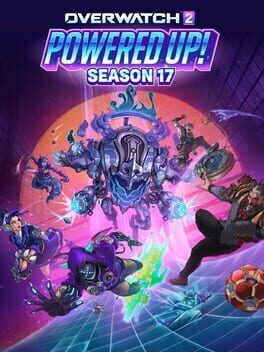
Second, Blizzard is already shipping other seasonal content, such as Season 17’s Powered Up update, with Nintendo Switch 2 listed among the core platforms. That kind of explicit platform parity signals that Nintendo’s hardware is part of the main release pipeline rather than an afterthought. It also means internal tools, QA, and planning are now structured around having Switch 2 in the same conversation as PlayStation, Xbox, and PC.
Finally, the nature of the upgrades themselves hints at long-term intent. Targeting 60fps on day one gives Blizzard a stable baseline they can design around for years, instead of starting from a compromised state and quietly walking away when optimization costs mount. Investing in higher-fidelity audio and visual cleanup likewise makes more sense if Switch 2 is expected to remain in the pool for future events, maps, and hero additions.
Of course, long-term support will ultimately be judged on how quickly patches, balance changes, and seasonal events hit the system over the next few years. But between the performance targets, launch timing, and clear presence in future seasonal planning, there is every indication that Blizzard views Switch 2 as a genuine pillar for Overwatch rather than a side project.
A second chance at the definitive portable Overwatch
The original Switch version of Overwatch proved that a big, team-based hero shooter could run on a handheld hybrid. It never felt like the best way to play, though. With Nintendo Switch 2, Blizzard is trying again with more powerful hardware and a clearer sense of what matters most.
By locking in up to 60fps in both handheld and docked play, cleaning up visuals and audio, and timing the launch alongside major seasonal content, this version positions itself as a legitimate, long-term option for players who primarily live on Nintendo’s platform. If Blizzard follows through on consistent support, Switch 2 might finally deliver the portable Overwatch experience the first port only hinted at.