
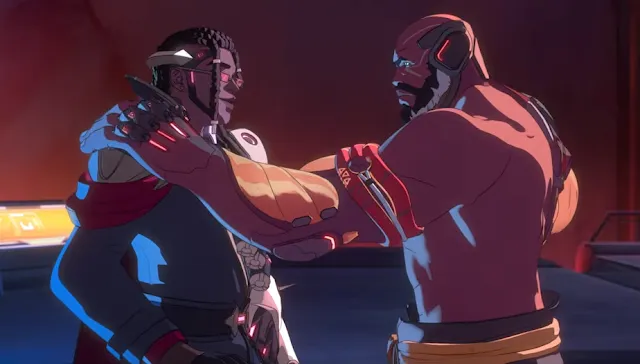

Blizzard has revealed Doctrine, Overwatch's vampire-inspired Support hero, with a limited-time trial live now and major unanswered questions around his full kit, role pressure, and Season 5 impact.
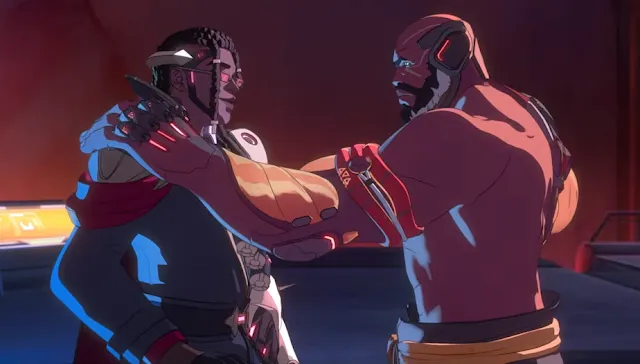
Image: technetbooks.com
Doctrine is official, but the kit is still the argument
Blizzard used BlizzCon 2026 to reveal Doctrine as Overwatch new hero 54, confirming him as a vampire-inspired Support hero tied directly to Doomfist, Talon, and the next step of the Reign of Talon story. The concrete player-facing news is immediate: Blizzard says Doctrine is playable now in a limited-time Hero Trial through September 14, before officially joining the roster in Season 5.
That answers the first question players always ask after a new hero reveal: when can I get hands on? It does not answer the question that actually decides whether a hero warps ranked for two weeks or lands as a specialist pick. Blizzard has confirmed the fantasy, role, trial window, story placement, and several broad ability ideas. It has not published the full Overwatch Doctrine abilities breakdown with numbers, cooldowns, ultimate details, breakpoints, hitbox specifics, or matchup rules.
For a Support hero, that gap matters. Support is where Overwatch’s balance problems can get ugly fast, because the role touches sustain, tempo, peel, dueling, and ultimate economy at the same time. A hero who damages enemies and heals allies through the same combat loop can either reward clean aim and fight awareness or become another source of overloaded midfight pressure. Doctrine’s reveal gives players enough to start testing feel, but not enough to settle his place in comps.
The vampire pitch is more than cosmetic flavor
Blizzard describes Doctrine as bringing Overwatch’s “ultimate vampire fantasy” to Support, built around manipulating lifeforce with a scepter, infusions, and bat-like drones. Kotaku reported that Doctrine’s scepter can heal teammates, while his mechanical bat drones can attack. Kotaku also reported that his signature ability is Infuse, which transforms his next ability, with the example of a dash becoming flight.
That is the strongest gameplay clue in the reveal. The vampire angle is not limited to a cape, pale skin, and Halloween timing. Blizzard is presenting him around lifeforce manipulation, and the early descriptions point toward a Support who converts offensive action, mobility timing, and ability sequencing into value. Polygon reported that developers described Doctrine as a Support with a very high mechanical floor whose attacks can heal allies and damage enemies.
A high mechanical floor is a loaded phrase in Overwatch. It usually means the hero asks for competent input before the kit pays out. For players, that can be exciting if the hero rewards tracking, projectile discipline, and fast target selection. It can also be frustrating if the hero’s baseline healing depends on landing difficult interactions while your tank is melting in a choke. Until Blizzard shares the full numbers, Doctrine sounds less like a passive backline battery and more like a fight-shaping Support who has to earn throughput by playing actively.
Support is confirmed, but his role inside Support is not
There is no longer a mystery about Doctrine’s class. Blizzard’s official Overwatch post calls him a Support hero, and Polygon, Kotaku, and TheGamer all describe him that way. The remaining role question is sharper: is Doctrine built to stabilize teams, enable aggression, duel flankers, or pressure enemy backlines while patching allies through damage?
The reveal leans toward an active, mechanically demanding Support. Polygon said his attacks can heal allies and damage enemies. TheGamer, citing Blizzard’s description, said Doctrine is capable of significant damage while also providing substantial healing, while noting that Blizzard had not revealed everything about his abilities. If that description holds in live play, Doctrine may sit closer to the high-agency end of the Support pool than to a pure maintenance healer.
That matters in real matches because Support heroes are judged by tempo, not flavor text. If Doctrine’s healing requires exposure or offensive accuracy, he may struggle in low-resource poke situations but shine when a team is already taking space. If his Infuse system can convert mobility into flight, as Kotaku reported, positioning could be a major skill check. A Support with conditional vertical movement can change sightlines, escape dive pressure, and reach allies in ways that punish slow teams, but only if the cooldowns and vulnerability windows are fair.
The other variable is Sombra. Blizzard says Season 5 will include major Sombra and Roadhog reworks, with Sombra moving from Damage into Support. That means Doctrine is not entering a static role ecosystem. He is arriving alongside another role-shifting Support experiment, which could make Season 5 one of the most volatile Support patches Overwatch has had in a while.
Doomfist’s return gives Doctrine a heavier story role than most reveals
Doctrine’s reveal did not happen in a vacuum. Blizzard says the new Escort map, Watchpoint: Grímsvötn, is the Icelandic volcano prison where Doomfist breaks Doctrine free and sets the final chapter of Reign of Talon in motion. Polygon reported that the BlizzCon cinematic focused on Doomfist trying to keep control of Talon after nearly being killed, working with agents including Sombra to free Doctrine. Kotaku’s account of the cinematic also names Doomfist, Sombra, Widowmaker, and Reaper as part of the mission.
That puts Doctrine on the board as a villain-aligned Support, or at least as a Talon ally, from the start. Blizzard even frames the reveal with the line, “new Overwatch Hero, or should we say, villain?” That framing matters because Overwatch hero releases often serve two audiences at once: competitive players evaluating a kit and lore players trying to place a character inside a story arc that has historically moved in bursts.
Blizzard says Doctrine’s true debut in Season 5 pushes Reign of Talon toward its conclusion and that the arc closes out Overwatch’s first year-long story arc. The studio also says it will reveal a clue about where 2027 is headed through a Hero 55 tease. That makes Doctrine a bridge character. He is the current playable reveal, but he is also being used to point toward the next year of Overwatch storytelling.
The BlizzCon package is bigger than one hero, and that affects the meta read
The BlizzCon 2026 Overwatch slate includes Doctrine, Watchpoint: Grímsvötn, Dokiwatch’s return, Sombra and Roadhog reworks, an Overwatch World Cup finale, QuestWatch, music performances, and a Mythic Gift. For competitive players, the hero is the headline, but the surrounding changes matter because they shape the patch environment he enters.
Watchpoint: Grímsvötn is confirmed by Blizzard as a new Escort map set at a remote Icelandic prison. Polygon also describes it as an Escort map, while Kotaku refers to “Watch Camp: Grimvotn,” which conflicts with Blizzard’s official name and spelling. Since Blizzard’s own Overwatch post uses Watchpoint: Grímsvötn, that is the listing players should treat as authoritative unless the studio changes it.
Escort maps often stress Support positioning because teams spend long periods rotating through predictable lanes, high grounds, and choke exits. If Doctrine’s kit includes drones, lifeforce manipulation, and an Infuse-modified movement option, Grímsvötn could be one of the first real tests of whether his tools hold up across long payload fights rather than highlight-reel skirmishes.
Roadhog’s rework is another practical wrinkle. Kotaku reported that Blizzard is planning a major Roadhog rework, and Blizzard’s official post confirms major Roadhog changes are coming in Season 5. A tank rework can change how much burst healing, anti-dive peel, and sustained damage a Support needs to provide. Pair that with Sombra’s confirmed move into Support, and Doctrine’s launch window becomes less about one hero’s balance in isolation and more about a role being actively reshaped.
What players can do now, and what is still unannounced
Players who want immediate hands-on time should use the limited-time Hero Trial. Blizzard says Doctrine is playable now through September 14 and will officially join Overwatch in Season 5. Polygon reports Overwatch is free-to-play on Nintendo Switch, Nintendo Switch 2, PlayStation 4, PlayStation 5, Windows PC, Xbox One, and Xbox Series X, so the trial is the practical way to test early feel without waiting for the full season launch.
The key missing pieces are still the ones that determine ranked value. Blizzard has not provided the full numerical kit in the supplied materials. We do not have confirmed cooldowns, damage values, healing-per-second details, range limits, drone health or targeting rules, ultimate behavior, reload or resource rules, or the exact way Infuse interacts with every ability. We also do not have official matchup notes for barriers, cleanses, anti-heal effects, hack interactions, or deployable counters.
That uncertainty is exactly why Doctrine will drive speculation before Blizzard shares full ability details. The concept hits several pressure points at once: a long-requested Overwatch vampire hero fantasy, a Support role already under heavy scrutiny, a Doomfist and Talon story hook, and Season 5 arriving with Sombra changing roles. The smart read for players is to treat the trial as a feel test, not a final verdict. Check whether his weapon and ability rhythm make sense to you, watch how often Infuse creates real choices instead of automatic combos, and wait for the full kit before declaring him broken or dead on arrival.