
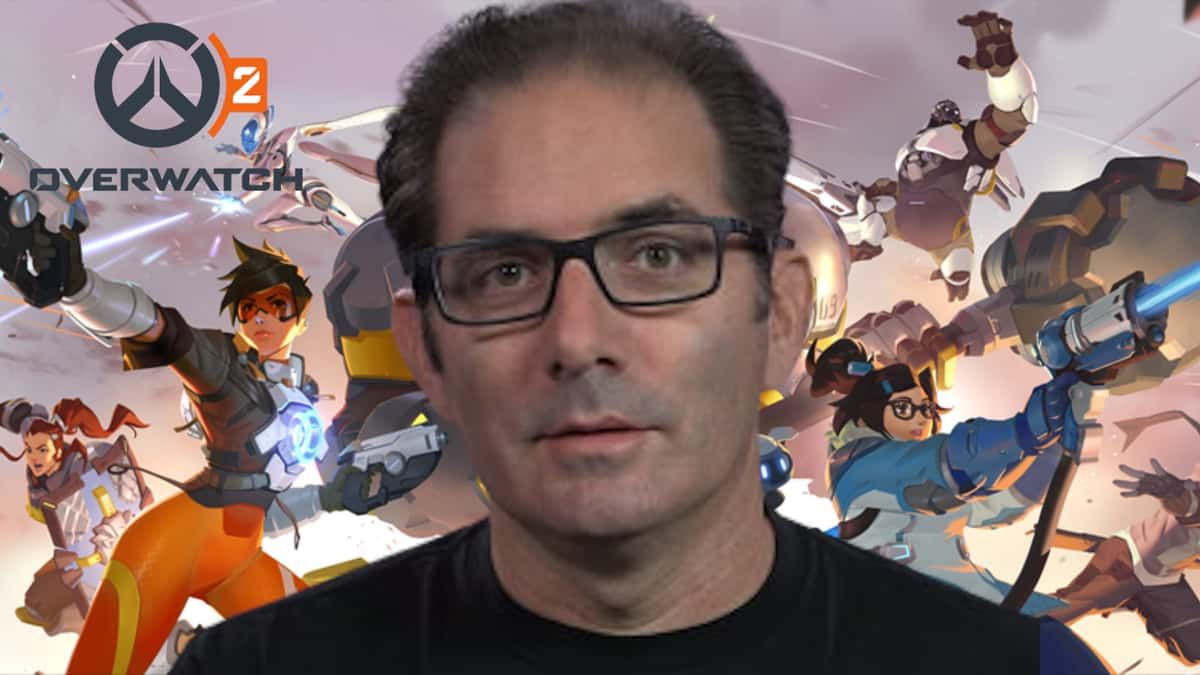
Jeff Kaplan says Blizzard pushed the Overwatch 2 reveal at BlizzCon 2019 before the team had a clear game or business model, exposing the sequel’s identity crisis.
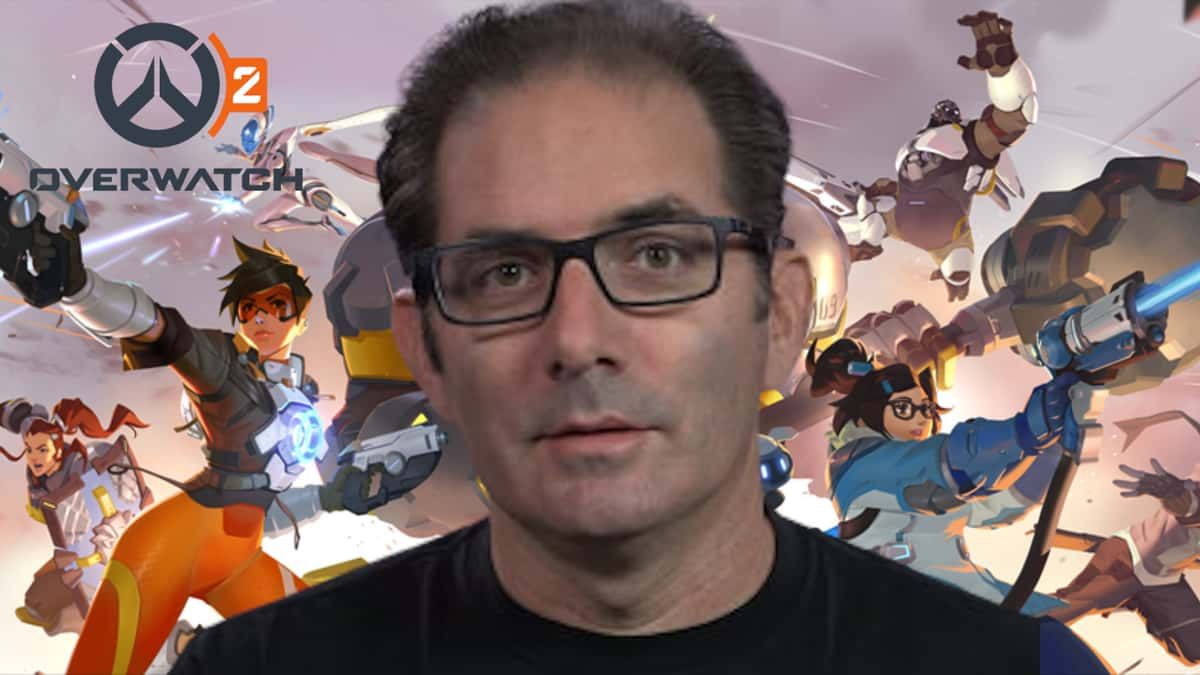
Image: dexerto.com
Kaplan says Blizzard announced Overwatch 2 before it knew what it was
Former Overwatch game director Jeff Kaplan says he fought Blizzard leadership over the decision to reveal Overwatch 2 at BlizzCon 2019, arguing internally that the team did not yet have a clear definition for the sequel or its business model. Speaking on Gaming World Interviews, in comments reported by Video Games Chronicle, GameSpot, Kotaku, Polygon, 80 Level, VGTimes, and tbreak, Kaplan recalled telling executives: “We don’t really know what this game is. We don’t know what the business model is. This is a huge mistake.”
That is the key tension behind his latest comments. The Overwatch 2 reveal was sold publicly as a confident relaunch of Blizzard’s hero shooter, with a new PvE push sitting beside a shared competitive ecosystem. Kaplan now describes it as a decision made amid internal conflict, executive pressure, and a loss of creative control that he says began around 2018 and continued until he left Blizzard in 2021.
Kaplan’s comments do not come from Blizzard, and Blizzard has not provided a response in the supplied source material. The account is Kaplan’s recollection, filtered through multiple reports of the Gaming World Interviews discussion. Still, the details line up with the public history players remember: a 2019 reveal, a long content drought for the original Overwatch, a 2022 launch that looked very different from the original pitch, and a PvE promise that became the core wound in the sequel’s reputation.
The BlizzCon 2019 reveal had a spotlight problem and a definition problem
Kaplan’s criticism of the Overwatch 2 reveal is not limited to one bad trailer beat or a marketing misread. According to GameSpot and VGC, he objected to announcing Overwatch 2 at the same BlizzCon as Diablo 4, saying the two games should not have been stacked on top of each other if Blizzard wanted either to have a clean moment. 80 Level quotes him calling the timing “really lame,” arguing that Blizzard should have let Overwatch or Diablo own the stage.
The sharper issue was that Kaplan says Overwatch 2 was shown before Blizzard had settled what players were actually being asked to buy into. In a competitive shooter, that matters. A sequel has to answer hard questions fast: Is the player base moving? Are maps and heroes carrying over? Is the PvP ruleset changing? Is the revenue model changing? Is the new content cosmetic, cooperative, competitive, or structural?
At BlizzCon 2019, the public pitch, as summarized by Kotaku and VGTimes, included a story campaign, co-op missions, and a shared competitive ecosystem with the original Overwatch. That combination created a strange identity from day one. It was framed as a sequel, but it also had to coexist with the first game. It promised a major PvE expansion, while the franchise’s daily heartbeat remained PvP hero combat. It gestured at continuity for the existing community, while asking that same community to wait through a development shift that Kaplan says was already contentious behind the scenes.
Kaplan frames the fight as a loss of control after 2018
Kaplan draws a firm line between the early Overwatch years and the period after 2018. VGC reports that he said he would take responsibility for anything players loved or hated in Overwatch during 2016 and 2017, including hero abilities and balance decisions. After 2018, he said his reaction to frustrated players was different: “I’m right there with you, man.”
According to Polygon and tbreak’s coverage of the interview, Kaplan said the game’s direction became a constant fight with Blizzard and Activision leadership. He described a “revolving door” of business executives inserting themselves into Overwatch’s direction and said he no longer felt able to make creative decisions or schedule decisions as game director. GameSpot reports that Kaplan said he spent three years trying to regain that agency before concluding that the company belonged to “corporate people” and that he did not want his name attached to a project he no longer believed in.
Kaplan did not name the executives involved in the supplied reports. VGC notes the timing around Blizzard leadership changes, pointing out that J. Allen Brack became Blizzard president in 2018, while Kaplan specifically said he had no issue with former Blizzard president Mike Morhaime. That timing is context, not proof of a single executive cause. Kaplan’s own claim is broader: from 2018 onward, he says executive leadership pushed Overwatch in directions he opposed.
The content drought makes more sense through Kaplan’s version of events
For players, the most visible symptom of the Overwatch development shift was the slowdown in new content for the original game. Polygon reports Kaplan’s claim that the team was told it could not keep making new heroes for Overwatch because it had to work on Overwatch 2. Kotaku similarly cites Kaplan describing a mandate that prevented work on new heroes for the first game while the sequel absorbed resources.
That context changes how the drought reads. In live-service PvP, new heroes are not garnish. They reshape pick rates, team compositions, map pressure, counterplay, and ranked pacing. When that pipeline slows, the meta calcifies. Players feel it in queue behavior, mirror comps, stale counters, and the sense that the game is being maintained rather than actively contested.
Kaplan’s account suggests the drought was tied to a sequel strategy that had not yet found its final form. The original Overwatch was effectively starved to build Overwatch 2, but Overwatch 2 had not clearly defined whether its center was PvE, PvP, monetization, engine and systems changes, or a full franchise reset. That is the identity problem in one sentence: the sequel needed the original game’s oxygen before it could explain what kind of sequel it was.
The hero monetization fight foreshadowed Overwatch 2’s launch controversy
Kaplan also accused Blizzard of pushing for paywalled heroes, according to VGC and tbreak. VGC quotes him saying executives were “trying to get me to sell heroes” and that this was a line he was unwilling to cross. That claim is Kaplan’s allegation, not a Blizzard statement in the supplied material, but it connects directly to one of Overwatch 2’s most controversial launch-era systems.
When Overwatch 2 launched, VGC notes that new heroes were tied to the battle pass. Paid battle pass owners unlocked new heroes on the first tier, while free players had to grind longer. VGC frames that as a competitive disadvantage, particularly in ranked play. Blizzard later phased that system out, with VGC reporting that starting in Season 10 new heroes became free at launch and are now unlocked instantly.
For a hero shooter, this is not a minor storefront detail. Hero access affects counter-picking, composition flexibility, and the competitive contract between players. Overwatch built much of its early identity around swapping heroes to solve problems mid-match. If a new hero sits behind a grind or payment path, the game’s tactical language changes. Kaplan’s reported refusal to sell heroes shows how old Overwatch’s design philosophy collided with the business model questions that he says were unresolved when Overwatch 2 was revealed.
The PvE promise became the sequel’s hardest burden
The public Overwatch 2 pitch at BlizzCon 2019 leaned heavily on PvE. Kotaku and VGTimes report that Blizzard presented the sequel with a story campaign, co-op missions, and a shared competitive setup with the original game. 80 Level states that the promised full PvE experience never arrived as first shown, saying it was scaled back and later canceled. VGTimes specifies that Blizzard abandoned the story-focused PvE mode with hero progression in 2023.
That history is central to why Kaplan’s comments land years later. If Overwatch 2 had launched as a clean PvP sequel with a clear competitive overhaul, the reveal might be judged differently. If it had delivered the full PvE progression fantasy that justified the number “2,” the content drought might have been easier for players to accept. Instead, the sequel arrived in 2022 with changes that 80 Level summarizes as including the switch to 5v5, server changes, and new heroes, while the most ambitious PvE promise was reduced or removed from the picture.
From an FPS perspective, 5v5 was a massive gameplay change. Removing one tank per team altered sightlines, tempo, peel, ult economy, and the amount of pressure a single player could apply. That gave Overwatch 2 a real competitive difference from the original. The problem is that the reveal had trained many players to judge the sequel by its PvE ambition. When that pillar cracked, the PvP changes had to carry the entire sequel identity by themselves.
A reveal built to prove Blizzard was back instead exposed a split vision
Kaplan’s read on Blizzard’s motivation is blunt. According to VGC, GameSpot, and 80 Level, he said new executives had “a lot to prove” and wanted to show that “Blizzard’s back” and “still has it.” His response, quoted across multiple outlets, was that they were “fucking idiots.” The language is harsh, but the strategic critique is clear: Kaplan believed leadership prioritized a statement-making reveal over a settled product plan.
That does not answer every question. The supplied sources do not include Blizzard’s side of the internal debate, the exact state of Overwatch 2 development at the time of the reveal, or the complete decision chain behind the business model. Kaplan’s comments are valuable because he was the public face and game director of Overwatch, but they are still one side of a conflict he describes as exhausting and personal.
What is confirmed by the supplied reporting is enough to explain why the Overwatch 2 reveal remains such a pressure point. Kaplan says he opposed announcing it. He says the game and business model were not clearly defined. He says executive pressure increased after 2018. He says the original game’s hero pipeline was affected by the sequel push. Publicly, Overwatch 2 later launched into exactly the argument his comments describe: players asking whether this was a sequel, a relaunch, a monetization shift, a PvE platform, or a PvP ruleset change.
For current players, the practical takeaway is not about waiting for a missing version of Overwatch 2 to reappear. The sources here point the other way: the original PvE vision was scaled back or abandoned, hero unlock monetization was changed, and the game’s identity has continued to move after launch. Kaplan’s interview is less a new roadmap than a postmortem on how the sequel’s first message went wrong. Blizzard announced Overwatch 2 as if the destination was clear. Kaplan now says the people building and directing it were still fighting over the map.