
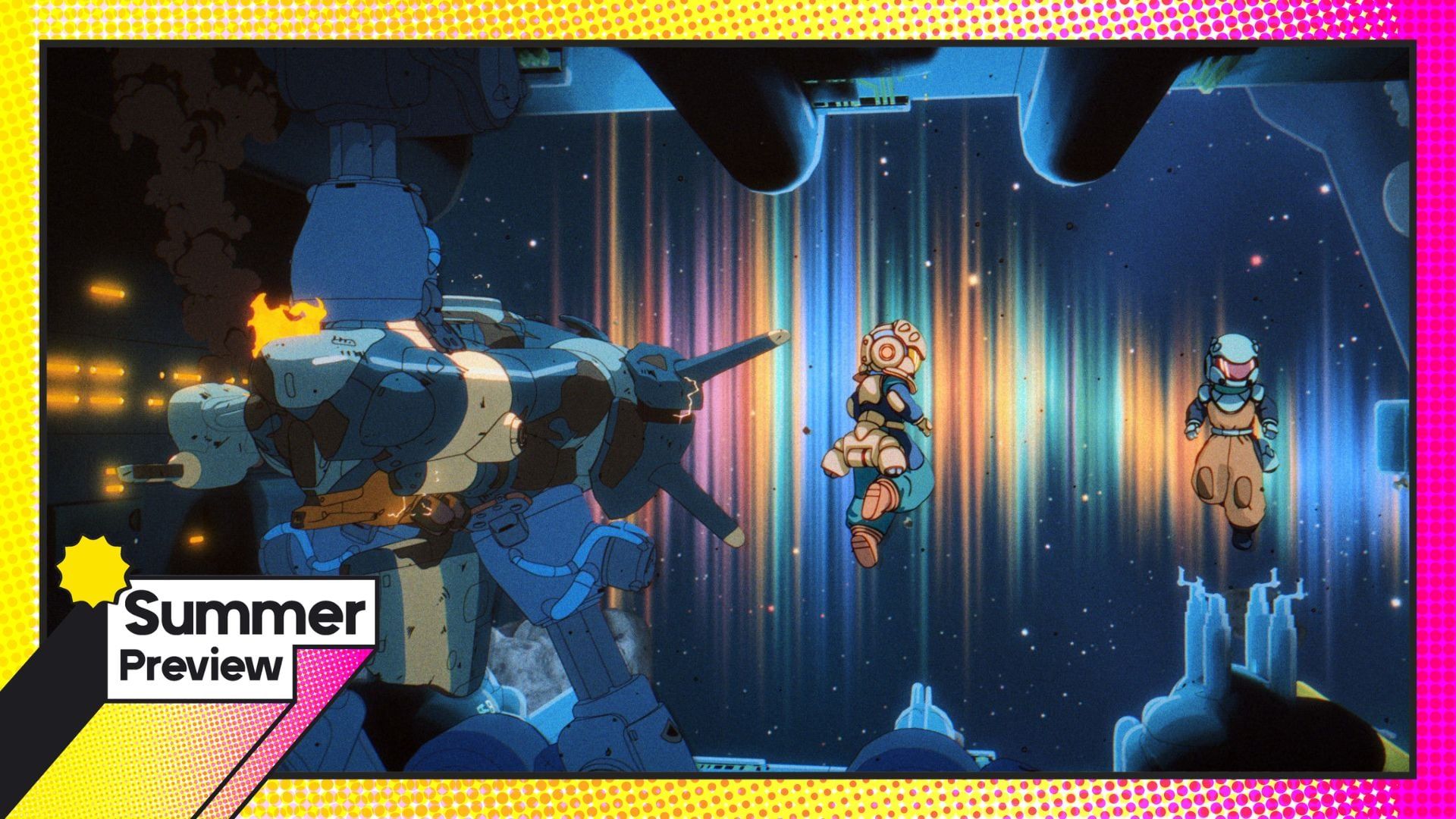
Summer Game Fest 2026 Orbitals hands-on reports point to a stylish but mechanically sturdy retro anime co-op adventure, with Switch 2 exclusivity, GameShare support, and a co-op-only caveat.
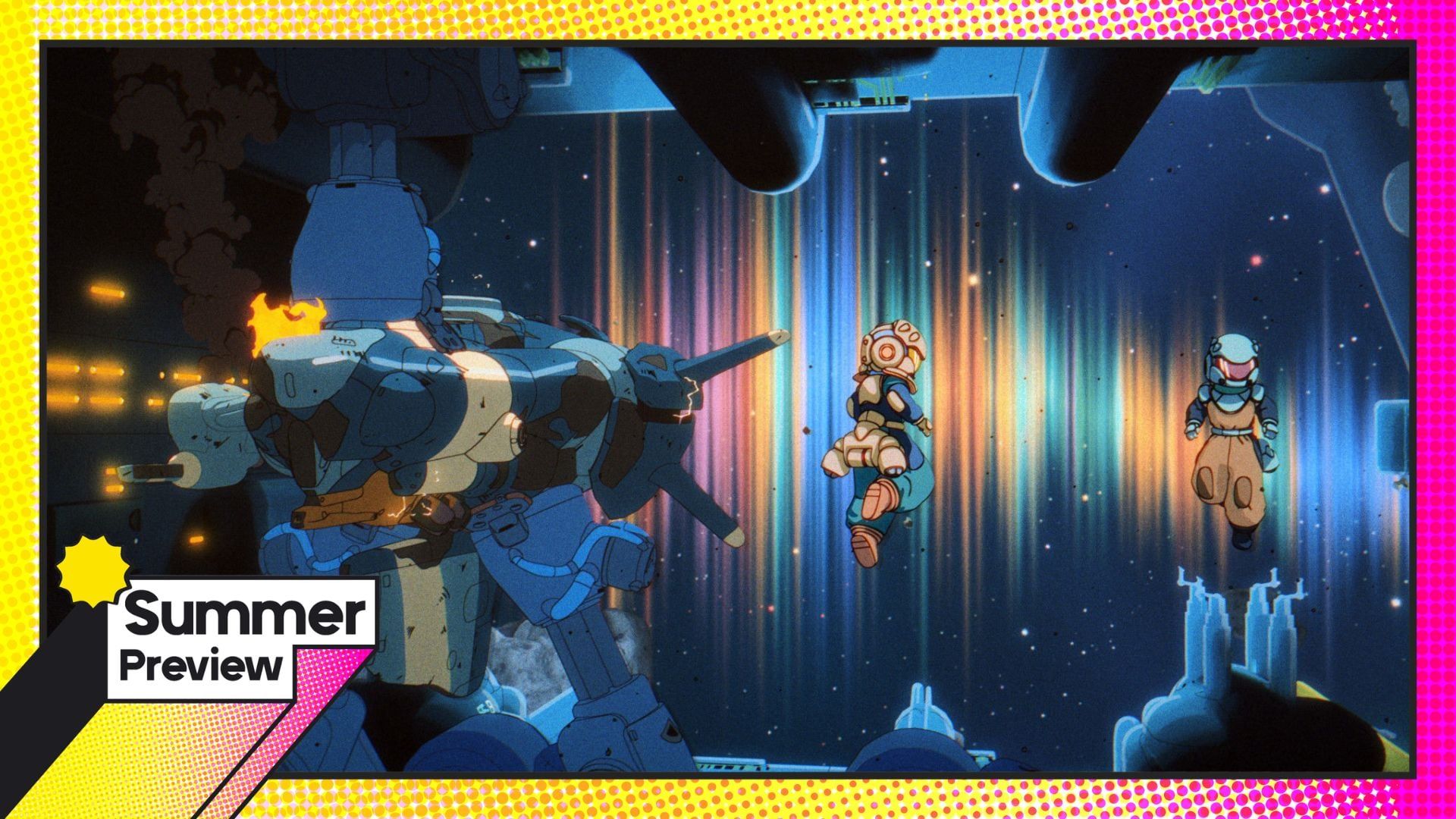
Image: kotaku.com
Orbitals has a date, a platform bet, and a co-op challenge
Orbitals is now scheduled to launch on Sept. 3, 2026, according to Polygon’s report from the June Nintendo Direct and Nintendo Life’s coverage of the same reveal. That turns the Summer Game Fest 2026 Orbitals conversation from a loose cloud of “this looks gorgeous” reactions into a practical question for Switch 2 owners: can a mandatory two-player adventure become one of the system’s early co-op anchors?
The confirmed pitch is narrow in the way good co-op games often are. Developer Shapefarm and publisher Kepler Interactive are positioning Orbitals as a two-player sci-fi adventure starring space explorers Maki and Omura, who set out through a cosmic storm to save their home station. Nintendo Life describes it as a co-op-only platforming adventure in the vein of Hazelight’s It Takes Two and Split Fiction, while TechRaptor’s hands-on calls it a co-op puzzle game that can only be played with another person, either split-screen or online.
That co-op-only requirement is the tension at the center of this Orbitals preview. The same design choice that lets Shapefarm build every interaction around communication also makes the game a harder casual purchase than a solo-friendly platformer. If you are buying on Switch 2, the first practical question is not whether you like retro anime. It is whether you have a reliable partner, locally or online, who wants to talk through puzzles with you.
The co-op hook is choice, not chaos
The most encouraging thread across Summer Game Fest hands-ons is that Orbitals appears to understand co-op as shared problem solving rather than two players waiting for their assigned turn. MonsterVine reports that creative director Marcos Ramos and game director Jakob Lundgren previously worked at Hazelight Studios on co-op titles including It Takes Two and Split Fiction, and the influence shows in how previewers describe Orbitals’ puzzle language.
Several outlets point to tools as the core of the loop. Nintendo Life’s hands-on describes early puzzles built around one player pulling open doors while the other extinguishes hazards. IGN names two tools from its demo, the Scraphook and the Liquid Launcher, and says players could choose roles for tasks rather than being locked into a character-specific assignment. MonsterVine highlights the ability to swap tools with a partner as a friction reducer, especially when one player is less comfortable with a particular task.
That detail matters for households where co-op games often break down at the same point: one player understands the solution but the other is holding the tool needed to execute it. According to MonsterVine, Orbitals lets partners trade tools directly instead of swapping controllers or restarting a sequence. Nintendo Life similarly appreciated that players could decide who used which ability before a puzzle grew stale. For a Switch 2 co-op game likely to reach siblings, partners, roommates, and mixed-skill friend groups, that could be one of Orbitals’ smartest accessibility-adjacent decisions, even if Shapefarm has not framed it as an accessibility feature in the provided material.
TechRaptor’s demo description suggests the tools also have room to scale. One example involved heating metal so the other player could grab and bend it. Another asked separated players to guide a floating robot down a path, with one player recharging it using a heated gun while the other opened hatches to create line of sight and managed obstacles. TechRaptor compared that section’s satisfaction to Portal 2’s co-op benchmark, which is high praise, but still based on a short preview slice. The larger question is whether Orbitals can keep remixing simple tools for a full campaign without leaning too heavily on repetition.
Retro anime is the sales pitch, but previews say it feeds the play
Orbitals’ easiest screenshot read is “retro anime co-op,” and the source material is unusually consistent about how deliberate that look is. Nintendo Life says Shapefarm is aiming for the feel of classic Japanese anime such as Dragon Ball, Sailor Moon, and Cowboy Bebop. IGN’s preview points to old-animation energy reminiscent of Dragon Ball and Ranma 1/2. GameSpot’s video page describes the game as inspired by Studio Ghibli and the work of Akira Toriyama.
The important part is that previewers are not treating the style as a flat filter. Nintendo Life reports that Orbitals intentionally runs at 24fps, with background details at 12fps, to evoke the movement of its anime sources. IGN separately says the game is capped at 30 FPS and, citing Inven Global, notes the character animation cadence is designed around classic animation. Those reports do not line up perfectly on the exact technical framing, so the safest reading is that Orbitals uses lower animation cadence as an art-direction choice, while the precise final performance profile should still be confirmed by Shapefarm, Kepler, or Nintendo.
MonsterVine adds another production detail: the outlet says it was told Studio Massket, which worked on series including Spy x Family and Attack on Titan, is behind Orbitals’ anime cutscenes and used old-school animation techniques to capture the classic style. That is a meaningful distinction for players wary of nostalgia paint jobs. Hand-drawn or animation-led presentation can carry tone, timing, and character acting in ways a simple shader cannot.
The hands-ons also suggest the visual direction helps the game communicate. TechRaptor praises the visual language for making objectives and tool uses obvious without heavy tutorializing. In a co-op puzzle game, that clarity is craft. If both players can glance at the same room and start forming a plan, Orbitals’ anime framing becomes functional design, not decoration.
Maki and Omura need to be partners, not player skins
Orbitals’ long-term charm will likely depend on whether Maki and Omura feel like a duo worth spending hours with. The demos offer some early signs. IGN identifies them as best friends, while Nintendo Life describes the setup as two space explorers trying to save their home station. MonsterVine reports that the characters have distinct personalities and world interactions: in one example, Maki can kick a janitor’s water bucket, while Omura does not because of his less bombastic nature.
That kind of character-specific interaction is small, but it is exactly the sort of smallness co-op adventures need. When both players are sharing every screen, personality cannot live only in cutscenes. It has to show up in movement, barks, environmental jokes, and the idle urge to poke at the world while your partner is figuring out the next step. Nintendo Life calls out Maki’s arms-back run and Omura’s dash roll as immediate nostalgia triggers, while MonsterVine says the demo area contained a surprising number of character-specific moments.
There is a design risk here. If one character consistently gets the louder gags or cooler animations, co-op partners may gravitate toward a favorite. The tool-swapping system could help, because it separates gameplay role from character choice. If Shapefarm keeps both characters mechanically flexible while letting their personalities diverge, Orbitals can avoid the familiar co-op problem where one player feels stuck as “the other one.”
Switch 2 players should watch the GameShare details closely
The Switch 2 angle is bigger than exclusivity. Nintendo Life’s news report says Orbitals is coming to Switch 2 as a console exclusive on Sept. 3, 2026, with pre-orders live on the Switch eShop at £34.99 / $39.99. Nintendo Life also reports a Deluxe Edition that includes bonus character and ship skins, a digital artbook, and a digital soundtrack. Polygon calls it a Nintendo Switch 2 exclusive, while GameSpot’s game page lists NS2 as the platform.
For a mandatory co-op game, the most practical feature may be GameShare. Polygon reports that the Nintendo Direct trailer showed Orbitals playable locally on two Switch 2 systems through GameShare, and even being played on an original Nintendo Switch through GameShare. Nintendo Life’s quoted description says Orbitals supports asymmetric two-player co-op through local split-screen or locally or online with GameShare.
That could lower the buy-in problem if only one player owns the game or if a friend has not upgraded to Switch 2 yet, but the provided sources do not spell out every limitation. We still need platform-holder or publisher specifics on how online GameShare works for Orbitals, whether both users need Nintendo Switch Online for remote play, how original Switch participation is constrained, and whether performance or display quality differs when using GameShare. Those are not minor footnotes for this particular game. They are purchase-shaping details.
There is also a date discrepancy worth flagging. Polygon and Nintendo Life report Sept. 3, 2026 as the release date from the Nintendo Direct cycle. GameSpot’s page metadata in the provided source lists “First Released Sep 30, 2026.” With two news reports tied to the Direct pointing to Sept. 3, that is the better-supported date here, but readers should treat storefront listings as the final authority closer to launch if dates shift.
The SGF buzz is strong, but the open questions are the right ones
Across MonsterVine, Nintendo Life, TechRaptor, GameSpot, and IGN, the hands-on mood is unusually aligned: Orbitals impressed previewers because the anime presentation and co-op structure seemed to reinforce each other. MonsterVine says its short demo did not feel like style over substance. TechRaptor calls it one of the most striking games at Summer Game Fest and praises how quickly two players fell into rhythm. GameSpot says its team played 30 minutes of Kepler’s co-op space game at Summer Game Fest and describes it as one to keep an eye on. IGN says its 15-minute demo worked even with a 30 FPS cap because the visual approach served the classic animation feel.
The caveat is sample size. IGN had 15 minutes. GameSpot’s listing mentions 30 minutes. Nintendo Life reports 50 minutes with the opening section. TechRaptor calls its time a short stint. Those are useful previews of feel, not proof of pacing, difficulty curve, netcode quality, accessibility options, or late-game puzzle variety.
The strongest sign for Orbitals is that multiple previewers came away talking about systems, not only vibes. They remembered swapping tools, guiding robots, managing ship roles, rhythm minigames, split-screen communication, vivid Switch 2 controller vibration, and interactable background details. That is the shape of a promising co-op game rather than a trailer-first curiosity.
For Switch 2 players, the sensible move is to keep Orbitals high on the watchlist if you have a partner ready for a co-op-only adventure and you respond to its 80s and 90s anime language. If you mostly play solo, wait for final coverage to clarify whether there is any meaningful workaround, because every provided source frames two-player cooperation as mandatory. Orbitals looks like one of the warmer discoveries in the Switch 2 pipeline, but its best trick only works if someone is sitting beside you, or reliably meeting you online, when Maki and Omura blast off.