
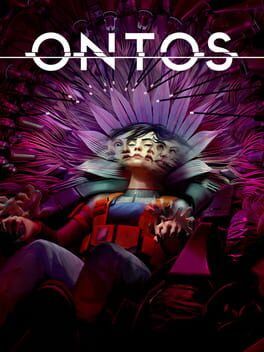

Frictional’s next horror game trades Amnesia’s cat‑and‑mouse terror for a slower, stranger lunar mystery that recalls SOMA’s philosophical dread. Here’s what the ONTOS debut trailer reveals about its moon‑hotel setting, Stellan Skarsgård’s role, and how its narrative structure might reshape player agency and horror pacing.
Frictional Games has finally shown its hand. After years of hinting that SOMA’s lineage wasn’t finished, The Game Awards 2025 reveal of ONTOS confirmed what fans suspected: this is the studio’s true return to cerebral sci‑fi horror, this time set in a crumbling luxury hotel on the Moon.
Where Amnesia built its legacy on being hunted in the dark, ONTOS looks more interested in letting you sit with the horror of ideas. From the first moments of the debut trailer, it frames itself less as a monster‑chase game and more as a surreal, philosophical mystery that happens to be terrifying.
Samsara: A haunted hotel in lunar orbit
The setting does a lot of heavy lifting. ONTOS takes place in Samsara, a repurposed moon hotel that once promised impossible views and extravagant comfort. Now it is half‑abandoned, glitching, and suffocatingly quiet. The reveal trailer lingers on slow tracking shots through its corridors: sterile white halls broken by overgrown plant walls, opulent suites sitting under flickering emergency lighting, and observation windows that look out not on a sea or skyline, but on raw lunar rock and distant Earth.
It is a clever evolution of SOMA’s PATHOS‑II facilities. Where the undersea complex was always meant to feel hostile and utilitarian, Samsara looks like a place that was built to coddle rich guests, then later twisted into something else. That tension between comfort and decay means the horror doesn’t arrive from the usual Frictional angles. The hotel’s skeleton is still a leisure space, so there are bars, lobbies, suites and spas, but every one of them feels out of joint, as if reality itself keeps slipping out of alignment.
Multiple previews note that Samsara has been “repurposed,” hinting at corporate or scientific interests moving in after the tourism dream died. The trailer backs that up with glimpses of improvised labs, strange machinery stitched into the architecture, and cables snaking across marble floors. You get the sense of experiments having been layered on top of luxury, which puts ONTOS neatly between SOMA’s research base and Amnesia’s ruined castles.
From cat‑and‑mouse horror to an investigative mystery
Frictional is positioning ONTOS as a spiritual successor to SOMA, and the debut trailer makes it clear how that diverges from the traditional Amnesia formula. Instead of an amnesiac noble trapped in a labyrinth, players control Aditi Amani, a resourceful engineer with specific skills, clear goals and a defined history. She is not just surviving Samsara; she is investigating it, driven by a personal mystery tied to her estranged father.
That change in protagonist type already suggests a pivot in how the game will play. Amnesia usually strips you down to the bare minimum so that every encounter with a monster is a scramble. ONTOS is described on its Steam page and in early write‑ups as a “tactile, systems‑driven” experience. The trailer shows Aditi manipulating devices and interacting with the environment in ways that look closer to a slow‑burn immersive sim than a pure hide‑and‑seek horror game.
Frictional has hinted that there is no single solution to obstacles in Samsara. That implies a level of mechanical agency that Amnesia often avoided. Instead of a corridor where you simply run or hide, ONTOS may present layered problems where you technically can run, but you might also reroute power, reconfigure doors, lure threats into traps or even negotiate with things that are not entirely human. The horror becomes less about scripted pursuit and more about what choices you make under pressure.
Stellan Skarsgård as the voice of doubt and memory
One of the big headline grabs is the involvement of Stellan Skarsgård. The trailer builds itself around his voice, which plays over much of the footage as a kind of intimate monologue. You do not see his character clearly for long, only fragments of a well‑dressed older man in ornate rooms, but every line suggests he is central to Aditi’s search.
Reports from PC Gamer, Rock Paper Shotgun and others make it clear that his role is tied to Aditi’s father. Whether he is the father himself, an echo, or something less literal is left ambiguous, which is exactly where Frictional likes to live. In SOMA, Catherine’s voice guided you through PATHOS‑II and gradually reframed what you thought you knew. In ONTOS, Skarsgård’s character seems poised to do something similar, but from a more morally murky angle.
The way the trailer uses his narration implies he is both unreliable guide and emotional anchor. He speaks of regret, of choices made long ago, and of reality itself being question‑worthy. The cadence is calm, almost soothing, in stark contrast to the grotesque sights on screen, like a room whose walls seethe with rat bodies forming a talking face. That dissonance hints that ONTOS will weaponize comfort, using a familiar, authoritative voice to lure players into accepting increasingly unstable world rules.
Casting a veteran screen actor like Skarsgård also signals how story‑driven ONTOS aims to be. Frictional has always prized writing, but here the marketing centers on performance. Between his presence and the more grounded, contemporary sci‑fi setting, ONTOS looks willing to lean into long conversations, conflicting accounts of past events and character‑heavy scenes, rather than cutting away to monster chases whenever things threaten to slow down.
Themes at the edge of reality
SOMA was primarily about consciousness: what it means to be a mind, and what happens when that mind can be copied, displaced or trapped. ONTOS, according to creative director Thomas Grip, shifts the focus to the “very nature of reality” itself. The trailer delivers on that with nightmarish imagery that is less about gore and more about ontological discomfort.
Rooms seem to reconfigure when you look away. Organic and mechanical elements bleed into each other. Human faces emerge from places they should not be, like walls, floors or that aforementioned crawling mass of rats. There are hints of entire spaces folding in on themselves or looping in non‑Euclidean ways, echoing SOMA’s late‑game sense of collapsing boundaries but pushing it into stranger, almost surreal territory.
The title “ONTOS” is itself a philosophical term, linked to ontology and the study of being. That is not subtle. The hotel’s name, Samsara, is a concept from Eastern philosophy tied to cycles of death and rebirth. Putting those together, and then framing the story around Aditi unpicking her father’s past, points towards a narrative obsessed with loops, recurrences and the idea that personal history and cosmic structure might be reflections of each other.
Expect questions like: if reality can be edited or layered, what does it mean to be responsible for your choices? How much of your perception is being authored by someone else, be it a corporation, a scientist, or a parental figure whose voice still lives in your head? The trailer does not answer any of that, of course, but it throws out enough visual and verbal hooks to suggest that ONTOS wants players actively wrestling with those ideas as they explore, not just passively receiving exposition in cutscenes.
Player agency in a collapsing world
A key difference between Amnesia and what ONTOS is teasing lies in player agency. Classic Frictional horror is about being overwhelmed. The most you can do is slam doors behind you or throw a chair at an abomination while you sprint away. ONTOS appears more willing to let you poke at the systems underpinning its nightmare.
The studio describes the game as “systems‑driven” and early community breakdowns of the trailer and Steam materials point to elements like electricity rerouting, tool‑based interactions and even hints of stealth alternatives. One shot shows Aditi holding what looks like a shock prod to a hostile machine, implying that confrontations may sometimes be resolved by direct manipulation instead of always avoiding contact.
This does not necessarily turn ONTOS into a power fantasy. In fact, limited, fraught agency can enhance horror. If you could do nothing, every bad outcome would feel inevitable. If, instead, you can do several things and you choose the one that leads to disaster, the guilt and tension intensify. Frictional seems to understand that, promising scenarios where there is no “correct” way through, only approaches that carry different risks and philosophical implications.
Thematically, that dovetails with the game’s fixation on reality and responsibility. If you can choose how to engage with Samsara’s systems, you are also choosing how complicit you become in whatever is actually going on there. Do you exploit the environment the way Aditi’s father might have? Do you prioritize your own survival over the fates of the strange semi‑sentient entities that inhabit the hotel’s walls? ONTOS looks ready to make those decisions mechanically meaningful and narratively corrosive.
Rethinking horror pacing after Amnesia
The reveal trailer’s pacing is a statement of intent. Instead of immediately cutting to a first‑person sprint in the dark, it opens with quiet, measured imagery and stays in that mode far longer than most horror reveals dare. There are spikes of grotesquery, but they are framed as intrusions into relative calm rather than the baseline experience.
Where Amnesia lived on sudden spikes of panic, ONTOS seems prepared to simmer. The cuts linger on empty spaces, on objects that feel dislodged from context, on the slow realization that a decorative wall is in fact made of living creatures. It feels closer to the uneasy dread of walking through SOMA’s more reflective sections, listening to audio logs about identity and loss, than to sprinting blind from The Bunker’s monster.
This slower pacing feeds into the promise of a more investigative structure. If Samsara is a mystery to be unraveled rather than simply escaped, you need stretches of relative safety to parse clues, sift through conflicting accounts and experiment with the environment’s systems. The horror then comes from the interruptions: the way those quiet moments are invaded by impossible architecture shifts or intrusive voices.
It is also a pacing philosophy that suits Skarsgård’s performance. His measured delivery invites space between scares, time for players to absorb what he is saying and question whether they believe it. That creates room for building dread through anticipation rather than repetition.
A spiritual successor that respects SOMA’s weight
Calling ONTOS a spiritual successor to SOMA sets a high bar. The trailer suggests Frictional is not just reusing underwater tricks in a new setting, but translating the things that made SOMA special into a new design framework.
The lunar hotel mirrors PATHOS‑II’s isolation, yet introduces class and comfort as additional axes for horror. The focus on Aditi and her father adds a more personal, intergenerational layer to the philosophical questions. Player agency is being expanded from “survive this scripted encounter” to “decide how you will engage with this unstable reality,” and the horror pacing looks tuned for reflection as much as for adrenaline.
If Amnesia is about being hunted in someone else’s nightmare, ONTOS looks like waking up in one you may have helped build, then being forced to decide how to live with that knowledge. The debut trailer is still intentionally opaque, but between the hints of immersive‑sim‑style systems, the heavy ontological theming and Stellan Skarsgård’s quietly unnerving presence, it positions ONTOS as the next big step in Frictional’s journey toward horror that leaves you thinking long after the credits roll.