
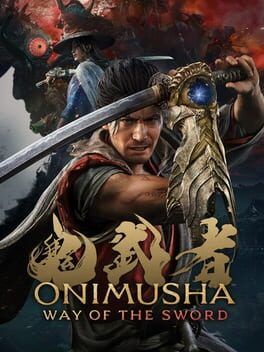
Capcom’s final preview and Severing Fates trailer show how Onimusha: Way of the Sword is trading fixed cameras for modern action while keeping its combat sharp, punishing, and bloody.
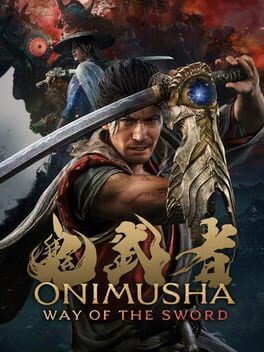
Image: IGDB
Store links: Onimusha: Way of the Sword on Steam
Capcom’s final preview puts the blade under pressure
Capcom’s newest look at Onimusha: Way of the Sword makes one thing clear: this revival is being sold on spectacle, but its final preview argues that spectacle will still have teeth. In a PlayStation Blog post written by Capcom public relations manager Kyle Burleson, the company detailed a late preview build that begins where the public demo leaves off, then opens into larger combat spaces, Kyoto missions, new tools, and tougher Genma encounters. At the same time, Capcom released the “Severing Fates” trailer, which centers on Yasui Konpiragu Shrine and a new Genma threat feeding on the desires of pilgrims.
That pairing is the useful tension around Onimusha: Way of the Sword right now. The Severing Fates trailer is all shrine smoke, ritual horror, and clean trailer-cut violence. The hands-on final previews from IGN, Polygon, and Rock Paper Shotgun describe a game that looks stylish in motion but still asks players to learn blocks, parries, deflections, boss patterns, and stamina pressure. Capcom is trying to modernize a series that last had a mainline entry on PlayStation 2 in 2006, according to Rock Paper Shotgun, without turning it into a frictionless character-action showpiece.
The confirmed shape is specific. Capcom describes Miyamoto Musashi as bound to the Oni Gauntlet, even though he initially wants to prove himself by his own hands. The PlayStation Blog says the final preview follows Musashi after his duel with Sasaki Ganryu at Kiyomizu-dera Temple, sending him into the Oni Refuge, then back to a corrupted Kyoto where Malice clouds, toxic fog, and hellish structures restrict the city. The question the preview raises is whether this new Onimusha can keep the old series’ deliberate bite while adopting the camera, pacing, and encounter design expected from a 2026 Capcom action game.
The severing fantasy is now a combat system, not scenery
The most literal reveal in the final preview is Capcom’s “dynamic dismemberment” system. On the PlayStation Blog, Capcom says that when Musashi’s katana connects with Genma, enemies are carved apart according to the angles of the sword’s travel. The examples given are direct: enemies can be split across the torso or cut from head to toe. That matters because Onimusha has always been about making demon-slaying feel ritualistic, with souls drawn into the Oni Gauntlet after the kill. Way of the Sword appears to make the actual cut read more clearly, moment to moment, as a result of player motion.
The Severing Fates trailer extends that idea into setting and story. Nintendo Everything reports that the trailer features Musashi visiting a shrine known for severing connecting threads of fate, where he finds a twisted presence preying on innocent wishmakers. DayOne identifies the location as Yasui Konpiragu Shrine in Kyoto and attributes to Capcom the trailer’s setup: a Genma named Rasho-gan preys on pilgrims, twists visitors’ desires, and takes their body parts for himself. DayOne also says players can expect to duel this multi-armed monster as Musashi, using the Oni Gauntlet and a broad combat arsenal.
That makes “severing” the cleanest throughline of this marketing beat. It is in the trailer title, in the real-world shrine inspiration, in Rasho-gan’s body-horror premise, in the dismemberment system, and even in one of the bow’s previewed uses. Capcom says Musashi’s Oni Bow can eventually sever a boss from its power source during a duel after he returns to Kyoto. That is a small detail, but it suggests Way of the Sword’s violence is not purely cosmetic. Severing can be a finisher, a puzzle interaction, a boss mechanic, and a thematic hook.
The difficulty is split between cinematic flow and boss discipline
The final preview coverage is consistent on one point: Onimusha: Way of the Sword is not simply copying the speed or punishment curve of Sekiro or Nioh, but it is clearly interested in the same audience that enjoys precise defensive play. Rock Paper Shotgun described its extended preview as impressive and finger-sore, calling the game engineered for “Soulslike deflection” players while noting that it keeps a distinct Onimusha identity. IGN’s final preview framed it as a demanding action game built around intense boss fights, while also saying regular enemies can be surprisingly forgiving and can often be dispatched with style.
That split is important because it explains why early demo impressions may have varied. IGN notes that some players found the public demo too easy until they reached Sasaki Ganryu, the boss at Kiyomizu-dera Temple. Polygon’s two-hour final preview makes a similar practical point from the other direction: its writer says the Daidara boss fight was tough but fair and warned that this is not a game players can clear without learning how to block.
The mechanics described by IGN give that challenge more definition. Musashi has both Parry and Deflect. Parry works like a familiar precise guard, staggering an opponent and creating a counter window. Deflect, as IGN describes it, involves holding guard and pressing the DualSense controller’s X button at the moment of impact to safely intercept blows while sharply reducing the enemy’s Stamina gauge. Once that gauge is depleted, Musashi can unleash a devastating attack. IGN compares that gauge’s role to Sekiro: Shadows Die Twice’s Posture meter, while also stressing that Way of the Sword’s regular encounters give players room to look cool.
That is Capcom’s tightrope. The game appears to let ordinary fights breathe like choreography, with contextual animations and generous slashing opportunities, then locks the gate at boss encounters. If that balance holds across the full game, Onimusha Way of the Sword could avoid the common action-game trap where stylish systems become optional decoration. The final previews suggest that flash gets you through the street fight, but discipline gets you through the duel.
Blade Barrage, Deflect, and the rhythm of modern Onimusha
The strongest combat details in the final preview point toward a game built around rhythm changes rather than pure aggression. IGN says Musashi’s one-handed and two-handed attacks function like light and heavy attacks. When both combatants attack simultaneously, they can clash in a mechanic called Blade Barrage. Switching from one-handed to two-handed attacks, or the reverse, lets the player win that exchange and trigger another cinematic sequence.
That reads like a smart modernization of Onimusha’s older cadence. Rock Paper Shotgun reminds readers that the original series began life as a Resident Evil spinoff, where fixed camera angles, careful movement, and methodical combat replaced ammo-scarce shooting with katana timing. Way of the Sword has moved to a behind-the-back perspective associated with Capcom’s modern Resident Evil remakes, but the preview coverage suggests the old deliberateness has been translated into defensive timing, stamina pressure, and attack-form switching.
IGN also reports that combat animations dynamically change depending on the positioning of Musashi and his enemy. Guarding while turned away or luring an enemy near a wall can trigger contextual animations, giving fights a staged samurai-film quality. IGN compares that animation responsiveness to Sifu, while clarifying that positioning is not the core strategic mechanic in the same way. That distinction is useful. Way of the Sword is using position to sell impact and personality, while using Parry, Deflect, Blade Barrage, guard breaks, and boss stamina as the actual test.
For players coming from Sekiro, the practical expectation should be caution rather than a one-to-one comparison. Sources describe a game with parry timing and posture-like pressure, but also one with more forgiving standard encounters, heavier cinematic flourishes, and Capcom’s own Onimusha soul-absorption economy. For players coming from older Onimusha, the fixed camera is gone, but the rhythm still seems to be about reading danger, choosing the right defensive response, and making every decisive cut count.
Kyoto is wider, but the preview does not describe an open world
The other major reveal from the final preview is structure. Capcom says the action opens up after the early sections, moving from tighter missions into a wider location with more room to explore Musashi’s growing abilities. The PlayStation Blog identifies Rokudo Chinno-ji Temple as a base of operations in Kyoto and says it is one of many real-life locations in the game. Nintendo Everything’s Capcom-provided overview says players will explore locations inspired by real-world Kyoto landmarks, including Yasui Konpiragu Shrine.
Polygon’s hands-on preview gives the clearest boundaries for that promise. After a linear section chasing the Genma Daidara through a surreal area of rocks and ruined buildings, Polygon says Way of the Sword shifted into a small village where the objective was to close demonic rifts in any order. There was free space to search for treasure, fight enemy groups, save villagers, and earn rewards for upgrades. Polygon explicitly says it was not open-world in scope, comparing it instead to a compact village structure.
Capcom’s own PlayStation Blog language supports that limitation. Kyoto is described as “vast” and far larger than earlier areas, but Capcom says exploration has bounds at that point in the game. Hellish structures and toxic fog form blockades, while the immediate goal is to seal rifts where Genma enter the world. That sounds like a hub-and-mission action-adventure design rather than a free-roaming map.
This is a meaningful pivot for Onimusha. The old games were compact, camera-driven, and puzzle-box-like. The new one appears to borrow enough modern action-adventure structure to allow side objectives, NPC rescues, treasure hunting, and soul grinding, without committing to the sprawl of a full open world. Rock Paper Shotgun’s preview also mentions a brief dungeon with light puzzle solving, including shooting symbols on platforms with the bow, and a Kyoto hub with small missions branching within its borders. The design risk is pacing. A deliberate combat game benefits from breathing room, but too much upgrade chasing could soften the menace. The preview build seems to be testing the middle path.
The Oni Bow gives Capcom a bridge between puzzles and duels
The Oni Bow may be the most quietly important tool shown in the final preview. Capcom says Musashi finds it in the Oni Refuge, giving him a way to answer Genma archers at range. The same post says arrows can solve environmental puzzles, trigger traps, and later sever a boss from its power source. Polygon’s preview describes using the bow to shoot a floating rock above enemies, crushing them, and using it to move a platform by finding the correct angle on a hidden eye. Rock Paper Shotgun similarly describes bow-driven symbol puzzles.
That is classic action-adventure glue. A ranged tool gives designers a way to vary pacing between close-quarters duels, environmental hazards, and exploration gates. It also lets Capcom modernize Onimusha without reducing everything to lock-on sword combat. If Musashi’s katana is the language of mastery, the bow looks like the language of space: interrupting archers, manipulating traps, reading arenas, and solving light traversal puzzles.
The sharper question is whether the bow remains meaningful when the game gets harder. Preview examples show puzzle uses and environmental kills, while Capcom’s boss-power-source detail suggests it will matter in major fights too. That is encouraging, but still limited preview evidence. We do not yet know how often Way of the Sword asks players to swap between katana pressure and ranged problem-solving under real danger, or whether the bow becomes a situational prompt outside set-piece moments.
Release timing, platforms, demo access, and the unresolved date wrinkle
The release information in the provided sources has one conflict readers should note. Nintendo Everything reports that Onimusha: Way of the Sword is launching for Nintendo Switch 2 on September 3. Polygon says the game launches September 4 on Nintendo Switch 2, PlayStation 5, Windows PC, and Xbox Series X. DayOne also lists September 4 for Xbox Series X|S, PlayStation 5, PC, and Nintendo Switch 2. Based on these sources, the safest statement is that the game is scheduled for early September 2026, with multiple outlets listing September 4 across platforms and one Nintendo-focused report listing September 3 for Switch 2.
Demo availability is also reported across several storefronts, but not in one identical list. Rock Paper Shotgun says the demo is currently available on Steam. The PlayStation Blog links to the Onimusha: Way of the Sword Demo on the PlayStation Store. DayOne says a demo is available on the Xbox Store, PlayStation Store, and Epic Games Store. Those reports collectively indicate that players have several ways to try the game before launch, though the exact storefront list should be checked on the platform you intend to use.
No provided source gives a price, PC requirements, performance targets, or upgrade-path details, so those remain outside the confirmed picture here. What is confirmed by the final preview and Severing Fates trailer is much more valuable for action players anyway: Capcom is positioning Onimusha Way of the Sword as a modern third-person Capcom action game with cinematic cutting, larger Kyoto spaces, real-world shrine inspiration, contextual combat animations, defensive timing, and boss fights that previewers say still demand execution.
If you bounced off the public demo because the early enemies felt too lenient, IGN’s and Polygon’s final preview impressions suggest the bosses are the real test. If you feared the revival would abandon Onimusha’s old methodical edge, Rock Paper Shotgun’s preview argues that the flash has not erased the challenge. The full answer will have to wait for launch, but the latest Onimusha Way of the Sword trailer and final preview show a coherent bet: let Musashi look impossibly cool, then make the player earn the moment when the blade finally lands.