
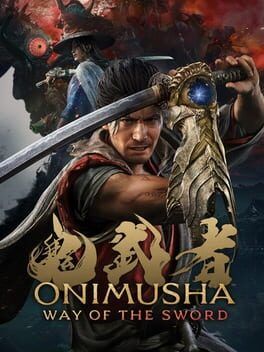

Capcom built detailed dismemberment for Onimusha: Way of the Sword, but director Satoru Nihei says freeform slicing did not fit its tempo. Here is what that says about the reboot’s combat identity and difficulty tuning.
Image: IGDB
Store links: Onimusha: Way of the Sword on Steam, Onimusha: Way of the Sword - Charm: Oni Lady on Steam
Capcom built the cut, then chose not to hand players the knife
Capcom’s latest comments on Onimusha: Way of the Sword put a sharp line around what kind of action game this reboot wants to be. Director Satoru Nihei told PC Gamer, as reported by GamingBolt, that the team considered the comparison to games where players can choose exactly how and where to slice enemies, but decided that approach was not right for Onimusha’s “tempo and style.”
That is the key tension. According to Nihei, Way of the Sword can cut enemies along the exact path of certain sword attacks, and Capcom even added new RE Engine functionality so enemies could continue animating while dying and collapsing after being dismembered. The team clearly invested heavily in visible blade impact. What it avoided was a Metal Gear Rising cutting system built around player-directed slicing freedom.
Nihei’s explanation is practical rather than evasive. “Choosing exactly which direction and how you want to cut, we didn’t think it was a good match for this particular title,” he told PC Gamer. Instead, Capcom wanted dismemberment to happen “reactively to how you’re playing,” as a display of ability power rather than a separate aiming mode or freeform execution layer.
For players, that distinction matters at the input level. A free cutting system asks you to stop thinking in terms of hit confirm, spacing, and punish timing, then think in terms of angle selection. Capcom’s comments suggest Onimusha combat is being built around the opposite instinct: read the opponent, commit to the right defensive or offensive answer, and let the kill animation prove you earned the exchange.
The reboot’s violence is systemic, but not sandbox slicing
GamingBolt’s report quotes Nihei saying the project began six years ago with a focus on using detail to sell “the power and the excitement of the action.” He credited Capcom’s existing assets and technology, along with a large amount of animation and motion capture work, for helping the game stand apart visually. He also credited programmers with converting that data into smooth transitions using physics-based calculations.
The confirmed technical point is specific. Nihei said that in many other games, an enemy cut by a blade may freeze and then fall apart. For Way of the Sword, Capcom added to RE Engine so a cut could occur while the enemy still animates through death and collapse. He tied that work directly to the impact of moves such as Issen.
That tells us the Metal Gear Rising comparison is limited. Revengeance’s blade mode is famous for letting players aim cuts with unusual freedom. Nihei’s comments indicate Capcom was chasing a different payoff: the sword path matters, but the system is tied to authored attacks, combat state, and reactive outcomes. In fighting game language, the cut is closer to a reward state than a neutral tool.
That does not make the system less ambitious. It makes the ambition narrower and more readable. If every strong action can branch into freeform cutting, the player’s decision tree expands away from opponent behavior. If dismemberment triggers from particular attacks after the correct setup, the decision tree stays focused on when to swing, when to parry, when to guard, and when to cash out. For a game built around sword clashes, that is a cleaner competitive loop.
Difficulty comments point to a deliberate middle lane
The new enemy difficulty comments sharpen the same identity. In a PC Gamer interview summarized by Eurogamer, Nihei said Capcom did not intend Way of the Sword to be “a particularly difficult game” in the mold of Sekiro: Shadows Die Twice or the Nioh series. The goal, he said, was for players to progress through the story while still meeting enough resistance to feel satisfaction after defeating enemies.
Nihei also said Capcom has been looking at in-game behavior data, including where players struggle and how they progress. According to Eurogamer’s report, Nihei said those trends are close to what the team set out to achieve. His phrasing is important: players “do stumble,” “do die,” and “do get defeated,” but they are able to overcome those points and continue.
That is a different pitch from a prestige difficulty identity built around repeated hard walls. It is also different from pure power fantasy mowing. Capcom appears to be aiming for a parry-forward action game where failure teaches a correction quickly. You eat the counter because you pressed late, guarded wrong, overextended, or failed to recognize the enemy’s turn. Then you adjust.
This is where the Onimusha enemy difficulty conversation connects back to cutting. A free-angle slicing layer could make the post-stagger moment the star. Capcom’s stated approach makes the pre-stagger exchange the star. The dismemberment is the period at the end of the sentence. The sentence itself is timing, guard discipline, and defensive conversion.
The demo concern was passive enemies, not a lack of spectacle
Eurogamer notes that difficulty was already contentious before release. Its coverage says the pre-launch demo divided players, with one Eurogamer preview finding the combat exciting and challenging enough to invite comparison to Nioh, while another felt it was too easy and at times seemed to play itself. Eurogamer also says some criticisms remained in the final release, especially passive enemies that stand around waiting, but that these issues were “much less pronounced.”
Black Girl Gamers’ demo coverage landed in a similar tension from another angle. Victoria Brown praised the game’s visual detail and its connection to older Onimusha elements, including the gauntlet and soul collecting, but the piece’s headline said she wanted the game “to fight back.” That source also cited Nihei, via Automaton Media, saying Way of the Sword was not an open-world game and not a punishing die-and-retry Soulslike. His stated focus there was expressing the clash of blades while making the game approachable for players who do not consider action games their strength.
Those reactions frame the risk Capcom is trying to manage. If enemies are too passive, parry-based combat loses its feeder. A parry game needs pressure. It needs attacks with readable startup, threatening active frames, and recovery windows that make the player feel clever for answering correctly. If enemies simply wait, the player never has to solve turn order.
Nihei’s data comments suggest Capcom believes the final tuning is landing close to target. That is a confirmed developer position, not proof that every encounter satisfies high-skill players. The practical read is narrower: Capcom is not chasing the Nioh or Sekiro audience by raising the pain floor. It is trying to make sword defense feel essential without making the campaign a gatekeeping exercise.
One sword, clearer turns, heavier confirms
Publicly available game details also support that narrower combat identity. Wikipedia’s summary describes Onimusha: Way of the Sword as a third-person action-adventure game starring Miyamoto Musashi in a dark fantasy Edo-period Kyoto. It lists Capcom as developer and publisher, with Satoru Nihei as director, and says the game released September 4, 2026 for Nintendo Switch 2, PlayStation 5, Windows, and Xbox Series X/S.
The same listing describes a combat kit centered on a sword. Musashi can strike, parry, deflect projectiles, and use a guard stance that blocks attacks from all directions. Striking and parrying deplete enemy stamina, which can open them to Break Issen, described there as an execution that dismembers the enemy. Consecutive parries or dodges can grant combat buffs, and the sentient gauntlet consumes souls from defeated enemies.
Taken with Nihei’s comments, the design looks intentionally compressed. Older action games often broaden expression through weapon swapping. Wikipedia’s summary says one major change here is that there are no alternative weapons, with the game focused solely on swordplay. If accurate to the final game, that makes tuning even more important. With fewer weapon archetypes, the nuance has to come from timing windows, enemy patterns, resource spending, and conversion routes.
From a fighting game perspective, that can be a strength. Limiting the moveset can make every opponent pattern easier to parse and every mistake easier to diagnose. A player can ask: did I challenge during their turn, did I mistime the parry, did I spend the resource too early, or did I miss the Break Issen route? The design lives or dies by whether enemies create enough varied questions for that single-sword answer set.
Reception suggests Capcom found an audience, though not one single expectation
The available sources agree that Way of the Sword has found commercial and critical traction, while differing in how they frame its lineage. GamingBolt reports that the game sold over one million copies on its first day and cites an 85 Metascore. Eurogamer also refers to it as a million-seller, and Wikipedia’s page says it sold one million copies on launch day and received generally favorable reviews.
Critical language around the combat is more subjective and should be treated that way. Eurogamer’s piece says the game has been hailed by many as a true successor to Sekiro and a new benchmark for parry-based combat, while also quoting its own review saying there is no game that makes the player feel more like a legendary swordsman. The Jimquisition review is enthusiastic about the combat balance, calling defeats correctable and praising the line between challenge and fun, but it also says Way of the Sword is a different kind of sequel that does not capture the same flavor as earlier Onimusha games.
That split is useful. The Capcom Onimusha reboot is not being positioned, by Nihei’s own comments, as a pure Soulslike escalation. It is also not returning unchanged to PlayStation 2-era pacing. It is a modern, readable sword-action game that uses high-fidelity dismemberment as feedback for correct play.
For buyers still on the fence, the practical guidance from the sources is clear. If you want a Metal Gear Rising cutting system where manual slicing is the central toy, Capcom says that was not the match it wanted. If you want Onimusha combat built around parries, stamina pressure, guarded exchanges, and stylish executions that react to your decisions, the design comments and early reception point in that direction.