
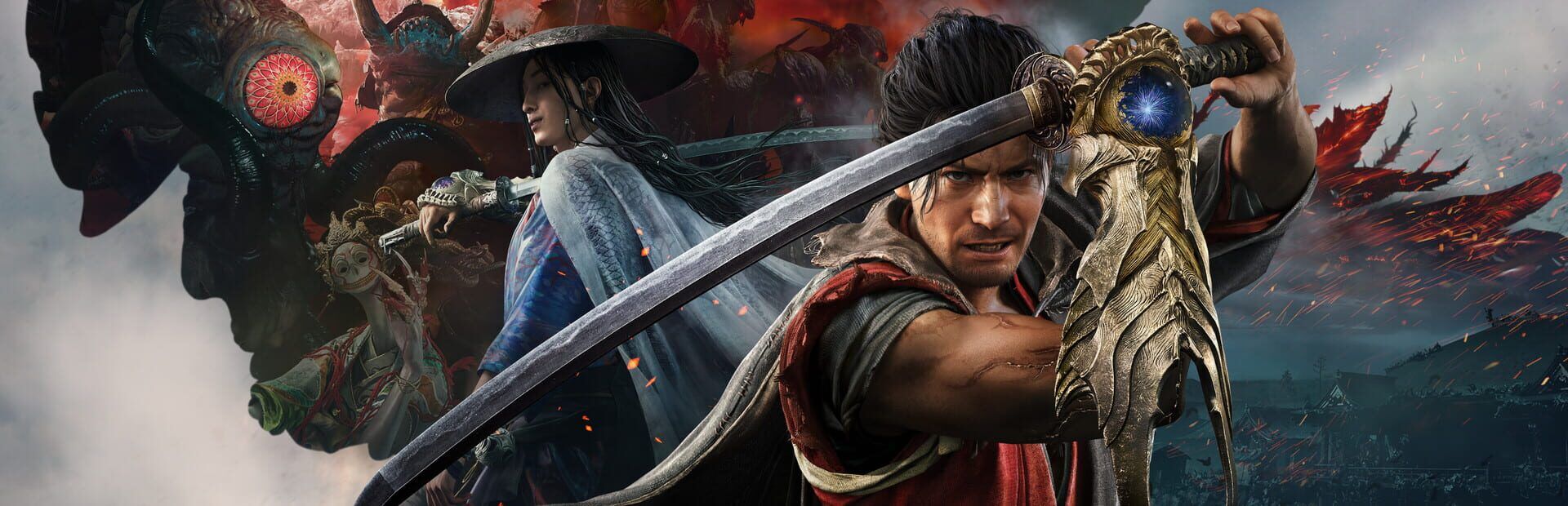

Capcom has locked in 1080p/30 fps targets for Onimusha: Way of the Sword on Switch 2, with an optional 30–40 fps mode. Here is what those specs reveal about Nintendo’s new hardware, and how the port stacks up against current‑gen action games on PS5, Xbox Series X|S and PC.
Capcom’s newly revealed targets for Onimusha: Way of the Sword on Switch 2 look modest at first glance: 1080p and 30 frames per second in docked mode, 900p and 30 frames per second in handheld, with an optional variable frame rate mode that floats somewhere between 30 and 40 fps.
Once you look a little closer, though, those numbers say a lot about where Switch 2 sits in the current generation, and what developers are willing to prioritize for a character‑action game built around precise swordplay.
The hard numbers: 1080p / 900p at 30 fps
Straight from Capcom’s specs, the Switch 2 version of Onimusha: Way of the Sword is targeting a clean 1080p output when docked and 900p in handheld, both at 30 fps.
Capcom also notes that you can enable a variable frame rate setting that pushes the game into a 30–40 fps window. That is not a true 60 fps performance mode, but it suggests Switch 2 can brute‑force some extra frames when the GPU load is light, instead of locking the game to 30 at all times.
The “upscaled” resolution wording used on some spec sheets all but confirms reconstruction techniques are involved. Given the wider industry trend and Nvidia’s rumored involvement with Switch 2 silicon, it is plausible that DLSS or a similar temporal upscaler is doing some of the heavy lifting to reach 1080p docked and 900p handheld.
In practice, that means most players should expect a stable 30 fps experience at relatively high resolutions for a portable system, with the variable mode acting more like a small bonus for those who do not mind frame‑time fluctuations.
What this suggests about Switch 2 performance
For an action‑heavy series like Onimusha, a 30 fps target might sound conservative, especially next to the 60 fps options promised on PS5, Xbox Series X and PC. But looking at the full picture, these settings tell us several things about Switch 2’s power profile.
First is that Capcom appears to be prioritizing visual parity over frame rate parity. On the more powerful consoles, the game offers both a 1080p 60 fps‑style performance mode and a more demanding quality mode that drops the frame rate to the 30–50 fps range to push effects and image quality. The Switch 2 version essentially lands closer to that quality preset. It is still aiming for a 1080p‑class output docked, rather than pulling resolution all the way down to 720p just to chase 60 fps.
Second is that the CPU and GPU combination in Switch 2 is clearly a substantial leap over the original Switch, which regularly had to choose between 30 fps at low resolutions or even more aggressive compromises. A dark fantasy action game of this scope targeting 900p in handheld mode with modern lighting and effects points to a machine that can comfortably sit in the last‑gen console ballpark while remaining fully portable.
Third, the existence of the 30–40 fps toggle suggests headroom that developers can tap into if they are willing to live with unlocked performance. On PS4 and Xbox One, that sort of “almost 60 but not quite” approach often produced wildly inconsistent frame pacing. On a new platform that is still early in its lifecycle, Capcom is playing it safe and marketing the mode as a minor option instead of the default.
How this compares to current‑gen action games
To really judge Onimusha’s Switch 2 numbers, it helps to line them up against what other action titles are doing on the mainline consoles.
On PS5 and Xbox Series X, many big character‑action and third‑person combat games now ship with two common presets. A performance mode that drops resolution or effects to hit a mostly locked 60 fps, and a quality mode that usually hovers between 30 and 40 fps in return for higher resolution and better rendering.
Capcom’s own recent portfolio fits this model. Titles like Resident Evil 4 remake and Dragon’s Dogma 2 provide clear splits between frame rate and fidelity. Onimusha: Way of the Sword follows the same template on those systems, with 1080p output shared between both modes and frame rate as the main differentiator.
In that context, Switch 2’s profile looks less like a severe cutdown and more like a rebalanced version of the quality mode. You lose the 60 fps option entirely, but you keep a high enough pixel count and a dense level of visual detail that should help the new Onimusha sit comfortably alongside its PS5 and Series X counterparts from a purely aesthetic standpoint.
Where Switch 2 lags is in motion clarity. For games that live or die on rapid dodge timing and animation‑driven combat, 60 fps genuinely changes the feel of attacks, parries and enemy tells. Players moving from a 60 fps performance mode on other platforms will immediately feel the difference dropping back down to 30.
Relative to other portable‑first hardware, though, the numbers are promising. Steam Deck struggles to sustain 60 fps in many current‑gen action releases without major sacrifices, and often ends up targeting 30 at around 720p. With Onimusha sitting at 900p handheld, Switch 2 should have a noticeably crisper presentation while delivering the same baseline frame rate.
Is 30 fps enough for a sword‑focused Onimusha?
The big question is whether 30 fps actually suits a game that sells itself on tight sword combat and fast‑paced demon slaying.
For players who have lived through action games on PlayStation 2, Xbox 360 and PlayStation 3, a well‑paced 30 fps experience is not automatically a problem. Many classic character‑action titles, including early entries in Capcom’s own catalogue, were built around that constraint. Animations, enemy wind‑ups and input buffers were designed to feel fair within a 33 millisecond frame window.
The concern is less the raw frame count and more about consistency. If Onimusha: Way of the Sword can deliver a genuinely locked 30 with clean frame pacing on Switch 2, it will feel vastly better than an unlocked, judder‑prone 40 fps that constantly oscillates. Capcom’s track record on this front for its RE Engine titles has generally been strong, which offers some reassurance.
The optional 30–40 fps setting is interesting but may not be ideal for everyone. That middle ground can make camera motion feel uneven, especially in handheld mode where screen size exaggerates judder. If the default mode is a stable 30 and the variable mode is clearly labeled as experimental or “prioritize performance,” players will at least have the freedom to pick their poison.
What this means for future Switch 2 action ports
Onimusha: Way of the Sword is one of the earlier third‑party titles to publish specific targets for Switch 2, which makes it a useful tone‑setter.
The takeaway is that developers looking to bring modern action games to Nintendo’s new system are likely to aim for a similar template. Expect 1080p‑class output on the TV, 900p or slightly below in handheld, both usually capped at 30 fps with the option of unlocked modes when possible. The days of 540p or dynamic 600p docked just to maintain a frame rate are probably over.
For Switch‑only players, that is a considerable upgrade from the last generation. For those used to PS5 and Series X performance modes, it will look more like a compromise that trades away responsiveness to keep visual quality closer to the big consoles.
Where Switch 2 could surprise is in games built from the ground up with its hardware in mind. A bespoke action project that scales back asset density and post‑processing could plausibly target a solid 60 fps at lower resolutions, leaning on modern reconstruction to keep the image sharp.
Onimusha, by contrast, has to coexist with higher‑end releases on fixed hardware, so Capcom’s targets are cautious. They secure an image that will look clean on a 4K TV and a portable display, accept 30 fps as the baseline for consistency, and offer a small performance‑leaning toggle for those willing to trade stability for a bit of extra fluidity.
For anyone eyeing Switch 2 as their main way to return to Capcom’s demon‑slaying samurai series, the message is clear. You will not be getting the fastest version of Onimusha: Way of the Sword, but you should be getting one that looks surprisingly close to the current‑gen experience, and that alone marks a big step up for Nintendo’s next handheld‑hybrid console.