
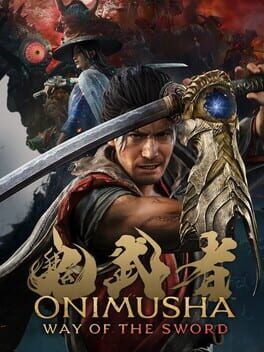

Breaking down what players are saying about the Onimusha: Way of the Sword demo, how Capcom is responding to difficulty concerns, and what this early slice really tells us about the final game.
The Onimusha name returning with a new game is already a big deal, but Onimusha: Way of the Sword has gone a step further by pushing its free demo past one million downloads in just a few days. That number alone suggests serious interest from both series veterans and curious newcomers.
The conversation around the demo has not been about performance issues or bugs. It has been about how it feels to play, and more specifically, how easy it is. That has pushed Capcom and producer Akihito Kadowaki to clarify what the demo actually represents and what players should expect from the full game.
A demo that feels powerful but soft
Across Reddit threads, Steam discussions and community forums, the same theme shows up over and over: the demo is fun, flashy and responsive, but for many players it is not demanding enough. Enemies are slow to engage and too willing to wait their turn, regular mobs die quickly, and the showcase boss, while visually impressive, often goes down on a first try.
For long time Onimusha fans who remember tight resource management and punishing encounters, this has created a sense of dissonance. They see dramatic standoffs and stylish swordplay, but the stakes feel low. Some players compare the pacing unfavorably to prior entries, calling the moment to moment combat "boring" outside of the boss, or complaining that the short demo slice does not give them enough of a sense of how the combat system will scale in complexity.
At the same time, a different segment of players has come away happy with the demo’s tone and accessibility. For them, the responsive controls, generous parry windows and approachable opening fights feel like an invitation into a series they may have skipped on PS2. The one million downloads figure suggests that this friendlier first impression may be working as a marketing tool even if it frustrates some hardcore fans.
Why Capcom intentionally made the demo easier
Capcom has already addressed the feedback directly. Speaking to outlets like GamingBolt and IGN, producer Akihito Kadowaki explained that the demo is built from an early story section, but Musashi is not equipped like an early game character. Instead, Capcom equipped him with several late game skills and advanced options that would normally be unlocked much later.
The goal was not to show an authentic difficulty curve. It was to let players sample a broader slice of the move set, including special attacks and mobility tools, right away. In other words, the demo is tuned like a combat sampler, not a strict vertical slice.
Kadowaki acknowledged that this choice has consequences. Giving players high level tools while keeping enemy behavior and health tuned for the opening chapters flattens the challenge. It becomes easy to overpower foes and trivialize openings that would normally feel more dangerous.
Capcom’s message in response has been straightforward. The full game will be tougher. Kadowaki has explicitly said that both regular Genma and bosses are going to put up a stronger fight than they do in the demo and has asked players to look forward to that higher level of challenge.
What the demo suggests about combat depth
If you ignore the low resistance from enemies for a moment and focus only on what Musashi can do, the demo showcases a surprisingly layered combat system. Players can experiment with aggressive and defensive control schemes that imply two different mindsets. One emphasizes quick, forward pushing offense with attack buttons on the face and blocks on the shoulder, while the other favors a more classic stance with guarding and positioning more central.
In practice this supports several playstyles in a single framework. You can play cautiously, relying on blocks, dodges and carefully timed counters, or you can stay in the enemy’s face, weaving in special moves, launchers and finishers. Parry timing is present but the game is not a pure "parry or die" experience. The generous windows and mobility tools hint at a combat loop where controlling distance and choosing your openings matter as much as pure reaction skill.
The real question raised by players is not whether Way of the Sword has enough buttons. It is whether the game will force them to use the full toolkit. In the demo, powerful skills and elemental techniques can shred standard enemies before they show off interesting attack patterns. That risks hiding the underlying depth behind easy victories. Capcom’s assurances suggest that later areas will have enemies sturdy and aggressive enough to push players into mastering cancels, counters and resource management instead of spamming flashy options.
Boss design and expectations going into launch
The demo’s boss fight has become a focal point of discussion. Visually and theatrically it lands well. The buildup, taunts and spectacle of the encounter feel worthy of a new Onimusha. Particle effects, dramatic camera work and the sense of a proper duel all line up with what fans expect from a high budget Capcom action game.
Where opinions split is in how the boss dictates player behavior. Some players praise the fight’s readability, saying attacks are well telegraphed and the game does a good job teaching key mechanics without resorting to cheap hits. Others argue that the boss is too forgiving and that its patterns leave little room for the kind of tense back and forth that defined earlier Onimusha rival encounters.
There is also an expectation that future bosses will escalate both mechanically and narratively. Fans are already wondering whether traditional Onimusha elements like multi phase duels and more lethal movesets will show up later. Kadowaki’s comments about tougher bosses in the final game set a clear bar: the first major story confrontations will need to leverage the full range of Musashi’s abilities, demand more consistent execution and showcase more complex patterns than what the demo offers.
Difficulty, modes and the target audience
The demo features Story and Action difficulties, which telegraph the team’s intent to appeal to multiple audiences. Story clearly leans toward accessibility, prioritizing narrative progress and spectacle for players who primarily want to experience the world and characters. Action is intended to be the more demanding setting, but in the demo its tuning still feels comfortable, especially with late game skills already unlocked.
That is the heart of the current tension. Long time fans are asking for a sharper edge, pointing to earlier Onimusha games where misreads and poor resource choices could quickly lead to death. Some are already calling for very hard modes or something akin to the infamous "Hell" settings of the past, where precise play was non negotiable. At the same time, Capcom clearly wants Way of the Sword to be an entry point for players who have never touched the franchise or who are coming over from other stylish action games.
Kadowaki’s comments, along with coverage from outlets and community impressions, suggest a layered approach. Lower difficulties will exist to keep the story flowing, while higher settings and possibly unlockable modes in the final game are expected to provide a stiffer challenge. The key unanswered question is how far Capcom is willing to push on those upper tiers to satisfy veterans without scaring off newcomers.
What the demo really tells us about the final game
Taken as a whole, the demo is less a promise of the game’s exact difficulty curve and more a proof of concept for tone, feel and core mechanics. It confirms that Way of the Sword is firmly an action forward take on Onimusha with responsive controls, theatrical presentation and a moveset that can support both straightforward and expressive play.
It also reveals that Capcom is thinking about accessibility and onboarding. By front loading powerful skills and keeping the opening fights relatively soft, the team has given millions of players a low friction way to feel cool, cut through demons and get a taste of the Edo era horror fantasy it is building.
At the same time, the strong reaction to the demo’s ease has already shaped expectations. Fans will go into launch looking for sharper enemy AI, more aggressive bosses and difficulty modes that actually demand mastery of the mechanics teased here. Capcom’s public assurances raise the bar further. If the full release on September 25 delivers on that promise, the demo will be remembered as a gentle onramp to a satisfying challenge. If it does not, the discourse around Way of the Sword could quickly shift from excitement over a successful revival to disappointment in a missed opportunity.
For now, though, the demo has succeeded at one crucial task. It has made people care about Onimusha again and has given Capcom clear, immediate feedback on what this audience wants from a modern samurai action game. The next step is proving that the final game can turn that feedback into sharper, more demanding encounters without losing the confident, stylish energy that made one million players pick up the sword in the first place.