
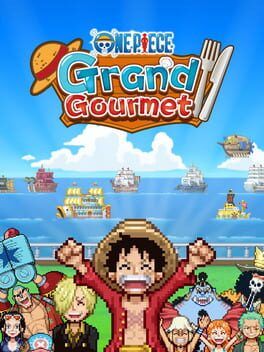
Kairosoft brings its cozy management-sim formula to the One Piece universe in Grand Gourmet, a restaurant game that turns Baratie II into your next long-term obsession.
Bandai Namco and Kairosoft are teaming up for One Piece: Grand Gourmet, a restaurant management sim that feels like a natural evolution of both the Straw Hats’ culinary side stories and Kairosoft’s long-running obsession with pixel-perfect business sims. Due out October 23 on Switch, Switch 2, PC, iOS, and Android, it puts Sanji and the crew in charge of a new Baratie offshoot and asks you to turn it into the greatest floating restaurant on the Grand Line.
Instead of another arena brawler or open-world adaptation, Grand Gourmet leans into something One Piece has always quietly excelled at: food as worldbuilding. The result is a game that looks like Game Dev Story collided with a Food Wars filler arc, with more than 400 familiar faces cycling through your dining room.
Cooking with Kairosoft: How the core loop works
If you have played a Kairosoft sim before, you will recognize the shape of Grand Gourmet almost immediately. You start with a tiny, modestly staffed Baratie Branch No. 2 and a short list of simple dishes. Service runs in real time as your crew takes orders, cooks, serves, and cleans, while meters and pop-up reports quietly track how well everything is running.
Between shifts, the real work happens. You spend money and resources to rearrange the dining area, expand the kitchen, place new facilities, improve recipes, and level up staff. Kairosoft’s specialty is turning these incremental tweaks into a dense puzzle of cause and effect, and Grand Gourmet seems built on that same backbone. A few extra tables might increase customer volume, but if Sanji cannot keep up on the line or Usopp has too many stations to bus, satisfaction will drop and word of mouth will suffer.
There is a familiar push-and-pull at play. You want to grow as quickly as possible to unlock new recipes, areas, and character appearances, but overextending will leave your restaurant overwhelmed. Finding the sweet spot, where each new upgrade just barely keeps you ahead of the next lunch rush, is where Kairosoft usually shines and where this One Piece spin feels most promising.
Ingredients, recipes, and the hunt across the seas
A big twist in Grand Gourmet is how it leans on the One Piece setting for its resource systems. This is not a static city block with a steady supply chain. The Baratie II crew has to sail out and track down ingredients that simply do not exist in a normal world.
You will send teams to islands and regions from across the series to gather rare fish, exotic fruits, and outright bizarre monster parts. Bringing back a new ingredient does more than just pad your pantry. In classic Kairosoft fashion, it unlocks new combinations in the research menu, letting Sanji and the kitchen staff experiment until they discover fresh dishes.
That loop of exploration, experimentation, and menu optimization gives the game a nice long tail. New ingredients not only boost dish quality and price, they also have synergy with certain customers and events. Serving the right regional specialty to a visiting pirate crew or marine officer can boost tips, trigger story scenes, or even convince them to become regulars at Baratie II.
Designing the Baratie II: Themes, layouts, and fan service
Kairosoft’s isometric pixel art feels like a great fit for One Piece’s loud, colorful aesthetic. Grand Gourmet lets you decorate your restaurant with themes and furniture inspired by locations and factions from the anime and manga. You might run with a sunny Thousand Sunny motif, lay out a marine-style mess hall, or lean into the gaudy style of Dressrosa.
This customization is not purely cosmetic. Different decor sets and layout choices influence which customers you attract and how long they are willing to stay. A cozy, plant-filled corner might encourage slower, more lucrative meals, while a wide-open, no-frills hall packs in budget diners looking for speed.
Kairosoft games tend to hide plenty of small layout optimizations too. Moving a prep station a few tiles closer to the serving counter, placing a waiting bench by the entrance, or adding a dessert showcase near the exit can all shave seconds from each interaction, letting your small crew handle a much bigger wave of hungry pirates.
Sanji and the Straw Hat crew’s roles
Grand Gourmet wisely does not make you play as a faceless manager in the background. Instead, you are a rookie chef working under Sanji, with the rest of the Straw Hats embedded in the business in ways that fit their personalities.
Sanji anchors the kitchen and doubles as your main progression vector for cooking tech. Leveling him up unlocks advanced recipes, kitchen techniques, and special skills that increase service speed or raise the quality rating of dishes. He is also front and center in many story beats, from clashes with rival chefs to high-stakes banquets where the entire restaurant’s reputation is on the line.
Luffy’s bottomless appetite, for example, becomes both a mechanic and a gag. Special events revolve around feeding him within strict time or resource limits, turning what is usually comic relief into a kind of challenge mode. Zoro might help manage rowdy customers and security during peak hours, while Nami’s money sense naturally nudges her toward overseeing finances and investments.
Beyond the core crew, a huge swath of the One Piece cast can show up as diners, part-timers, or special event guests. Over 400 characters are slated to appear, from fan favorites to deep cuts. Recruiting certain characters to help out at Baratie II can grant passive bonuses or unique actions in service, like a speed boost on cleaning duties or a one-off crowd control move that calms an impatient line.
Progression from tiny galley to legendary diner
Progress in Grand Gourmet is framed as the rise of Baratie Branch No. 2 from a humble side project to a culinary institution that can stand alongside Zeff’s original. Early goals focus on basic survival: keep the lights on, maintain a steady flow of guests, and avoid any disastrous service streaks.
As your fame grows, the scope widens. You will unlock new floors and decks to build on, opening up multi-level layouts and separate themed areas within the same ship. Major arcs introduce visiting VIPs tied to specific One Piece storylines, each bringing their own expectations and constraints. Hosting a feast for the Marines will not look anything like catering a celebration for the Straw Hat Grand Fleet.
Kairosoft typically layers seasonal events, contests, and midterm rankings on top of this growth curve, and Grand Gourmet follows suit. Expect periodic food festivals, cooking duels, and critic inspections that function like difficulty spikes. These events gate your access to the next region’s ingredient pool or to higher-tier decor, so optimizing the restaurant to clear them becomes a satisfying, long-term puzzle.
On mobile and PC, all of this is built to support short, repeatable sessions. You can jump in for a single day’s service, tweak a layout, queue some upgrades, and log off, secure in the knowledge that progress is always moving forward in small, digestible steps.
Why One Piece is such a good match for the management genre
On paper, a restaurant sim spin-off might sound like an odd detour for a shonen series known for sky-splitting clashes and massive adventure arcs. In practice, the fit is almost unnervingly clean.
One Piece has always had a preoccupation with food. Sanji’s backstory is literally about starvation and survival. Shared meals double as emotional release valves after big arcs, and entire locations are framed around specific culinary cultures or ingredients. Translating that energy into a sim about hunting rare ingredients and serving them to an ever-rotating cast of pirates and marines feels true to the tone of the series.
It also sidesteps a long-running problem with licensed games. Instead of trying to summarize hundreds of manga chapters in a rush of boss fights, Grand Gourmet narrows in on a slice of life that the anime rarely treats as more than a few scenes in between storms. This gives Kairosoft room to build systems that actually breathe, while still hitting constant fan-service beats as famous faces wander in looking for something to eat.
From the Kairosoft side, this is a chance to put a fresh skin on a formula the studio knows better than almost anyone. Fans of Game Dev Story, Hot Springs Story, or Dungeon Village already understand how compelling its feedback loops can be when they are tuned correctly. Dropping that framework into a setting where every character has a distinct relationship with food, money, and chaos is an easy way to keep those loops feeling fresh.
If Bandai Namco and Kairosoft can nail the difficulty curve and ensure those 400-plus character appearances feel meaningful rather than purely cosmetic, One Piece: Grand Gourmet has a real shot at becoming the licensed sim that quietly lives on your home screen for months.
For now, though, it is enough that someone finally looked at Sanji, the Baratie, and the Grand Line’s never-ending parade of weird ingredients and thought: this should be a management sim.