
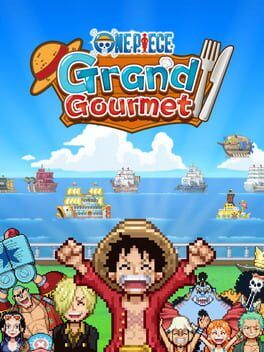

Bandai Namco's One Piece Grand Gourmet launch push pairs a final trailer with four recipe videos, while Kairosoft's management format may be the hook for fans wary of licensed spinoffs.
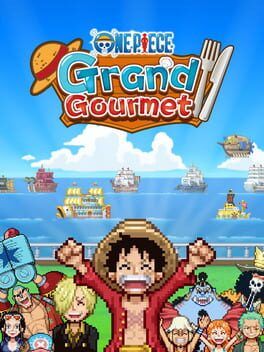
Image: IGDB
Store links: One Piece: Grand Gourmet on Steam
The launch trailer turns Baratie into a management problem
Bandai Namco is putting One Piece: Grand Gourmet in front of players with a final launch trailer ahead of its October 23, 2026 release, and the clearest pitch is unusually specific for a licensed anime game: this is a restaurant management sim built by Kairosoft, not an action retelling of familiar arcs. Nintendo Everything reports that the One Piece Grand Gourmet launch trailer is tied to this week's release on Nintendo Switch 2 and Nintendo Switch, where the game is being sold both physically and digitally.
Bandai Namco's official site confirms the broader platform plan. One Piece: Grand Gourmet is scheduled for Nintendo Switch, Nintendo Switch 2, PC via Steam, and mobile platforms on October 23, 2026. That spread matters because the Switch trailer push is only one part of the launch. The official platform list positions the game as a portable-friendly management sim across console, PC, and phones, which fits Kairosoft's long-running design history better than a spectacle-first console exclusive would.
The tension is in the license. One Piece games often have to decide whether they are selling power fantasy, story nostalgia, character collecting, or mechanical depth. Grand Gourmet's public materials lean into the last two. Bandai Namco describes the player as a new staff member working with the Straw Hat Crew to build the second location of Baratie into the greatest restaurant on the seas. That premise gives the game a practical structure: cook, decorate, recruit attention, satisfy customers, and expand.
The four recipe videos are part promotion, part design thesis
Ahead of launch, Bandai Namco also released four One Piece: Grand Gourmet recipes videos, according to Siliconera. The videos cover Sanji's Pilaf, Stone Stew, Meat on the Bone, and Fruit Macedonia, all framed as dishes players can serve in the game and all connected to food that appears in the One Piece anime and manga.
Siliconera notes an important limit on that tie-in: these recipes are not exact replicas of, or directly tied to, the existing official cookbook. That distinction keeps the videos from being simple cookbook marketing. They function more like a bridge between the fiction and the sim loop, showing how recognisable food moments can become game objects without requiring the player to treat the game as a strict culinary adaptation.
The selection is doing careful fan work. Sanji's Pilaf started the video run in early October 2026, and Siliconera reports that it is a dish players will see fairly early in the adventure. Stone Stew is described as a similar take on the Scorched Stone Stew from the Skypiea Arc. Meat on the Bone has the obvious Luffy association, with Siliconera characterising the video as a more realistic take on that recurring food image. Fruit Macedonia connects back to Sanji and Baratie early in the anime and manga.
That is a smarter launch beat than it first appears. Recipes are modular by nature, and Kairosoft games are built around modular systems: inputs, combinations, upgrades, customer preferences, and long-tail unlocks. The videos sell the fantasy at plate level, while the game sells the long game at restaurant level.
Kairosoft's format gives the licensed spinoff a clearer job
The reason this Kairosoft One Piece game could reach fans who usually skip licensed spinoffs is that the studio's format does not need the license to carry every minute. The source material is the attraction, but the structure comes from management pressure: food sets, furniture placement, customer conversion, exploration, unlocks, and repeatable objectives.
Bandai Namco's overview says players get ideas from characters, choose ingredients, and work with Sanji to cook dishes. Meals can be arranged into sets with additional flourishes, while adventures unlock more recipes. The examples include Water-Water Meat BBQ, Sea King Penne Gorgonzola, and special dishes using Devil Fruit powers. That is franchise fan service expressed as an economy, which is exactly where Kairosoft's style tends to make sense.
Siliconera's review places Grand Gourmet in the lineage of Kairosoft's restaurant sims, citing earlier titles such as Cafeteria Nipponica and The Sushi Spinnery as part of the company's established formula. The outlet's assessment is that One Piece: Grand Gourmet is a classic Kairosoft sim and a time-sink, with the added appeal coming from how the series' characters and elements are folded into the management structure.
MonsterVine's review reaches a similar conclusion from the player-facing side, calling the game charming and addictive while saying it combines One Piece's cast and lore with Kairosoft's management gameplay. MonsterVine also reports a few small translation errors, but says they are not enough to undermine the experience for series fans or sim players. That is review judgment, not a technical specification, but it helps frame the practical risk: this appears to be a systems-first licensed game with some localization rough edges reported by at least one reviewer, rather than a presentation-first adaptation with little mechanical backing.
The restaurant loop is built around fans, routes, and controlled growth
The most interesting confirmed design details point to a management game about routing attention. Siliconera's review says each location starts with five objectives. One recurring goal is to outsell the false Baratie run by Sanji and Luffy imposters. Other objectives can involve finding missing Straw Hat crew members by placing Wanted signs to generate tips from customers, or building up customer fandom through requests and gifts.
That makes the One Piece management sim premise sharper than a simple cook-and-click loop. Siliconera describes a feedback loop where Sanji handles cooking, while the player obtains blank recipes by sending Luffy, with or without other crew members, out to explore or by completing customer wishes. Ingredients can come from gifts, exploration, shopping, or placed items. New meal sets combine a main dish, side dish, dessert, and drink, and those sets can level up or attract specific customers if they meet requirements.
For strategy-minded players, the key system is customer permanence. Siliconera reports that people in one area only visit when the restaurant ship is parked in those waters, unless the player turns them into fans by fulfilling a wish. Once converted, those customers can visit even when the ship moves elsewhere. In management terms, that is a retention mechanic: local demand becomes portable demand if the player invests correctly.
The imposters also give the loop a campaign spine. Siliconera says completing a region's objectives triggers a cooking battle against the imposters, using the foods the player has created and levelled to win over judges. This is where Kairosoft's numbers game and One Piece's comic rivalry can reinforce each other. A stronger menu is not abstract progress; it becomes the tool for clearing the Straw Hats' and Baratie's names inside the story.
Fan service becomes a retention system, not scenery
Bandai Namco's overview promises over 400 One Piece characters appearing as staff and customers in a pixel style, described as the first time that many characters have appeared this way in a game. It also says players can encounter character events and special interactions. The scale of that cast is easy to read as a marketing number, but in a Kairosoft sim it also has mechanical implications: every character can potentially become a preference profile, a request chain, a staffing reward, or a reason to revisit a sea.
MonsterVine's review says Grand Gourmet moves from sea to sea, serving dishes to characters in chronological order, and highlights that the cast includes obscure one-off supporting figures alongside major villains and allies. That matters for One Piece fans who have seen the main crew and headline antagonists recycled across many adaptations. A restaurant sim has room for civilians, shopkeepers, side characters, and gag personalities because the fantasy is service and recognition, not combat balance.
Customization has a similar dual role. Bandai Namco says the game includes over 200 furniture, building, and decorative items, including Whole Cake Island dessert-themed pieces and futuristic Egghead items. If a character likes the design, they may become a regular. That turns decorating into more than cosmetic taste. The interior becomes part of the customer acquisition model, which is exactly the kind of system that can keep a licensed game alive after the first wave of character sightings.
This is where the launch trailer's restaurant pitch and the recipe videos align. Food references pull fans in. Layout, menu construction, customer conversion, and exploration determine whether they stay.
Release guidance, platform gaps, and who should wait
The confirmed release date is October 23, 2026. Bandai Namco lists Nintendo Switch, Nintendo Switch 2, PC via Steam, and mobile platforms. Nintendo Everything specifically reports retail and digital availability for the Switch versions. The provided source material does not include pricing, file size, performance targets, Switch 2 enhancements, mobile monetization details, cross-save support, or upgrade-path information between Nintendo platforms.
That leaves a few practical decisions unresolved. If you are choosing between Switch and Switch 2, the public materials cited here do not confirm whether the newer hardware version adds performance or usability benefits. If you are eyeing PC, Bandai Namco confirms Steam as the PC route, while the Steam community listing confirms the app's presence in Steam's ecosystem, but the supplied material does not provide price or system requirements. If you are considering mobile, the official site confirms mobile platforms, but not the business model.
For One Piece fans who normally ignore licensed spinoffs, Grand Gourmet is worth watching because its appeal appears to come from the fit between license and genre. Baratie, Sanji, customer requests, iconic dishes, and a huge cast naturally map onto a restaurant sim. For Kairosoft players who do not follow every One Piece arc, the risk is the opposite: much of the charm described by Siliconera and MonsterVine comes from character recognition and lore density.
The safest read from the available sources is that One Piece: Grand Gourmet is being sold as a long-tail management game with a heavy fan-service layer, not a quick narrative recap. If you need confirmed pricing, platform comparisons, or performance data before buying, wait for store pages and technical coverage. If your main question is whether the One Piece Grand Gourmet launch trailer and recipes represent the actual design pitch, the answer from Bandai Namco's overview and early reviews is yes: this is a Kairosoft restaurant machine built around One Piece's food, faces, and running jokes.