
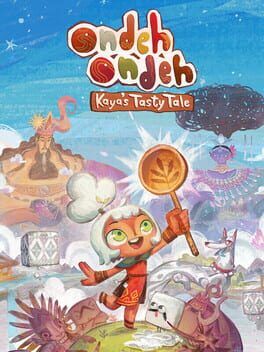

Bandai Namco and Metronomik have announced Ondeh Ondeh Kaya's Tasty Tale, a Southeast Asia-inspired rhythm puzzle adventure game coming to PS5, Xbox Series X|S, Nintendo Switch 2, and PC via Steam in 2027.
Image: IGDB
Store links: Ondeh Ondeh Kaya's Tasty Tale on Steam
Bandai Namco sets a 2027 table for Metronomik’s next game
Bandai Namco has announced Ondeh Ondeh Kaya's Tasty Tale, a rhythm-puzzle action-adventure from Metronomik, with a 2027 launch planned for PlayStation 5, Xbox Series X|S, Nintendo Switch 2, and PC via Steam. The announcement landed during the September 9, 2026 Nintendo Direct, according to ConsoleCreatures and Nintendo Everything, but the confirmed platform list from Bandai Namco Europe and MonsterVine makes clear this is a multi-platform release rather than a Switch 2 exclusive.
The concrete news is straightforward. Ondeh Ondeh Kaya's Tasty Tale is real, it has Bandai Namco publishing behind it, and it is targeting 2027. The tension is in everything still left unstated. Bandai Namco has not announced a specific release date, price, edition structure, demo, PC requirements, or any cross-platform features. The current listings and publisher materials also name only current-generation consoles and PC, with no PlayStation 4, Xbox One, or original Nintendo Switch version mentioned.
For a cozy indie game 2027 calendar that will almost certainly be crowded with gentle adventures, farming-adjacent life sims, and hand-crafted puzzle worlds, Metronomik’s pitch has a sharper mechanical hook than most first reveals in the space. This is a food-inspired adventure where rhythm is not presented as a side activity. Bandai Namco’s announcement says music sits at the heart of exploration, puzzle solving, and combat, with players following tempo to move through the world, open paths, and empower Kaya’s abilities.
A food identity rooted in Southeast Asian culture
The title is doing a lot of work before the trailer even starts. Bandai Namco Europe describes Ondeh Ondeh Kaya's Tasty Tale as inspired by the vibrant cultures of Southeast Asia, specifically pointing to music, cuisine, and other cultural elements as part of the game’s identity. ConsoleCreatures notes that the game takes its name from Ondeh Ondeh, a sweet snack. Out of Games, writing from the reveal, connects the name to onde-onde, which it describes as a traditional Indonesian rice cake, while framing the spelling as an apparent connection rather than a formal glossary entry from the publisher.
That food language carries into the premise. Players control Kaya, a young hero trying to become a Worldbuilder like her parents. Bandai Namco says her certification test requires her to gather the Giants across the world and perform the Renewal Ritual to rejuvenate the world’s flavours. That last word matters. The quest is not framed around restoring light, defeating darkness, or filling a map with collectibles. It is about taste, rhythm, and renewal, which gives the Ondeh Ondeh game a different texture from the usual cozy adventure setup.
There is still plenty we do not know about how far the cuisine theme goes mechanically. The announcement confirms Kaya uses a trusty Spoon and the powers of the Ondeh to interact with environments, solve puzzles, and deal with eccentric creatures. It does not confirm cooking systems, recipes, ingredient gathering, restaurant management, or any progression loop tied to food preparation. For now, the food identity is confirmed as theme, worldbuilding, naming, and ability language, with the deeper systems still unannounced.
The rhythm hook could separate it from softer adventure games
Bandai Namco’s most useful design description is that players must follow the tempo across exploration, puzzle solving, and combat. MonsterVine reports that keeping the beat opens new paths, strengthens Kaya’s abilities, and shapes how players move through each area. GamersHeroes, citing the press release, says the game blends rhythm-based gameplay with exploration, puzzle solving, and combat as players follow the tempo.
That puts Ondeh Ondeh Kaya's Tasty Tale in a more demanding lane than its warm art direction and coming-of-age story might suggest. A rhythm puzzle adventure game lives or dies on timing readability. If the beat governs platforms, hazards, enemy behavior, and puzzle states, then the game needs clean audio cues, visible rhythm language, and forgiving enough windows for players who are here for the world rather than a score-chasing challenge. Out of Games, describing what it saw in the trailer, specifically pointed to crushers moving with the music and monsters acting on rhythm. That is an outlet observation rather than a separate publisher feature list, but it aligns with Bandai Namco’s broader claim that tempo affects combat and navigation.
The genre blend is the standout promise. Cozy-leaning indies often lean on atmosphere, collection, and low-friction exploration. Ondeh Ondeh Kaya's Tasty Tale appears to be aiming for warmth with bite: puzzles that listen, enemies that dance, and traversal that asks players to internalize the soundtrack. If Metronomik can tune that well, the game could stand apart from the broader cozy indie game 2027 field by making comfort and concentration share the same space.
Metronomik returns to audio, but not by repeating No Straight Roads
Metronomik is a meaningful name here because the studio previously developed No Straight Roads. ConsoleCreatures reports that the developer says Ondeh Ondeh Kaya's Tasty Tale is audio-centric but different from its previous game, set in a “weirder and more fantastical context.” That quote gives the reveal a useful frame. Metronomik is not abandoning music-driven design, but the studio is repositioning it inside a puzzle adventure built around Southeast Asian-inspired food, folklore-like giants, and a young hero’s certification trial.
The difference matters because rhythm mechanics can easily become spectacle without structure. A rhythm boss fight is immediately readable as a set piece. A rhythm puzzle world is harder. Players need to understand when to listen, when to act, and how the beat changes the state of the environment. The early description suggests a game where tempo is systemic rather than decorative, since Bandai Namco says rhythm affects exploration, puzzles, and combat instead of being limited to isolated musical encounters.
As an indie and platformer player, that is the part I will be watching most closely in future footage. The Spoon and Ondeh powers sound like puzzle verbs, but their exact rules have not been detailed. Does the Spoon work as a melee tool, a conductor’s baton, an interaction key, or all of those at different points? Do Ondeh powers map to flavours, regions, Giants, or tempo patterns? The announcement gives a flavorful outline, while the real test will be whether each mechanic is legible in motion.
Platforms are broad, but the current-gen focus is clear
Bandai Namco Europe lists Ondeh Ondeh Kaya's Tasty Tale for PS5, Xbox Series X|S, Nintendo Switch 2, and PC via Steam. MonsterVine reports the same platform lineup, and Nintendo Everything focused on the Nintendo Switch 2 announcement coming out of the Direct. That spread gives the game immediate reach across console audiences and Steam players, while also drawing a firm line around current hardware.
The absence of older platforms is worth noting without overreading it. None of the provided publisher or outlet materials mention PlayStation 4, Xbox One, or the original Switch. That does not prove those versions were considered and dropped. It only tells readers that, as of announcement, Bandai Namco is promoting the game for newer consoles and PC. For players still on last-generation systems, the practical guidance is simple: wait for an official update before assuming support.
The Switch 2 placement is also interesting because the reveal happened during a Nintendo Direct, yet the publisher messaging immediately confirms parity in platform availability at the announcement level. There is no source-confirmed exclusivity window, timed content, upgrade path, or platform-specific feature. Until Bandai Namco says otherwise, buyers should treat Kaya's Tasty Tale 2027 as a simultaneous multi-platform target with exact timing still to be announced.
The unanswered questions will determine its real audience
Ondeh Ondeh Kaya's Tasty Tale has the ingredients for a memorable discovery: a specific cultural and culinary identity, a family-centered coming-of-age premise, a tactile tool in Kaya’s Spoon, and a rhythm layer that could give its puzzles a pulse. It also has a publisher with enough reach to keep the game visible beyond the usual indie showcase cycle. Those are confirmed advantages at the announcement stage, but they are not the same as a clear buying recommendation yet.
The key unknowns are practical and mechanical. Bandai Namco has not detailed difficulty options, accessibility support for rhythm timing, audio-visual cue customization, co-op, length, save structure, or whether combat can be softened for players drawn in by the cozy tone. For rhythm-driven games, accessibility is especially important because players may have different hearing needs, input latency conditions, and timing comfort. No source material provided confirms any such options for Ondeh Ondeh Kaya's Tasty Tale.
For now, the best read is cautious optimism grounded in the reveal. If you are looking for a cozy indie game 2027 release with a distinct sense of place, Ondeh Ondeh Kaya's Tasty Tale belongs on the watchlist. If you mainly want a relaxed puzzle adventure, wait for hands-on impressions to see how strict the beat windows are. If Metronomik can make rhythm feel like a way of reading the world rather than a constant test, this could be one of 2027’s most distinctive small-scale adventures.