
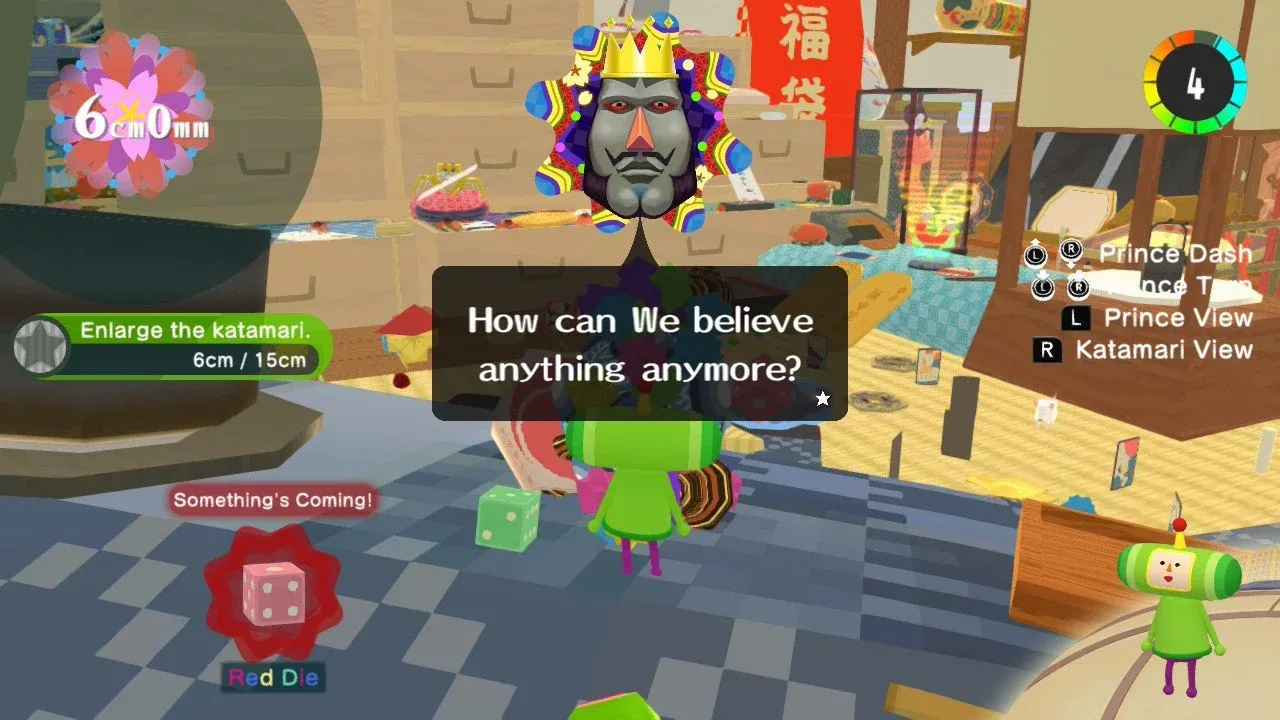

Bandai Namco’s Switch 2 listing gives Once Upon a Katamari a major technical lift over the original Switch release, but save, DLC, HDR, and performance wording matter before you double dip.
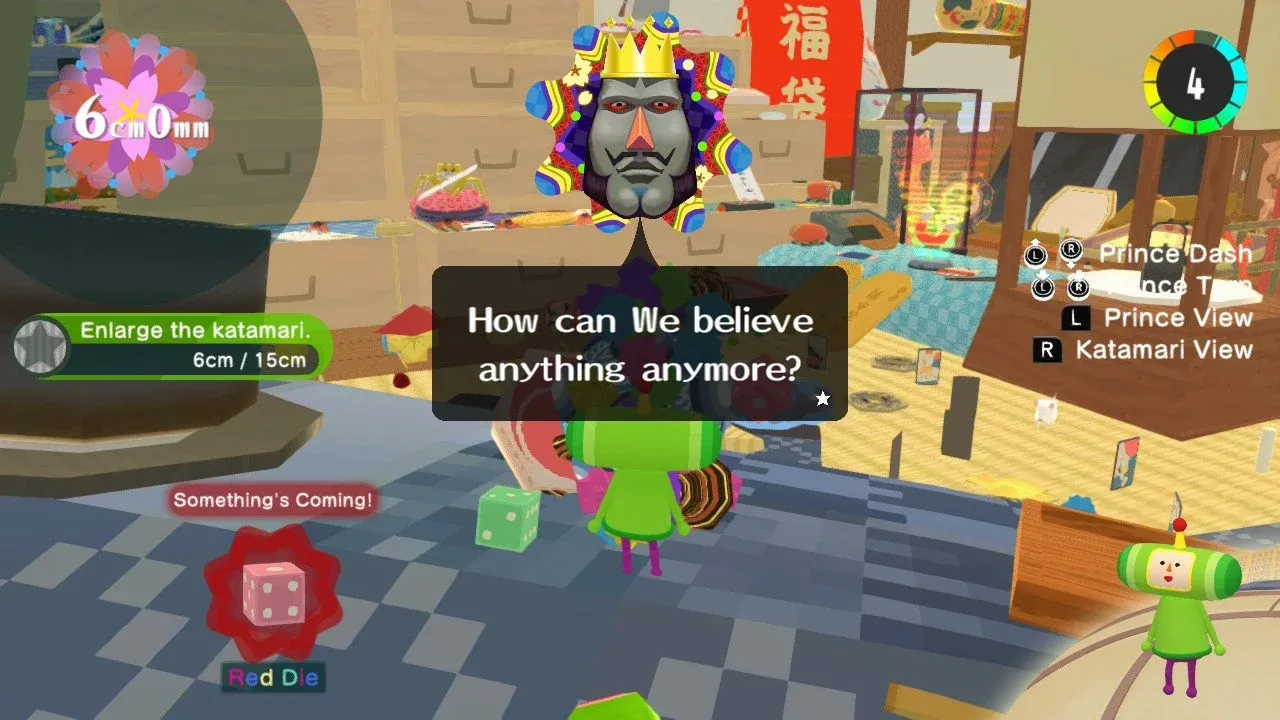
Image: toomuchgaming.net
Switch 2 gets the Katamari upgrade players were waiting to quantify
Once Upon a Katamari on Nintendo Switch 2 is targeting up to 4K resolution when docked, up to 1080p in handheld mode, and up to 60 frames per second, according to details Bandai Namco posted on the game’s official Japanese website and reported by Nintendo Everything. That is the concrete headline for anyone comparing Nintendo’s new hardware against the original Switch version, but the wording is doing real work here: Bandai Namco is describing maximums and targets, not a locked performance guarantee.
The frame rate and resolution jump is still substantial. Nintendo Everything reports that the original Nintendo Switch release topped out at 1080p docked, 720p portable, and 30 FPS. On paper, the Switch 2 version doubles the frame-rate ceiling and raises portable output to the same 1080p resolution the old console used only on a TV. Docked play can now reach 4K, matching the top TV output Nintendo advertises for Switch 2 itself.
That combination makes Once Upon a Katamari Switch 2 a cleaner comparison point than many late ports. The question is less whether the new version is technically improved, since the listed numbers say it is, and more whether those upgrades outweigh the catches around saves, DLC, HDR, and the lack of a clarified locked frame-rate claim.
The original Switch version is the baseline, and Switch 2 changes the feel on paper
Katamari’s performance conversation is unusually practical because the series is built around constant visual parsing. You are scanning cluttered spaces, steering a rolling ball through object fields, judging what is small enough to absorb, and responding as the katamari grows from toy-scale to absurd-scale. Wikipedia’s game summary describes Once Upon a Katamari as an action-puzzle game in which the Prince rolls a sticky katamari to collect smaller objects and complete objectives assigned by the King of All Cosmos. Bandai Namco’s overview, quoted by Nintendo Everything, also points to new stages, a new soundtrack, and support tools such as a magnet that draws nearby objects toward the katamari.
That design makes the reported jump from 30 FPS to up to 60 FPS meaningful even before anyone starts pixel-counting. Higher frame rates can make continuous turning, collision feedback, and crowded object pickup easier to read. Higher resolution can help preserve the game’s tiny-object comedy, where the joke often lives in recognizing a pencil, snack, crown, or piece of furniture a split second before it joins the ball.
Still, this remains a listed target. Nintendo Everything specifically notes that Bandai Namco does not clarify what would cause the action to run below 60 FPS. Until the Switch 2 version is tested in busy late-stage scenes, the safest reading is that 60 FPS is the intended ceiling rather than a verified lock across every level and situation.
Switch 2 hardware explains the numbers, but Once Upon a Katamari does not use every feature
Nintendo’s own Switch 2 feature page says the system has a larger 1080p screen and can connect to a TV for up to 4K resolution in supported games. Nintendo also advertises HDR, VRR, and frame rates up to 120 FPS in compatible games, while noting that 4K output is fixed to a maximum of 60 FPS. In that context, Once Upon a Katamari’s reported Switch 2 specs line up with the top end of the hardware’s 4K-and-60 lane rather than chasing the system’s 120 FPS ceiling.
That is an important distinction for buyers reading the spec sheet. Once Upon a Katamari resolution on Switch 2 reaches the console’s advertised maximum output in docked mode, according to the Bandai Namco listing as reported by Nintendo Everything. Its handheld figure also matches the Switch 2 screen resolution Nintendo promotes. But the game is not presented as a showcase for every display feature Nintendo lists for the machine.
Nintendo Everything reports that HDR is not supported. Nintendo’s hardware page frames HDR and VRR as supported-game features requiring compatible displays, so their presence on the console should not be assumed for every release. For Once Upon a Katamari, the confirmed display story is resolution and frame-rate target first, not HDR color output or a 120 FPS performance mode.
The phrase “up to 60 FPS” should guide cautious buyers
The most useful number in the new listing is also the most qualified one. “Up to 60 FPS” tells players the Switch 2 version can run above the original Switch version’s 30 FPS cap, but it does not tell us whether performance is stable during every stage, how the game behaves when the screen is crowded, or whether docked and handheld modes share the same frame-rate profile.
That gap matters because Katamari stages naturally become more demanding as the ball grows and the number of visible interactable objects increases. A smooth opening minute does not automatically prove the final minute of a larger stage holds the same cadence. Bandai Namco’s listing, as relayed by Nintendo Everything, gives the target but not the stress-test conditions.
For players deciding whether to buy at launch, the practical advice is simple: if 60 FPS consistency is your deciding factor, wait for direct footage or technical testing of the Switch 2 version. If your main concern is whether the new Nintendo hardware meaningfully improves the old portable release, the confirmed Once Upon a Katamari frame rate and resolution details already show a major upgrade over the first Switch version’s reported 30 FPS and 720p handheld limits.
Against PS5, Xbox, and PC, Switch 2’s case is portability with fewer compromises
Wikipedia lists Once Upon a Katamari as having released on October 24, 2025 for Nintendo Switch, PlayStation 5, Windows, and Xbox Series X/S, with a Nintendo Switch 2 version set for October 8, 2026. Nintendo Everything describes the new Switch 2 technical profile as putting it on par with other platforms, though the supplied source material does not include fresh per-platform resolution or frame-rate tables for PS5, Xbox Series X/S, or Windows.
That leaves the buying comparison in a familiar but sharper place. If you already prefer playing Katamari on a TV and do not care about handheld play, the other current platforms remain part of the conversation. If the appeal is rolling through stages in bed, on a commute, or in tabletop mode, Switch 2 now has a stronger argument than the original Switch version because its portable target rises to 1080p and its frame-rate ceiling rises to 60 FPS.
The key is not to treat listing parity as measured parity. Bandai Namco’s Switch 2 numbers are official listing-level information, as reported by Nintendo Everything, but they are not the same as a frame-time analysis or side-by-side capture. For many players, “portable 1080p with up to 60 FPS” will be enough. For performance-sensitive buyers choosing between Nintendo hardware and another platform, independent testing remains the missing piece.
The upgrade path has save, DLC, and multiplayer friction
The technical upgrade comes with several ecosystem catches. Nintendo Everything reports that online multiplayer is available only between Nintendo Switch and Switch 2 versions, that there are no cross-platform saves, that HDR is unsupported, and that DLC purchased for the Nintendo Switch version cannot be used on Switch 2.
Those details may matter as much as the resolution bump for existing players. If you already bought the original Switch version and have progress, records, or DLC tied to that release, the Switch 2 version is not presented as a frictionless continuation. The source material does not describe an upgrade program, a save-transfer path, or DLC entitlement sharing between the two Nintendo versions.
The multiplayer note cuts both ways. Switch and Switch 2 players being able to play online together is useful inside Nintendo’s ecosystem. At the same time, Nintendo Everything’s report says that online multiplayer is limited to those Nintendo versions, so players should not buy Switch 2 expecting broader cross-platform online play with PlayStation, Xbox, or PC friends unless Bandai Namco announces something different later.
Who should pick the Switch 2 version, and who should wait
For new buyers who want Katamari on Nintendo hardware, the Switch 2 release is the clearly stronger version on listed specs. It targets up to 4K docked, up to 1080p handheld, and up to 60 FPS, compared with the original Switch version’s reported 1080p docked, 720p handheld, and 30 FPS ceiling. That is the cleanest answer to the Once Upon a Katamari Switch 2 performance question based on current official listing information.
For existing Switch owners, the answer is more conditional. The better technical target has to be weighed against the absence of cross-platform saves and the reported inability to use Switch-version DLC on Switch 2. If you are already deep into the older version, the upgrade may feel less like a patch and more like a separate purchase path, depending on pricing and ownership details Bandai Namco has not addressed in the provided source material.
For players choosing between Switch 2 and other platforms, the Switch 2 pitch is now portable flexibility without the original Switch version’s biggest visible compromises. The caution is that “up to” remains untested in the wild, HDR is not supported, and 120 FPS is not part of the confirmed feature set. If those limits do not bother you, Switch 2 looks like the Nintendo version to get. If a locked frame rate, transferable DLC, or platform-wide save continuity is the deciding factor, waiting for launch coverage is the smarter roll.