
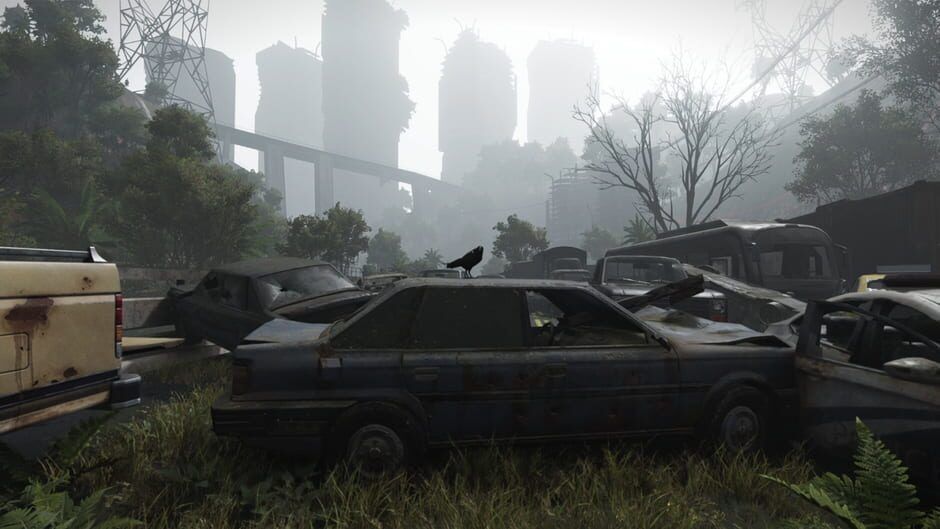

A state-of-the-game look at Once Human’s Visional Wheel Season 3: Aberrant Progeny, how the new Fusion-style Deviant Sprout system, zones and enemies reshape the survival shooter’s loop, and whether it’s enough to bring players back from rival post-apocalyptic live-service games.
Once Human has been quietly carving out a niche as a stranger, more experimental take on the post-apocalyptic survival shooter. With Visional Wheel Season 3, subtitled Aberrant Progeny, Starry Studio is pushing harder into that identity by letting you stop hunting monsters and start becoming them.
For returning players, this season is less about another reward track and more about a structural shake-up. Pollution Zones have been reworked into bespoke Deviant playgrounds, a new Fusion-style system lets you graft monster powers onto your character, and the Aberrant Progeny mode itself layers a seasonal metagame over almost everything you do. The question is whether this is the refresh Once Human needs to hang with genre neighbors like Fallout 76, The First Descendant and the evergreen Warframe.
Fusion By Any Other Name: Deviant Sprouts And Resonant State
The headline feature of Aberrant Progeny is what the devs call Deviant Sprouts and Resonant State, which together behave like a Fusion system between your character and the monsters that roam the world.
Deviant Sprouts are rare ability seeds pulled out of powerful Deviants and a new enemy type called Half-Deviants. Slot one into your build and your character snaps into a Resonant State. Visually your head mutates to echo that Deviant’s shape, and mechanically you gain its unique combat tricks plus a huge boost to pollution resistance.
There are twelve Sprouts to chase in Season 3, each acting like a distinct combat stance rather than simple stat sticks. One might turn you into a melee bruiser better suited to the Wild Deviant Zones, another might give you positional tools that shine in the reflective chaos of Mirror Zones. Sprouts are consumable, with durability that ticks down as you fight, so they sit somewhere between a permanent subclass and an expendable power-up. You are encouraged to rotate through them instead of locking into a single form for the whole season.
Compared with rival live-service shooters, this is a fairly bold swing. Warframe’s power fantasy comes from collecting entire frames, while something like Fallout 76 adds mutations as passive quirks. Once Human goes for a middle ground where monster powers feel expressive and cosmetic yet remain tied to the core loop of farming and risk management. You are not just equipping a new gun; you are planning which monster you want to become for the next hour and what that will cost you.
Aberrant Progeny’s World: Pollution As A Playground, Not A Penalty
Season 3 reframes Pollution Zones as the stage for this Fusion fantasy. These areas have always been high-risk territories, but Aberrant Progeny turns them into curated PvE arenas with clear rules, escalating events and a season-long economy.
The fiction is that Mother Nova’s offspring, the Rogue Progeny, is hanging over the world and corrupting everything beneath. In practice, that means territories inside these Deviant Zones now suffer corrosion and need special resources to maintain. There is a grace period for existing bases, but settling deep in a Pollution Zone is no longer trivial. For survival fans who enjoy long-term territory planning, this adds a welcomed layer of logistical tension instead of only making numbers bigger.
The zones themselves are more distinct too. The Wild Deviant Zone leans into huge beasts and aggressive melee. Firearms still matter, but the encounter design favors closing distance, weaving between charges and timing heavy hits. Mirror Zones are more of a shooter puzzle, with attacks that can come from any reflective surface and enemies that use sightlines in playful ways. Phantasmal Zones blur reality with illusion, complicating navigation and target priority as much as raw DPS.
Compared to the often flat open worlds in competing games, this trio of zone archetypes gives Once Human stronger identity. Fallout 76’s regions have tone differences but share similar encounter logic. Warframe’s open worlds are busy but less about systemic environmental hazards and more about enemy density. Aberrant Progeny, by contrast, asks you to pick the right monster form before you step into each pocket of the map and then adapt to that zone’s specific cruelty.
New Enemy Types: Half-Deviants, Symbiotic Behemoths And The Feast
Monsters are not just stronger bullets sponges this season; they are the central axis of the economy and progression.
Half-Deviants are humanoid enemies with Sprouts fused into their heads. Mechanically they act like elite foes that showcase each Deviant’s kit, and crucially they are guaranteed to drop the matching Sprout. That guarantee softens the RNG that often frustrates live-service grinds and turns hunting specific Half-Deviants into a clear goal for players chasing a particular playstyle.
Symbiotic Behemoths function as timed world bosses for Deviant Zones. They spawn each hour and are tied directly to Deviant Chests, one of the primary reward containers for the season. Their presence keeps even routine farming sessions punctuated by high-stakes fights, similar in pacing to Warframe’s bounties or Destiny 2’s public events, but with a stronger tie to the seasonal system.
Those Behemoths feed into the new Deviant Feast event. At the top of every hour, ore deposits appear in high-level Pollution Zones. Start mining and the game locks you into a defensive scenario, throwing waves of Deviants at your position while you try to keep the ore intact. The longer you defend without interruption, the richer your Deviant Chests become. Enemies here are tuned to aggressively destroy fortifications, so base-building knowledge matters as much as gun skill.
This rhythm of hunt Half-Deviants, chase Behemoths, then hunker down for a Feast is what really redefines Once Human’s loop for Season 3. It nudges the game away from loose, aimless roaming toward a predictable schedule of spikes that you can plan around with friends. In a landscape where many survival shooters can feel like endless errands between daily and weekly checklists, Aberrant Progeny manages to bake its chores into set-piece encounters that feel more like content than obligation.
The Aberrant Progeny Mode: A Seasonal Metagame Woven Through Everything
The Visional Wheel structure returns for Season 3, and Aberrant Progeny uses it to tie progression together across the entire game.
Through the event interface, you track several layers. Deviant Analysis turns the Deviant Seeds you collect from kills and events into tangible rewards, from weapon skins to collectibles. Deviant Carnival adds a collection game on top, asking players to gather all twelve Sprouts and defeat featured seasonal enemies. Your progress here feeds into a server-wide pool of points that gradually unlocks seasonal tags.
Those tags are not just cosmetic milestones; they actively change global rules for Deviant content on your server. One tag might tweak enemy behavior, another might alter rewards or event pacing. It is a subtle but effective way to give each community a slightly different feel over the course of the season, and it helps Once Human stand apart from more static seasonal models.
Structurally this puts Aberrant Progeny closer to Warframe’s narrative-driven operations than to something like a standard battle pass. There is still a reward ladder to climb via Deviant Seeds and chests, but the sense that the entire world is mutating alongside the player base echoes the core theme of fusing with monsters.
Gear, Mods And Buildcraft: Depth For The Dedicated
Backing up the flashy Fusion system are quieter but important tweaks to Once Human’s buildcraft.
New weapons like the EBR-14 Octopus! Grilled Rings! and the TEC9 Additional Rules lean into synergy with existing mechanics. The EBR-14 specializes in stacking Burn across crowds, making it a natural complement to zone events where enemies funnel toward you. The TEC9’s guaranteed Fortress Warfare triggers turn it into a proc engine for players already invested in that subsystem.
Aberrant Progeny also introduces three new mod suffixes, Mirror, Wild and Phantasmal, for upper-body armor and shoes. These mirror the three headline Deviant zone types and invite you to lean harder into your preferred hunting grounds. A Mirror build might emphasize mobility and trick shots in reflective spaces, while a Wild-focused set could prioritize durability and melee throughput.
Six new Morphed Deviations add another layer, each themed after bizarre entities like Rain Man or Dr. Teddy. In the Deviation: Survive, Capture, Preserve scenario, you do not get the Deviations directly but farm Mutagens that let you sculpt them. It is deeper than the basic perk unlocks of some competitors and should appeal to players who treat their character sheet as a hobby.
For returning players, all of this means there is genuine room to retool your main rather than just slotting in a seasonal trinket. For new players coming from other live-service shooters, Once Human’s buildcraft still trails the sheer wildness of top-end Warframe builds, but it is rapidly approaching a satisfying complexity tier for a relatively young game.
How It Feels To Play In 2026: Strengths And Weak Spots
Taken as a state-of-the-game snapshot, Visional Wheel Season 3 suggests Once Human is finding confidence as a hybrid of survival sandbox and oddball ARPG shooter.
Moment to moment, the new content succeeds in making the game feel more directed without losing its sandbox qualities. You still roam, loot and build, but the Aberrant Progeny layer ensures that at any given hour there is a clear target worth dropping everything for. The Fusion-like Sprout system translates Once Human’s unsettling monster designs into tools rather than just threats, something many competitors hesitate to do.
Compared to other post-apocalyptic live-service shooters, Once Human now hangs its hat on three things. First is its commitment to environmental hostility through Pollution Zones, which keeps survival mechanics relevant in a way looter shooters often abandon after the early game. Second is its economy of risk and reward around Deviant Feasts and Seeds, which keeps group play interesting beyond simple damage checks. Third is its willingness to let you break the human silhouette and look truly wrong when you commit to Resonant forms.
There are still caveats. The reliance on timed events can make the experience feel schedule-bound, which may not appeal to solo players dipping in casually. The Sprout durability model also risks feeling punitive if drop rates do not keep pace with player experimentation. And while the new zones are flavorful, Once Human still wrestles with the occasional jank and repetition familiar to anyone who has spent time in early live-service sandboxes.
Verdict: A Season For Players Who Want The Weird
Aberrant Progeny is not simply more of Once Human; it is a fairly aggressive attempt to redefine what playing it feels like week to week. By letting you fuse with its monsters, by turning Pollution Zones into rotating arenas and by tying progression to server-wide mutations, Visional Wheel Season 3 gives lapsed players a strong reason to reinstall and see what the game has grown into.
Rival shooters will still win on polish, and the genre giants have years of systems and campaigns behind them. But if you are looking for a survival shooter where the apocalypse feels genuinely alien and where new seasons do more than add another battle pass, Once Human’s latest vision makes a compelling case to step back into its corrupted world and become something less than human again.