
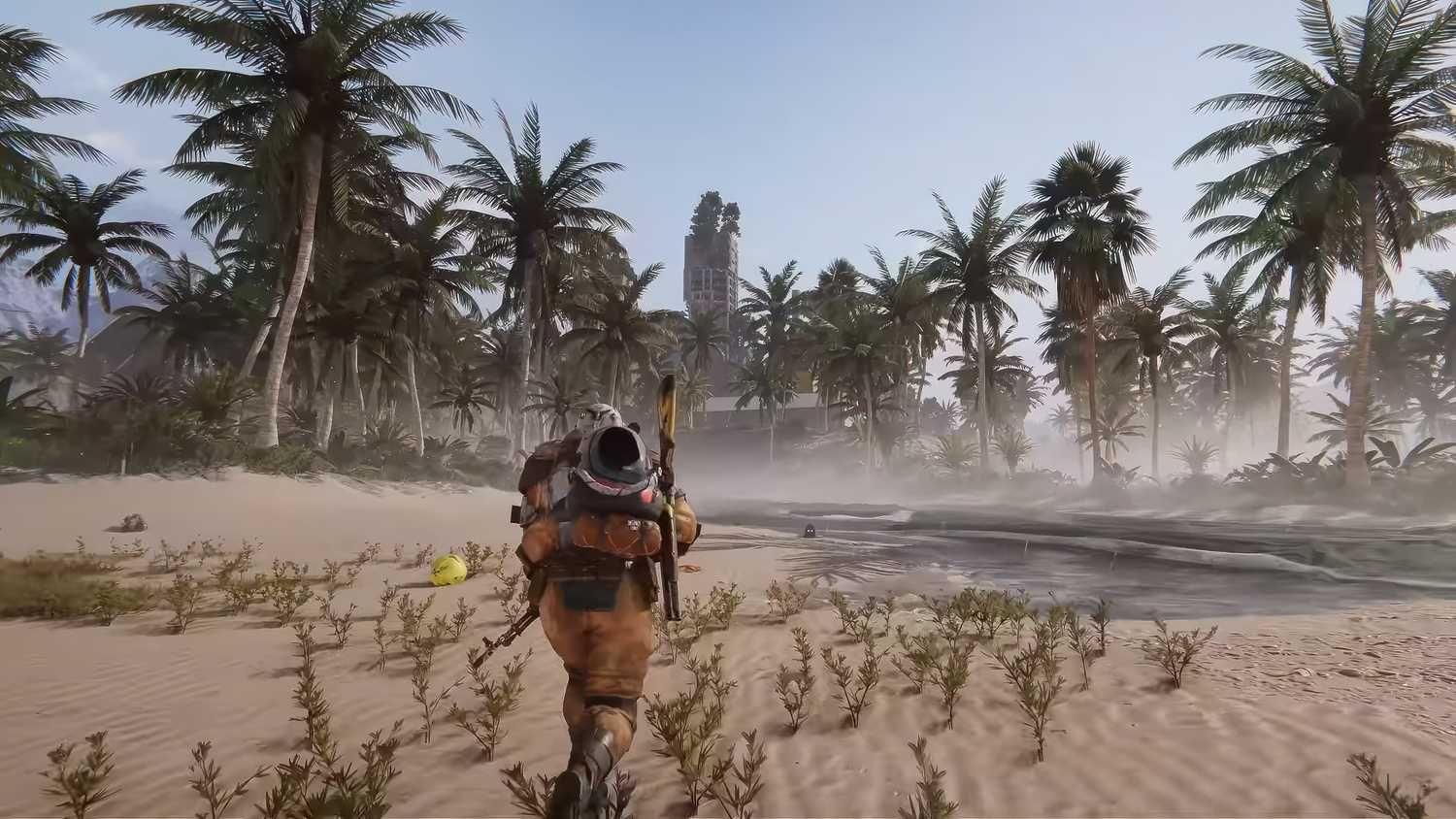

Once Human Isles of Abyss arrives as a free ocean survival update with five sea regions, shipbuilding, underwater resources, and new land and sea survival pressure.
Image: gamerant.com
Once Human Isles of Abyss sets a free October course into hostile water
Once Human’s next major update, Isles of Abyss, is scheduled to arrive on October 22 as a free update, and the clearest confirmed shift is also the most dangerous one: Starry Studio is moving the survival game’s pressure point out onto the ocean. Pocket Gamer reports that the update adds five sea regions, vessel progression from small skiffs to Mobile Sea Fortresses, and underwater resource gathering, while PlayDay says the expansion will launch across PC, mobile, and console with cross-play and cross-progression.
That date comes with a useful caveat for players tracking time zones. PlayDay lists the launch as October 22, with October 21 PT noted in its coverage, while other sources in the provided material use October 22 as the headline date. The practical read is that the Once Human update is targeting a global late-October rollout, but players should still check the official launcher or regional store page closer to release for exact unlock timing.
The tension behind Isles of Abyss is that this is being pitched as a new maritime survival scenario rather than a simple stretch of extra map. NetEase’s official final test recruitment page describes Isles of Abyss as a “New Survival Scenario” with a maritime challenge built around scattered islands, resource gathering, dynamic weather, day-night cycles, facilities, environmental threats, and mysterious enemies. IDC Games goes further in its reading of the official preview, saying the update is being developed with its own world progression, environmental rules, technology, resources, and phased objectives. That distinction should matter to returning players. If the scenario structure holds, this is a fresh survival rhythm with its own rules rather than a familiar land route with water painted between objectives.
The ocean is being treated as an enemy, not empty space
The most striking piece of reported fiction around Once Human Isles of Abyss is the Sunken Lord. Pocket Gamer and PlayDay both describe the ocean as an ancient awakening entity watching players across five regions. The reveal material, as relayed by those outlets, frames the sea through the logbook of Malla, a navigator who has “drowned a thousand times,” and through six survival rules warning about threats such as predatory lighthouses and islands that are not what they appear to be.
That sounds theatrical, but it points to a practical design shift. In many survival games, water is a border, a travel tax, or a resource pocket. Here, according to the announced feature set, the ocean is the connective tissue between exploration, combat, and progression. Pocket Gamer says players will move between islands, dive below the surface for treasure and resources, and haul those gains back into progression on land. NetEase’s test description supports that broader loop by saying players will explore scattered islands, build facilities, and face threats from both the environment and mysterious enemies.
For a survival audience, the key change is distance. On a land map, a bad trip can often be corrected by turning around, cutting across terrain, or scavenging along the way. An archipelago changes that calculation. IDC Games notes that every journey in an island chain can become a separate expedition requiring preparation, navigation, and a suitable vessel. That is where the Once Human sea survival premise has teeth. The boat is not simply transport if the water has enemies, weather, objectives, and resource routes of its own.
Ships turn base-building into a moving survival problem
The update’s shipbuilding may be the feature returning players feel first. Pocket Gamer says players begin with small skiffs and can work toward Mobile Sea Fortresses, floating bases that can carry a workshop and heavy guns. PlayDay similarly describes craftable, customizable vessels that can become functional bases, workshops, and artillery platforms. In a game already built around shelter, crafting, and anomalous tools, the sea version of a base introduces a harsher question: what do you take with you when the safe place has to move?
That matters because mobility creates tradeoffs. A small vessel implies speed and lower commitment, while the reported Mobile Sea Fortress suggests staying power, storage, crafting access, and heavier combat options. The sources do not provide final build limits, costs, crew requirements, or upgrade trees, so players should avoid assuming their current favorite land-base strategy will transfer cleanly. What is confirmed is the broad arc from skiff to fortress and the idea that ship design affects how players approach ocean hazards.
IDC Games also reports several naval-combat details from the final-test coverage, including multiple cannons, a radial selection interface for switching weapons, projectile-drop pre-aim lines for affected cannons, adjusted control cameras, and handling improvements for water territories. Those are test-stage details, and NetEase’s official recruitment page explicitly says the content is still under development and does not represent final quality. Still, they show what the developers are testing hardest: making ships usable while moving, fighting, and navigating. Survival pressure collapses quickly if a vessel feels like a clumsy menu with sails, so those control and targeting adjustments are worth watching in final patch notes.
Land, sea, and underwater loops could change how progression feels
The strongest design promise in the Once Human new update is the three-part loop: sea surface, islands, and underwater exploration. PlayDay describes Isles of Abyss as a land-sea dual survival setup spanning treacherous navigation, mysterious islands, and deep-water dives for treasure and aquatic resources. Pocket Gamer says whatever players haul back from islands and underwater locations feeds progression on land.
That loop matters because it can stop exploration from feeling like a checklist of disconnected biomes. If the sea provides hazards, islands provide build sites and discoveries, and dives provide resources that feed crafting, then preparation becomes a layered decision. Players may need to think about hull durability, combat loadout, storage space, weather timing, nightfall, and whether a dive is worth the return trip. NetEase’s official test description specifically mentions dynamic weather and day-night cycles, and IDC Games reports that threats after sunset become more dangerous in the scenario preview.
The best survival systems force players to leave comfort behind at the wrong hour with the wrong supplies and then make every sound feel expensive. The sources do not confirm detailed audio systems, enemy behaviors, oxygen rules, hunger changes, or durability values for Isles of Abyss. What is confirmed is enough to see the intended pressure: resources are split across land and water, traversal has risk, and the environment is supposed to fight back. For players who bounced off earlier scenarios because travel felt too routine, this could be the update to watch. For players who prefer static bases and predictable farming routes, the same structure could be a shock.
The horror hook is navigation paranoia
Once Human has always leaned on the strange and contaminated, but Isles of Abyss appears to shift the fear from what is waiting in a ruin to whether the route itself can be trusted. Pocket Gamer’s report on Malla’s rules mentions lighthouses that are dangerous and islands that may be living things in disguise. PlayDay ties those warnings to the Sunken Lord, describing the sea as a hostile entity watching the tide and those who cross it.
That is a useful kind of survival horror because it makes navigation suspicious. A lighthouse usually means orientation, safety, and shore. If the update trains players to distrust that symbol, then the ocean becomes a field of bad invitations. An island is usually a target, shelter, or resource pocket. If some islands can move or reveal themselves as something else, then the act of choosing a destination becomes part of the threat.
The official test page stays broader, referring to environmental threats and mysterious enemies rather than naming a bestiary. IDC Games reports that players can encounter random ships and server-wide encounters connected to the Sunken Lord. Those details suggest enemy pressure may come from several directions: the world itself, hostile entities, maritime encounters, and larger shared events. The unanswered question is density. A scary ocean needs long stretches of dread, but it also needs enough meaningful danger that sailing does not become dead time. That balance is something players will only be able to judge once the public version is live.
The closed beta explains both confidence and caution
NetEase’s official final test recruitment page is the strongest source for what players should and should not assume. The test was listed for North America on PC and console, with approximately 4,000 recruited players split between 2,500 on PC and 1,500 on console. The test period ran from September 16 at 21:00 PT to October 8 at 03:00 PT, and NetEase described it as a confidential online closed beta with a data wipe. Test participants were required to sign an NDA, and NetEase warned that leaks could lead to account bans, bans on associated accounts, and legal action.
That NDA matters for everyone outside the test. It means the most detailed hands-on impressions, footage, balance discussion, and late-game discoveries should be treated carefully unless they come through official channels or authorized coverage. It also means the absence of public detail on some systems is not proof that those systems are shallow or missing. NetEase said the current stage was still under development and that player feedback would be used for subsequent adjustments and improvements.
For returning players, the most important sentence in the official notice may be that the test objective focused on the complete scenario experience, but that the phase schedule used in testing was only applicable to the test and the final scenario phase cycle is subject to the official release version. In plain terms, do not plan launch week around beta pacing. Phase length, resource speed, enemy tuning, naval balance, and progression gates may change before the October release.
What returning players should watch before launch
The first thing to verify is platform access. Pocket Gamer reports that Isles of Abyss arrives free across PC, mobile, PS5, and Xbox Series X/S, with cross-play and cross-progression across the lot. PlayDay also says the free update supports PC, mobile, and console and mentions Game Pass benefits for Once Human. Players moving between devices should make sure their account linking is clean before launch rather than discovering a cross-progression issue after servers are busy.
The second thing to watch is whether NetEase publishes final scenario rules before release. IDC Games’ interpretation of the official preview says Isles of Abyss has its own progression, environmental rules, technology, resources, and phased objectives. If that holds in the live version, returning players may need to treat this like a fresh survival start rather than a direct continuation of existing land habits. Existing knowledge of crafting, combat, and base logic will help, but the economy around ships, underwater materials, and island facilities may set different priorities.
The third thing is ship handling. Test-stage reports from IDC Games point to targeting aids, camera adjustments, cannon switching, and water-territory handling improvements, all of which are the unglamorous systems that decide whether naval survival feels tense or frustrating. If Starry Studio publishes patch notes or a launch guide, look for final wording on vessel construction, upgrade materials, combat controls, durability, and whether Mobile Sea Fortresses have restrictions that affect solo players.
Finally, be skeptical of any leaked “optimal route” before launch. NetEase put the closed beta under NDA, stated that test data would be wiped, and said the content was still being refined. Isles of Abyss is being sold on uncertainty: hostile lighthouses, living islands, dangerous night cycles, and an ocean with a name. The safest preparation is practical rather than obsessive. Clear storage, settle account access, watch official channels for timing, and arrive ready to learn the water’s rules instead of assuming Nalcott’s old instincts will keep you alive.