
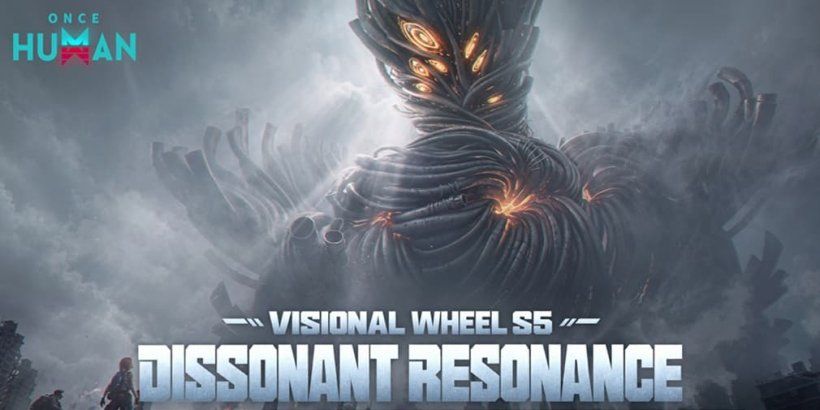

Once Human’s Dissonant Resonance Visional Season launches November 19 with emotion-warped zones, rhythmic gunplay, a living machine colossus, and a four-player raid built around the music itself.
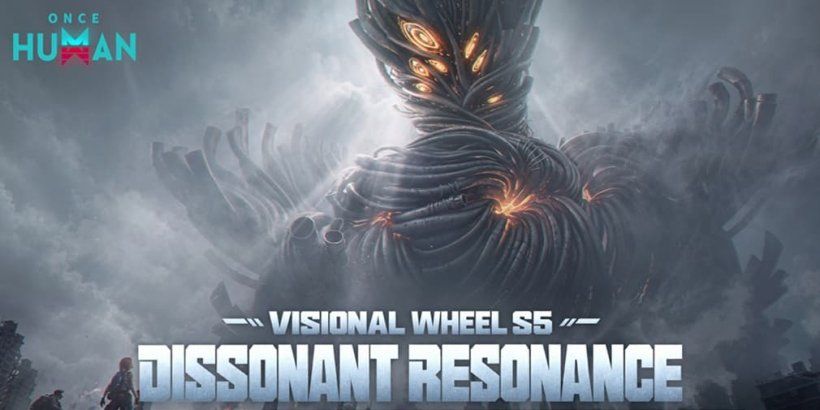
Image: pocketgamer.com
Once Human’s next season turns the sky into an instrument of pressure
Starry Studio has announced that Once Human Season 5, Dissonant Resonance, will launch globally on November 19, according to the studio’s press release published through Games Press. The new Once Human Visional Season is framed around sound as both a weapon and a threat, with the season’s central horror taking the form of a colossal pipe-organ machine god that watches the world from above before descending into a four-player raid.
That is the concrete hook, and it is a strong one for a survival game that has often leaned on scale, spectacle, and strange-world dread. Dissonant Resonance is not being described as a simple boss update. Across the official announcement and reports from Pocket Gamer, MMORPG.com, WorthPlaying, and TechTimes, the season is positioned as a systemic shift in how combat spaces behave: zones are tied to emotions, enemies leave musical notes behind, gunfire interacts with those notes, and successful composition can feed into buffs or open the way toward something worse.
The immediate tension for returning players is practical. Once Human is asking squads to read sound, timing, battlefield pickups, and a skybox threat at the same time. The Once Human living machine colossus is being sold as an environmental presence before it becomes a raid target, which suggests Season 5’s pressure will start long before anyone queues into the featured encounter.
The confirmed premise: a sound-driven apocalypse with emotion-warped zones
In the official Games Press announcement, Starry Studio says Dissonant Resonance transforms Once Human’s post-apocalyptic wilderness into an “acoustic nightmare” where bullets strike notes, kills fuel emotions, and a cathedral-like pipe-organ entity listens from above. Pocket Gamer similarly reports that the fifth season is focused on music and sound, with new sound-based foes and a massive boss arriving on November 19.
The season’s open-world layer appears to center on Anomaly Zones associated with emotional states. Games Press names Joy, Rage, Sorrow, and Fear as examples, while Pocket Gamer describes zones representing emotions “ranging from Joy to Fear” with matching soundtracks. That wording matters because it points to more than a cosmetic soundtrack swap. The official description says these regions “warp the wilderness,” and that defeated monsters scatter musical notes across the battlefield.
The loop, as described by Starry Studio, is built around shooting those notes. Doing so produces pitch-tuned audio and lets players collect notes to purify corrupted scores. Rearranged into harmonious melodies, those scores grant acoustic buffs. Pocket Gamer adds that players can eventually form a “perfect apocalyptic” score with hidden effects, while the official release teases that such a melody “might tear open a rift to something far more dangerous.”
That last line is a tease rather than a full mechanical explanation. Starry Studio has confirmed notes, corrupted scores, acoustic buffs, and the possibility of a more dangerous escalation tied to composition. It has not, in the supplied material, laid out exact buff values, zone rotations, loot tables, or how much improvisation squads will actually have over the score system. Returning players should treat the musical language as confirmed design intent, but wait for patch notes or in-game tooltips before rebuilding their loadouts around it.
The living machine colossus is the season’s real pressure valve
The Once Human living machine colossus is Dissonant Resonance’s most visible threat. Starry Studio describes it as a gargantuan entity inspired by cathedral pipe organs, looming in the skybox as a “living, judging presence.” MMORPG.com calls it a “giant pipe-organ machine god,” while Pocket Gamer describes it as an ominous pipe-organ leviathan watching the battlefield and changing conditions in response to player actions.
The important distinction is that this creature is being presented first as an overseer. According to the official announcement, it dynamically alters the atmosphere, expressions, and movements in response to what players do below. That makes the colossus a piece of encounter design before the raid even begins. A boss that changes the mood of the world can create constant low-grade pressure, especially in a survival game where players are already balancing ammo, healing, route planning, and enemy behavior.
For horror and survival players, the phrase “always listening” carries mechanical implications even if Starry Studio has not fully detailed them yet. If the season’s systems reward shooting notes and composing melodies, then noise is not background dressing. It becomes a currency, a lure, and potentially a trigger. That is the design space to watch when Dissonant Resonance arrives: whether the colossus responds in ways that change enemy aggression, visibility, hazards, soundtrack states, or objective pacing.
At this stage, Starry Studio has confirmed the colossus reacts to player actions and will eventually descend. The exact rules behind those reactions remain unannounced in the provided source material. That uncertainty is part of the season’s appeal, but it is also where players should be careful. If the colossus is tied to world-state changes, the safest launch-week habit will be to observe before optimizing: watch when the sky shifts, note what actions precede changes, and pay attention to whether solo and squad behavior provoke different responses.
The four-player raid turns music into the clock
Dissonant Resonance’s centerpiece encounter is a four-player raid against the descended colossus. Pocket Gamer reports that players must finish off the colossus before the music track concludes, with dynamic changes tied to the song. TechTimes frames the raid’s pressure similarly, saying squads are racing the track rather than a standard numeric timer.
That framing is worth taking seriously. A conventional raid timer asks players to read a UI element. A musical timer asks players to hear the fight’s structure while surviving it. If Starry Studio follows through on that premise, the raid could punish groups that rely on visual tunnel vision, especially if phase changes are tied to arrangement, tempo, or the track’s ending.
TechTimes, citing the official press announcement, reports additional raid details: squads enter a ruined cathedral, destroy glowing Resonating Pipes, and, for airborne players, steer aerial vehicles through floating Resonating Cavities in storm clouds above. Those specifics are not present in every supplied report, so they should be treated as reported raid details rather than a full official mechanics sheet. Still, they line up with the season’s broader language about pipe organs, resonance, and the colossus descending from the sky.
The practical read is that Dissonant Resonance may ask groups to divide attention vertically. Ground players may need to handle pipes, enemies, and note interactions, while airborne players, if TechTimes’ details hold in the final build, could be responsible for skyborne objectives. That creates resource pressure beyond raw damage. Bring builds that can survive movement mistakes, recover from split positioning, and maintain damage during objective swaps. The sources do not confirm recommended power levels, rewards, or revive rules, so raid preparation should stay flexible until Starry Studio publishes final season notes.
Rhythmic gunplay could change what counts as good survival play
WorthPlaying’s headline describes Dissonant Resonance as adding rhythmic gunplay, and Starry Studio’s official description gives the phrase some substance. Defeating monsters drops notes. Shooting those notes triggers audio and collects them. Collected notes purify corrupted scores. Harmonized scores provide buffs.
That chain matters because it can pull players out of familiar Once Human habits. In many survival shooters, the cleanest play is to kill fast, loot fast, and keep moving. Dissonant Resonance may complicate that rhythm. If notes are left on the battlefield and must be shot or collected in a particular flow, then the optimal path through a fight may involve choosing when to stop firing at enemies and start playing the arena.
For returning players, the question is not whether the system sounds stylish. It is whether it creates meaningful tradeoffs under pressure. A note pickup that exposes you to Fear-zone hazards, a buff that requires holding a dangerous position, or a score puzzle that competes with ammo conservation would all fit the season’s survival-horror texture. None of those specific examples are confirmed. They are the kinds of friction players should look for when judging whether the system has teeth.
The audio layer could also become a real accessibility and squad-communication issue. If track progression signals phase timing, if pitch cues mark successful note interaction, or if the colossus telegraphs mood changes through sound, then players who normally keep game audio low may be at a disadvantage. Starry Studio has not detailed accessibility options in the supplied announcement, so anyone sensitive to audio-heavy encounters should check settings, subtitle options, and community findings once the season goes live.
Nailoong arrives beside the dread, and platform details still need a careful read
Dissonant Resonance is launching alongside a very different piece of content: a limited-time Nailoong crossover event. Starry Studio’s Games Press announcement says the Nailoong event is live in-game today, while Pocket Gamer describes the mascot collaboration as bringing pastel cosmetics and other goods tied to the chubby dragon character.
That tonal contrast is deliberate business sense. A season built around dirges, Fear zones, and a judging pipe-organ god can sell atmosphere, while a bright crossover gives casual and cosmetic-focused players a softer reason to log in before November 19. The supplied sources confirm the crossover exists and is limited-time, but they do not provide pricing, reward tracks, unlock requirements, or an end date. Players who care about cosmetics should check the in-game event page rather than assume the crossover will remain available through the whole Dissonant Resonance season.
Platform reporting also deserves a careful read. The Games Press announcement in the supplied material identifies Once Human as a free-to-play survival title and gives the global November 19 launch date for Season 5. TechTimes reports the season launching across PC, PlayStation 5, Xbox Series X/S, iOS, and Android. WorthPlaying’s game box lists PC, PlayStation 5, and Xbox Series X, while Pocket Gamer’s coverage naturally emphasizes the mobile side and notes that Once Human took a while to get to mobile.
Those platform references are not identical, so the safest guidance is to verify the patch timing on the client you actually play. The core season announcement is global and dated November 19. The supplied sources do not confirm preload timing, patch size, regional maintenance windows, cross-platform parity, or whether all systems receive every feature at the same time.
What to watch before November 19
The biggest thing returning players should watch is how Dissonant Resonance handles cause and effect. Starry Studio has confirmed that the colossus observes and responds, that emotion zones change the wilderness, and that combat feeds a musical scoring system. The unknown is how readable those reactions will be in live play. If the season makes its sound rules clear, the pressure can feel eerie and fair. If it hides too much behind spectacle, launch-week squads may spend as much time parsing the orchestra as fighting the apocalypse.
Preparation should start with the basics: stabilize your main combat build, make sure you have a squad plan for four-player content, and avoid overcommitting resources to a theorycrafted setup before final patch notes explain the acoustic buffs. Since the raid appears to be time-pressured by the track itself, consistent damage and survivability may be safer early than fragile burst builds that collapse when mechanics interrupt rotations.
Players should also pay attention to the season’s resource economy. A system that asks you to shoot notes can create extra ammo demand. A raid with ground and possible aerial objectives can punish teams that bring four versions of the same role. Emotion-themed zones could shift what defensive tools feel valuable from one area to the next. None of that is a confirmed meta, but all of it follows from the systems Starry Studio has described.
Once Human Dissonant Resonance has a clear arrival date, a clear central monster, and a strong premise: sound is no longer scenery. It is pressure, reward, warning, and invitation. The unanswered questions are the ones that will decide whether Season 5 becomes a memorable survival set piece or a noisy grind: how the colossus reacts, how much agency players have over scores, how punishing the raid timer feels, and whether the music remains legible when four players, enemies, notes, and a machine god are all screaming for attention.