
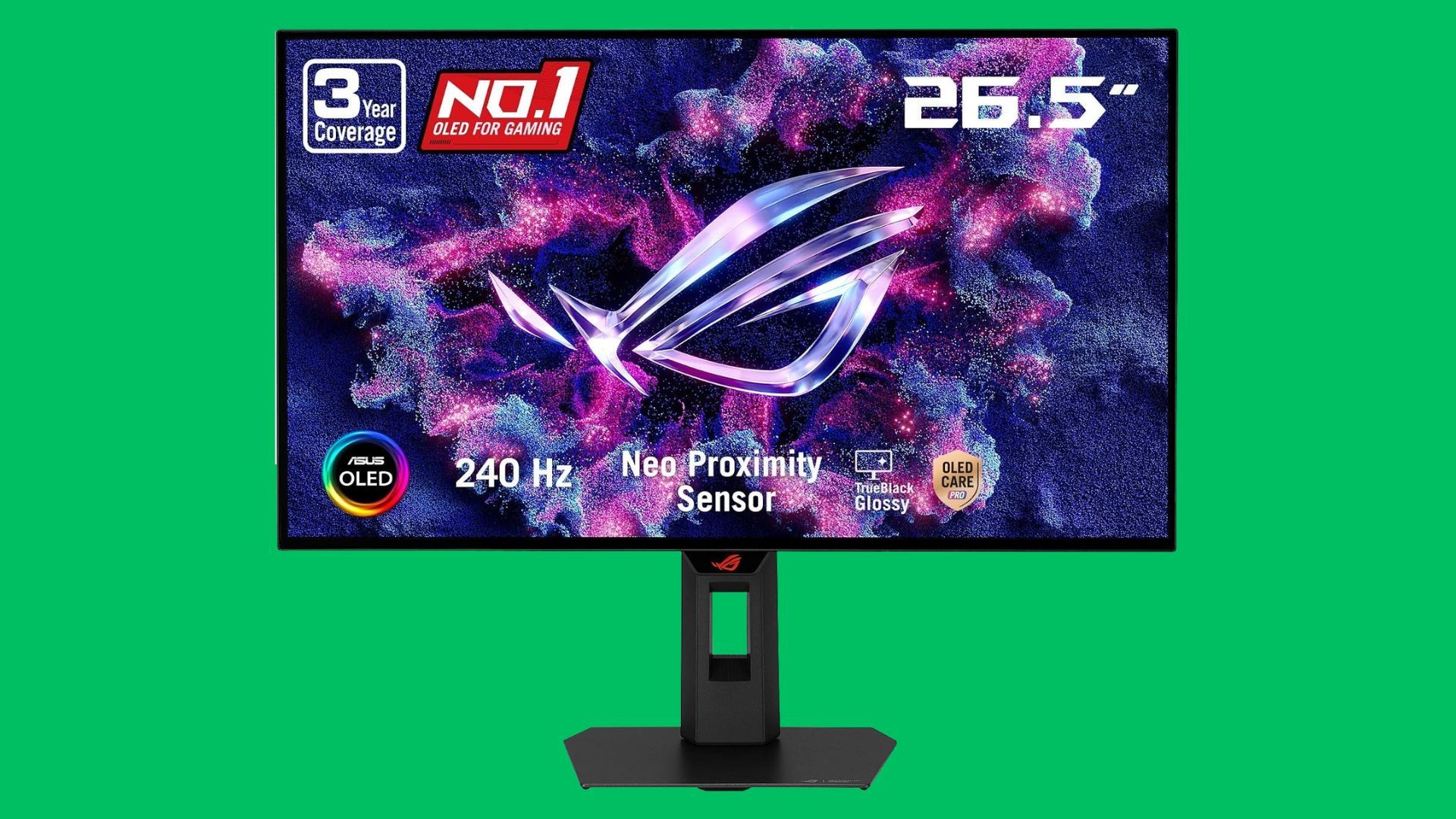

TrendForce’s Q3 2026 OLED monitor shipment data shows a market accelerating fast, but buyers still need to weigh price, burn-in risk, panel type, refresh rate, and timing before upgrading.
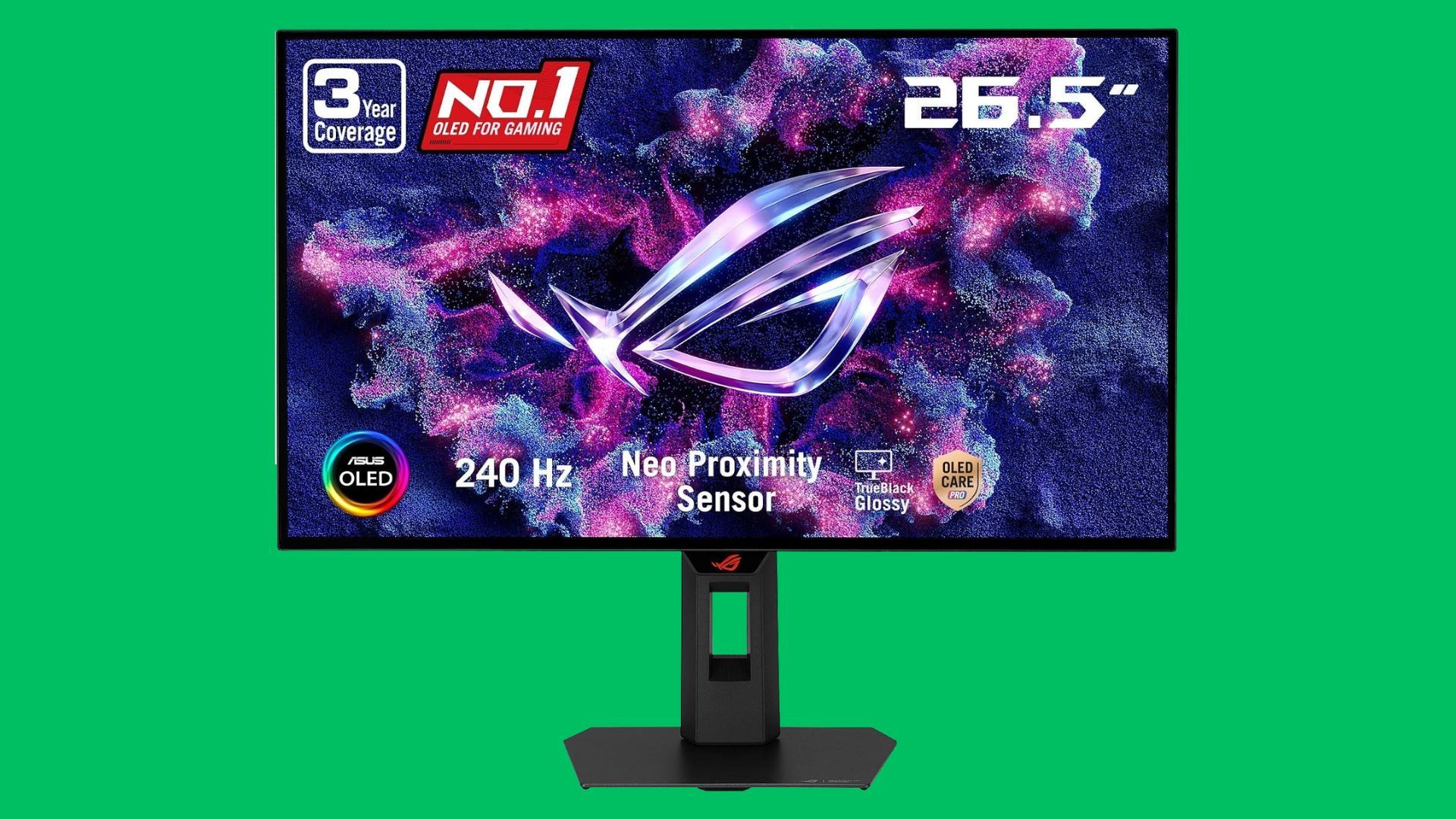
Image: tomshardware.com
OLED demand has doubled, but the signal is not the same as sales
Global OLED monitor shipments doubled year over year in the third quarter of 2026, according to TrendForce figures reported by Notebookcheck, VideoCardz, Windows Forum, and other hardware outlets. TrendForce also reported a 13% increase from the second quarter to the third quarter, which makes OLED one of the more active upgrade lanes in a PC market where many players have delayed GPU, CPU, and full-system purchases.
The tension is in the word “shipments.” Windows Forum correctly notes that these figures count units sent into the channel, not retail sell-through, revenue, or the number of OLED screens already sitting on players’ desks. That distinction matters for anyone reading this as a pure OLED monitor sales story. A shipment surge means manufacturers and retailers are preparing inventory and betting on demand. It does not prove every panel has already been bought at retail price.
Even with that caveat, the direction is hard to ignore. VideoCardz, citing TrendForce, reports that OLED monitor shipments are forecast to exceed 4 million units in 2026, up from 2.735 million in 2025, with TrendForce expecting 6.893 million by 2028. VideoCardz also reports that OLED accounted for only 2.1% of the overall monitor market in 2025, with that share expected to rise to 5.4% by 2028. In strategy terms, OLED is still a small faction on the map, but it is gaining territory quickly.
For buyers searching for the best OLED gaming monitor 2026 options, this is the first useful read on the market: momentum is real, choice is expanding, and supply appears healthier. But the market is still young enough that model selection, panel generation, warranty terms, and use case matter as much as headline refresh rate.
ASUS leads, MSI jumps Samsung, and the vendor race is changing
TrendForce’s Q3 2026 ranking shows ASUS still on top of the OLED monitor market with a 21.7% share. Notebookcheck and VideoCardz both report that ASUS shipments rose 6% quarter over quarter, helped by improved availability of high-end 27-inch QHD 540Hz OLED panels. Notebookcheck also says new ASUS models tied to the company’s 20th anniversary helped stimulate demand.
The bigger competitive shift is second place. MSI moved ahead of Samsung for the first time, reaching 14.5% share, up 1.7 percentage points from the prior quarter, according to TrendForce figures reported by Notebookcheck and Windows Forum. TrendForce attributed MSI’s third-quarter growth mainly to higher orders for 27-inch QHD monitors ahead of holiday shopping, along with several new models, including 27-inch QHD 320Hz displays.
Samsung slipped to third at 11.3%. The important nuance is that TrendForce did not frame Samsung’s decline as a collapse in shipments. Notebookcheck reports that Samsung’s shipment volumes stayed relatively stable through the first three quarters of 2026, but its share was diluted because the overall OLED monitor market expanded quickly around it. Samsung plans to increase shipments aggressively in the fourth quarter, targeting holiday demand in Europe and North America, according to Notebookcheck’s account of the TrendForce data.
LG Electronics and Dell also gained position. TrendForce’s figures put LG fourth at 8.6%, with demand helped by promotions on selected 27-inch QHD 240Hz models. Dell placed fifth at 8.2%, supported by mainstream 27-inch QHD 240Hz models and increased shipments of a 39-inch monitor introduced in the second quarter. VideoCardz reports that the top five manufacturers accounted for 64.3% of OLED monitor shipments in Q3, down from 66% in Q2, which suggests smaller brands are gaining some room as panel availability improves.
That is the market meta shift. OLED used to feel like a premium skirmish between a few obvious names. The Q3 data shows a broader fight over sizes, refresh rates, and price points, especially in the 27-inch QHD segment.
The upgrade case is built on contrast, HDR, and response time
The reason OLED is gaining momentum is not mysterious. Rock Paper Shotgun argues that OLED’s core advantage over LCD comes down to lighting control and speed. In an OLED panel, each pixel, and effectively each subpixel, is its own light source. That gives OLED the ability to place fully lit and fully dark pixels next to each other without relying on a shared backlight.
That matters most for HDR. Rock Paper Shotgun’s explanation is blunt: LCD is a transmissive technology, pushing light through pixels from a backlight, while OLED emits light at the pixel level. LCD can improve with mini-LED backlights and local dimming, but the outlet notes that even a mini-LED monitor with 2,000 dimming zones works out to roughly a 55 by 35 lighting grid on a 16:9 monitor. In a 4K display, that can mean each dimming zone is shared across about 4,000 pixels, producing visible blooming, brightness gradients, and dimming transitions.
OLED avoids those specific backlight problems because there is no big backlight to control. For games with dark interiors, bright spell effects, neon signage, muzzle flashes, space scenes, or high-contrast UI elements, that difference is visible in a way spec sheets can understate. The display can hold black levels while showing bright highlights without asking a coarse dimming grid to guess the scene.
Speed is the other half. Rock Paper Shotgun points to the physical behavior of LCD’s liquid crystals as a limitation, since those crystals must rotate to update the image. OLED’s emissive structure gives it a response-time advantage, which is why the market is now full of high-refresh gaming models such as 240Hz, 320Hz, and 540Hz QHD OLED panels reported in TrendForce’s brand breakdown.
This is where the shipment data and the buyer case line up. If the 2024 and 2025 OLED pitch was “great image quality if you can afford the compromises,” the 2026 pitch is becoming “competitive speed and HDR strength in the same display class.” That combination is what makes a gaming monitor upgrade feel rational even when other PC components are expensive.
The 27-inch QHD OLED is becoming the market’s default weapon
The most repeated spec in the Q3 2026 data is 27-inch QHD. ASUS gained from improved supply of 27-inch QHD 540Hz OLED panels. MSI’s rise was driven by higher orders for 27-inch QHD monitors, plus new 27-inch QHD 320Hz models. LG’s promotional activity centered on selected 27-inch QHD 240Hz monitors. Dell’s growth included mainstream 27-inch QHD 240Hz models.
That clustering is useful for shoppers because it shows where the industry is placing its volume bets. A 27-inch QHD OLED sits in a practical performance lane for PC gaming. It asks less of a GPU than 4K, supports high refresh rates that competitive players can use, and fits on normal desks without forcing buyers into huge-panel ergonomics. The Q3 shipment mix suggests brands see this category as the main bridge between early-adopter OLED and broader gaming monitor adoption.
That does not make every 27-inch QHD OLED the best OLED gaming monitor 2026 buyers can choose. Refresh rate still has to match the games you play and the frame rates your system can produce. A 540Hz panel is only strategically useful if your titles, settings, and hardware can push extremely high frame rates. A 240Hz model may be the better value if you play a mix of multiplayer games, RPGs, strategy games, and single-player releases where image quality carries more weight than absolute refresh ceiling.
Larger and higher-resolution panels remain part of the story. Rock Paper Shotgun mentions the MSI MPG 322UR X24 as part of a new generation of 32-inch 4K OLED gaming panels. Dell’s Q3 growth, according to TrendForce figures reported by Notebookcheck and VideoCardz, also benefited from a newer 39-inch monitor introduced in Q2. Those categories target buyers who want immersion, workspace, or 4K clarity rather than the most efficient esports setup.
The strategic read is simple: the mainstream OLED battle is not being fought first at the most cinematic size. It is being fought at the size and resolution where the widest range of gaming PCs can actually feed the panel.
Price pressure is improving, but OLED still has upgrade friction
Rock Paper Shotgun notes that OLED gaming monitors can now be found for under £300 or $300, while also warning that OLED gaming is still hard to call cheap. That is the buyer’s paradox in 2026. The entry point is lower, shipments are rising, and promotions are visible in the TrendForce data, especially around LG’s 27-inch QHD 240Hz models. Yet OLED still carries complexity that an LCD purchase often avoids.
Burn-in remains the obvious concern. Rock Paper Shotgun acknowledges that the risk of burn-in is an immediate deal-breaker for some buyers. The source material here does not provide model-by-model warranty terms, burn-in coverage, or manufacturer mitigation details, so buyers should not treat rising shipments as proof that the risk has disappeared. If your monitor spends long hours on static desktop layouts, strategy game UI, MMO hotbars, productivity apps, or streaming overlays, the burn-in question deserves more attention than it would for someone who mostly plays varied full-screen games.
The other complication is product fragmentation. Rock Paper Shotgun describes the OLED gaming monitor market as complicated, with a confusing range of panel types and monitor models. That matches the TrendForce brand data, where several vendors are pushing different refresh rates, sizes, and promotional tiers at the same time. The OLED label alone is no longer enough information.
Buyers should also remember that shipment growth can create both better deals and temporary noise. Holiday inventory can produce promotions, but a vendor ramp does not guarantee every model is discounted. Windows Forum’s warning about shipments is the anchor here: channel movement is not retail sell-through. If a model is newly launched, scarce, or tied to a premium refresh-rate panel, it may remain expensive despite the broader OLED growth curve.
For a gaming monitor upgrade, the smarter approach is to start from use case. Competitive players should compare refresh rate, resolution, and GPU headroom first. HDR-focused single-player players should prioritize panel quality, brightness behavior, and contrast handling. Mixed-use PC owners should check burn-in policies and practical desktop features before chasing the lowest sale price.
Whether to buy now or wait depends on your upgrade timing
The Q3 2026 shipment data gives buyers a stronger reason to watch OLED deals through the holiday period. TrendForce’s figures, as reported by Notebookcheck, say Samsung plans to ramp shipments in Q4 for Europe and North America in an attempt to regain second place. MSI’s Q3 jump was tied partly to higher orders ahead of the holiday shopping season. LG’s position improved with promotions on selected models. Those are all signs of a more active retail window, even if the shipment reports do not list specific prices.
If your current monitor is an older 1080p or 1440p LCD and you already have the GPU performance to support high refresh rates, OLED is no longer a speculative upgrade. The technology advantages described by Rock Paper Shotgun, especially per-pixel lighting control and faster response behavior, directly affect games in motion. The current shipment surge suggests better availability than earlier OLED monitor cycles, particularly in 27-inch QHD.
If you already own a strong mini-LED or high-refresh LCD, the case is narrower. OLED will likely improve black levels, pixel response, and HDR contrast, but it also introduces burn-in considerations and often a higher price. In that scenario, waiting for Q4 promotions, model reviews, or clearer warranty comparisons is the more disciplined play.
The 2026 market is still early in total share. VideoCardz reports that TrendForce expects OLED to reach only 5.4% of the total monitor market by 2028, despite rapid shipment growth. That means LCD will remain dominant for some time, especially in budget and office-heavy segments. OLED’s momentum is real, but it has not turned the entire monitor economy overnight.
For readers searching OLED gaming monitor shipments because they want to know whether this is the moment to upgrade, the answer is conditional. The market is finally building enough volume to create choice and competition. The best move is to buy when a specific model matches your games, GPU, desk setup, and tolerance for OLED’s maintenance risks, rather than buying because the category’s shipment chart is rising.