
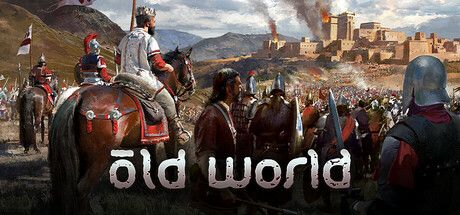

A strategy-focused preview of Old World’s Empires of the Indus DLC, breaking down its new South Asian empires, scripted scenarios, and mechanical twists for Civilization and Humankind players.
Old World has always lived in the space between Civilization and Crusader Kings, with turn-based empire building driven by dynastic characters and event chains. Empires of the Indus, the game’s next major DLC, leans hard into that identity while finally giving South Asia a full spotlight. For 4X fans eyeing Old World from the comfort of Civ or Humankind, this looks like the expansion that makes the jump worth it.
A new strategic theater: the Indus and beyond
Empires of the Indus shifts Old World’s focus to the Indus Valley and wider South and Central Asia. Instead of just dropping new factions into the generic map pool, the DLC arrives with multiple mapscripts and handcrafted scenarios that try to capture how contested this region really was.
You get new scripts that cover the whole subcontinent for sprawling campaigns, along with smaller pre-made maps that zoom in on flashpoints like the Indus Valley or landlocked Bactria. For players used to Civ and Humankind’s procedural maps, this is where Old World’s design diverges. The geography is not just backdrop; it is tuned to make political pressure, trade routes, and religious spread feel like a tight puzzle rather than a blank canvas.
Jungle terrain joins the existing biomes, and that alone has interesting knock-on effects. Jungles slow movement and complicate logistics, which matters in Old World’s order-based system where every unit and action draws from a shared pool. Marching heavy infantry through dense jungle just to secure a river crossing starts to feel like a serious economic decision.
Three contrasting South Asian powers
At the heart of the DLC are three playable civilizations tied to the region: the Maurya Empire, the Yuezhi on their way to forming the Kushan Empire, and the Tamilakam polities in the south. For Civ and Humankind players, the pitch is not simply “three new leaders,” but three different strategic problems designed around Old World’s character-driven framework.
Maurya Empire: building power through faith and administration
The Maurya arrive during a period when statecraft, conquest, and religion are tightly interwoven. Empires of the Indus leans into this by tying the Mauryan game plan to turning Buddhism into a world religion while still maintaining a centrally managed empire.
Old World already supports religions as political levers, but the Maurya push this further. As Ashoka, you care deeply about who converts, which families hold religious posts, and how your piety translates into legitimacy. Rivals do not just threaten your borders; they compete for spiritual influence across the map.
For Civ players, this feels like a hybrid of a religious and diplomatic victory, just with more knife fights inside your court. Faith is not an abstract pressure vector but a resource that flows through governors, courtiers, and heirs. A bad succession can undo decades of careful theological expansion.
Yuezhi and the future Kushan Empire: migration as long-game strategy
The Yuezhi represent a different fantasy entirely. Historically, their migrations and eventual consolidation as the Kushan Empire reshaped Central and South Asia. In Old World terms, this is a civ that wants to transform itself over time, leaning on mobility, cross-cultural contact, and flexible identity.
You are not simply painting the map your color. Instead, you are nudging a people in motion toward a stable imperial core, managing steppe-style expansion with the realities of agrarian subject populations along the Indus routes.
For Humankind fans, this will be the closest Old World gets to that game’s culture-shifting systems. The Yuezhi evolve inside a continuous campaign rather than through era-based swaps, but the idea is similar: your early moves shape the eventual Kushan powerhouse, and your success depends on how gracefully you blend steppe militarism with settled wealth.
Tamilakam: family feuds as a core mechanic
The southern Tamilakam realms are the most explicitly character-focused of the bunch. While all Old World factions juggle noble families, Tamilakam turns intra-dynastic rivalry into a main pillar of play.
Families within your sphere have their own feuds, goals, and grudges, and you are never far from a civil conflict that can spiral out of control. Managing these rival lineages while still expanding outward along the coasts and inland trade routes is the Tamilakam challenge.
For veterans of Crusader Kings who always wanted more robust economic and city-building layers, this faction reads like a bridge. Where Civ might abstract internal politics into a couple of loyalty modifiers, Tamilakam is asking you to broker marriages, give out governorships, and keep ambitious nobles just satisfied enough not to tear your budding empire apart.
New religions and wonders with strategic teeth
Empires of the Indus does not just add a new region; it pushes Old World’s religious and prestige economies forward. The big mechanical headline is the addition of Hinduism alongside the new focus on Buddhism.
Hinduism enters the game with its own events, laws, and pressures on the ruling family. Choosing which religion to elevate is no longer a simple numbers game of yields and opinion bonuses. Your decision locks you into a tenor of rulership that ripples through ambitions, succession, and diplomacy.
For Civ and Humankind players used to religions as yield-generating packages or ideological skins, Old World’s approach here is more personal and volatile. When a religion falls out of favor or a zealous heir takes the throne, you feel it as a crisis in your ruling house, not just a reshuffle of pantheon bonuses.
The DLC also adds four new Wonders tied to the region. As in the base game, Wonders in Old World are as much political symbols as infrastructure projects. Building one is a statement about your dynasty’s priorities, and it plays into legacy scoring and ambition completion.
The key difference from Civ is that Wonders here are bounded by your ruler’s lifespan and your limited order pool. Chasing a Wonder at the wrong time is not just a lost race; it can be the choice that leaves your armies without orders during a critical war.
Events, ambitions, and the Huns: scenario-style pressure for sandbox players
Old World has been praised as much for its event system as for its tactical layer, and Empires of the Indus doubles down. The DLC introduces over 200 new events and 60 new ambitions, many of them tuned to reflect South Asian social, religious, and dynastic tensions.
Ambitions are long-term goals your rulers set, stretching across decades and sometimes generations. Here, they can intersect with new religious paths, family politics, and expansion strategies in the Indus region. Failures hurt not just your score but the legitimacy of your ruling house.
The new events hook into these ambitions and into the added mechanics for the new civs. Expect crises born of monastic politics, frontier clashes, and elite quarrels over temples and trade routes. For players coming from Civ, this is one of the biggest structural differences: there is much less sense of a perfectly planned build order and much more adaptation to narrative shocks.
Joining all this is a new tribal threat, the Huns. Old World’s tribal systems already create pressure on border regions, but adding the Huns means late-game campaigns in or around Central Asia become far more turbulent.
For Humankind fans who liked the way hostile cultures and events kept the map from settling into pure optimization, the Huns serve a similar purpose. You cannot simply turtle behind walls and wait for science to carry you. You are forced to project power into dangerous territory, burning precious orders to keep steppe incursions in check.
Why 4X fans should pay attention
From a distance, Empires of the Indus could look like the usual DLC checklist: new civs, new terrain, more events, extra Wonders. The reality is more interesting. This pack uses South Asia to stress Old World’s central thesis that empires are fragile human projects rather than smooth curves of production and science.
If you come from Civilization, you will recognize the tile-based expansion, city specialization, and wonder races. The difference lies in how tightly these are tied to rulers who age, die, and make mistakes. The Maurya and Tamilakam in particular showcase how a single bad heir or botched religious policy can unravel an entire strategy.
If you come from Humankind, you will appreciate the way the Yuezhi–Kushan arc plays with identity and transformation over time, without restarting your civ each era. Old World’s fixed time frame supports sharper storytelling, and Empires of the Indus uses that to show a region in flux rather than just adding another historical skin to a generic empire.
The core 4X loop is still here: expand, exploit, exterminate when necessary. What this DLC does is reframe those verbs through South Asian history, religious pluralism, and dynastic drama. It invites you to win not only on the map, but in the throne room and the temple courtyard.
For players looking for a fresh take on ancient-world strategy, Empires of the Indus is shaping up to be more than extra content. It looks like the point where Old World finally pulls South Asia into the center of its story and, in the process, gives Civ and Humankind fans a compelling reason to shift their next campaign east.