

With a 20th anniversary site live and a full sequel in development, Okami is poised for a modern revival. We look back at the series’ legacy, break down what Capcom is teasing on the anniversary hub, and explore how RE Engine tech and today’s audiences could transform Amaterasu’s next adventure.
Okami turning 20 in 2026 feels surreal. What started as a risky, painterly action adventure from Clover Studio has grown into one of Capcom’s most beloved cult classics, resurfaced through HD re-releases, and now revived through a dedicated sequel.
With Capcom’s new 20th anniversary website live and a fresh Okami project quietly in development at CLOVERS, this is the most forward momentum the series has had since the original PS2 release. It is not just a celebration of what Okami was, but a signal that Capcom finally sees what it can be in a modern landscape shaped by games like The Legend of Zelda: Breath of the Wild, Elden Ring, and Ghost of Tsushima.
A brief look back at Okami’s unlikely legacy
When Okami launched in 2006, it landed near the end of the PlayStation 2’s life and had the misfortune of releasing into a crowded window. Its sales were modest, but its artistic impact was immediate.
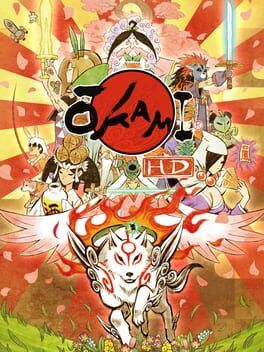
Clover Studio built Okami as a playable woodblock print. Thick ink outlines, fluttering brushstrokes and parchment-style backdrops gave Nippon a look that still feels singular. Controlling Amaterasu, the sun goddess in the form of a white wolf, players drew with the Celestial Brush to slice enemies, bloom trees, carve rivers and literally repaint a cursed world back to life.
Critically, the game hit like a thunderbolt. Reviewers praised its visual style, sweeping score and heartfelt take on Japanese folklore. Over time, word of mouth and later ports on Wii, PS3, PS4, Xbox One, PC and Switch turned Okami into a slow-burn success. Okami HD in particular found an audience that had missed it the first time, with higher resolutions making the sumi ink look even sharper and gesture or motion controls giving the brush a tactile feel.
Yet for all its acclaim, Okami’s future felt uncertain for years. Clover Studio was shuttered, a DS follow up in Okamiden arrived without much marketing support, and Capcom folded the series into its back catalog, resurfacing it primarily via ports. The 20th anniversary is the first time in a long while that Okami is being treated as an active, growing brand again.
What the 20th anniversary site is really saying
The new 20th anniversary website is more than a nostalgia hub. On the surface it offers exactly what you would expect: an overview of the original game, celebratory key art of Amaterasu and familiar characters, and clean links out to Okami HD for modern platforms.
The more interesting piece is how prominently Capcom positions the in-development sequel. The site does not bury it in a press release or a tiny footer; it calls out that a new Okami game is underway, and folds that future into the overall brand story. This suggests Capcom wants players to see the series as a living thing rather than a one-off cult classic.
The messaging also emphasizes continuity. From the anniversary hub and related official pages, Capcom reiterates that the new title is a direct follow up to the original Okami. It is not a soft reboot or distant spin off, but a continuation of Amaterasu’s tale.
For longtime fans, the anniversary site plays a dual role. It is a convenient archive and celebration, but it is also the first central place where Capcom points everyone toward the sequel. In that sense, it acts like a relay baton, passing the emotional weight of the last 20 years into the project that is being built now.
What we know about the Okami sequel so far
The sequel, often referred to unofficially as Okami 2, remains early in development, but there are now some concrete details.
Capcom has confirmed that the sequel is a direct continuation of the first game’s story. That means players can expect Amaterasu’s journey to pick up after the events of the original Nippon, rather than a distant prequel or side tale. This alone is a big deal for fans who have spent years speculating about loose threads and unseen gods beyond the Okami pantheon.
The project is being directed once again by Hideki Kamiya, who led the original Okami. That creative throughline is crucial given how much of the first game’s identity came from its tone, pacing and willingness to blend slapstick comedy with earnest mythological drama.
On the technical side, multiple reports, interviews and features have converged on one important point: the sequel is being built on Capcom’s modern technology, the same backbone that powers Resident Evil remakes, Devil May Cry 5 and Dragon’s Dogma 2. This is often referred to as the RE Engine, a scalable toolset that has proven it can handle everything from tight third person combat to vast open landscapes.
Developers at CLOVERS and Capcom have downplayed the idea of a quick release. Public comments describe the project as still a ways off and stress a desire to surpass player expectations. That sounds like marketing speak, but taken alongside the relatively early state of public materials, it lines up with a long development runway aimed at something more ambitious than a modest nostalgia piece.
How RE Engine and modern Capcom tech could reshape Okami
Dropping Okami’s painterly vision into the same technological ecosystem as Resident Evil and Dragon’s Dogma invites obvious questions. Can a toolset tuned for photoreal horror and high fidelity action really handle a stylized, ink brushed world without losing its soul?
The last few years of Capcom output suggest the answer is yes. RE Engine has quietly become one of the most flexible pieces of tech in the industry. It has adapted to first person horror, slick character action and large scale fantasy. For Okami, the challenge is not whether the engine can do cel shading at 4K, but how it can be bent toward interactive art.
Imagine a Nippon where the parchment-like sky is not just a backdrop, but a living canvas tied into the engine’s lighting, weather and particle systems. Instead of simple texture swaps when Amaterasu blooms a field, the entire scene could be reconstructed with real time brush effects, ink bleeding across the world geometry, grass and water reacting dynamically as color floods back into the land.
The Celestial Brush itself is ripe for reinvention. On PS2 it was a clever pause and draw mechanic. In an RE Engine powered sequel on modern hardware, it could be a richer layer that deforms the environment, redirects projectiles in volumetric space and chains seamlessly into combat animations. Think of carving wind paths that persist as swirling ink ribbons or drawing bridges that feel physically present under Amaterasu’s paws.
Performance targets matter here too. With Capcom routinely hitting high frame rates and resolutions on current platforms, a new Okami could finally marry its art style with the kind of smoothness players now expect. Sharp 4K rendering would make ink strokes and kanji effects pop, while HDR support could give sunrise scenes the blinding warmth they always aspired to on older hardware.
Designing Okami for a post Breath of the Wild audience
The world in which Okami’s sequel will launch is very different from 2006. Back then, large adventures were more linear, with clear critical paths and discrete dungeons. Today, players are used to open ended exploration and systemic worlds where curiosity is rewarded with genuine discovery.
The original Okami already flirted with those ideas. Nippon was more spacious than many of its peers, filled with side quests, hidden brush techniques and pockets of wilderness to cleanse. It felt like a spiritual cousin to Zelda, inviting players to revisit areas with new powers and slowly restore color to every corner.
In a modern sequel, those foundations could evolve into a more genuinely open structure. Instead of gated sequences that unlock regions in a strict order, the new Okami could lean into regional myths and yokai stories as semi independent threads. Players might choose which cursed provinces to tackle first, each with its own brush focused mechanics, environmental challenges and gods to befriend.
Games like Breath of the Wild and Elden Ring have reset expectations around how secrets and narrative can be embedded in the world itself. For Okami’s sequel that might mean fewer tutorial heavy explanations of how to use each brush and more opportunities to experiment and stumble into clever solutions.
Capcom also has years of experience now with systemic combat design. Devil May Cry 5’s combo philosophy and Dragon’s Dogma’s physics based encounters could bleed into how Amaterasu fights. Instead of simply headbutting and slashing, she could leverage brush strokes mid combo to knock foes into each other, break armor weak points or reshape the battlefield with drawn barriers and traps.
Crucially, none of this needs to come at the expense of approachability. One of Okami’s charms was its gentle tone. The sequel can appeal to modern sensibilities without becoming punishing, focusing on expressive freedom and playful experimentation rather than punishing difficulty.
Story possibilities in a continued myth
From a narrative standpoint, a direct sequel has a lot of room to expand on the groundwork the original laid. Okami presented a rich tapestry of Shinto inspired gods, spirits and legendary beasts, but even by the end of its long runtime it felt as if Nippon held more mysteries than one game could resolve.
Returning to Amaterasu allows the team to continue that myth, perhaps exploring distant lands hinted at in passing, or delving deeper into the celestial plane glimpsed during the first adventure. There is also space to bring back fan favorite characters, including Issun, while introducing new companions with their own regional folklore.
Modern players also tend to expect more optional storytelling and character focused vignettes. Side quests that once boiled down to simple fetch tasks could become deeper chains that explore local legends, family histories and how ordinary villagers respond when gods literally walk among them.
Given Capcom’s track record with strong cinematic direction in recent years, from Resident Evil’s first person horror to Dragon’s Dogma’s sweeping vistas, the sequel could amplify Okami’s emotional peaks with more sophisticated staging, camera work and animation while still relying on its theatrical, storybook framing.
A cult classic finally treated like a pillar
Perhaps the biggest change in Okami’s fortunes is not technical at all. It is about how Capcom is choosing to present the series to the world.
The 20th anniversary site positions Okami alongside the publisher’s major brands rather than as a quirky side project from a defunct studio. It acknowledges the original, celebrates its long tail success through HD ports and explicitly ties that history to a future that is being actively built.
In an era where publishers are mining back catalogs for safe remakes, Okami’s path is slightly different. The HD version already exists and has done its job introducing the game to new players. The sequel has to justify itself not just as another trip through nostalgia, but as a genuinely new chapter in a beloved style of action adventure.
That is a high bar, but it also feels like the moment Okami has been waiting for. Players are more open than ever to stylized art, mythological settings and slower, more reflective pacing, especially when it is paired with modern quality of life features and performance standards.
Looking ahead to Amaterasu’s next sunrise
Right now, the 20th anniversary website is a promise as much as a party. It collects two decades of affection for a once underappreciated game, then points that energy toward a project that will live or die based on how well it can honor the original while speaking to a new audience.
With Hideki Kamiya back at the helm, Capcom’s flexible RE Engine behind the scenes and a global player base primed for grand, expressive adventures, the conditions are better than they have ever been for Okami to truly flourish.
If the sequel can capture the feeling of drawing the sun into a bleak sky and watching the world bloom in response, while letting players explore a freer, more reactive Nippon, then Okami’s 20th anniversary will not just mark a milestone. It will mark the moment the series finally steps into the spotlight it has always deserved.