
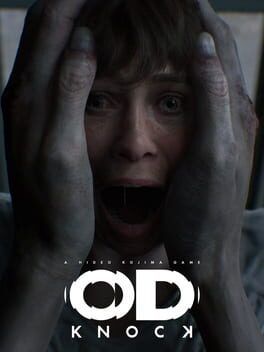
Hideo Kojima says OD will push horror “beyond the limit of scariness” while secretly monitoring how scared you are and helping you keep going. Here is how that fear‑management idea fits into horror design today, and how it could change accessibility and player retention.
Hideo Kojima has started talking about OD in a way that makes it sound less like a traditional horror game and more like an experiment in managing human fear. In recent interviews highlighted by IGN and Video Games Chronicle, Kojima describes OD as a project built to test how much terror a player can take before they mentally “overdose on fear,” while still including a special, secret system for those who are too scared to keep going.
That combination is unusual. Horror games usually balance scares with relief using static difficulty options or pacing tricks. Kojima is describing something that sounds closer to a dynamic, personalized fear thermostat. If OD pulls this off, it could shift how horror games look at both accessibility and keeping players engaged over the long haul.
What Kojima has actually said about OD’s fear‑management system
Because the full Entertainment Weekly interview and other coverage is light on real specifics, we mostly have fragmentary quotes. Across the reporting, Kojima makes a few key points about how OD will treat fear and player stress:
He says OD’s core concept is to explore “overdosing on fear,” presenting a horror experience that goes “beyond the limit of scariness” normally seen in games. That sounds like an escalation from the already intense psychological dread of P.T. or the most oppressive sections of Silent Hill and Resident Evil.
At the same time, he stresses that there is a special system for people who are too scared to keep playing. The way outlets summarize it, this doesn’t seem like a simple “easy mode.” Instead, Kojima describes it as something that lets a player who has hit their personal fear ceiling “keep going,” without undermining the point of OD.
He also hints that OD will use technology to monitor how players react, talking about testing fear thresholds in a way that feels more experimental than conventional difficulty tuning. In typical Kojima fashion, details are concealed behind a layer of mystery, but the messaging is clear enough: OD will actively react to your fear.
In other words, OD is being framed as a horror game that simultaneously wants to be the scariest experience on the market and yet not lose the people who find it overwhelming.
How horror games usually handle fear and stress
To understand why this pitch stands out, it helps to look at how most horror games have historically managed player stress.
At the most basic level, horror design is a cycle of tension and release. Games like the original Resident Evil titles, Silent Hill 2, or more recently Alien: Isolation all build long sequences of dread, then give the player some form of catharsis: a safe room, a powerful weapon, a story beat, or even just a hallway where nothing happens. This ebb and flow is the backbone of horror pacing.
More modern horror games have layered dynamic systems on top of that pacing. The Xenomorph AI in Alien: Isolation responds to the player’s noise and behavior to keep tension simmering without letting the experience completely stall. Resident Evil 4’s “adaptive difficulty” tracks how well you are playing and quietly tweaks enemy aggression and damage. Dead Space 2 uses director‑style systems to spawn enemies in places where the player is likely to be relaxed.
Crucially, most of these systems are invisible, but they are tuned around performance metrics like health, ammo, or player accuracy. They care about whether you are winning or losing, not whether you are about to put the controller down because the game is simply too intense.
Some games do acknowledge that fear itself can be a barrier. Amnesia: The Dark Descent warns players up front that the game is designed to disturb them and offers advice on how to play. Resident Evil 7’s director later admitted the game might have been “too scary” for some audiences, while its follow‑up Resident Evil Village lightened the tone and increased the action partly to avoid losing players to pure dread. The Outlast series and Layers of Fear have sold themselves as relentless, almost sadistic experiences, but they also quietly know that many people never see the credits.
What most horror games stop short of doing is building formal systems that watch for the moment you decide you cannot go on.
Where OD’s approach sounds different
From Kojima’s comments, OD’s system sounds less like difficulty tuning and more like emotional monitoring.
The system, as described in the coverage, has two goals. First, to track each player’s personal fear threshold. Second, to make sure that when someone hits that limit and is ready to quit in discomfort rather than cathartic fear, the game has a way to intervene so they can continue.
Instead of only watching performance indicators, OD may be watching behavioral cues linked to fear and stress. That could include how long you hesitate at doors, how often you pause, whether you look away from the screen, or how consistently you fail after a given type of scare. Kojima’s history with meta‑design and breaking the fourth wall in games like Metal Gear Solid means he is unusually willing to treat player behavior as part of the narrative fabric.
To players, this might feel less like a hard “easy mode” toggle and more like an invisible safety net. The horror can still peak as high as Kojima wants, but the game can quietly catch you if you are about to mentally check out.
Techniques horror games already use to manage stress
Even if OD ends up pioneering some new twist, it is worth mapping it onto existing stress‑management methods in horror.
One common tactic is controlled safe zones. Silent Hill’s save rooms, Dead Space’s upgrade benches, and RE’s typewriter rooms are all signals that the dread will drop for a moment. These are breaks you can see and plan around. They lower heart rate and let you prep for the next wave.
Another method is mixing power fantasy with vulnerability. Resident Evil 4 Remake, The Evil Within 2, and Dead Space Remake all regularly flip the script from stalked victim to empowered hunter. Giving players bursts of control lets them process earlier fright without burning out.
A more modern approach involves dynamic scare pacing. Alien: Isolation’s AI director or the Stalker system in S.T.A.L.K.E.R. adjust when and where threats appear to avoid both boredom and total shutdown. Even some indie horror experiments randomize jumpscares or enemy paths so the player can never routinize their fear.
What these systems lack is an explicit focus on people who are close to putting the game away permanently. They are mostly about keeping existing players immersed, not coaxing them through a panic response. OD’s secret system, as Kojima frames it, is aimed at that brink.
Speculation: how OD might actually watch and manage fear
Given the lack of concrete detail, any analysis of OD’s internal workings is speculative, but it is possible to make educated guesses based on Kojima’s previous work and current industry tech.
The most straightforward possibility is a behavioral fear index running in the background. The game could combine factors like time spent in high‑tension areas, number of deaths during chase sequences, how often a player abruptly pauses after a scare, and camera behavior. Pausing immediately after a loud scare, backing away from objectives, or staring at the floor to avoid visuals are subtle tells that the experience is becoming too much.
On Xbox, OD could theoretically reach beyond the controller. Modern cameras and microphones can detect movement and breathing rate, and some games already read controller input fluctuations as a crude stress proxy. Kojima’s stated interest in blending film, game, and experimental tech suggests OD might at least experiment with these kinds of signals, even if in a simple way.
Once the game believes you are over your threshold, it could activate its special system. That might mean toning down the intensity of upcoming sequences, ramping up the availability of safe zones, shortening chase segments, or swapping an especially disturbing set piece for something milder while preserving story beats. It could also introduce an in‑universe mechanism, such as a mysterious character who “guides” scared players in a way that doubles as a narrative excuse for easier sections.
Kojima being Kojima, the system could even be presented meta‑textually. The game might inform you that it sees you struggling and offer a diegetic bargain to let you proceed for a cost, or it might silently change the rules to keep the illusion of uncompromised horror while quietly making life easier. That would keep the theme of overdosing on fear intact without forcing everyone to experience the maximum dose.
How a fear‑management system could change accessibility
Horror is one of the genres where emotional accessibility is as important as mechanical accessibility. Many horror fans love the genre in film or books but avoid horror games because interactivity makes the fear too raw. If OD can genuinely watch for panic and intervene appropriately, it could open the door for those players in a way that simple “Story Mode” options rarely do.
First, a dynamic fear‑management system can make content more accessible to people with anxiety disorders, PTSD, or other conditions that heighten stress responses, provided it is implemented thoughtfully and transparently. Letting the game read your discomfort and soften specific spikes could keep the experience within safe psychological bounds while still delivering a tense narrative.
Second, it helps with sensory accessibility. Jumpscares often rely on sudden audio spikes, harsh flashes, or other elements that are punishing for players with sensory sensitivities. A system that recognizes repeated failures or abrupt quits around such moments could, in theory, replace them with slower‑burn scares or visual storytelling.
Finally, tying fear management to design systems rather than blunt toggles means players do not have to label themselves as “too scared” up front. Some people avoid switching to easy modes out of pride, even when they would enjoy the experience more. If OD silently buffers the extremes for those who need it, more players can experience the full story without feeling they have opted out of the “real” game.
The ethical caveat is that OD needs to be clear about any biometric or behavioral tracking it uses. Accessibility benefits depend on trust. If players feel spied on or manipulated, the system could have the opposite effect.
Why this could be a retention tool as much as a creative choice
From a business perspective, Kojima’s system also targets a real retention problem in horror. Many horror games see steep drop‑off after especially intense early sequences. People try the game, get genuinely terrified, then never come back. That might be a win for the horror genre’s reputation, but it is not great for engagement metrics or word of mouth.
A secret safety net lets OD go harder on terror without bleeding players. If the game can detect that you are close to quitting, it can slip into a lower‑stress state, let you get your bearings, and rehook you with story or exploration. Instead of quitting in the middle of a traumatic sequence, you ease into a calmer chapter and are more likely to return.
This plays nicely with modern content‑driven models. The more players stick with OD, the more likely they are to talk about it online, recommend it to friends, or even engage with post‑launch content. A dynamic fear system is thus both an artistic statement about exploring the limits of fear and a smart retention mechanic in an era where completion rates matter.
There is also the streaming factor. Horror thrives on reaction videos, but very few streamers want to permanently stall on a section that makes them visibly uncomfortable. If OD can soften spikes at the moment streamers are about to bail, the game becomes more streamable, generating more organic marketing while keeping its reputation for intensity.
The risk: horror that adapts might lose its edge
There is a tension at the heart of Kojima’s pitch. Horror fans often value uncompromising design that does not flinch away when things get truly nasty. If OD is constantly trimming its own sharp edges in response to player stress, the fear of missing out on the “true” experience might overshadow the accessibility benefits.
The way out of that dilemma is to make the system configurable and honest. If players can opt into a “pure” mode that minimizes adaptation, or if OD lets you see in retrospect how much the system intervened, hardcore fans can chase the maximum dose while others get the moderated experience.
Kojima’s own track record suggests he cares about preserving the artistic statement. Metal Gear Solid’s famous Psycho Mantis fight and the controller‑port trick, Death Stranding’s social‑network systems, and P.T.’s cryptic puzzles all show a willingness to frustrate or unsettle players in service of a point. OD’s system will likely be tuned to maintain that edge, not simply sand it down into generic comfort.
What OD could mean for the future of horror design
Whatever the specifics, Kojima’s comments already shift the conversation. Instead of asking, “How scary can we make this?” more developers may start asking, “How do we push the ceiling of fear while keeping people from dropping out entirely?”
If OD’s fear‑management system works, future horror games might:
Use behavioral analytics as a standard part of horror pacing, not just combat tuning.
Blend psychological profiling with narrative branching, letting your reactions shape not just difficulty but tone and story.
Treat accessibility as a dynamic, moment‑to‑moment adjustment rather than a static menu choice.
Design with streamers and long‑tail engagement in mind, building systems that are as much about watching the watcher as about scaring the protagonist.
Hideo Kojima has always used technology and meta‑design to examine the act of playing. OD sounds like his attempt to apply that lens to fear itself. If his secret system for “people who are too scared to keep playing” can keep more players in the experience without dulling the horror, OD could end up being remembered as the game that treated terror not just as a spectacle, but as a variable to be measured, respected, and sculpted in real time.