
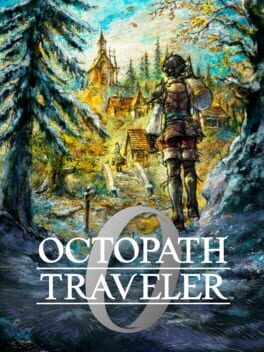

The HD-2D RPG series returns with a character-created hero, 30+ recruitable allies, and a rebuildable hometown. Here’s how Octopath Traveler 0 expands the formula, how the Switch / Switch 2 versions stack up to other platforms, and where newcomers should actually start.
A New Starting Line For Orsterra
Octopath Traveler 0 arrives as a prequel to the first two games, but it is designed as a clean on-ramp. Set in Orsterra years before the original Octopath, it trades eight separate protagonists for one customizable lead and a sprawling cast of allies. The result feels less like Octopath 3 and more like a remix of everything the series has done so far, tuned for both new hardware and new players.
You still get lush HD-2D visuals, the familiar Break and Boost combat rhythm, and Path Actions that let you poke at every NPC in town. Around that core, though, Square Enix has bolted on three big ideas: a single, focused story hook about divine rings and a fallen town, a flexible party built from more than 30 recruitable characters, and a surprisingly deep village-building layer that makes Orsterra feel more like a place you are responsible for than a backdrop you just pass through.
A Story Of Restoration And Retribution
Previous Octopath games spread their narrative energy across eight distinct character arcs. Octopath Traveler 0 keeps the anthology spirit but reframes it around your own avatar. You create the protagonist rather than inheriting a premade lead. Their appearance, voice, animation style and even their favorite dish are all yours to define before they ever swing a sword or cast a spell.
That custom hero begins not as a wandering traveler but as a refugee. Their hometown has been ravaged, its people scattered and its prosperity stolen. The mystery centers on a set of divine rings and the powers that covet them, threading together themes of restoration and retribution. Instead of constantly hopping between disconnected origin stories, you follow a single throughline that branches as you decide which allies to recruit, which quests to pursue and which corners of Orsterra to rebuild first.
This tighter focus does not mean a smaller scope. Many of the travelers you meet reference events, gods and nations that series fans will recognize, and the prequel timeline lets the writers seed origins for factions that later loom large in Octopath Traveler and Octopath Traveler II. For newcomers, the script functions as a self-contained epic. For veterans, it acts like connective tissue that finally links the console games and mobile spin-offs into one wider saga.
From Eight Travelers To A Company Of Thirty
The most striking structural change is the party itself. Instead of locking you into eight defined protagonists, Octopath Traveler 0 offers more than 30 potential allies and lets you field up to eight of them at a time. You are no longer choosing which story to put on hold but which roles you want at your side.
Each ally has a distinct job, Path Action and combat gimmick. A traveling apothecary might specialize in defensive buffs and debuffs, while a disgraced knight tilts toward big, multi-hit break setups. Some recruits clearly echo classic Octopath jobs. Others are hybrids, bending the existing roles into stranger support archetypes. Because your own created hero also has a flexible job identity, team building feels far more open than the fixed archetype grid of previous games.
This wider cast feeds directly into the game’s new action skill system. Allies can learn special action skills that define how they contribute in battle or in the field, then pass those skills along. It is a soft form of inheritance and encourages experimentation. That hunter you benched hours ago might still influence your endgame team through a bow technique they taught to your custom mage.
The knock-on effect is that each town and dungeon feels more reactive to who you bring. Path Actions such as Inquire, Challenge or Entreat return in expanded fashion, and the huge bench of characters means you often have multiple ways to solve a situation. Do you bribe a corrupt official using a silver-tongued merchant, duel them with a hot-headed guard captain, or recruit their terrified subordinate and whisk them away to safety? Those choices spill out of the menu layer and into the story.
Rebuilding Home: How Town Building Changes The Formula
Octopath Traveler 0’s village-building layer is where the prequel most clearly steps away from its predecessors. Your starting town is a ruin, and nearly everything you do pushes against that status. Quests reward not only gear and money but people, facilities and resources that can be fed back into your settlement.
The basics are straightforward: you invite NPCs to move in, unlock shops and services, and gradually restore buildings. The hooks come from how tightly this loop is tied to Path Actions and the ally system. Many characters you recruit for combat can also be brought home as residents. Likewise, people you originally invited to town might later reveal side stories or combat potential once they have settled in.
As your village grows it shifts from a quiet hub to a strategic layer. Certain upgrades open new gear tiers or rare materials. Others unlock unique quests or new routes through the overworld, making your town feel like a living record of your choices rather than a static menu. Octopath has always been about travelers and destinations. Here, you are also a caretaker, turning one small corner of Orsterra into something personal.
Break, Boost And HD-2D On Modern Hardware
Under all these new systems, the turn-based battles still revolve around Break and Boost. You target enemy weaknesses to shave off shield points, shatter their defenses and then unload with boosted skills during the window of opportunity. That rhythm has always given Octopath a hint of puzzle flavor, and with more party slots and transferable action skills, Octopath Traveler 0 leans into layered setups even more strongly.
HD-2D, meanwhile, has had time to mature. Fields look denser and more dynamic, and the lighting work is stronger across all platforms. On newer hardware you notice more subtle depth-of-field effects and smoother camera sweeps through towns, but even on older systems the presentation remains sharp and readable.
Switch And Switch 2 Versus The Rest
Octopath Traveler 0 launches on virtually everything, but the Nintendo versions occupy a special place. The series was born on Switch, and Switch 2 is one of the main showcases for the current generation of HD-2D.
On Nintendo Switch, the game targets a lower resolution than other platforms, especially in handheld mode, with some mild softness in busy scenes. Frame pacing is generally stable in exploration and battles, with occasional dips when heavy effects flood the screen. Load times are longer than on solid-state platforms but still within an acceptable range for a turn-based RPG, particularly if you are used to the first Octopath on the same hardware.
Nintendo Switch 2 raises the bar. Higher resolution output makes the layered pixel art and volumetric lighting really pop, and texture clarity takes a noticeable step up. Frame rate is more consistent across dense towns and in the flashier Limit Break style moves that show off the divine rings’ power. Crucially for handheld fans, the sharper image makes reading ability icons and damage numbers easier during long play sessions.
On PlayStation 5, Xbox Series X|S and modern PC hardware, Octopath Traveler 0 benefits from faster load times and the crispest presentation, especially on large displays. These platforms handle the HD-2D depth-of-field and lighting tricks with headroom to spare. Console options lean toward a single quality profile that prioritizes resolution and effects, while PC lets you scale some features if you are running on a lower-spec laptop or handheld.
Compared to these, PlayStation 4 and Xbox Series S still deliver the core experience but with pared back resolution or occasional performance hitches in the busiest scenes. The HD-2D art style, however, remains forgiving. Even in scaled-down form, it holds together better than many fully 3D RPGs.
If you care most about portability and tradition, Switch and Switch 2 are still the most thematic homes for the series. If you want the cleanest image and the fastest battle transitions, PS5, Xbox Series X and a capable PC have the edge.
Where To Start If You Skipped The First Two
Octopath Traveler 0 is explicitly billed as a standalone prequel, and it works as a first step into Orsterra. You do not need to know who any previous protagonists are, and the plot is structured to welcome players who only know the series by reputation.
For complete newcomers, there are two strong paths.
If you like the idea of building a town, handpicking a huge party and shaping a custom hero who acts as the narrative spine, starting with Octopath Traveler 0 makes sense. It offers the most modern conveniences, the broadest cast and a single cohesive storyline that eases you into concepts like Break, Boost and Path Actions.
If you are more interested in intimate, character-driven vignettes and the original “eight stories, one journey” experiment, circling back to the first Octopath Traveler and then Octopath Traveler II will give you a better appreciation for how 0 stretches that template. Those games have smaller casts and no town building but remain some of the best traditional turn-based RPGs of the last decade.
Crucially, there is no wrong order. Playing 0 first will not spoil the big beats of the other entries so much as reframe them. You will recognize gods, nations and conflicts when they reappear, but the emotional arcs of the original travelers still land on their own terms. Think of Octopath Traveler 0 as a wide, welcoming gate into a series that used to feel a little more fragmented. Whether you are returning to Orsterra or arriving for the first time, this prequel is built to be a starting point.