
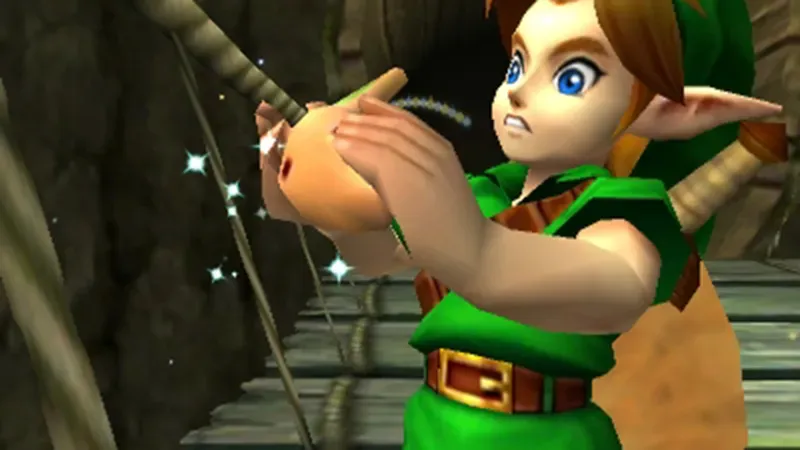
Shigeru Miyamoto’s latest Famitsu comments explain Nintendo’s remake strategy, but they do not confirm what kind of Zelda Ocarina of Time remake Switch 2 players should expect.
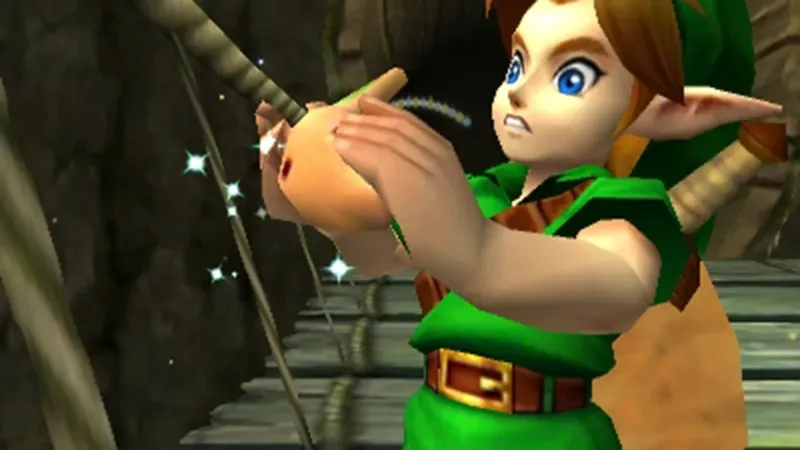
Image: gameinformer.com
Miyamoto’s remake defense arrives at the exact moment Zelda fans want answers
Shigeru Miyamoto has defended Nintendo’s recent push into remakes in a Famitsu interview, saying older games need to be made playable again for younger audiences and that reintroducing those originals can lead to “future developments,” according to Nintendo Everything’s translation and reports from Nintendo Life, GameSpot, IGN, My Nintendo News, NME, and ComicBook.com.
That comment lands in the middle of a loaded Switch 2 year. Nintendo has already released a new Star Fox on Switch 2, described by Nintendo Everything and Nintendo Life as another version of Star Fox 64, while The Legend of Zelda: Ocarina of Time is also set to receive a Switch 2 remake later in 2026, according to those same reports. IGN says Nintendo confirmed the Ocarina of Time remake during a June 2026 Nintendo Direct, with an initial teaser showing the game’s 3D art style and confirming a 2026 launch window.
The tension is obvious. Miyamoto’s Nintendo remake comments sound like a philosophy statement, but fans are reading them through the lens of one of the most intensely scrutinized games in Nintendo’s catalog. Ocarina of Time is not a quiet catalog pull. It is a landmark action-adventure whose dungeon pacing, lock-on combat, horseback scale, and set-piece structure became part of the genre’s grammar. A Zelda Ocarina of Time remake on new hardware immediately raises questions that Miyamoto did not answer: how faithful it will be, how far Nintendo is willing to modernize it, and whether this is a bridge to new Zelda development or simply a carefully staged return to Hyrule’s most mythologized version.
Nintendo’s stated logic is access first, future development second
The clearest confirmed part of the story is Miyamoto’s own explanation. In the Famitsu quote translated by Nintendo Everything, Miyamoto said, “Some people might say there are a lot of remakes, but after five years, a lot of people have outgrown games and stop playing them. Young people today don’t have the opportunity to play games from 10 years ago, so remaking them to be more playable and releasing them again is a good way to meet the demand. Letting people know the original games also leads to future developments, so we’ve been actively pursuing that recently.”
That is a revealing order of priorities. Miyamoto frames remakes less as nostalgia products for the audience that was there and more as re-entry points for players who missed the original release window. “More playable” is the phrase to watch. It does not automatically mean a total redesign, expanded story, new combat system, or rebuilt dungeon flow. It could mean visual clarity, modern controls, interface improvements, smoother onboarding, or other changes that help an old structure move at today’s speed.
The second half of the quote is where speculation starts to gather force. “Future developments” is broad enough to support several readings. It can mean using a remake to rebuild awareness of a dormant series, as fans are hoping with Star Fox according to Nintendo Life and IGN. It can also mean keeping a franchise visible while new work continues elsewhere. What it does not do is confirm a new Star Fox, a specific Zelda follow-up, or a particular design direction for Ocarina of Time on Switch 2.
Ocarina of Time is confirmed, but its shape is still largely unannounced
For readers tracking the Ocarina of Time Switch 2 remake, the confirmed facts are narrower than the online conversation around it. IGN reports that Nintendo revealed the remake during a June 2026 Nintendo Direct after earlier leak-driven speculation, and that the teaser confirmed a 2026 release window while showing a 3D art style. GameSpot also describes The Legend of Zelda: Ocarina of Time remake as Nintendo’s next big remake and says it is coming to Switch 2 this year.
Beyond that, Nintendo has said little in the source material provided. Nintendo Life notes that the company has been “fairly quiet” about Ocarina of Time after its debut trailer and says it is not certain whether players should expect a 1:1 remake or something more ambitious. IGN adds one more signal, reporting that a now-removed product description hinted the game would likely be a faithful remake. Because that description was removed and because Nintendo has not publicly filled in the design details in these sources, it should be treated as a store-page or listing signal, not a final feature confirmation.
That distinction matters for a game built around rhythm as much as memory. Ocarina of Time’s original tempo depends on how quickly Link pivots from field travel to dungeon problem-solving, from Z-targeted duels to boss reveals, from quiet ocarina pauses to spectacle moments like Volvagia rising from Death Mountain’s arena. A faithful remake and an ambitious reinterpretation would solve very different problems. The former preserves the old cadence with modern presentation. The latter risks changing the combat weight, camera language, puzzle readability, and dramatic timing that made the original so influential.
Star Fox is the nearest comparison, but it is an imperfect guide for Zelda
Nintendo’s 2026 Star Fox gives fans a current reference point, though it should not be treated as a blueprint for Ocarina of Time. Nintendo Everything says this year’s Star Fox was another version of Star Fox 64. Nintendo Life describes it as a new Switch 2 remake that retells the Star Fox 64 story and says the outlet awarded it a 9/10 for production values and timeless gameplay. NME describes Star Fox as a completely reworked version of the N64 classic with updated graphics and quality-of-life upgrades but no major changes to plot or gameplay.
That pattern supports one reasonable expectation: Nintendo may see value in preserving the recognizable spine of a classic while improving how it feels on current hardware. For Star Fox, that means the on-rails shooter’s mission flow and familiar story can remain intact while presentation and usability change around it. For Ocarina of Time, the stakes are messier. Its spaces are slower, its dungeons are more interlocked, and its combat is built around reading enemy openings rather than chasing arcade score flow.
If Nintendo follows the Star Fox approach, the Zelda remake may prioritize legibility and comfort over reinvention. Better camera behavior, cleaner animations, clearer UI, and faster friction points would fit Miyamoto’s “more playable” framing without turning the game into a modern open-air Zelda. But that is analysis based on reported precedent, not a Nintendo announcement. The only safe statement is that Star Fox shows Nintendo is willing to revisit N64-era structures on Switch 2, while Ocarina of Time’s actual scope remains unconfirmed in the provided reports.
Miyamoto’s broader role points to stewardship, not a personal remake mandate
Miyamoto’s remake comments also sit beside another Famitsu thread reported by Nintendo Life: he is “not really thinking about” directing another game. In that same interview, as reported via Nintendo Everything, Miyamoto said modern games can require 200 people, making production “tough,” though he left the door open if a theme interested him enough. He cited Pikmin Bloom as an example of getting involved because he wanted to make it himself.
Nintendo Life notes that Miyamoto’s directorial history has been sparse for decades, pointing to Super Mario Run in 2016 and Super Mario 64 in 1996 before that. The outlet also reports that he remains busy as producer on the Super Mario movies, the upcoming Legend of Zelda movie, and as a driving force behind Universal’s Super Nintendo World attractions in Japan, Florida, and California.
That context changes how his remake defense should be read. This is not necessarily the director of a new Zelda remake explaining a personal design document. The source material frames him as a senior creative figure speaking about Nintendo’s broader production logic. His comments describe why Nintendo is “actively pursuing” remakes, not what specific rooms, bosses, systems, or story scenes have changed in Ocarina of Time. For fans waiting on Kokiri Forest footage, Water Temple adjustments, or combat changes, this interview is a philosophy clue rather than a reveal.
The business case is clear, even where the design case is still open
Several outlets connect Miyamoto’s comments to a wider industry appetite for remakes. GameSpot notes that remakes are popular across gaming and cites reports from 2025 saying nearly all gamers played a remake or remaster the previous year and that remakes and remasters reached more than 138 million downloads in 2025. Those numbers are presented by GameSpot as industry context, not as Nintendo-specific sales data for Ocarina of Time.
ComicBook.com adds an interpretation that remakes are likely cheaper to develop than wholly new titles because they can work from an existing framework, reducing pre-production needs. That is plausible business analysis from the outlet, but it is not a cost breakdown from Nintendo. The confirmed Nintendo-side rationale in the source material remains access, playability, demand, and future development.
For Nintendo, the strategic appeal is easy to understand. A remake can fill the calendar with a known name, introduce younger players to foundational series entries, and keep franchises warm while new projects take longer to build. Nintendo Life’s list of recent and upcoming releases also argues against a simple “Nintendo only makes remakes” reading, naming 2026 releases such as Splatoon Raiders, Rhythm Heaven Groove, Tomodachi Life: Living the Dream, Yoshi and the Mysterious Book, Pokémon Pokopia, and Mario Tennis Fever alongside Star Fox and Ocarina of Time. The more precise concern is balance, not abandonment of new development.
How fans should read the Ocarina of Time Switch 2 wait
The practical guidance is simple: separate the confirmed release from the imagined remake. Based on the cited reports, The Legend of Zelda: Ocarina of Time is coming to Switch 2 in 2026, Nintendo has shown an initial teaser with a 3D art style, and Miyamoto has publicly defended remakes as a way to make older games more playable for newer audiences. Nintendo has not, in the provided source material, confirmed price, performance targets, file size, upgrade paths, physical edition details, or the exact extent of design changes.
Players hoping for a faithful Zelda Ocarina of Time remake can point to the now-removed description reported by IGN and to Star Fox’s reported approach as encouraging signs. Players hoping for a bolder reimagining should recognize that Miyamoto’s comments do not promise that. “Future developments” may be the most tempting phrase in the Shigeru Miyamoto interview, but it is too broad to carry the weight of a new Zelda roadmap.
Until Nintendo shows more, the healthiest expectation is a remake shaped by access and preservation, with room for quality-of-life changes that smooth the old adventure’s edges. Ocarina of Time’s power has always depended on pacing: the step from childhood wonder into adult ruin, the slow turn of a dungeon key, the snap of a shield block before a counterattack. If Nintendo can make that rhythm readable for a new Switch 2 audience without sanding away its tension, Miyamoto’s remake philosophy will have its strongest test yet.