
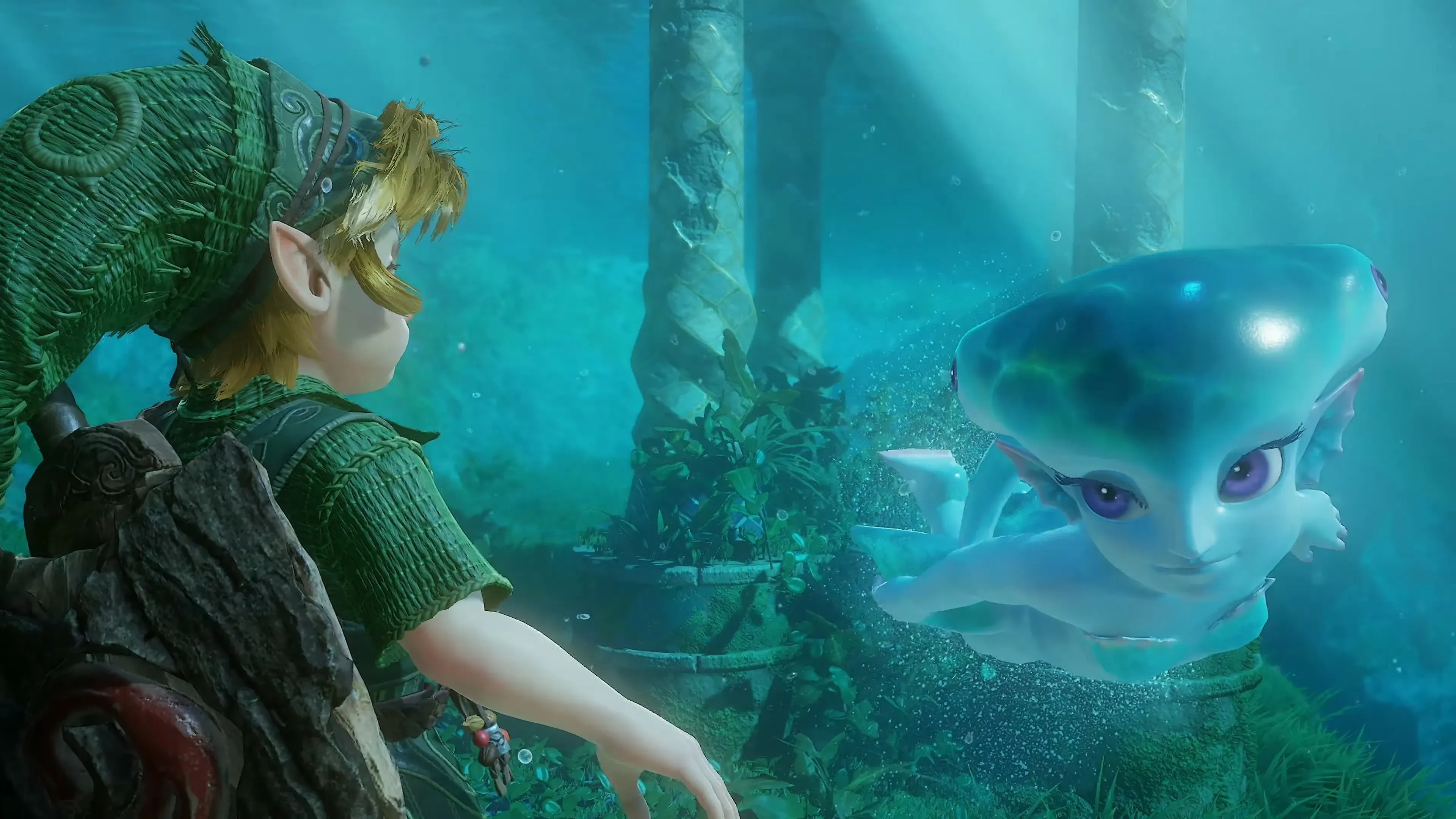

Nintendo’s new Zora’s Domain footage for The Legend of Zelda: Ocarina of Time Remake highlights the scale of the visual overhaul, while reported gameplay changes and unconfirmed Navi voice actress speculation keep the remake debate alive.
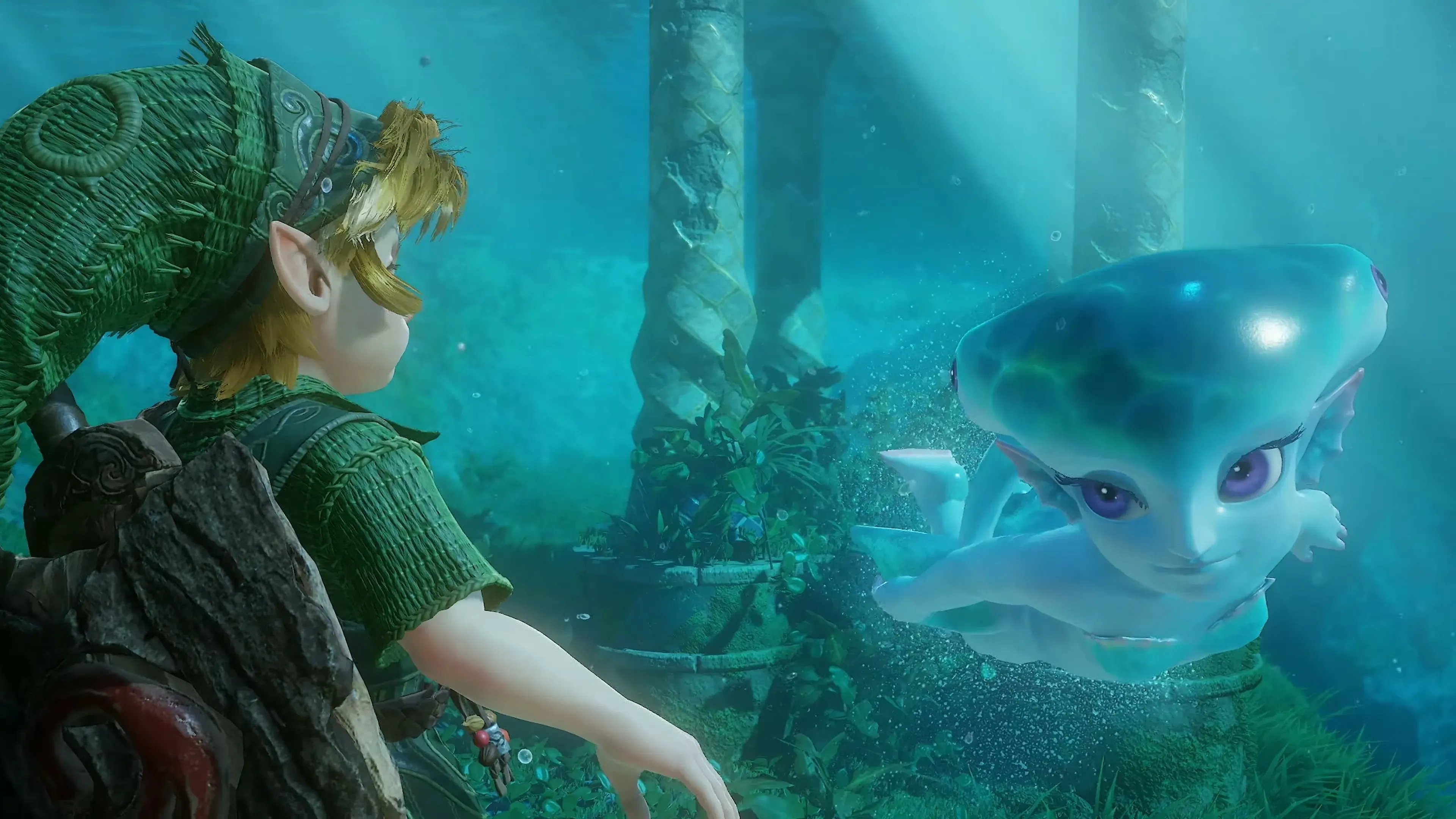
Image: gameinformer.com
Zora’s Domain is the remake’s newest stress test
Nintendo’s official Japanese The Legend of Zelda X account has shared new Zora’s Domain footage from The Legend of Zelda: Ocarina of Time Remake, giving players a fresh look at one of the N64 game’s most memorable locations before the remake’s reported November 5, 2026 launch on Nintendo Switch 2. My Nintendo News reported the clip on September 29, noting the significant visual overhaul to the Zora village, while CBR described it as a brief 15-second look at the redesigned area.
The timing matters because the clip lands in the middle of a broader argument around the Ocarina of Time Remake: how far Nintendo is willing to go in modernizing a game whose smallest sounds, camera angles, and traversal quirks have been burned into players’ memories for nearly three decades. Zora’s Domain is a good place for that argument to resurface. In the 1998 original, the area was quiet, cavernous, and ritualized, accessed upstream from Zora’s River through a waterfall opened by playing “Zelda’s Lullaby,” as CBR notes. In the remake footage, the same location is being staged with contemporary environmental detail and a more fluid sense of movement.
That contrast is now the central tension around this Legend of Zelda remake. The remake is being sold through familiarity, but the footage and reporting around it point to a version that changes how players look, move, swim, hear, and possibly relate to characters. Zora’s Domain footage gives fans another scenic set-piece to inspect, but the debate has shifted beyond graphics. The sharper question is whether modernizing Ocarina of Time strengthens its rhythm or sands down the very constraints that shaped it.
The Zora’s Domain footage shows a careful reveal, not a full tour
According to CBR’s breakdown of the official clip, the Zora’s Domain footage opens with a sweeping crane shot across the water village. One Zora stands at the water’s edge while two others swim, placing the redesigned space immediately in motion rather than presenting it as a static postcard. The clip then cuts to child Link walking through the center of the Domain before turning toward a carved stone stairway. In its final beat, Link leaps from the Domain’s waterfall, passing the Zora who, in the original game, rewards the Silver Scale after the diving challenge, then splashes into the water and swims before the footage ends.
That is a compact sequence, but it says a lot about how Nintendo appears to be framing the remake’s spaces. The camera move emphasizes scale. The Zora activity emphasizes settlement. Link’s path through the center of the area gives viewers a practical read on traversal. The waterfall jump closes the clip with a recognizable action beat, the kind of small set-piece that old players remember less as a cutscene and more as a physical ritual.
CBR also points out what the clip does not show. King Zora’s throne room is absent. The Zora’s Domain shop is not shown. The ancillary areas around the Domain, including the pool that holds Lord Jabu-Jabu, are also held back, even though CBR notes that Lord Jabu-Jabu has appeared open-mouthed in earlier trailer clips. That restraint is useful to keep in mind. This is not a complete location reveal, and it should not be treated as confirmation of every layout, quest beat, or encounter tied to the area.
Still, the footage supports one confirmed reading: Nintendo is presenting Zora’s Domain as a visually rebuilt location rather than a simple resolution upgrade. The clip’s composition, carved stonework, active NPC placement, and water-focused movement put the Domain in line with earlier reactions to Kokiri Forest footage, which CBR described as surprisingly detailed when the remake was shown at the Zelda 40th Anniversary Direct.
Reported Zelda remake changes go beyond scenery
The Zora’s Domain footage is arriving after several outlets have cataloged remake changes that affect how Ocarina of Time plays, or at least how it appears to play in trailers and presentations. Kotaku reported on September 29 that the remake includes fully voice-acted cutscenes, a manual jump button, proper swimming with a speed boost, underwater movement governed by a short stamina bar, a free camera, sprinting out of a roll by holding the A button, and revised mechanisms in some dungeon spaces. Kotaku framed some of those changes as directly pointed out by Eiji Aonuma during a gameplay presentation, while others were identified through close viewing of trailers, so they should not all be treated with the same level of official confirmation.
Even with that caution, the direction is clear. A manual jump button changes the pacing of a game originally built around auto-jumps triggered by running off ledges. In the N64 version, that design made traversal feel readable but also locked Link’s movement into the geometry. If the remake allows players to jump on command, that gives Nintendo a new tuning problem: old spaces must preserve their intended routes while accommodating a player who can test ledges and angles more aggressively.
Swimming may be even more relevant to Zora’s Domain. Kotaku reports that Link can swim more fully now, including underwater, with a stamina bar limiting how long he can stay submerged. In the original, underwater presence was often tied to specific items and awkward maneuvers, including the Iron Boots later in the adventure. The remake’s reported approach could make water traversal smoother, but it also risks changing the feel of areas originally designed around friction, gates, and ritualized access.
The free camera has similar consequences. Kotaku says the remake lets players rotate the camera freely, including in areas that previously used fixed camera setups such as Castle Town. A free camera gives players more visual control and can make combat and navigation feel less brittle, but it also exposes parts of old environments that were never meant to be seen from every angle. That may explain why the remake appears to be rebuilding spaces with more complete environmental detail. A modern camera demands a fuller stage.
Navi has become the smallest change with the loudest echo
The most emotionally charged reported change is not a dungeon mechanism or a camera option. It is Navi’s voice. ScreenRant reported on September 24 that English gameplay from the remake makes Link’s fairy companion sound noticeably different from the original Nintendo 64 version, especially in the famous “Hey, listen!” delivery. Vice similarly reported that fans noticed the English version sounding different after Nintendo showed gameplay, while also emphasizing that Nintendo has not confirmed who voices Navi in either version of the remake.
That distinction is important. It is confirmed that fans and outlets are hearing a difference in publicly shown English footage. It is not confirmed, based on the provided source material, that Nintendo has officially replaced Navi’s English voice actor, because no cast list has been shared. ScreenRant says Navi’s new voice actor is not among confirmed changes, and Vice explicitly states that Nintendo has not confirmed the voice talent for either version.
The reaction is easy to understand without overstating it. Navi is an unusually small character with an unusually large audio footprint. Her lines are brief, repeated, and instantly recognizable, to the point that “Hey, listen!” became both a nostalgic cue and a long-running joke. The original Ocarina of Time used limited voice clips rather than fully performed scenes, so the sound of Navi carried a lot of identity with very little material. A modern remake with expanded voice acting changes that equation. If the game now includes fully voice-acted cutscenes, as Kotaku reports, Nintendo may need performances that work across far more dialogue and across multiple localized versions.
That makes the Navi voice actress debate different from a typical casting complaint. It is about continuity of memory versus the practical needs of a remake with more spoken material. The English performance may be new, but without official casting details, the responsible read is that fans are reacting to a perceived difference, not to a confirmed replacement announcement.
The Kaori Mizuhashi theory is fan-driven, not confirmed
The debate grew more complicated because fans comparing Japanese footage believe Navi may sound much closer to the original performance there. Kotaku reported that fans have noticed Navi’s voice in Japanese trailers for the Ocarina of Time Remake sounds remarkably like the original, and may even be the same actor. The original Navi was voiced by Kaori Mizuhashi, who remains active in games and anime, with Kotaku citing recent work including Eirika in Fire Emblem Engage and Mami Tomoe in Puella Magi Madoka Magica-related projects.
The strongest publicly cited evidence is fan comparison footage. Kotaku and Vice both reference a September 9 X post comparing Navi’s voice from a 1998 official Ocarina of Time strategy video with Navi audio from the 2026 remake. The fan post argues that the two performances sound strikingly similar after 28 years. Kotaku’s writer says they asked Nintendo to confirm whether Mizuhashi is involved and to identify the English actor, but the provided source text does not include a response from Nintendo.
So the status is simple: Mizuhashi’s return is plausible, discussed by fans, and treated by outlets as possible, but it is not confirmed in the available reporting. Vice is especially clear on this point, stating that the Japanese audio may sound remarkably similar but that the comparison alone does not prove her return. That is the line readers should hold until Nintendo publishes credits or comments on casting.
The practical implication for players is also still unconfirmed in scope. Kotaku raises the possibility of switching the remake’s voice language to Japanese for those who want a Navi closer to the original sound, but the source material does not provide a full options menu, language policy, or regional audio breakdown. If the final game allows independent voice-language selection, this could become a simple preference choice. If audio settings are more restricted, the debate will follow players all the way to launch.
Release details are clearer than the remaining questions
The Ocarina of Time Remake is reported by My Nintendo News and ScreenRant to launch on November 5, 2026, for Nintendo Switch 2, with ScreenRant describing it as a Switch 2 exclusive. For anyone planning around the release, that is the firmest practical information in the provided sources. My Nintendo News also points to regional preorder bonus coverage elsewhere on its site, while ScreenRant reports that a foil version is available through preorder and that physical copies have sold out in at least one country. The provided material does not identify every region, retailer, or stock situation, so buyers should treat availability as retailer-specific.
Price remains less settled in the supplied reporting. My Nintendo News links to earlier coverage saying PlayAsia listed the remake at $60, while also noting in the visible source text that Nintendo had yet to reveal the price point at that time. A retailer listing is useful as a signal, but it is not the same as an official Nintendo price. The sources provided here also do not confirm performance modes, file size, upgrade paths, amiibo support, or whether all language tracks will be available in every region.
For now, the safest read is that Nintendo is revealing the remake as a sequence of controlled location and feature glimpses. Goron City appeared in recent related coverage from My Nintendo News. Zora’s Domain now gives the water-side counterpart, and it arrives alongside discussion of modernized movement, fully voiced scenes, and an unresolved casting question around Navi. Each reveal answers one visual question and opens two design questions.
That is the real shape of the current conversation around Zelda remake changes. The new Zora’s Domain footage looks designed to reassure players that Hyrule’s classic spaces are being treated with scale and atmosphere. The reported mechanics suggest Nintendo wants the remake to move at a modern action-adventure cadence. The Navi voice actress speculation shows how little room there is for error when a remake touches sounds players have carried in their heads since 1998. Until Nintendo confirms casting and more final feature details, the debate will remain suspended between preservation and performance.