
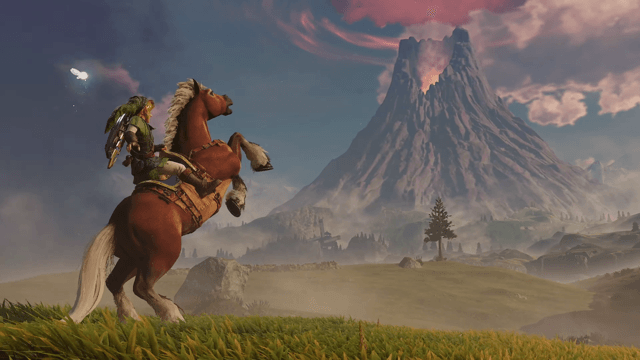
Nintendo's new Ganondorf clip for the Zelda Ocarina of Time remake is official Switch 2 footage, and its small scene changes explain why fans are studying every frame.
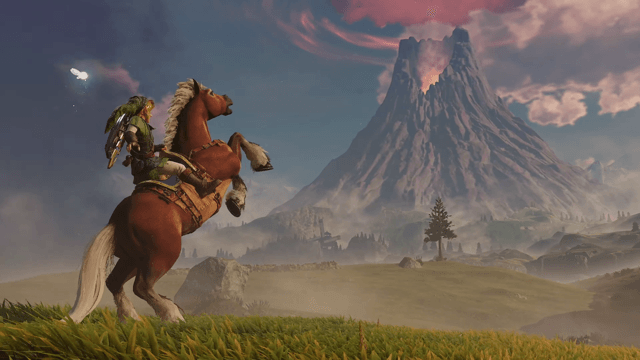
Image: nordic.ign.com
Nintendo’s Ganondorf clip is official Switch 2 footage
Nintendo has released a new short clip of The Legend of Zelda: Ocarina of Time remake through the Nintendo Today! mobile app, giving fans a closer look at Ganondorf in the upcoming Switch 2 version. IGN reports that the clip is only 16 seconds long, but it expands on footage shown earlier this month during Nintendo’s Zelda 40th Anniversary Direct.
That answers the first practical question around the latest Zelda remake footage: this is not a fan project, Unreal Engine remake, mod, or concept reel. Multiple outlets, including IGN, Nintendo Life, Game Rant, and GoNintendo, identify the clip as Nintendo-published or Nintendo-shared footage tied to the official Ocarina of Time remake for Switch 2. The game is reported by IGN and Game Rant as launching on November 5, 2026, while Nintendo Life refers more broadly to a November arrival.
The tension comes from how little Nintendo showed, and how much that tiny window suggests. Ganondorf is not being revealed through a full boss encounter or a new story trailer. He is being reintroduced through one of Ocarina of Time’s most familiar early images: the nightmare vision of a rider cutting through the rain, framed as prophecy, threat, and stage-setting for the whole adventure.
What the Ganondorf clip actually shows
According to IGN, the clip expands the updated dream sequence previously seen in Nintendo’s reveal footage, showing Ganondorf on horseback while voiceover says, “And now… An evil has appeared, yearning after that power.” Nintendo Life says the video takes scenes from the main trailer and includes new voiceover work.
Nintendo’s accompanying text, quoted by IGN and Nintendo Life, describes Ganondorf as “A man from the Gerudo, a tribe in which men are said to be born only once in a hundred years.” The text also says he “harbors a grand ambition to obtain the Triforce, a sacred relic rumored to grant the wish of any individual who touches it.”
Game Rant adds that the footage offers a closer view of Ganondorf’s redesigned character model, facial animation, and overall presentation. Its report notes that the remake keeps him recognizably connected to his original Ocarina of Time design, citing the red hair, armor, jewelry, facial structure, and exaggerated features, now rebuilt with much more detail. That is important because Ganondorf’s role in Ocarina of Time depends on presence before action. In the original scene, the player reads menace through posture, framing, and the speed of a horse emerging from the storm. The remake is now leaning on lighting, animation, voiceover, and timing to carry the same threat.
The smallest change may be the most revealing one
The most concrete alteration in the new Ganondorf clip is not his face or armor. It is pace. IGN reports that Nintendo’s comparison material shows the Switch 2 version of the sequence running in slow motion, while the Nintendo 64 and 3DS versions show Ganondorf moving at normal speed.
That is a tiny editorial change, but it changes the rhythm of the scene. Ocarina of Time’s original dream sequence was abrupt, almost jagged, shaped by the N64’s staging limitations and the blunt force of its camera cuts. Slowing Ganondorf’s ride turns the moment into a more deliberate piece of direction. The horse, the rain, the villain’s silhouette, and Link’s perspective all get more room to breathe.
For an action-adventure remake, that choice says as much about intent as any texture upgrade. Nintendo is not only redrawing a 1998 scene with modern assets. Based on the Nintendo Today! comparison described by IGN, it is adjusting scene language. That is where longtime fans start paying attention, because Ocarina of Time’s pacing is part of its identity. Even small changes to timing can make a familiar set-piece feel grander, heavier, or less immediate.
Why fans are studying every frame
The Ganondorf clip lands in the middle of a broader debate around the Zelda Ocarina of Time remake’s direction. IGN has described the remake’s art style as divisive following the trailer reveal, and Nintendo Life’s comment section on the new clip reflects that split, with some readers excited and others criticizing details of Ganondorf’s updated look.
The remake is also making design changes beyond visuals. GoNintendo reports that the Switch 2 version includes completely overhauled visuals, fully voiced cutscenes, expanded character dialogue, symphonic orchestral music, reworked camera and movement controls, and faster load times. Game Rant similarly reports that Link can freely jump and dash with new commands and that players will have more camera control than in the original.
Those changes sit beside preservation choices. IGN reports that Nintendo intentionally retained loading screens from the original experience, a decision that has also left fans torn. That mix creates the central friction around this Ocarina of Time remake: Nintendo appears willing to modernize movement, camera work, presentation, and cutscene direction, while still preserving some structural pieces that remind players of the N64 release. Fans are watching Ganondorf closely because he is a stress test for that balance. If his first scene feels wrong, the remake’s broader approach becomes harder to trust.
What is confirmed about the remake so far
The confirmed picture, based on the provided reports, is an official Nintendo remake of The Legend of Zelda: Ocarina of Time for Switch 2. IGN and Game Rant report a November 5, 2026 release date. Nintendo Life says it arrives for Switch 2 this November. No source material here provides a price, edition breakdown, upgrade path, file size, or physical versus digital availability details.
The feature set reported across GoNintendo and Game Rant includes rebuilt visuals, voiced cutscenes, expanded dialogue, orchestral music, refreshed sound, smoother performance, faster loading, snappier actions, new jump and run commands, right-stick camera control, remodeled locations, and a day and night cycle that continues in towns. GoNintendo also mentions a “Threads of Time” feature that lets players check story progress and the next objective, with a tapestry gradually filling in as the adventure continues.
GoNintendo further reports an ocarina-related feature where players can hum a learned song and have Link play it, with support for instruments such as new playable and electric ocarinas coming later this year. That detail is presented in GoNintendo’s list of expected updated elements, but the source material does not include Nintendo’s full original post, so it is safest to treat the wording as reported by GoNintendo rather than expand beyond it.
The open questions before November
The new Ganondorf clip clarifies authenticity, but it does not settle the remake’s bigger questions. We still have not seen, in the provided source material, how combat encounters flow with the new movement options, how dungeon pacing changes with faster loading, how much expanded dialogue alters character scenes, or how fully voiced cutscenes handle one of Nintendo’s most replayed adventures.
The slow-motion Ganondorf scene is a useful signal because it shows Nintendo is willing to revise the cinematic grammar of Ocarina of Time, even in a moment players know by heart. That can sharpen the remake’s drama if the timing supports the story. It can also risk over-scoring scenes that originally worked because of restraint and surprise.
For players deciding whether to follow every new Ocarina of Time remake update or wait, the practical answer is simple. The Ganondorf clip is official Zelda remake footage, it comes from Nintendo’s Nintendo Today! app, and it points to a Switch 2 release on November 5, 2026, according to IGN and Game Rant. What remains unproven is how all these small cinematic and control changes feel in sequence, with a controller in hand, across dungeons, towns, and boss fights rather than inside a 16-second glimpse of an evil riding through the storm.