
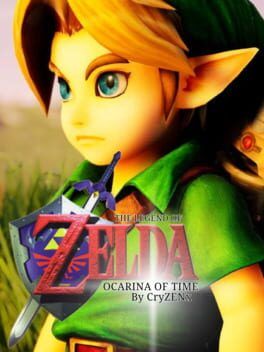
Nintendo's renewed attention to Ocarina of Time's final cutscene has reopened discussion of why the finale, credits, and time travel consequences still define Zelda adventure design.
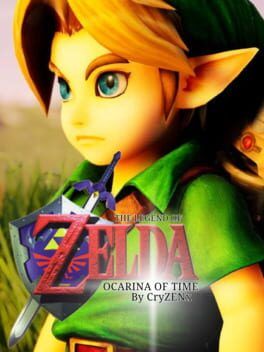
Image: IGDB
Nintendo revisited the finale, and the old wound reopened
The renewed discussion around The Legend of Zelda: Ocarina of Time starts with a concrete development: Nintendo has been talking about the ending again. In an interview cited by GamesRadar and Yahoo, Ocarina of Time remake producer Hidemaro Fujibayashi said the final cutscene was something the development team “heavily discussed,” because the Nintendo 64 original could not always express every emotional beat with the clarity the team wanted.
That is the tension behind the latest wave of Ocarina of Time ending explained pieces, credits essays, and fan debates. The plot mechanics are, on paper, unusually clean for a Zelda finale built around time travel. Link defeats Ganondorf. Zelda and the sages seal him away. Zelda sends Link back to his childhood. The kingdom celebrates. Link returns to the Hyrule Castle Courtyard and meets Zelda again.
Yet the ending still leaves players unsettled because its emotional closure and its narrative consequences pull in different directions. The adventure ends with triumph, but the hero does not get to stay in the world he saved. The credits show Hyrule at peace, but they also linger on absence. The final cutscene restores Link’s childhood, but it separates him from the people who remember the journey. Nearly three decades later, the Ocarina of Time finale continues to resonate because Nintendo built victory around loss, then trusted the player to feel the gap.
The ending is simple until Link is sent home
Nintendo Everything’s recent breakdown argues that Ocarina of Time’s ending does not actually require much explanation, apart from one lingering mystery. Its reading of the ending is straightforward: at the end of the game, Zelda uses the Ocarina of Time to return Link to the child era. Once back in his original time, Link meets Zelda again in the Hyrule Castle Courtyard and warns her about Ganondorf. According to Nintendo Everything, that warning helps set events on a path where Ganondorf never obtains the full Triforce and never conquers Hyrule in that child-era branch.
SVG’s explanation lines up on the broad shape of the finale. It describes the adult portion of the ending as Link rescuing Zelda after Ganondorf has manipulated events, seized the Triforce of Power, and conquered Hyrule. Link, bearing the Triforce of Courage, and Zelda, bearing the Triforce of Wisdom, defeat Ganon in monstrous form before he is banished to the Evil Realm by Zelda and the sages. Zelda Dungeon’s wiki summary adds an important character note: after Ganondorf is sealed, Zelda congratulates Link and apologizes for trying to control everything.
That apology matters because it changes the ending from a simple reward scene into an act of repair. Zelda does not send Link back only because the kingdom is safe. She sends him back because his childhood was taken by the very plan that set the adventure in motion. Ocarina of Time makes its central mechanical idea, moving between childhood and adulthood, into the emotional cost of the story. The Master Sword is a key, a weapon, and a wound. The final act closes the combat arc by defeating Ganon, then closes the character arc by returning Link to the moment before that lost time became permanent.
The credits celebrate Hyrule while reminding you who paid the price
The Zelda Ocarina of Time credits remain a major reason the finale has lasted in memory. Nintendo Life’s recent opinion piece calls the sequence one of Nintendo’s best, focusing on how it shifts from landscapes to the people Link saved. The article describes the early credits as panning over locations that players have spent dozens of hours exploring, accompanied by Zelda’s Lullaby, before cutting to a celebration at Lon Lon Ranch where NPCs from across the game dance, sing, and gather around the fire.
That structure is a piece of adventure design as much as it is an ending montage. Ocarina of Time spends its campaign teaching the player to think of Hyrule as connected spaces under pressure: Kokiri Forest, Death Mountain, Zora’s Domain, Lon Lon Ranch, Kakariko, the desert, the castle. The credits reverse the journey. They are not asking the player to complete another dungeon or solve another lock-and-key chain. They let the world breathe after the pressure has been released.
Nintendo Life’s reading sharpens when the credits move away from the party. The article points to Mido and King Zora sitting apart from the celebration, solemn rather than joyous, because Link’s victory has also awakened sages tied to people they loved. The sequence then brings in the Sage Chamber music and shows medallion-colored lights crossing the sky before the sages appear over Death Mountain. The result is carefully paced emotional counterpoint: the kingdom is alive, the sages endure, but the restoration of Hyrule did not erase sacrifice.
That is why the credits still land. They do the work many endings skip. They show where the camera goes after the boss falls. They connect the player’s route through the game to a communal outcome, then complicate that outcome with grief. The Ocarina of Time finale does not ask players to remember only the final strike against Ganon. It asks them to remember the people who get to dance because of it, and the people who cannot quite join in.
Time travel gives Ocarina of Time closure and denies it at once
The lasting power of the Legend of Zelda Ocarina of Time story comes from a paradox: Zelda fixes Link’s life by removing him from the future he saved. SVG notes that the adult timeline continues even after Zelda sends Link back. In that future, Hyrule has been liberated, the sages keep watch over Ganondorf’s imprisonment, and the people celebrate. But Link no longer belongs there. He becomes the missing center of a victory party he earned.
Nintendo Everything follows the child-era consequences in another direction. Once Link warns Zelda, Ganondorf is stopped before the same conquest can unfold, leading eventually to Majora’s Mask and Twilight Princess in that branch. The outlet frames the transition to Majora’s Mask through Link’s personal loss: Navi leaves at the Temple of Time after Link returns to childhood, and by the time Majora’s Mask begins, Link has set out into the Lost Woods on Epona searching for her.
That is the one mystery Nintendo Everything highlights. Navi does not offer a long goodbye in the ending as described by the outlet. She flies upward into the light pouring through the Temple of Time window and disappears. From Link’s perspective, the companion who guided him through every dungeon, ambush, boss arena, and lonely stretch of Hyrule Field simply leaves when the quest is complete.
This unresolved note is part of the reason the ending resists becoming a sealed box. Players can explain the timelines, the Triforce pieces, the sages, and Ganondorf’s imprisonment. What they cannot fully settle from the ending alone is the emotional logic of Navi’s departure. The story has closure at the level of kingdom and mythology, but not at the level of companionship. That imbalance gives the final scene its ache.
Nintendo’s adventure design turns mechanics into memory
Ocarina of Time’s ending works because the rest of the game prepares players to feel it. The sources here focus on the finale, but their details point back to Nintendo’s larger design choice: the adventure is built around returning to places after time, power, and knowledge have changed them. A child sneaks through courtyards, plays songs, meets oddball townspeople, and learns the shape of Hyrule. An adult returns to a damaged version of that same world and fights to restore it.
That loop gives the final credits their force. The panning shots described by Nintendo Life are effective because these are not abstract fantasy locales. They are spaces players have crossed on foot and horseback, often under different conditions. The celebration at Lon Lon Ranch works because the game has treated NPCs as anchors for regions, side stories, and mood. Even broad archetypes become part of the player’s mental map.
The final boss sequence also fits that design philosophy. SVG summarizes the combat outcome clearly: Ganon is vanquished in monstrous form and banished. But the fight matters because it compresses the whole adventure into a final rhythm of preparation, revelation, and release. Link’s accumulated tools, courage, allies, and songs all point toward that confrontation, while the ending immediately pivots away from power fantasy and back to consequence. Nintendo lets the player feel mastery, then asks what that mastery cost.
That is a durable adventure design choice. Modern games often separate systems from story, handing players a victory screen after the mechanics are done. Ocarina of Time’s finale ties its biggest system, time itself, to its final emotional decision. The same structure that let the player solve temples also decides where Link can and cannot belong after the quest.
The remake discussion shows how fragile the final scene is
Fujibayashi’s comments, as reported by GamesRadar and Yahoo, are revealing because they suggest Nintendo understood the ending as a scene whose tone depended on details of tempo, expression, and presentation. Yahoo’s report quotes him saying that, because of the technological limitations of the original era, there may have been things the team could not fully convey, whether due to tempo or other factors. For the remake, he said the team wanted to capture the moment in the way it wanted to express it, so the intended emotions and story would come through.
That does not mean the original ending failed. The entire renewed conversation suggests the opposite. The N64 version’s restraint helped create decades of interpretation around Link’s return, Navi’s exit, and the credits’ mixture of joy and sorrow. But the remake discussion highlights how easily the final scene could lose its balance. Add too much explanation and Navi’s disappearance stops haunting the player. Rush the credits and the celebration becomes decorative. Overstate Link’s sadness and the ending turns blunt.
Nintendo Life’s account of watching faithful post-game scenes in the Switch 2 remake, including the credits presented in 4K, frames the updated version as a test of preservation. The question is not only whether a remake keeps the same plot beats. It is whether it keeps the same emotional timing: Zelda’s promise, the ocarina, the sudden cut to credits, the return to Hyrule’s people, the quiet grief at the edge of the party, and the final movement back to childhood.
For players returning now, that is the practical lens. If you are revisiting the game for the Ocarina of Time ending explained angle, the answer is clear enough: Link defeats Ganon, Zelda sends him back, the adult world continues without him, and the child timeline branches toward later consequences. If you are returning for the Zelda Ocarina of Time credits, the reason they still hurt is less mechanical. They let you see the world saved, then remind you that the hero’s reward is to leave it.