
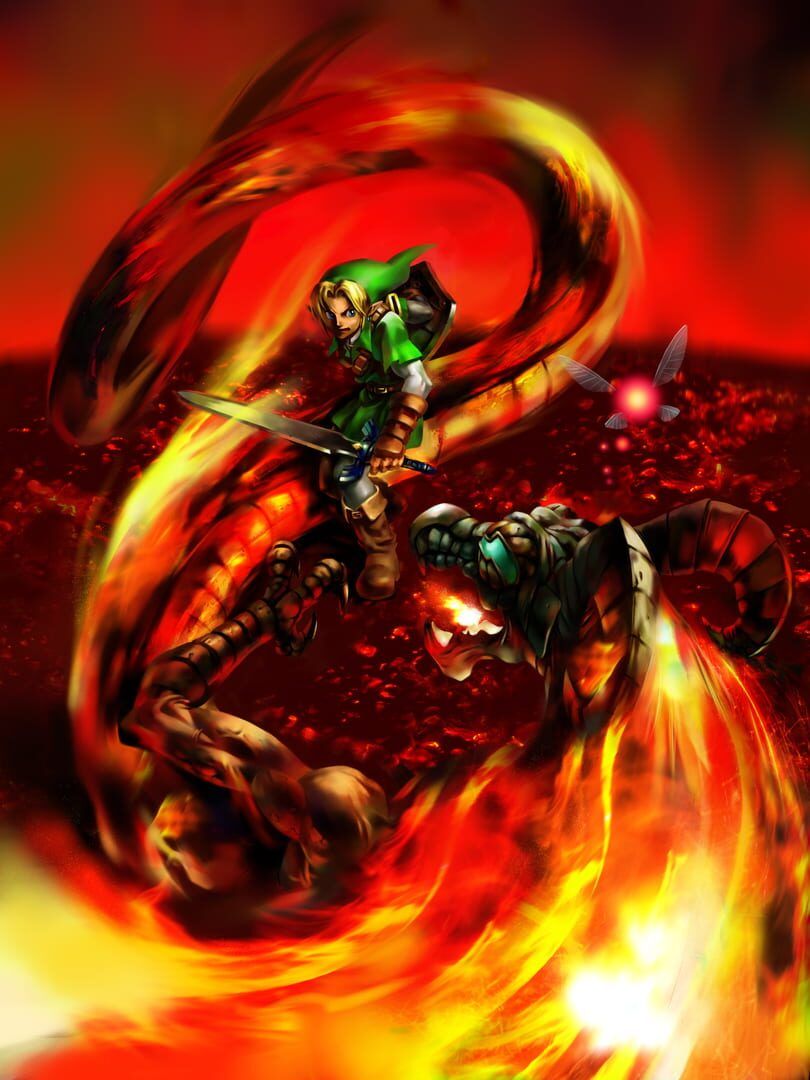
Breaking down the huge reaction to the Ocarina of Time Remake, what Nintendo is changing visually, and what absolutely must stay the same for longtime fans.
Nintendo barely had to do more than flash a logo and a few seconds of footage for The Legend of Zelda: Ocarina of Time Remake and the internet erupted. Within days, analytics firm Level Up had the reveal pegged as the most watched trailer of the last ten days, and the Nintendo Direct that housed it became the most watched gaming showcase in that same window. For a twenty five year old Nintendo 64 adventure to overpower brand new IP and fresh sequels says a lot about both the game’s legacy and how Nintendo is positioning this remake.
At the center of the conversation is a short line buried on Nintendo’s North American site, calling it “The N64 classic reborn as a full remake for Nintendo Switch 2” with “stunning visuals, updated designs, and timeless gameplay.” Those three phrases are doing a lot of heavy lifting. They hint at a thorough rebuild that goes beyond Ocarina of Time 3D on 3DS, yet they also reassure fans that the fundamentals will remain intact.
The massive engagement numbers are the first clear signal of what Ocarina still represents. My Nintendo News reports that the remake trailer topped a stacked list of heavy hitters, beating out God of War: Laufey, Resident Evil Veronica, Kingdom Hearts IV and Spyro: A Realm Beyond. Across social platforms and YouTube it pushed into nine digit view counts within a week, putting it among the most watched trailers of the entire Summer Game Fest cycle according to multiple tracking reports.
This surge is partly nostalgia and partly the unique status Ocarina holds in game history. It is the template for 3D action adventure structure, a game that many players regard not just as a classic but as a personal origin story. For older fans, the trailer is a chance to see a foundational memory modernized. For younger players raised on Breath of the Wild and Tears of the Kingdom, this is the first time the “legend” their parents talk about will be available in a contemporary, big budget form on a current system.
There is also the significance of hardware. Framing it as a flagship project for Switch 2 immediately elevates interest. People are not just evaluating a remake, they are scrutinizing the future of Nintendo’s platform and first party tech. Being the most watched event of the last ten days means the Direct became a combined reveal of console identity and franchise revival, with Ocarina as the proof of concept.
Nintendo’s site teasing “stunning visuals” may seem like boilerplate, but combined with “full remake” and “updated designs” it suggests a total rebuild on a modern engine. Expect physically based materials, dynamic lighting that can truly sell the contrast between Kokiri Forest’s soft greenery and the oppressive gloom of the Shadow Temple, and performance targets that finally allow smooth play without the quirks of N64 hardware.
The teaser already points to a more cinematic presentation. Link waking in Kokiri Forest appears in a reimagined, softer dawn light, with finer detail in foliage, cloth and facial animation. Tiny touches like dust motes in light shafts or the way Navi’s glow interacts with the environment do a lot of work to sell the fantasy. These are the kinds of enhancements that the GameCube and 3DS updates could never fully deliver.
“Updated designs” is the most intriguing and contentious phrase. It suggests Nintendo is doing more than simply sharpening textures. Characters are likely being adapted to match the house style that has evolved through Skyward Sword, Breath of the Wild and Tears of the Kingdom, while still remaining recognizable as their N64 selves. Costumes may gain additional layers and ornamentation, enemies may be more anatomically detailed, and environments will probably be laid out with more naturalistic geometry instead of the abstract, low poly spaces of 1998.
This also opens the door for subtle environmental storytelling. Kakariko Village can include more implied daily life, from laundry lines to extra NPC clusters, while places like Hyrule Castle Town can feel less like a compact hub and more like a believable capital square. Even without changing the map grid, new props and updated architecture can give Hyrule a grander sense of place.
At the same time, Nintendo has called the gameplay “timeless,” which reads less like marketing fluff and more like a promise to preserve core structure. Z targeting, item based dungeon progression, and the child to adult time split form the backbone of how Ocarina plays and paces its story. That word “timeless” implies optional refinements instead of sweeping redesigns. Expect better camera behavior, accessibility options, cleaner context prompts and quality of life borrowings from later Zeldas, but not a total reimagining into an open air sandbox.
The visual upgrades will only land if Nintendo preserves the specific atmosphere that defined the original. Ocarina of Time was bright and whimsical in spots, but it also had a surprisingly strong sense of melancholy and dread. The first step into the ruined future version of Hyrule Castle Town, Redeads frozen in the square, the unsettling music in the Forest Temple, and the oppressive darkness of the Bottom of the Well are all emotional pillars. A prettier, more detailed art style must still allow for harsh lighting and uncomfortable imagery when the story demands it.
Color grading will be crucial. A fully saturated, cartoony palette might suit some modern Nintendo titles, but Ocarina works because it mixes warm, storybook tones in Kokiri Forest and Lon Lon Ranch with muted, washed out hues in adult Hyrule. If Switch 2’s rendering tech offers HDR and advanced post processing, it should be used to deepen contrast and mood rather than flatten it into uniform brightness.
Dungeon layout is another element that needs careful preservation. The original design is tightly paced, with each dungeon introducing a clear mechanical conceit and then escalating on it. The Water Temple, for all its 1998 frustrations, is a masterclass in vertical dungeon design and spatial awareness. The 3DS remake proved that small interface tweaks and clearer markers were enough to defuse most complaints without altering the underlying puzzle. The Switch 2 remake should follow that philosophy. Add visual cues and better mapping, but resist the temptation to chop or simplify layouts in the name of modern expectations.
The pacing loop between overworld exploration, side quests and major dungeons is just as important. Ocarina’s structure, with its gradual expansion of Hyrule field, break points for minigames like horse racing or fishing, and longer detours such as the Biggoron Sword quest, creates a sense of journey. Modern design trends often favor constant rewards and checklist style open worlds, but Ocarina’s slower, more deliberate rhythm is part of its identity. Nintendo should preserve that cadence, perhaps with more optional connective tissue and environmental secrets, but without turning Hyrule into a map of objective markers.
One of the biggest intangible pieces that must survive is the musicality of the experience. The ocarina itself is not just a tool but a ritual, requiring the player to internalize melodies and inputs. While the remake will likely add more intuitive UI for recalling songs, Nintendo would do well to keep the feel of actually playing an instrument. Motion options using modern controllers, or subtle haptic feedback when you hit the right notes, could evolve the mechanic without trivializing it. The soundtrack also needs a sensitive touch. Higher fidelity orchestrations are welcome, yet the core compositions and many of the specific instrument timbres are tied directly to player memory.
Narratively, Ocarina of Time is straightforward, but the coming of age arc is handled with restraint. The sudden, seven year jump to a devastated future Hyrule hits hard because the game refuses to over explain or over dramatize it. Modern remakes sometimes add extra cutscenes to fill perceived gaps, but Ocarina’s sparse dialogue and suggestive worldbuilding are part of its charm. Additional character moments for Zelda, Sheik or side characters like Malon could be welcome if they remain optional or ambient, but expanding scenes so extensively that they overshadow player driven discovery would undercut the original’s tone.
In the end, Nintendo is walking a narrow path. The phrase “full remake” raises expectations of a ground up rebuild that can stand alongside new releases, which is exactly why the trailer performance has been so explosive. People expect a kind of definitive edition that merges their idealized memories with modern fidelity. At the same time, “timeless gameplay” is a tacit admission that radically changing the core would break what made Ocarina so special.
If Nintendo delivers a Hyrule that looks and sounds like the one players remember, rather than the one they literally saw on old CRTs, while preserving dungeon structure, game flow, and the strangely haunting atmosphere that lurks beneath its heroic surface, the remake will likely justify the tidal wave of attention. The view counts and showcase rankings show that the audience is not just large, but emotionally invested. That kind of engagement is both an opportunity and a responsibility, and Ocarina of Time Remake may be the project that defines how Nintendo handles its most sacred classics for the next decade.