
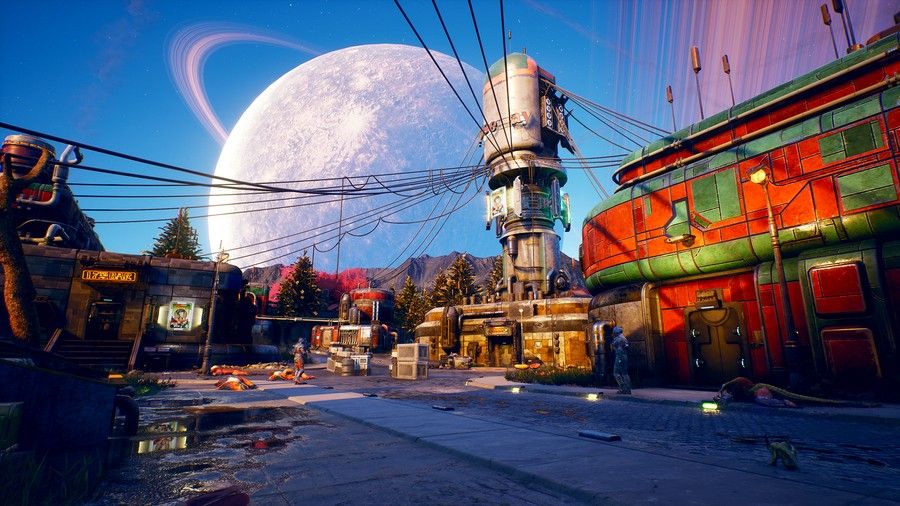
Reported Obsidian layoffs cut across The Outer Worlds 2, Avowed, Pentiment, and Grounded teams, raising new questions about Xbox’s first-party RPG pipeline.
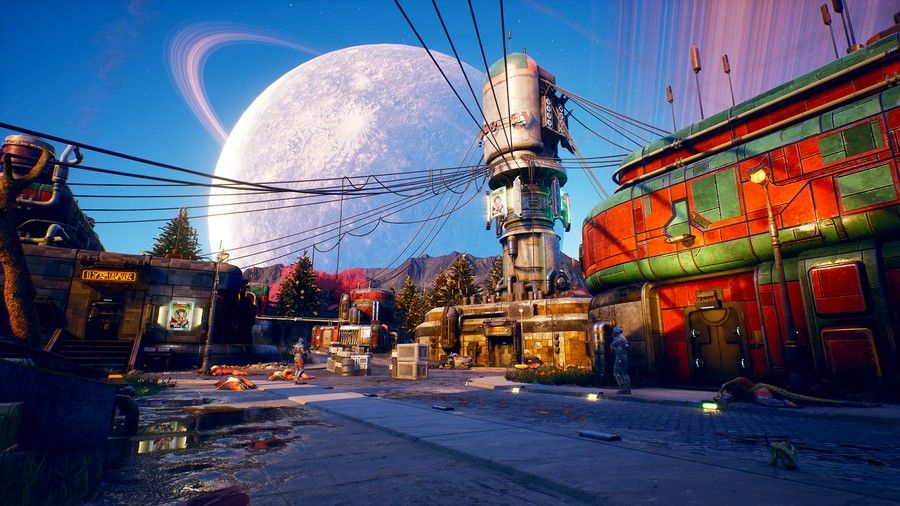
Image: purexbox.com
A quarter of Obsidian is reportedly being cut
Obsidian Entertainment has reportedly lost around one-quarter of its staff in the latest Xbox layoffs, creating immediate uncertainty around one of Microsoft’s most prolific RPG studios. Kotaku, citing sources with knowledge of the matter, reports that roughly 60 to 70 people are being let go from the developer behind The Outer Worlds 2, Avowed, Pentiment, and Grounded 2. Game Developer, Push Square, Console Creatures, and VGChartz all picked up the same core figure, with Kotaku as the originating report for the Obsidian-specific cuts.
The reported reductions are not described as a narrow post-launch ramp-down. Kotaku says the cuts included producers, artists, designers, programmers, QA testers, writers, and other staff across Obsidian’s departments. The outlet also reports that many affected employees were senior talent, including some with over a decade at the studio. Kotaku specifically names the art director on The Outer Worlds and the studio’s only recruiter among those laid off. Console Creatures says dozens of affected staff have posted layoff notices on LinkedIn, with many of those posts coming from senior positions.
The timing sharpens the tension. Kotaku reports that most of the Obsidian roles were eliminated on July 6 as part of Xbox’s first wave of 1,600 layoffs, while a smaller number of employees were told they would be let go later in the year during a second wave. Game Developer describes the cuts as part of a broader 3,200-person Xbox reduction, with 1,600 layoffs beginning immediately and another 1,600 expected within the next year. Xbox declined to comment to Kotaku on Obsidian-specific details.
That leaves Obsidian in a strange position: reportedly still open, reportedly still working on announced content, but with a major loss of staff across the disciplines that build RPGs from the inside out. For a studio whose reputation rests on quest structure, authored worlds, faction logic, build expression, and reactive writing, the loss of senior designers, writers, producers, QA, and technical staff is not interchangeable headcount. It is institutional memory leaving the building.
The Outer Worlds 2 DLC is the clearest active project, but not a settled one
For The Outer Worlds 2, the most important sourced detail is that its announced downloadable content is still expected to continue. Kotaku reports that work on The Outer Worlds 2 DLC is expected to continue, and Game Developer repeats that point while noting broader uncertainty outside that work and Grounded 2. That is the practical line for players right now: the available reporting does not say The Outer Worlds 2 DLC has been canceled.
It also does not say the project is unaffected. Kotaku reports that one remaining employee said staff had not yet received formal guidance on how existing projects would continue with so many people missing. In RPG production, that kind of gap is especially consequential late in a game’s life cycle. DLC is rarely a simple appendage. It can require new quest scripting, bespoke art, combat encounter tuning, companion or faction reactivity, localization, QA passes across save states, and production triage when old systems are asked to support new content. If senior staff are among those leaving, the risk is less about whether a build can be assembled at all and more about how much iteration remains possible before release.
The commercial context is also unsettled. Push Square describes The Outer Worlds 2 as Obsidian’s biggest and most expensive project to date and says the sci-fi RPG did not catch on by most accounts, trailing its predecessor’s sales by a significant distance. IGN separately reported that both Avowed and The Outer Worlds 2 failed to hit commercial targets and that The Outer Worlds 3 was said to be not in development. Those are reported claims, not a public sales disclosure from Microsoft in the source material, but they frame why DLC support now carries extra weight.
The first Outer Worlds became a strong modern Obsidian calling card. Kotaku notes that the 2019 game won Game of the Year at the New York Game Awards, RPG of the year at the DICE Awards, and a Nebula Award for game writing, among other accolades. The sequel, according to the supplied reports, now sits at a harder crossroads: post-launch content may still be moving, but the staffing base behind that content has reportedly been cut deeply, and the next numbered entry is not something the sources describe as active.
Avowed is the RPG with the most visible question marks
Avowed’s situation is different because the source material does not identify a specific Avowed expansion, patch roadmap, or cancellation. The correct reading is narrower: Avowed is part of Obsidian’s recent slate, Obsidian has reportedly been hit with major cuts across departments, and the studio’s future project mix is unclear. Anything beyond that, including claims about Avowed DLC or long-term support ending, would be speculation based on the provided sources.
Still, Avowed is central to the story because it represents Obsidian’s larger first-party RPG ambition under Xbox. IGN reports that Obsidian had no newly announced project after Avowed and The Outer Worlds 2 failed to hit commercial targets, while also noting that there were rumors of another Avowed game. IGN’s wording matters: a rumored follow-up is not an announcement, and a missed commercial target is not the same as a public cancellation. The point is that Avowed appears in the reporting as part of the pressure around Obsidian’s next move.
For players, that means patience is warranted before treating the Xbox layoffs as an Avowed support verdict. If someone is buying Avowed today for the campaign that exists, the source material does not change the availability of that game. If someone is waiting for future content, major balance work, or a deeper expansion of Eora from Obsidian’s first-person perspective, the reporting gives fewer assurances. Kotaku’s source says remaining employees had not yet received formal guidance on continuing existing projects, and Kotaku also says plans beyond The Outer Worlds 2 DLC and Grounded 2 are up in the air.
That uncertainty matters in RPG design terms because support is often where big role-playing systems become more coherent. Post-launch tuning can clarify build incentives, smooth quest blockers, adjust encounter spikes, and make underused abilities viable. If staffing cuts remove designers, QA testers, programmers, writers, and producers, the studio may have less capacity for the kind of systemic maintenance that turns a dense RPG from stable into mature. The reporting does not prove Avowed will lose that support. It shows why players should wait for Obsidian or Xbox to give direct guidance rather than assuming a full roadmap is intact.
Pentiment’s value is exactly the kind a spreadsheet can miss
Pentiment is not the project with an announced DLC question in the supplied reporting, but it may be the sharpest lens on what Obsidian risks losing. Kotaku notes that Pentiment launched in 2022 and won a Peabody Award as well as the Game Developers Choice award for best narrative. That is a rare kind of recognition for a first-party game in the modern subscription and portfolio era: a smaller, authored work valued for writing, historical texture, and choice-driven consequences rather than scale.
The reported layoffs do not say Pentiment’s specific team was removed, and they do not name Pentiment director Josh Sawyer as affected. IGN says Sawyer is still at Obsidian and recently told The 41st Precinct that whether Obsidian would ever get a chance to make another Fallout project would be decided above him. His comment was about franchise authority, not the layoffs themselves, but it captures the hierarchy around a studio like Obsidian under Xbox: even veteran creative leadership operates inside decisions made at the platform level.
Pentiment’s legacy complicates any simple reading of Obsidian’s output. The studio’s Xbox years, as Kotaku lists them, include The Outer Worlds 1 and 2, Grounded 1 and 2 in early access, Avowed, and Pentiment. That is an unusually broad catalog for one first-party studio, spanning survival, first-person fantasy RPG, satirical sci-fi RPG, and narrative historical adventure. Push Square calls Obsidian one of Xbox’s most prolific outfits, even while arguing that it has struggled to deliver commercial smash hits under the Xbox banner.
If the business pressure is now being applied through staff reductions, Pentiment becomes the cautionary example. Award-winning narrative design does not automatically answer platform-level demands for growth, subscription retention, or blockbuster sales. At the same time, studios do not produce games like Pentiment without experienced writers, artists, designers, and producers who know how to scope strange ideas into finished work. Kotaku’s report that many senior employees are among those affected therefore lands harder than a raw percentage. It suggests a loss of the very people who help a studio choose which risks are viable.
Xbox’s first-party RPG slate has less room for redundancy
The Obsidian layoffs also narrow the margin for Xbox’s internal RPG ambitions. Microsoft acquired Obsidian in 2018 alongside inXile, as IGN notes, bringing two role-playing specialists under the Xbox Game Studios umbrella. Since then, according to Kotaku’s summary, Obsidian has shipped or launched into early access a steady run of projects: The Outer Worlds, Grounded, Pentiment, Avowed, The Outer Worlds 2, and Grounded 2. Whatever the commercial picture, that is a high-output studio by first-party standards.
Game Developer reports that the cuts are part of an Xbox reset tied to 3,200 total layoffs. The outlet also cites Xbox CEO Asha Sharma’s message that the business is not healthy and that reductions are needed after big bets on Game Pass, multi-platform publishing, and a broader content portfolio failed to pan out. That statement, as reported, places Obsidian’s cuts inside a platform-level recalibration rather than a single studio’s ordinary post-ship adjustment.
The RPG consequence is capacity. Obsidian has historically occupied a specific lane within Xbox: authored role-playing systems with strong quest identity, branching dialogue, and settings that ask players to live with tradeoffs. The larger Xbox portfolio may still include RPGs from other teams, but the source material here only establishes Obsidian’s place and the reported pressure around it. When a studio with that specialization loses a quarter of its staff, the pipeline does not simply become smaller. It becomes less able to absorb delays, parallel prototypes, expansions, and support obligations at once.
There is also a prior-reporting conflict worth keeping separate. IGN covered an earlier claim from The Game Business that Obsidian was among studios negotiating to avoid closure, but updated the story after Bloomberg reporter Jason Schreier disputed that account, saying on social media that Xbox was keeping Obsidian according to people familiar with the situation. Push Square also notes that a report about Obsidian being in danger of shutdown was later refuted. The current reporting is therefore not that Obsidian is closing. The current reporting is that Obsidian is staying inside Xbox while losing a reported 60 to 70 employees, with future plans beyond certain active work unresolved.
Where players should draw the line between fact and fear
The safest practical read is this: Obsidian Entertainment layoffs are reported by Kotaku at roughly 25 percent of the studio, or around 60 to 70 people, with additional outlets citing that report and LinkedIn posts from affected staff. The cuts reportedly include a wide range of roles, including senior talent. Xbox declined to comment on Obsidian-specific details. A studio-wide meeting was reportedly expected on July 7, according to Kotaku and Game Developer.
For The Outer Worlds 2 players, the strongest available signal is that announced DLC is expected to continue, according to Kotaku. That does not guarantee timing, scope, or feature completeness, and no source in the supplied material provides a release date, price, platform-specific performance target, or upgrade path for that DLC. Anyone deciding whether to buy The Outer Worlds 2 primarily for future content should wait for an official roadmap or store-page details from Xbox or Obsidian.
For Avowed players, there is less concrete guidance. The sources do not report an Avowed cancellation, and they do not provide an official post-launch plan. They do report uncertainty around Obsidian’s projects beyond The Outer Worlds 2 DLC and Grounded 2, along with IGN’s claim that Avowed missed commercial targets. That makes Avowed support an open question rather than a settled outcome.
For Pentiment fans, there is no immediate availability issue in the source material. The concern is cultural and creative: a studio known for award-winning narrative work has reportedly lost experienced staff across creative and production roles. Pentiment’s Peabody and Game Developers Choice recognition remains part of Obsidian’s record, but awards do not shield a team from platform restructuring.
For Xbox RPG watchers, the larger takeaway is not a new closure rumor. It is a capacity problem at a studio that has carried a broad slice of Microsoft’s first-party role-playing identity. Until Xbox or Obsidian gives direct guidance, The Outer Worlds 2 DLC and Grounded 2 are the only projects in the supplied reporting described as expected to continue. Everything else, including Avowed’s long-term support and Obsidian’s next RPG, remains unannounced or unresolved.