
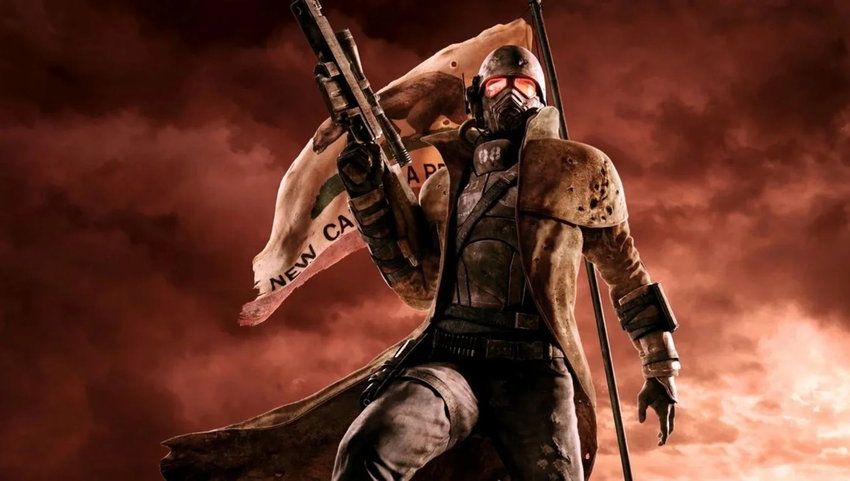
Bethesda’s reported message to Obsidian staff frames the Xbox restructuring as a reporting change, while leaving big questions around Fallout cooperation, studio autonomy, and future RPGs.
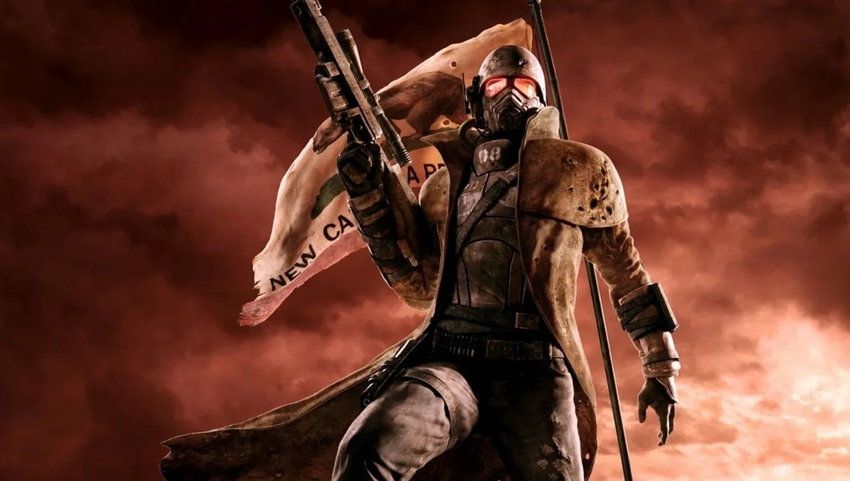
Image: umgamer.com
A reporting change with a lot riding on the wording
The clearest concrete development is also the source of the tension: Bethesda president Jill Braff reportedly told Obsidian Entertainment staff that the studio’s move under Bethesda is “primarily a change in reporting structure,” while also saying Obsidian’s “creative identity and strengths” will remain central to its work. That language comes from an internal email reportedly seen by Aftermath and quoted by multiple outlets, including Game Developer, Eurogamer, GamingBolt, and Operation Sports.
The Obsidian Bethesda shift is being reported inside a wider Xbox restructuring, not as a standalone creative announcement. That distinction matters for fans trying to read the tea leaves. The reported memo does not say Obsidian is being dissolved, renamed, or turned into a Bethesda Game Studios satellite team. According to the quoted email, CEO Feargus Urquhart and Obsidian leadership will continue to lead the studio, with the studio now reporting to Braff.
At the same time, the structure is not cosmetic. Braff reportedly framed it as part of a “franchise-led model” that keeps accountability for both the studio and the franchise clear. That is corporate language, but it is also the part that should keep Obsidian fans alert. Xbox’s restructuring appears to be placing major intellectual properties and studio groups into cleaner chains of command, and Obsidian’s proximity to Fallout is now formalized under the same Bethesda umbrella.
So the safest reading is narrow: this is not confirmed evidence of a creative shakeup at Obsidian, but it is a realignment around Bethesda’s franchise priorities, if the reported memo is accurate. For a studio whose identity is built on authored RPGs, branching quests, reactive dialogue, and smaller experiments like Pentiment alongside larger projects, the unanswered question is how much room that identity gets inside a structure designed around clearer franchise ownership.
What is confirmed, reported, and still unannounced
The public record here is layered. The reported email is not a public Bethesda blog post or a published Xbox statement. Aftermath is said to have obtained the employee email, and other outlets are reporting from that account. The strongest sourced details are the quoted claims attributed to Braff: Obsidian keeps its leadership, Bethesda Game Studios continues to lead Fallout, and the two teams have early work underway on a new Fallout project.
What remains unannounced is equally important. There is no release date for the new Fallout project in the provided source material. There are no announced platforms, price, format, title, scope, engine details, or confirmation of whether this project is separate from Fallout 5. Operation Sports explicitly notes that it is unclear whether the new game is related to Bethesda’s current Fallout 5 work or an entirely new title in the franchise. Game Developer’s report says Todd Howard described Fallout 5 as being in preproduction, while the Obsidian and Bethesda collaboration is presented as a new Fallout game with the timing considered right.
There is also a vocabulary gap between the reporting and the reported internal framing. Eurogamer describes Obsidian as being folded into Bethesda. Game Developer uses the language of merging with Bethesda. Operation Sports refers to Obsidian officially becoming part of Bethesda. The reported email, however, softens that by calling the move primarily a reporting-structure change. Those phrases are not identical. One emphasizes corporate integration; the other emphasizes continuity.
That gap is the story. Fans should treat the memo’s creative reassurance as meaningful, but not as proof that nothing will change. Reporting lines decide budgets, greenlights, staffing priorities, review processes, and which pitches survive. Creative identity can remain intact while the range of possible projects narrows. Until Xbox, Bethesda, or Obsidian publicly details how this affects future games beyond Fallout, the responsible position is to separate the reported assurance from assumptions about long-term autonomy.
Fallout cooperation is now the center of gravity
The Fallout connection explains why this specific reorganization is drawing so much attention. Obsidian’s Fallout: New Vegas remains the unavoidable reference point, and several reports describe fan concern that the studio could be reduced to Fallout support work after moving under Bethesda. The reported Braff email tries to answer that concern by drawing a boundary: Bethesda Game Studios will continue to lead the Fallout franchise, while Obsidian’s leadership continues to lead Obsidian.
That setup suggests cooperation rather than a simple handoff. Braff reportedly wrote that the teams will build on their longstanding relationship and on early work already underway on a new Fallout project. The phrase “early work” is doing a lot of work here. It signals movement, but not production maturity. It does not tell players whether this is a full-scale RPG, a smaller Fallout release, a co-developed spin-off, or something else entirely.
From a strategy perspective, Xbox’s incentive is obvious from the reporting. Fallout is one of Bethesda’s largest brands, and Obsidian is the internal studio most closely associated with a beloved non-Bethesda Fallout entry. Putting the teams into a clearer reporting structure could reduce friction around approvals, technology access, franchise supervision, and narrative guardrails. It could also make collaboration more efficient if the project requires Bethesda oversight and Obsidian authorship in the same pipeline.
The risk is that Fallout’s scale can consume oxygen. Big franchise projects tend to demand long production cycles, specialized technical work, and staff continuity. If Obsidian’s best-known RPG designers are pulled deeply into Fallout, fans will reasonably ask what happens to Pillars of Eternity, The Outer Worlds, Avowed, Pentiment-style projects, and the studio’s appetite for unusual systems-driven storytelling. The reported memo answers the identity question in principle, but the project slate will answer it in practice.
Xbox restructuring adds pressure to every reassurance
The timing makes the reported reassurance harder to read as a simple calming note. Eurogamer describes Xbox’s wider reset as beginning with 1,600 layoffs and five first-party developers being parted with, followed by a continuation that cut a further 268 roles and moved studios across Microsoft’s gaming divisions. Operation Sports similarly reports nearly 300 layoffs in the latest shift. GamingBolt, meanwhile, frames the restructuring as broader and ongoing, saying Xbox is about three-quarters through it and reporting that another 1,600 layoffs will follow through the fiscal year.
Those figures are not identical in scope, and readers should not flatten them into one clean number. Different reports appear to be describing different phases or different boundaries of the same restructuring. The shared point is clear enough: this is happening in a period of cuts, studio movement, and tighter corporate control across Xbox’s first-party business.
That context changes the weight of Braff’s reported memo. Saying Obsidian’s leadership remains in place is reassuring because leadership continuity matters. Saying the studio’s creative strengths remain central is also notable because it directly addresses the fear that Obsidian becomes an appendage to another studio’s priorities. But the same reported memo also uses the language of a franchise-led model, and the broader restructuring is openly associated in coverage with major IP consolidation.
For a strategy-minded read, this resembles a publisher trying to reduce variance. Large platform holders rarely restructure around vibes. They restructure around accountability, output, recognizable brands, and clearer ownership of expensive bets. Fallout cooperation fits that model perfectly. The harder question is whether Obsidian’s original RPG identity is seen as a competitive advantage inside that model or as a luxury that must prove itself project by project.
Obsidian’s identity is bigger than a logo on a box
Obsidian fans are not only worried about the studio name surviving. They are worried about design DNA. The source material repeatedly points to the same cluster of games that define the studio’s reputation: Fallout: New Vegas, The Outer Worlds, Grounded, Avowed, Pillars of Eternity, and Pentiment. That is a broad portfolio, moving from party-based RPGs and first-person choice-driven adventures to survival crafting and compact narrative work.
The reported Bethesda memo speaks to that concern by saying the creative identity and strengths that make Obsidian distinct will remain at the core of the studio and its work. If taken at face value, that is a promise that Bethesda is not trying to sand away what makes Obsidian useful in the first place. In practical terms, the value of Obsidian on Fallout is not simply headcount. It is quest structure, tone, consequence, faction design, and the ability to make player choice feel politically and morally messy.
Still, identity is protected by decisions, not slogans. A studio can keep its leadership and still face fewer greenlights for smaller or riskier projects. A team can retain its writing culture while working inside a franchise bible with stricter approvals. A developer can remain distinct while the economics of a platform holder push it toward safer brands.
The useful comparison is internal to the reports themselves. Eurogamer notes concern that Obsidian might be downgraded to a support studio because it is developing a new Fallout game with Bethesda Game Studios. Braff’s reported email directly rejects the most alarming version of that fear by keeping Obsidian leadership in place. It does not, however, disclose what Obsidian will be allowed to make after its current obligations. For fans, that is the unresolved strategic variable.
The near-term reader guidance: watch the slate, not the slogans
For players, nothing in the provided reporting changes what you can buy, download, or play today. GamingBolt reports that Obsidian is also working on Grounded 2 alongside Eidos Montreal, and that the game is currently in early access for Xbox Series X/S, PS5, and PC. The new Fallout collaboration has no announced launch window, platforms, price, or public title in the source material. Bethesda’s reported note says there will be more to share in the months ahead, but that is not a release promise.
If your main interest is Fallout Obsidian cooperation, the next meaningful signal will be how Xbox and Bethesda describe the new project publicly. A named game, a stated lead developer, platform details, and even the wording of the reveal will say more than the current internal memo. If Bethesda Game Studios is clearly positioned as franchise lead and Obsidian as a co-developer with authorship over quests, world design, or systems, that would support the cooperation reading. If Obsidian appears only in a support capacity, fan skepticism will grow.
If your concern is Obsidian creative identity beyond Fallout, watch what happens after the restructuring dust settles. Future hiring, project cancellations, public comments from Urquhart or Braff, and whether Obsidian continues to announce games outside Bethesda’s biggest franchises will matter more than any single quoted line from an employee email.
For now, the fairest conclusion is restrained. The reported Bethesda Obsidian memo is a reassurance, not a verdict. It says Obsidian’s leadership and identity remain in place while formalizing a closer relationship with Bethesda around Fallout. That is good news compared with the darkest fan fears, but it sits inside an Xbox restructuring defined by cuts, consolidation, and franchise discipline. Obsidian’s next few projects will determine whether this becomes a stronger platform for the studio’s RPG craft or a narrower lane with a famous wasteland at the center.