
Bethesda's Oblivion Remastered update 1.1 is live on Nintendo Switch 2, targeting crashes, quest bugs, Water Walking jitter, and underwater breath behavior, but not the frame-rate concerns some handheld players were watching.
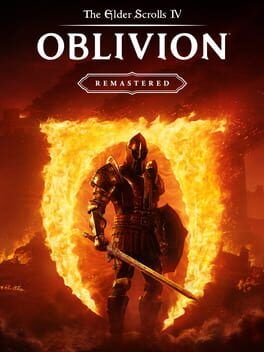
Image: IGDB
Store links: The Elder Scrolls IV: Oblivion Remastered on Steam
Bethesda’s first Switch 2 cleanup pass targets stability first
The Elder Scrolls IV: Oblivion Remastered update 1.1 is now live on Nintendo Switch 2, and Bethesda’s official patch notes, republished by Nintendo Everything, Nintendo Life, VGTimes, and Twisted Voxel, make the priority clear: this is a crash-fix and quest-cleanup update rather than a broad Oblivion Remastered performance update.
That distinction matters for returning players who are treating Elder Scrolls IV Oblivion Remastered Switch 2 as a long-haul handheld RPG. Patch 1.1 addresses several places where a save could be disrupted by normal play, including opening the player map, switching to third-person view, fast-traveling after leaving Castle Bravil, entering the Cheydinhal Fighters Guild during “Mystery at Harlun’s Watch,” idling in the Kvatch Oblivion realm, and using Wait around Bound spell effects. Those are not edge-case activities in Oblivion. They sit close to the everyday rhythm of traveling, questing, build-testing, and managing time.
What Bethesda has not listed is equally important. The Oblivion Remastered Switch 2 patch notes do not mention frame-rate improvements, resolution changes, image clarity adjustments, docked-versus-handheld tuning, load-time reductions, battery-impact changes, or UI readability fixes. Nintendo Life’s Switch 2 review called the game a “solid update of an all-time classic RPG” while noting “some issues with the target fps.” Patch 1.1, at least by the published notes, does not claim to solve that performance concern.
The most useful fixes are tied to routine RPG behavior
The crash fixes in update 1.1 read like a list of systems that returning Oblivion players touch constantly. Bethesda says it fixed a crash when quickly using the Altar of Enchanting or Altar of Spell Making to add an enchantment or spell effect to an item. For a character deep into custom gear, spellcrafting, or late-game optimization, that fix protects one of Oblivion’s most expressive progression loops.
The map crash fix may be the most broadly relevant. Oblivion’s Cyrodiil is built around frequent map checks, fast travel, dungeon routing, and city-to-city quest juggling. A crash when launching or navigating the player map is the kind of problem that can make a portable session feel risky, especially if a player is dipping in for one guild step, one Oblivion Gate, or one wilderness detour. Patch 1.1’s map fix directly addresses that use case.
The same goes for the third-person camera crash. Oblivion players often swap camera views to inspect armor, navigate cramped spaces, line up screenshots, or simply enjoy the absurd dignity of a freshly looted helmet. Bethesda’s note says switching to third-person view should no longer trigger that crash. On a handheld, where sessions often involve quick interruptions and less tolerance for replaying lost minutes, these stability fixes are practical quality-of-life improvements even without a frame-rate claim.
Quest-specific fixes protect several late and faction-adjacent saves
Patch 1.1 also cleans up problems tied to named quest moments, which is the category that should catch the eye of completion-minded players. Bethesda lists a crash when loading into the Cheydinhal Fighters Guild during “Mystery at Harlun’s Watch,” a Fighters Guild quest. It also fixes random items being equipped if the player cast Blessing of Talos during “Umaril the Unfeathered,” a quest associated with the Knights of the Nine content included in the remaster according to the broader game listing cited in the source material.
The update further closes an out-of-world escape at the Temple of the One during the “Imperial Dragon Armor” quest. That is less dramatic than a hard crash, but it matters for save integrity. Oblivion’s old reputation includes strange physics, strange spaces, and strange outcomes. In a remaster that includes a modern graphics overhaul but keeps the underlying open-world RPG structure, Bethesda’s patch note suggests the team is still policing points where older systemic weirdness can become a progression risk.
There is also a fix for the Lucky Old Lady statue in Bravil missing animations during “Honor Thy Mother.” That is a visual correction rather than a progression fix, but it touches a memorable Dark Brotherhood-adjacent piece of Bravil’s quest texture. For returning players who remember Oblivion as much for its faction stories and odd local rituals as for its main quest, these smaller quest presentation fixes help preserve tone.
Water, waiting, and Bound spells get targeted corrections
Some of the update’s most Oblivion-specific fixes involve the interaction between magic effects, time, and the environment. Bethesda says update 1.1 fixes a crash when the player repeatedly casts a custom Bound spell and uses the Wait option. It also fixes a crash when the Wait button is used while a bound weapon or armor magic effect runs out.
That is a systems-heavy correction. Bound gear has always encouraged temporary build flexibility: summon a weapon, fill a defensive gap, wait out time, and keep moving. If the Switch 2 version could crash when those timers collided with waiting, that would be especially punishing for magic-heavy characters, hybrid builds, and players experimenting with custom spell behavior.
Water behavior gets two changes. Bethesda says moving in shallow water while under Water Walking no longer causes the player character to jitter. The notes also say the patch improves depletion of the player breath bar while underwater during loading screens. Neither note promises a larger physics rewrite, but both are relevant to handheld play because small animation or status-meter oddities are more noticeable when playing close to the screen. They also matter because Oblivion’s systems often stack: water, spell effects, loading boundaries, timers, and player movement can meet in ways a linear action game rarely has to account for.
Does update 1.1 improve the biggest handheld pain points? Partly, but not the performance one
Based on Bethesda’s listed changes, Oblivion Remastered update 1.1 should make the Switch 2 version safer to play in the sense that fewer ordinary actions should end in a crash. Map navigation, third-person toggling, fast travel, waiting, Bound spell use, and specific quest transitions are all covered by the notes. Those fixes are meaningful for a portable RPG because interruption is the enemy of handheld play. Losing progress during a short session hurts more when the plan was simply to clear one Fighters Guild step or test an enchanted item before sleep mode.
The patch does not, however, provide evidence of a wider performance uplift. Nintendo Life’s review specifically referenced issues with the target fps, and none of the version 1.1 notes mention frame pacing, frame-rate targets, dynamic resolution, visual sharpness, texture streaming, or mode-specific optimization. VGTimes characterized the update as a technical cleanup pass focused on stability first, and that reading matches the patch contents.
So the practical answer is narrow. If your biggest frustration was instability around maps, camera switching, spellcrafting, fast travel, Wait interactions, or particular quests, update 1.1 directly addresses several of those pain points. If you were waiting for a documented frame-rate or image-quality improvement before starting a 100-hour save, Bethesda has not announced that in these patch notes.
Should returning players start now or keep waiting?
For players returning to Cyrodiil on Switch 2, the case for starting after patch 1.1 is stronger than it was at launch if your concern was crash risk. Twisted Voxel reports that Oblivion Remastered first released for Windows, PlayStation 5, and Xbox Series X/S on April 22, 2025, before the Nintendo Switch 2 version arrived on August 11, 2026. A stability update landing on September 17, 2026 gives the Switch 2 release a post-launch correction pass roughly a month after its arrival on the platform.
Completionists and build tinkerers should still save deliberately. The patch removes listed crash triggers, but it does not claim to solve every possible instability in a remastered open-world RPG. If you plan to lean into custom spells, Bound equipment, Water Walking, faction chains, and heavy fast travel, update 1.1 is specifically relevant to your route, but the safest habit remains rotating manual saves before major quest transitions and before experimenting at spell or enchantment altars.
Players sensitive to performance should be more cautious. The available sources support saying that the patch fixes crashes, gameplay quirks, and a visual animation issue. They do not support saying the Switch 2 version now hits its target fps more consistently. For a returning RPG player who can tolerate some performance roughness in exchange for portable Oblivion, update 1.1 is a useful stability patch. For a player waiting on a confirmed handheld performance pass, the better move is to watch for a future update with explicit frame-rate or image-quality notes.