
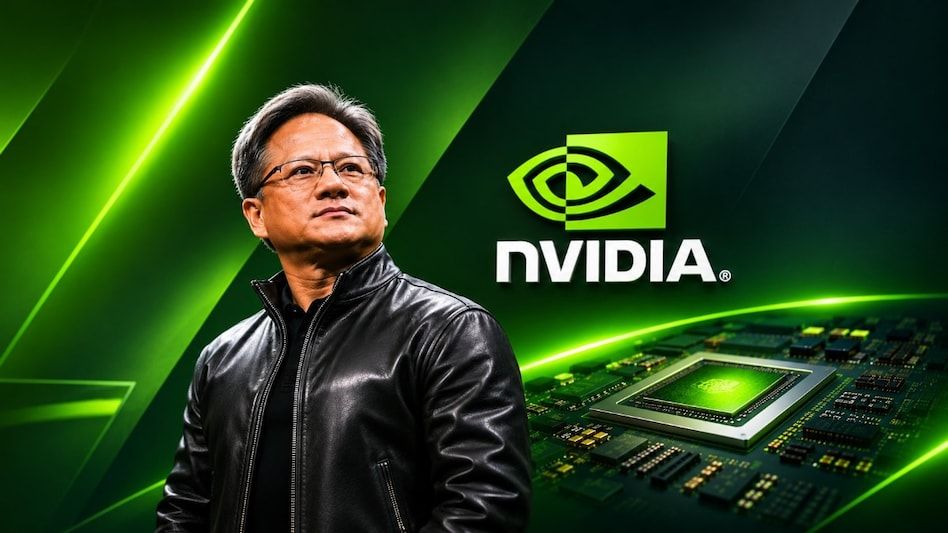
A proposed Nvidia shareholder lawsuit claims investors were misled over Jensen Huang's alleged relationship and related national security risks. Here is what is alleged, what Nvidia has said, and what gaming hardware buyers should watch.
Image: businesstoday.in
A shareholder case turns Nvidia’s leadership crisis into a market test
Nvidia and CEO Jensen Huang are facing a proposed shareholder class action in California federal court after the company’s share price fell sharply following reports about Huang’s alleged relationship with Alice Huang, a former Megaspeed executive described in multiple reports as an alleged or suspected Chinese intelligence asset.
According to Politico, the lawsuit claims Huang’s failure to disclose the affair artificially inflated Nvidia’s share price and may have violated federal securities laws. The complaint was filed by Rosen Law Firm on behalf of Nvidia shareholder Mark Kistenmacher, with Politico quoting the lawsuit’s claim that shareholders suffered losses after a “precipitous decline in the market value of the Company’s securities.”
The market move is central to the case. Politico reported that Nvidia’s stock fell $7.97 per share, or 4.27 percent, to close at $178.67 on Monday. The Guardian characterized the company as a $4.3 trillion business. DW also reported that Nvidia shares closed down 4.3 percent Monday and said the lawsuit was filed five minutes after US markets closed.
For readers coming to this through the gaming side of Nvidia, the immediate tension is clear: the company that still defines much of the high-end PC graphics market is now being tested on investor disclosure, export-control sensitivity, and board oversight at the same time it has become one of the central suppliers of AI computing. There is no sourced evidence in the provided reporting that GeForce products, drivers, warranties, or consumer GPU availability have changed because of the lawsuit. The risk for Nvidia’s gaming hardware audience is indirect for now, tied to confidence in leadership, market stability, and whether the controversy grows into a longer governance or regulatory problem.
What the Nvidia investor claims actually allege
The Nvidia lawsuit is a securities case, not a criminal finding. The complaint, as described by Politico, The Guardian, Kotaku, Rock Paper Shotgun, DW, and Yahoo Finance, alleges that Nvidia and Huang misled investors by failing to disclose information connected to Huang’s alleged relationship and the national security concerns that shareholders say could threaten Nvidia’s reputation and business prospects.
Kotaku reported that the proposed complaint was filed November 9 in the United States District Court for the Northern District of California and names both Nvidia and Huang. The outlet said the complaint quotes statements given to The New York Times and Bloomberg by Nvidia spokesperson John Rizzo and Huang after those outlets covered Huang’s alleged relationship with Alice Huang. According to Kotaku, the complaint accuses Huang of misleading shareholders by describing Nvidia’s dealings with Megaspeed as “normal and not unusual.”
The Guardian reported a similar allegation: Nvidia had described Jensen Huang’s interaction with Alice Huang as “not unusual or unexpected” in a comment to The New York Times, saying that meetings with customers are part of a CEO’s job and that Huang speaks with thousands of customer executives every year. The lawsuit, according to The Guardian, claims that statement was “materially false and misleading at the time it was made because [Jensen Huang] had an affair with Alice Huang.”
That is the plaintiff’s theory. It has not been proven in court. The complaint’s logic appears to depend on whether the alleged relationship, the Megaspeed connection, and the related national security questions were material information that investors should have received earlier, and whether any omission or public statement caused shareholders’ losses when the stock dropped.
What Nvidia and Huang have said so far
The confirmed company response is narrower than the allegations around it. Rock Paper Shotgun quoted Nvidia as saying: “While the Board has no reason to believe that either national security or Nvidia secrets were compromised, the Board's inquiry will examine all available information. Jensen fully supports the review and has committed to cooperating with it. The Board has confidence in Jensen and his leadership team and will provide further updates as appropriate.”
DW reported that Nvidia announced an independent investigation Sunday into reports that Huang had been the “target of a foreign intelligence effort.” DW also reported that Huang acknowledged being unfaithful to his wife in an open letter but did not identify the woman. According to DW, Huang said: “I support the investigation and will cooperate fully. I am committed to protecting NVIDIA and supporting America's national security.”
Those statements matter because they separate three issues that can easily blur together. First, Huang has acknowledged personal misconduct, according to the reporting. Second, Nvidia says its board currently has no reason to believe national security or company secrets were compromised, while still conducting a review. Third, the lawsuit argues investors were misled about risks and relationships relevant to Nvidia’s business.
That distinction is important for any careful reading of the Jensen Huang lawsuit coverage. The lawsuit does not establish that secrets were transferred. Nvidia’s statement does not resolve whether investors were owed earlier or different disclosures. The board review, the shareholder case, and any government inquiry are separate tracks, even if they arise from the same reported events.
The Megaspeed and China angle raises the stakes beyond one executive
The reason this controversy has moved beyond a personal scandal is Nvidia’s position in the US-China technology fight. The Guardian reported that Alice Huang is a former executive of Singapore-based Megaspeed and is not related to Jensen Huang. The Guardian also reported that The New York Times said US authorities had concluded Alice Huang was a Chinese intelligence asset. Kotaku, citing the Financial Times, reported that an internal US intelligence memo said US intelligence believed Alice Huang had been recruited by China’s Ministry of State Security to spy on Nvidia’s CEO.
Those are reported intelligence claims, not court-proven facts. DW reported that China denied conducting an intelligence operation targeting Huang, quoting Foreign Ministry spokesperson Guo Jiakun as saying the “so-called Chinese spy allegation is unsubstantiated” and “nothing but smears against China.”
Megaspeed is another piece of the alleged risk. The Guardian reported that the company has reportedly been investigated over suspicions that it may have diverted Nvidia chips to China in violation of US export restrictions. Rock Paper Shotgun described Megaspeed as a Singapore-based data center company that allegedly gave Chinese companies Nvidia chips it had bought in large quantities. These allegations are especially sensitive because Nvidia’s most advanced chips sit at the center of export-control policy, AI infrastructure spending, and national security scrutiny.
Washington’s role adds another layer. The Guardian reported that Donald Trump said the FBI was investigating Huang’s affair with an alleged Chinese spy. DW reported that Trump said he had spoken with Huang and that Huang “had absolutely no idea that the person in question was a spy.” The president’s public support does not answer the securities-law claims, but it signals how quickly the controversy has become a political and regulatory issue as well as an investor one.
Investor confidence now depends on disclosure, controls, and board discipline
Nvidia’s share-price decline is the lawsuit’s clearest numerical anchor, but the larger investor question is about trust in a company whose valuation depends heavily on confidence in leadership, demand visibility, and geopolitical risk management. Politico reported that the lawsuit says the national security concerns raised by the allegations present a material risk to Nvidia’s reputation and future business prospects. Yahoo Finance similarly reported that shareholders led by Kistenmacher accuse Nvidia and Huang of causing “significant losses and damages” by failing to disclose the affair and allegedly inflating the share price.
For a company valued in the trillions, the difference between a personal scandal and a material disclosure problem is not semantic. Investors price Nvidia on expectations about AI demand, data center growth, export-rule navigation, supply allocation, and executive execution. If plaintiffs can plausibly argue that undisclosed conduct created a material risk to those assumptions, the Nvidia investor claims become part of the company’s governance overhang.
There is also a procedural signal to watch. Kotaku reported, citing TechCrunch, that at least four legal firms were moving around potential Nvidia claims, with Rosen Law Firm described as the first to take official legal action. That does not prove the case is strong. Securities suits often multiply after a large stock move. Still, it tells investors that legal scrutiny may not end with a single complaint.
The next strategic question is whether Nvidia can contain this as a disclosure dispute while its board conducts the review, or whether more facts emerge that shift the case toward export-control compliance, internal access controls, or succession planning. The current sourced record does not support conclusions about compromised secrets. It does support the idea that investors are now watching Nvidia’s governance systems with the same intensity they usually reserve for chip margins and data center backlog.
For Nvidia gaming hardware buyers, the practical risk is indirect but worth tracking
Nvidia’s gaming audience should resist two bad readings of this story. One is panic: none of the provided sources report that GeForce GPUs are being discontinued, delayed, repriced, or technically affected by the lawsuit. The other is dismissal: Nvidia’s consumer hardware business exists inside the same company whose leadership, capital spending, export exposure, and AI strategy shape product cadence and pricing pressure.
DW noted that Huang led Nvidia’s transformation from a gaming chipmaker into a central supplier of AI technology. That history matters for PC players because Nvidia gaming hardware now competes internally for attention with massive AI and data center demand. When Nvidia is calm, well-capitalized, and predictable, its gaming roadmap benefits from the same silicon leadership, driver infrastructure, and developer ecosystem that make the company dominant. When the company faces governance or geopolitical turbulence, the gaming impact is usually second-order: investor pressure, executive distraction, regulatory scrutiny, or shifts in how Nvidia allocates chips and messaging.
At the buyer level, there is no sourced basis to delay a GPU purchase solely because of this Nvidia shareholder lawsuit. A better strategy is to track the things that would directly affect a gaming rig: retail pricing, inventory, board partner availability, driver release cadence, warranty service, and official product announcements. If those remain stable, the lawsuit is mainly a corporate-risk story for gamers rather than a hardware-availability story.
For investors who also happen to be PC hardware fans, the calculus is different. The question is not whether the next driver works. It is whether Nvidia’s board can demonstrate that sensitive customer access, executive conduct, and national security risks are governed by repeatable controls rather than personal trust in a founder-CEO. In strategy terms, Nvidia’s board has to show that the company’s late-game advantage is protected by systems, not only by the star player at the center of the map.
The unresolved questions now matter more than the headlines
The next phase depends on facts that are still unannounced or disputed. The court has not adjudicated the shareholder claims. Nvidia’s board review is ongoing, according to the company statement quoted by Rock Paper Shotgun. China has denied the spy allegation, according to DW. Nvidia says it currently has no reason to believe national security or company secrets were compromised, while plaintiffs argue investors were misled about material risks.
The strongest near-term signal will be what Nvidia discloses next. A board update that addresses the scope of the review, the handling of Megaspeed-related contacts, and whether any policy changes are coming would give investors more to price than fragments of litigation and political comment. A prolonged silence could leave the company exposed to speculation, especially if additional firms file related actions or if government inquiries produce new details.
For GameLoop readers, the disciplined read is this: the Nvidia lawsuit is real, the stock drop is documented, the shareholder allegations are serious, and the most damaging claims remain allegations. Gaming hardware buyers do not yet have a product-level reason to change plans, but Nvidia’s position as a supplier to both gamers and AI infrastructure means corporate trust is part of the hardware story now. A company that sells performance also sells confidence, and this case has turned confidence into the contested resource.