
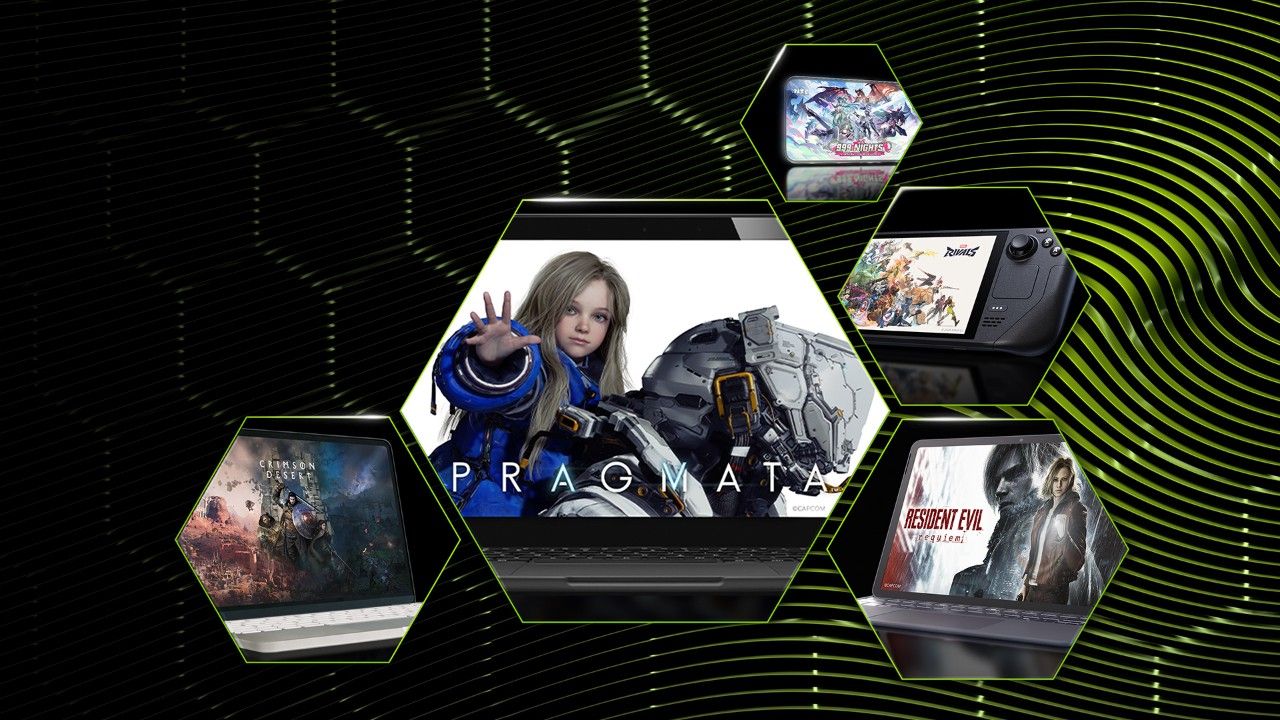

Nvidia GeForce Now now officially supports Firefox on Windows, giving Mozilla users a non-Chromium browser route into cloud gaming while Linux and macOS Firefox support remain outside the announcement.
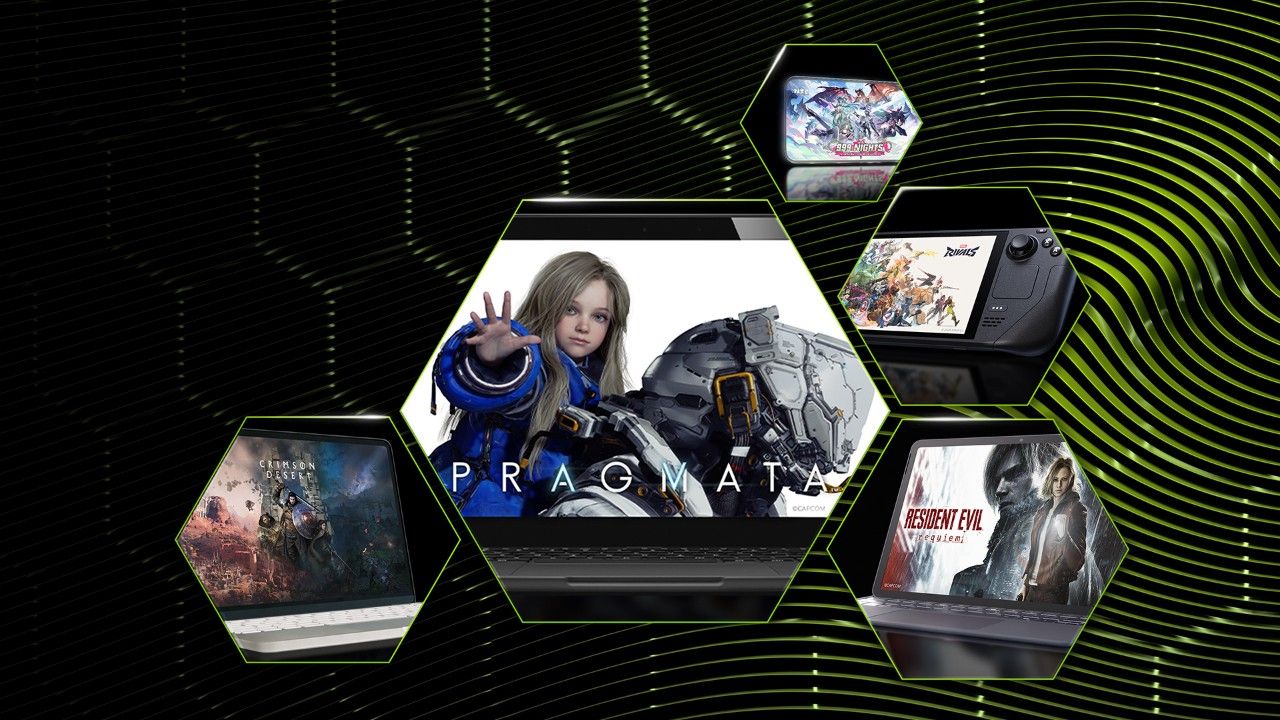
Image: nvidia.com
Firefox joins GeForce Now on Windows, with a platform caveat
Nvidia GeForce Now now officially supports Firefox on Windows, ending a long gap for players who wanted to use Mozilla’s browser without keeping Chrome, Edge, or Opera GX around as a fallback. Mozilla announced on August 18, 2026 that Nvidia had “made it official,” opening GeForce RTX-powered cloud play to Firefox users on Windows through play.geforcenow.com.
The immediate tension is the platform boundary. This is GeForce Now Firefox support for Windows, not a blanket Firefox rollout across every operating system. GamingOnLinux noted that Nvidia’s announcement left out Linux, while MakeUseOf reported that the new support has not reached Firefox on Linux or macOS. That distinction matters because GeForce Now is already a service built around removing hardware friction, yet browser support still depends on the operating system underneath the browser.
Nvidia framed the addition as a quality threshold rather than a simple switch flip. Andrew Fear, director of Nvidia GeForce Now, said in the announcement quoted by Mozilla and GamingOnLinux that “Firefox earned its place on our list of supported browsers by delivering the first-class experience GeForce NOW players expect.” Mozilla described the launch as the result of months of collaboration and engineering between Mozilla and Nvidia.
For Windows players, the practical change is clear: if Firefox is your daily browser, Nvidia cloud gaming no longer requires a Chromium-based detour. Update Firefox, go to play.geforcenow.com, sign in with a GeForce Now account, and the supported library is available through the browser.
The access gain is bigger for Firefox loyalists than for casual browsers
Before this update, the browser route into GeForce Now on Windows was effectively aligned around Chromium. MakeUseOf reported that Nvidia’s officially supported Windows browsers previously included Chrome, Microsoft Edge, and Opera GX, all Chromium-based. Neowin similarly listed Chrome, Edge, Opera GX, and Safari among the browsers already supported for cloud play.
That made Firefox the missing piece for a large group of users who preferred Mozilla’s browser for privacy, customization, extensions, or simple habit. Mozilla’s blog emphasized Firefox’s identity around privacy, control, flexibility, themes, colors, and tab settings. Those are browser features rather than game features, but in cloud gaming the browser is part of the gaming setup. If the browser is the client, browser preference becomes part of platform preference.
The support also matters because Firefox uses Gecko rather than Chromium. MakeUseOf pointed to Firefox as one of the major browser engines outside Google or Apple control, and called this the first non-Chromium browser option for GeForce Now on Windows. That is the strategic layer of the story. Browser parity gives players a choice of engine, not only a choice of icon.
For a service like GeForce Now, this reduces a small but persistent form of friction. A player who owns games on Steam, Epic Games Store, GOG, Xbox PC Game Pass, or Ubisoft Connect can now open those supported GeForce Now libraries from Firefox on Windows, according to Mozilla and Invision Community. They do not need to download the games locally or install another game client just to render the game on their PC. The game still runs through Nvidia’s cloud infrastructure, but the entry point now matches the browser some players already use every day.
Cloud gaming is a brutal browser test, and that explains the delay
Mozilla’s announcement describes cloud gaming as one of the web’s toughest tests because every frame and input matters. That is not marketing fluff in this case. A browser client has to receive a continuous high-resolution video stream while sending mouse movement, keyboard input, and controller input back to the cloud with minimal delay. If any part of that chain stutters, a cloud game feels worse immediately.
That technical risk helps explain why official Nvidia GeForce Now Firefox support arrived after years of requests rather than as a routine compatibility toggle. Mozilla said the launch followed months of engineering work with Nvidia. GamingOnLinux received press material that used the same months-long collaboration framing. Nvidia’s quote about a “high bar for browser support” is also important because official support is a promise that Nvidia considers the experience acceptable, not merely possible.
Reports on the pre-support state show why the label matters. Neowin wrote that trying to play through Firefox before the update would throw an error. Notebookcheck described a more mixed unsupported situation, saying the service could work “to some extent” but with limitations, including warnings, poor streaming quality, missing codecs, and a Firefox bug that could cause mouse movement in streamed games to behave incorrectly. Those descriptions do not perfectly match, but they point to the same conclusion: unsupported Firefox was unreliable enough that serious players had little reason to treat it as a stable GeForce Now Windows browser option.
The confirmed ceiling for Firefox on Windows is also narrower than the broadest GeForce Now marketing around premium play. Mozilla says GeForce Now Ultimate members can stream through Firefox at up to 1440p and up to 120 frames per second. Invision Community and MakeUseOf report the same Firefox limit. Neowin, citing Nvidia’s system requirements, reported that GeForce Now requires at least a 15 Mbps connection for 720p at 60 FPS, while 4K at 120 FPS requires at least 35 Mbps. The sources provided here do not say Firefox on Windows supports 4K streaming, so the safe reading is that Firefox’s announced Windows target is up to 1440p and 120 FPS for Ultimate members.
Windows users with modest PCs get the cleanest win
The Windows users who benefit most are those whose bottleneck is local hardware, storage, or browser choice. Mozilla says Firefox users can stream more than 2,000 PC games from virtually anywhere with no downloads, installs, or hardware upgrades required, using a Windows PC and a browser. Invision Community similarly described the pitch as access to more than 2,000 PC games without downloading games, installing additional software, or upgrading existing hardware.
That makes the update especially useful for students, laptop users, older desktop owners, and anyone whose Windows machine is capable of decoding a stream but not running modern PC games locally. Nvidia’s required media for this announcement, titled “Study. Stream PC Games. Same Laptop.”, captures that positioning directly. The cloud machine does the rendering, while the local Windows PC handles the browser, network connection, display, and controls.
There are limits. Cloud gaming still depends on a stable internet connection, and MakeUseOf highlighted that connection quality remains the main disadvantage of relying on a streaming setup. Official Firefox support removes a browser compatibility problem, but it cannot remove latency from a weak home network or fix inconsistent bandwidth. Players considering GeForce Now through Firefox should treat the first session as a real-world network test, especially for shooters, racing games, competitive games, or anything that exposes input delay quickly.
The browser also adds some practical conveniences for the way PC players actually play. Mozilla specifically called out Discord in Firefox Split View, a guide in another tab, Reddit between matches, and the option to go full screen when ready. Invision Community made the same point about keeping Discord, walkthroughs, or Reddit visible alongside a game. That is a smaller feature than 120 FPS streaming, but it fits the day-to-day rhythm of PC gaming, where builds, patch notes, maps, and community answers often sit one tab away.
Linux and macOS remain the unanswered platform questions
The official announcement is cleanest on Windows and murkier everywhere else. GamingOnLinux reported that “any mention of Linux was left out” of the Firefox support announcements, while also noting that Nvidia recently moved its official GeForce Now app for Linux out of beta. That creates an odd platform split: Linux has an official GeForce Now app, according to GamingOnLinux, but Firefox support on Linux was not part of this announcement.
There is a signal of future movement, but it is not the same as a dated product commitment from Nvidia. GamingOnLinux updated its report with a Reddit reply from a Mozilla team member, identified as jrmuizel, who said: “GeForce NOW works well today on Linux. Official support will be coming in the future.” That is encouraging for Linux Firefox users, but it leaves timing, requirements, and Nvidia’s own platform language unresolved in the source material.
MakeUseOf also reported that support has not reached Firefox on macOS. That matters because Safari is already among supported browsers according to Engadget and Neowin, so Mac users are not without a browser path into GeForce Now. The missing piece is specifically Firefox on macOS, and the provided sources do not include a Mozilla or Nvidia date for that expansion.
Nvidia and Mozilla both pointed to August 25 at Gamescom for more to share about the partnership. Until then, the confirmed position is narrower than the excitement around browser parity may imply: Nvidia GeForce Now Firefox support is official on Windows, while Linux and macOS Firefox support remain outside the announced rollout.
The browser parity play is about reducing strategic friction
From a strategy angle, this is a platform-surface expansion. GeForce Now already spans PCs, mobile devices, TVs, and browsers, as Neowin summarized. Each supported access point reduces the number of reasons a potential subscriber might fail to start a session. Firefox on Windows removes one more blocker from that chain.
That is significant because cloud gaming competes on immediacy as much as raw performance. A local PC game asks for hardware, storage, downloads, patches, launchers, and graphics settings. GeForce Now shifts much of that burden to Nvidia’s servers, but the service still loses some of its elegance if a player has to install or maintain an unwanted browser. Official Firefox support tightens the route from intent to play for users already committed to Mozilla’s ecosystem.
It also gives Mozilla a high-pressure proof point. Cloud gaming stresses video decoding, hardware acceleration, networking, input handling, and full-screen behavior in ways ordinary web browsing rarely does. Notebookcheck suggested Firefox may have benefited more generally from the Nvidia collaboration, particularly around hardware acceleration and video decoding, though that outlet framed it as likely rather than as a confirmed Mozilla changelog. The confirmed piece is narrower: Firefox on Windows now meets Nvidia’s bar for GeForce Now streaming.
The open questions are still meaningful. Nvidia has not provided, in the supplied source material, a public timeline for Linux Firefox or macOS Firefox support. The sources also do not spell out whether future Firefox updates will expand beyond the announced 1440p and 120 FPS ceiling for Ultimate members. Players should separate the confirmed Windows launch from the expectation that every Firefox platform will quickly follow.
How to try Nvidia GeForce Now on Firefox today
The setup path is simple for supported users. Mozilla says to update to the latest version of Firefox, visit play.geforcenow.com, and sign in with a GeForce Now account. Invision Community and MakeUseOf report the same process. Once signed in, players can access supported games connected through stores and services such as Steam, Epic Games Store, GOG, Xbox PC Game Pass, and Ubisoft Connect, where those games are supported by GeForce Now.
If you are a Windows Firefox user, there is little reason to keep using a Chromium browser solely for GeForce Now unless your own network or device performs better there in practice. Ultimate members have the clearest performance target, with Mozilla confirming up to 1440p and up to 120 FPS through Firefox. Free or lower-tier users should check Nvidia’s current plan details directly, because the provided sources focus on Ultimate’s Firefox ceiling rather than comparing every subscription tier.
If you use Linux or macOS and specifically want cloud gaming Firefox access, the practical advice is to wait for official language from Nvidia or Mozilla. A Mozilla team member’s Reddit comment, as reported by GamingOnLinux, says official Linux support is coming in the future, but that is not a launch date. For now, the confirmed Firefox rollout belongs to Windows.
Browser parity rarely sounds dramatic until the unsupported browser is yours. For GeForce Now players on Windows, Firefox support turns Mozilla’s browser from an awkward workaround into an official client route for Nvidia cloud gaming. The larger platform story now shifts to how quickly Nvidia and Mozilla can close the remaining Firefox gaps without lowering the performance bar they say took months to meet.