
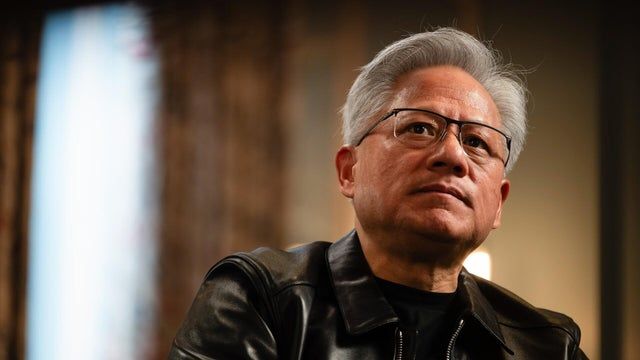

Jensen Huang has resigned as Nvidia CEO, with CFO Colette Kress named interim chief as the board searches for a successor. The leadership shock lands during an AI-driven GPU market squeeze and raises new questions for PC gaming partners.
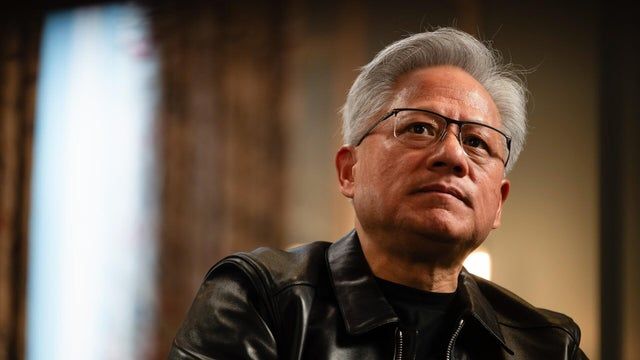
Image: cbsnews.com
A founder exits, and Nvidia chooses continuity first
Nvidia confirmed on November 12 that Jensen Huang has resigned as president, chief executive officer, and board member effective immediately, ending his run atop the company he co-founded 33 years ago. In the same announcement, Nvidia named executive vice president and chief financial officer Colette Kress as interim CEO while it searches for a permanent replacement.
That is the hard fact at the center of today’s GPU industry news: Nvidia CEO resigns, Nvidia interim CEO steps in, and the board is trying to signal that the machine keeps running. Harvey C. Jones, newly appointed as Nvidia’s first-ever chair of the board, said in the company’s release that the board has “full confidence” in Kress and the leadership team, and that it expects operations, customer commitments, and the product roadmap to continue without interruption.
For gaming, that assurance is the key line. Nvidia is not only an AI infrastructure company. It remains the dominant force behind GeForce graphics cards, DLSS, developer relations, driver cadence, and the broader PC hardware economy. A sudden Jensen Huang resignation creates a leadership vacuum at the exact point where Nvidia’s gaming identity is already under pressure from AI demand, supply constraints, and player skepticism about how much of the company’s attention still belongs to consumer GPUs.
Nvidia’s own statement presents the transition as orderly. It says Kress will remain CFO while serving as interim CEO, and that the board will consider both internal and external candidates. It also says Nvidia will report third-quarter fiscal 2027 financial results on November 17 as previously scheduled. That gives investors, partners, and PC builders a near-term checkpoint rather than a long wait for the first official read on whether the company’s guidance has changed.
The scandal Nvidia did not mention in its CEO transition statement
Nvidia’s press release does not cite the scandal that preceded Huang’s resignation. It thanks Huang for his “immeasurable contributions” and describes Nvidia as one of the world’s most consequential technology companies. The surrounding reporting fills in the context, but it also needs to be handled in the right category: Nvidia has confirmed the resignation, the interim CEO appointment, the board chair appointment, and the CEO search. Allegations about Huang’s conduct come from news reports and from Huang’s own prior apology where quoted by outlets.
GamingOnLinux reported that Huang published a November 8 letter titled “A Message to Our Company,” in which he apologized for being unfaithful to his wife, said there was “no excuse” for what he did, and said Nvidia’s board had initiated an independent investigation into national security concerns raised by news reports. The same outlet quoted Nvidia’s board statement saying a committee of independent directors, assisted by outside counsel, would oversee an independent investigation after reporting that Huang had been the target of a foreign intelligence effort.
The New York Times reported that Huang had an affair with Chinese businesswoman Alice Huang, whom U.S. intelligence agencies concluded was spying for China. The Times also reported a second extramarital relationship with Kimberly Powell, Nvidia’s vice president of healthcare. CNBC likewise described the rapid fall as following revelations about romantic ties to a woman believed by the U.S. intelligence community to be a Chinese spy, and reported the Times account of a separate affair with Powell. The Guardian reported that Nvidia hired Wachtell, Lipton, Rosen & Katz to conduct a thorough and independent investigation into the relationship with Alice Huang.
Those are serious claims, but they are not all the same kind of fact. Huang’s resignation and Kress’s appointment are confirmed by Nvidia. Huang’s apology for infidelity is sourced to his message as quoted by outlets. The espionage and smuggling dimensions are reported allegations, with The New York Times noting that China rejected the espionage claims and called smuggling allegations “smears,” and that Alice Huang had not responded to requests for comment. Nvidia’s transition announcement avoids the conduct questions entirely, which leaves the board’s governance response as one of the unresolved parts of the story.
Colette Kress inherits a company that cannot pause its roadmap
Kress is a continuity pick by design. Nvidia says she joined the company in September 2013 and has led its finance organization through a period of major growth. Before Nvidia, the company says, she spent nearly 25 years in finance roles at technology companies including Cisco and Microsoft. This is not the board placing a product visionary from outside the company into the seat overnight. It is handing the interim role to an executive already close to customer commitments, margins, capital allocation, and the supply-side math that defines Nvidia’s current position.
That matters because Nvidia’s partners need boring answers, quickly. Board makers, system integrators, laptop manufacturers, cloud customers, game developers, and engine vendors all plan around Nvidia roadmaps months or years in advance. Nvidia’s statement directly addresses that audience when Kress says the company will keep serving “customers, partners, developers and shareholders,” while continuing work in accelerated computing and AI.
The unanswered question is whether continuity at the finance and operations level is enough to replace Huang’s role as strategist, salesman, and public face. CNBC described Huang as the co-founder who built Nvidia into a $4 trillion company that powered the AI boom. The New York Times called his departure a stunning fall for one of the most powerful figures in that boom and said Nvidia controls an estimated 90 percent of the market for advanced chips essential to AI projects. Those descriptions are about influence as much as revenue.
In strategy terms, Kress’s first job is stabilization, not reinvention. She has to keep the roadmap credible while the board runs a CEO search. Nvidia says internal and external candidates will be considered, which means partners now have two time horizons to track: the immediate execution window under Kress and the longer-term question of whether the permanent CEO changes Nvidia’s balance between AI infrastructure, professional compute, and consumer graphics.
For PC gaming, the AI emphasis remains the central pressure point
The Huang exit does not automatically change the GeForce roadmap, driver support, or DLSS plans. Nvidia says the product roadmap should continue without interruption. No source provided in this assignment confirms a new delay, cancellation, price change, or availability shift for consumer graphics cards tied to the resignation.
The concern for PC gaming is broader than one executive departure. Video Games Chronicle reported that Nvidia has gone heavily into AI, including in its gaming ventures, and pointed to DLSS 5 as a recent example of generative AI being pushed into game upscaling. VGC also reported that player reaction to DLSS 5 was divided, with some mocking the company’s reveal materials for games including Resident Evil Requiem and Starfield. That reaction matters because Nvidia’s consumer pitch increasingly asks players to trust AI-enhanced frames, AI-assisted image reconstruction, and platform-level software features alongside raw raster performance.
At the same time, VGC noted that component suppliers such as Nvidia have become even more important to the games industry amid shortages associated with the rise of AI. That is the conflict facing PC players and hardware partners: Nvidia’s AI business gives the company enormous leverage and cash flow, but it also competes for attention, supply, and messaging space with gaming hardware.
Rock Paper Shotgun’s coverage captured the sentiment from a gaming angle by noting that some players would cheer if Nvidia shifted even a little attention away from AI and back toward consumer GPUs. That is commentary, not a corporate signal. Nvidia’s actual statement from Kress says the company will continue advancing work that has made it a leader in accelerated computing and AI. Anyone hoping the Jensen Huang resignation immediately produces a gamer-first pivot has no confirmed basis for that expectation yet.
Market confidence is now tied to governance as well as GPU supply
The market reaction shows how much Nvidia’s valuation depends on confidence in leadership. The Guardian reported that Nvidia shares plunged 13 percent at the Wall Street open after Huang’s departure was announced, then partially rebounded and were down 7 percent in morning trading, wiping more than $320 billion from Nvidia’s value on the day and more than $600 billion for the week. CNBC separately reported Nvidia stock falling 10 percent in its coverage. Those figures reflect different market snapshots, not necessarily a contradiction, but together they show a sharp loss of confidence around the resignation.
For PC gaming, stock movement does not translate directly into tomorrow’s GPU price at retail. Graphics card pricing is shaped by supply, demand, channel inventory, board partner costs, memory pricing, regional taxes, and retailer behavior. None of the supplied sources confirms a GeForce price change following the resignation.
Still, market confidence affects the industry in indirect ways. A weaker or more volatile Nvidia can make partners more cautious about commitments, marketing cycles, and inventory planning. A stable Nvidia can reassure developers that SDKs, driver support, and feature integration will keep arriving on schedule. Nvidia’s board clearly understands that risk, which is why Jones’s quote in the company release focuses on operations, customer commitments, and product roadmap continuity.
The governance layer is also unusually visible here. The board appointed Harvey C. Jones as its first-ever chair, a structural change announced alongside the CEO transition. Nvidia says Jones has been an entrepreneur, technology executive, and venture investor for more than 30 years, including service as CEO and executive chairman of Synopsys. In practical terms, that appointment gives investors and partners a named board leader during the search, rather than leaving the post-Huang structure ambiguous.
The next checkpoints for partners, players, and PC builders
The first concrete date is November 17, when Nvidia says it will report third-quarter fiscal 2027 financial results at approximately 1:20 p.m. PT, followed by an earnings call at 2 p.m. PT. That call now becomes the first major test of Nvidia’s transition message. Investors will listen for continuity. Hardware partners will listen for supply and roadmap language. PC gamers should listen for any commentary about GeForce demand, AI allocation, gaming revenue, or product timing, if Nvidia chooses to discuss those areas.
The second checkpoint is the CEO search. Nvidia has confirmed that it will consider internal and external candidates, but it has not named a timetable. Until a permanent successor is chosen, Kress is carrying both the interim CEO role and the CFO role. That dual responsibility may reassure partners who want financial discipline, but it also concentrates pressure during a period when Nvidia is already under scrutiny from shareholders, regulators, customers, and the games audience.
For anyone planning a PC build, the clean guidance is to separate confirmed operational information from market noise. Nvidia says its roadmap and customer commitments are expected to continue without interruption. No provided source confirms a consumer GPU recall, launch delay, driver halt, or official GeForce pricing change caused by the leadership transition. If you were already waiting for a specific GPU generation, independent benchmarks, or better retail pricing, this resignation is another reason to avoid impulse buying during a volatile news cycle. If you need a card now, the known buying questions remain the same: real-world performance, price, power draw, VRAM needs, game support, and driver stability.
The larger strategic question is whether Nvidia’s next permanent CEO treats PC gaming as a core front in the company’s identity or as one application layer inside a much larger accelerated computing empire. Huang’s Nvidia turned graphics hardware into the foundation for AI dominance. Kress’s interim Nvidia is promising no interruption. The successor’s Nvidia will decide how much confidence gamers, developers, and hardware partners should place in green-and-black silicon for the next phase of the GPU market.