
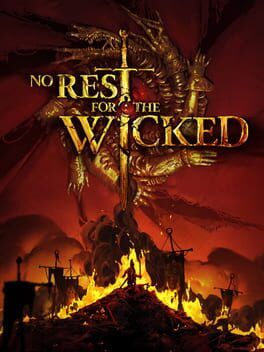

Moon Studios’ first big co-op update turns No Rest for the Wicked into a shared ARPG playground, with persistent shards, four-player realms, and progression tweaks that finally make its Souls-meets-Diablo pitch feel complete.
No Rest for the Wicked always felt like a game built for stories you swap with friends after a rough boss or a ridiculous loot drop. With the No Rest for the Wicked Together update, Moon Studios finally lets you live those stories at the same time, in the same world, instead of in parallel solo save files.
The new co-op suite does more than just flip an online switch. Persistent shards, four-player realms, and a rebalanced progression curve fundamentally change how exploration, combat, and loot feel compared to the Early Access launch. Paired with a fresh sales milestone, it looks like Moon Studios’ bet on blending Soulslike combat with Diablo-flavored loot is landing with a bigger audience.
From isolated saves to shared shards
In the original Early Access build, Wicked was a solitary pilgrimage. Your character, your save, your version of Isola Sacra. Co-op meant occasionally streaming your run or trading clips of perfect parries and devastating falls. Progress lived and died on a single file and the world state started and stopped when you did.
With Together, Moon Studios shifts the game toward something closer to a micro online action RPG through persistent shards, or Realms. Up to four players can share one shard that behaves much like a tiny private server. The important detail is persistence. The shard continues to exist and update even when the original creator is offline. Friends can drop in, finish a quest chain, push a dungeon, or just rearrange furniture in a shared house without needing a host.
That persistence changes expectations about what a session is supposed to be. In solo, you logged in to progress your character and chip away at the campaign. In a shard, you also log in to see what your group has done in your absence, how the world has evolved, and what new threats or opportunities have appeared in spots that used to be familiar.
It also reframes death and danger. In an isolated save, a bad run is your burden alone. In a shard, a failed push into a tough area or a poorly timed boss attempt becomes a shared story and a shared problem to solve the next night. You are no longer just saving your own Isola Sacra. You are stewarding a communal one.
Four-player co-op in a Soulslike foundation
Adding four-player co-op to a game built around deliberate, Souls-inspired combat is tricky. Early Access solo play made clear that Wicked wanted you to respect timing, stamina, and spacing. Enemies hit hard, punishing greed and sloppy positioning. Drop three more bodies into that mix without changes and you risk reducing every encounter to a noisy DPS race.
Together pushes back against that with explicit tuning for group fights. Enemy behavior has been reworked so mobs react more desperately and dynamically when outnumbered or cornered. Instead of standing still while four players melt them, enemies try to reposition, break lines, and punish overextensions. The goal is to keep the parry windows and dodge patterns relevant even with friends around to draw aggro.
Hand-tuned enemy placements reinforce that intent. Areas that solo players thought they knew now spring ambushes and flanking routes designed for multiple players. What was once a tense one-on-one duel in a tight alley can become a crossfire between ranged threats and a tanky frontliner, forcing the group to coordinate crowd control and focus targets rather than rush in together.
In practice, this pushes No Rest for the Wicked closer to a co-op Soulslike than a traditional action RPG where four heroes simply steamroll the map. Roles naturally emerge. One player kites and staggers, another stays on interrupts, a third focuses on damage while watching stamina. The core feel from solo remains, but the pacing of fights shifts from personal mastery to shared execution.
Progression tweaks for a shared grind
Persistent shards would not work if the game’s progression remained tuned strictly for solo. Early Access runs were about carefully rationing risk, pushing into new zones only when you were confident your gear, flask count, and knowledge of enemy patterns were enough to survive. That tension is important, but in a shard it has to coexist with the reality that players will enter at different power levels and different times.
Together’s progression changes are subtle but important. Vendor reworks streamline how you gear up in a shared world so late joiners do not feel like dead weight and veterans can still chase upgrades instead of trivializing content. Access to better gear and materials becomes less about grinding alone in a corner and more about leveraging the shard’s activity. One player farming certain enemies or materials can indirectly accelerate the whole group’s readiness.
The housing system, once a quiet solo distraction, starts to matter more as a progression hub. Shared homes become places to pool resources, store crafted gear, and set up workstations that benefit everyone. Building no longer feels like a purely cosmetic personal project, it is more like upgrading the party’s base of operations.
A lightweight voting system helps keep that shared progress from turning into chaos. When any player can affect the shard’s world state, you also need guardrails to avoid one person griefing three others by impulsively triggering big changes or demolishing carefully arranged spaces. The voting checks do not turn Wicked into a democracy simulator, but they recognize that a persistent shard is a social contract as much as a game mode.
The result is a progression loop that still asks you to fight carefully and earn your power but is less brittle than Early Access solo. You can hop into a shard for a quick run with friends, contribute a little to the shared economy, log off, and still feel like you moved the needle for both your character and your world.
How co-op reshapes exploration and loot
No Rest for the Wicked launched as an ARPG openly chasing Diablo’s thrill of loot while clinging to the precision of Soulslike combat. Solo, that mix sometimes felt at odds. The methodical pace and punishing mistakes made it easy to lose sight of the loot chase in the grind for survival.
Co-op tilts that balance. A persistent shard turns loot into a social event. New drops are not just incremental stat bumps, they are conversation starters. Someone finds a weapon with an offbeat affix combo and suddenly the group is theorycrafting new builds or arguing who should respec to take advantage of it.
Exploration also transforms. Early Access solo runs encouraged cautious scouting, pulling single enemies, and memorizing every shortcut. In co-op, players fan out, call out threats, and trace different routes through the same spaces. Discoveries ripple through the shard. A hidden chest, an alternate path to a boss, even a particularly nasty elite placement now become shared map knowledge that persists across sessions.
Because the shard keeps going when you log off, there is also a sense of shared rhythm. One night might be about punching through a tricky dungeon with the full squad. The next might be quieter, with just two players running resource loops or decorating while eying new gear that dropped while they were away. That ebb and flow is closer to a small online ARPG community than a standard co-op campaign.
A million sales and a clearer identity
The timing of Together matters. Moon Studios announced that No Rest for the Wicked has cleared a major milestone, crossing one million copies sold in Early Access. That number does not just look good on a press release. It signals that the team’s unusual pitch is connecting.
Soulslike combat in an isometric ARPG shell is not an easy sell. It is slower, harsher, and less immediately power-fantasy-driven than the usual loot crawl. Yet the early community has clearly been willing to buy into that tension. The co-op update reinforces the game’s identity instead of sanding it down. It does not chase pure accessibility by overbuffing players in groups. Instead it tries to ask an old question in a new format: what happens when you take the exacting dance of a Souls game and drop it into a shared, persistent ARPG world that wants to be played for hundreds of hours.
The million-seller status suggests players are ready to find out. And the shard-focused design hints at how Moon Studios sees Wicked’s long-term future. This is not just a linear campaign to complete once. It is an evolving space for a small circle of friends to inhabit, revisit, and reshape with every patch.
The ARPG that finally feels built for stories with friends
Early Access solo play showed that No Rest for the Wicked had the mechanical chops. Precise stamina management, weighty weapon swings, dangerous enemies, and a loot system with just enough complexity to keep buildcrafting interesting. What it lacked was a natural social frame that matched how players wanted to talk about it.
With No Rest for the Wicked Together, that frame is in place. Persistent shards let your adventures exist beyond a single login session. Four-player co-op turns every ambush, misstep, and clutch parry into a story that multiple people share in real time. Progression tweaks smooth out the rough edges of mixing a Soulslike foundation with a Diablo-style loot grind.
The result is a game that finally looks like the one Moon Studios described when it unveiled Wicked. A demanding, precision ARPG that respects your time, rewards mastery, and now, more than ever, feels like it was built for you and your friends to carve your own shared legend across a cursed island that never fully sleeps.