
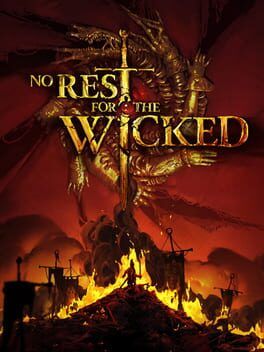

Moon Studios’ grim action-RPG just hit 1 million copies in Early Access, and its Together co-op update is quietly transforming No Rest for the Wicked from a lonely Souls-meets-Diablo experiment into one of the most ambitious shared ARPGs on PC.
No Rest for the Wicked has been building a reputation as one of Steam Early Access’s strangest success stories: a painterly, brutally precise action-RPG that looks like an isometric Diablo but plays like a hand-drawn Souls game. It has also been a hard sell for some players, with early builds leaning into unforgiving systems, sparse onboarding, and a lonely, single player loop.
Now it has crossed a huge milestone. Moon Studios has confirmed that No Rest for the Wicked has sold over one million copies in Early Access, and it is celebrating that momentum with its most important update yet. Together, the game’s long-teased co-op patch landing January 22, 2026, does more than just bolt on multiplayer. It fundamentally reframes what this ARPG wants to be.
From solitary Cerim to shared Realm
No Rest for the Wicked casts you as a Cerim, a holy warrior dropped into the rotting, faction-riddled island of Isola Sacra to face the ancient plague known as the Pestilence. In its launch state, that premise translated into a stark, solitary journey. You crept through alleys and cliffsides alone, learned the strange timing of its weighty attacks, and slowly plugged into its dense systems for crafting, housing, and progression.
Together repositions that experience. The headline feature is its persistent Realms, shared worlds that up to four players inhabit as a continuous space. Once a Realm is created, it lives on independently of the original host. Friends can drop in, make progress, and log off again without needing the creator online every time.
That single change pulls No Rest for the Wicked away from being just a moody solo ARPG and closer to a shared world that behaves more like a small-scale MMO shard. You are not simply joining someone’s temporary lobby for a boss run. You are helping build a place that remembers everything you do.
Souls-meets-Diablo, now tuned for four
At launch, the big pitch for No Rest for the Wicked was that it fused top-down ARPG structure with Soulslike combat. You had slow, telegraphed swings, brutal damage, and enemies that demanded patience rather than click-spam. The Together update forces Moon Studios to reexamine that formula for groups.
Instead of just adding more health and damage to mobs, the team has overhauled how enemies behave when they are outnumbered. Foes react dynamically to being cornered by multiple players, trying to break away or punish reckless flanking. Encounter layouts across Isola Sacra have been reauthored for co-op, with new enemy placements intended to keep four-player runs tense rather than trivial.
The result, on paper, is a combat rhythm that still feels Soulslike in its demand for precision but gains the chaos and synergy you expect from a Diablo-style party. One Cerim can draw aggro while another sets up heavy attacks; a third can hang back to punish openings. It is less about power fantasy numbers and more about whether your small squad can manage spacing and timing in tight quarters.
For players who bounced off early builds because the combat felt punishing in isolation, co-op offers a pressure release valve. Learning bosses with three other people, sharing tells in voice chat, and reviving mistakes with a teammate’s clutch intervention all make the difficulty curve more approachable without flattening it entirely.
A Realm that belongs to your group
Where a lot of ARPG co-op begins and ends with combat, Together reaches into systems that sat awkwardly in the original Early Access release. Housing, vendors, and progression are all being reworked to acknowledge that this is now a world shared by multiple Cerim.
The homestead side of No Rest for the Wicked, which lets you carve out and upgrade a personal space, becomes a hub project for your group. Shared housing means your build choices can support the way your crew plays. You might prioritize crafting stations that feed your favorite weapon types, or aesthetic upgrades that turn a bleak corner of Isola Sacra into a lived-in base.
Vendors are being tuned so their inventories and behaviors make sense when four players are selling, buying, and progressing in tandem. Instead of everyone awkwardly fighting over a shop menu designed for one, the systems are being reshaped around the idea that a Realm is a communal economy.
Moon Studios is also adding a light voting system for key decisions. That might sound dry, but it is an important piece of keeping an open co-op Realm from sinking into chaos. Whether it is moving the story forward, triggering world-changing events, or handling disruptive behavior, the game now has simple tools to nudge your group toward consensus without needing a dungeon master.
Why one million copies and Together matter now
The million-copies milestone is not just a vanity stat. For a dense, experimental ARPG that launched into Early Access with sharp edges, it is a signal that Moon Studios has found an audience willing to invest in a long-term vision. More importantly, it gives the team runway to keep reshaping the game rather than locking it into its initial identity.
Together lands at a pivotal time for that identity. In its first months, No Rest for the Wicked could feel caught between pillars. Its art direction and isometric angle invited Diablo comparisons, but its combat and unforgiving early hours pushed it closer to Soulslike territory. Players who came looking for cozy, loot-forward runs saw a game that punished missteps. Those seeking pure Souls austerity saw crafting systems, housing, and ARPG progression that did not quite feel justified in a purely solo context.
Four-player, persistent co-op is the missing piece that makes those systems cohere. Suddenly, a grind-heavy crafting tree reads differently when you are outfitting an entire group and their shared home. A punishing boss becomes a community story when your Realm’s regulars rally to take it down. Even the slow, deliberate traversal of Isola Sacra feels more like a shared hike through hostile territory than a lonely slog.
For anyone who bounced off the Early Access debut, this is the moment to reevaluate. The core combat has seen balance passes, quality of life adjustments smooth out some of the rough onboarding, and now there is a clear way to experience the game socially without waiting for a full 1.0 launch.
A better on-ramp for lapsed players
If your first hours in No Rest for the Wicked ended in frustration or confusion, Together addresses several of the friction points that made the game so polarizing.
Playing with others lowers the cognitive load of learning its interlocking systems. Instead of parsing crafting, weapon upgrades, and build decisions alone, you can offload some experimentation to different members of your group. One friend might dive into homestead optimization while another tests weapon archetypes, and you all benefit from that shared knowledge.
A persistent Realm also means that dipping in and out of the game is less punishing. You are not starting fresh or rehosting every session. You can log in, see what your friends have changed, contribute a few upgrades or attempts at a boss, and leave knowing that your Realm continues to evolve.
Finally, co-op turns the game’s difficulty spikes into social events instead of personal roadblocks. Wiping on a boss repeatedly is easier to swallow when you are laughing about it in a full group, and a narrow victory feels like a communal payoff.
A rising ARPG with something to prove
No Rest for the Wicked is not suddenly a mainstream crowd-pleaser. Its painterly, grim aesthetic, obsession with tight animation timing, and willingness to be opaque still make it a very specific flavor of action-RPG. Yet the combination of one million copies sold and the ambitious Together update shows a studio willing to bet on that uniqueness rather than sand it down.
In a genre dominated by seasonal treadmills and transient lobbies, the idea of a handcrafted, persistent Realm shared by a small fellowship is quietly radical. It borrows the best of Souls’ tension and Diablo’s structure, then asks what happens when you and three friends are allowed to truly inhabit a place instead of just farming it.
If you wrote No Rest for the Wicked off as an impressive but alienating curiosity, Together might be the moment it clicks. The island of Isola Sacra is no longer a pilgrimage you have to endure alone. It is a home you and your group can fight for, shape, and keep coming back to as this rising ARPG grows into its final form.