
The cult classic haunted-FPS No Players Online has returned to Steam after a bizarre DMCA takedown. Here’s what actually happened, how the new 2025 spiritual successor differs from the 2019 freeware original, and why this liminal horror experiment still matters in today’s indie scene.
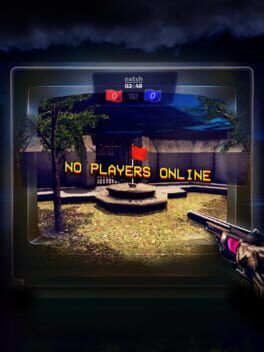
In 2019, No Players Online quietly appeared on Itch.io as a strange, free horror curio. It looked like an abandoned capture-the-flag shooter from the late 90s: flat lighting, low-poly corridors, a lonely server browser with a single active match. You joined, captured flags and gradually discovered that the scariest part of a dead multiplayer game might not be the lack of people, but the sense that something else is in there with you.
Six years later, No Players Online is back in the spotlight for a very real horror story. Beeswax Games’ new commercial spiritual successor briefly vanished from Steam after a DMCA claim by someone the creator describes as a former friend, before resurfacing when the claim quietly expired. It is a messy, human drama, but the more interesting angle is how this incident spotlights a small, influential horror experiment that has grown into a full game without losing the uncanny charm that made it a cult hit.
The haunted-FPS roots of No Players Online
The original No Players Online, credited to papercookies and collaborators, was built around a single clever idea: treat a dead multiplayer FPS server like a haunted house. Instead of gore or monsters, it leans on the particular sadness of empty lobbies and lost communities. You boot what looks like an old executable, click through a barebones server list and load into a lonely CTF map that feels like a mash of Quake-era arenas and bargain-bin shareware.
The core of the horror is repetition and absence. You circle the same hallways, capture flag after flag and listen to the ambient hum of a game that no one else cares about anymore. Glitches creep in. The map changes in ways that do not match how an FPS is supposed to behave. A mysterious presence begins to stalk the map, and the illusion that you have found an inert, forgotten piece of software slowly falls apart.
Stylistically it was way ahead of its time. It hit several trends that would later define a chunk of indie horror: analog and retro interfaces, meta-fiction about cursed software, and a kind of “liminal FPS” aesthetic where low-resolution graphics and familiar multiplayer design are twisted into something melancholy and hostile. All of this was delivered as a short, free browser download, which helped it spread through YouTube horror channels and word of mouth.
From freeware nightmare to full Steam release
Beeswax Games spent around two and a half years turning that concept into a larger commercial project. The new No Players Online, released on Steam in 2025, pitches itself as a spiritual successor rather than a remaster of the original Itch version. It keeps the same central premise: you discover an obscure, abandoned FPS on an old machine and decide to poke around. Everything beyond that has been stretched, deepened and rearranged.
The biggest shift is structural. The 2019 game was essentially one haunted map and one unraveling trick. The 2025 release wraps that premise inside a broader haunted-software anthology. Instead of just booting an .exe and joining a match, you are dropped onto a faux 90s desktop complete with grainy wallpaper, file folders, obscure utilities and faux community forums. From there, you “download” and launch multiple in-universe games and builds, each with its own eerie quirks.
This desktop frame lets the new No Players Online explore different types of fear while still orbiting its FPS core. Some parts stick close to the original, with empty servers and flickering scoreboards. Others play more like found footage, ARG fragments or corrupted prototypes stored on the same cursed hard drive. The sensation is less about one haunted map and more about rummaging through the fossil record of a forgotten multiplayer ecosystem, uncovering what went wrong over time.
Technically the new game is much more involved. Lighting, sound design and level geometry are richer but still committed to a late 90s, early 2000s look. It is not chasing photorealism. It is chasing the vague, dreamlike memory of the games we saw in low resolution on CRT monitors or in magazine screenshots. Menus and interface elements are designed to look utilitarian rather than stylish, which makes every visual glitch and intrusion feel more aggressive and uncanny.
Yet, beneath all the extra layers, the same emotional hook survives. It is still about logging into a game that should feel safe and mechanical, then feeling like you have trespassed into a space that remembers its players too well.
The strange DMCA ‘exorcism’ and return to Steam
Shortly after Beeswax released the new No Players Online on Steam, the game disappeared. The Steam page went down because of a DMCA takedown request filed by someone the developer, Adam Pype, described in a statement as a former friend who claimed co-authorship of the project.
According to Pype, this person had not contributed work to the game. But the way the DMCA process works, platforms like Steam have strong incentives to take content down first and ask questions later. So Valve removed the game while it processed the claim. For a small studio that had just launched after more than two years of work, losing visibility and sales during the most important early weeks was a serious blow.
Beeswax responded by filing a counter-notice. Under DMCA rules, that gives the original complainant a set window to respond or escalate. In this case, they apparently did not. Once the response window closed, Valve restored No Players Online to Steam, essentially treating the original claim as unfounded.
In the abstract this is a story about how vulnerable small games can be to bad-faith or personal DMCA filings. But in the context of No Players Online it almost feels thematically on-brand. A game about empty servers and abandoned code was briefly “killed” by a bureaucratic ghost, then resurrected when the specter behind the complaint vanished. It is a neat narrative hook, but for the developers it was a very real, stressful event that may have long-term financial consequences.
How the spiritual successor differs from the 2019 original
For players who remember the Itch release, the question is whether the new No Players Online is just a polished reissue or something meaningfully different. The answer sits somewhere between expansion and reimagining.
The original is tightly scripted and linear. You join a server, capture flags, trigger a sequence of interventions by the game’s unseen keeper and hit a twist about what the server is actually preserving. It is a one-sitting experience that depends on you not quite knowing how “real” its glitches and warnings are.
The 2025 version treats that story more as a starting myth than a fixed text. Instead of one contained match, you are bouncing between different versions, spin-offs and artifacts tied to the same fictional FPS. One might echo the classic map layout, another might show a later competitive update or a console port test build. The sense of progression comes from piecing together the slow death of a multiplayer scene, its community folklore and the personal tragedies that hitched a ride on its netcode.
Mechanically, more attention is paid to environmental storytelling and exploration between firefights. Matches are still about capturing points and traversing sightlines, but there are extended stretches where you comb through menus, desktop folders and patch notes, hunting for context. The horror has a wider range too, moving from the dread of being watched on an empty map to the sick feeling of manipulating files and archives you probably should have left alone.
Importantly, the original freeware Classic build remains free, now explicitly marked as No Players Online Classic. That gives the new release space to be bolder. It can remix scenes, contradict earlier details and even poke at the way the 2019 game was received by streamers and theory videos, without erasing the artifact that started it all.
Why No Players Online still matters in 2025’s indie horror scene
In 2025, indie horror is crowded with VHS filters, PS1 throwbacks and analog glitch aesthetics. What keeps No Players Online relevant is not just that it arrived early to those trends, but that it uses them to say something specific about games and memory.
Where many retro horror titles use old graphics as a mood or brand, No Players Online uses the language of dead multiplayer shooters to talk about loss. It is about the way online spaces vanish overnight, about friendships that evaporate when a server browser goes dark and about how those spaces can feel more real in hindsight than they ever did in the moment.
That emotional angle has only grown sharper. Players who were teens during the heyday of Quake clones and early matchmaking are now old enough to feel genuine nostalgia and regret for games that no longer exist. The new No Players Online taps directly into that sensation by letting you rummage through a fake ecosystem of patches, fan servers and forgotten builds. It feels like logging into a version of your own gaming adolescence and finding something sick growing between the lines of the changelog.
The DMCA saga also unintentionally reinforces one of the game’s core themes. No Players Online has always been about how fragile our digital worlds are, and how quickly they can be erased. Seeing the commercial release vanish from Steam overnight because of a single complaint makes that fragility literal. For a few weeks, this thoughtful, eerie exploration of dead servers became a dead entry itself, invisible to anyone who was not already in the know.
In an era where horror games constantly escalate spectacle, No Players Online still stands out by being quiet and oddly tender. Its scares are anchored in the mundane textures of gaming life: patch notes, server pings, map rotations, empty lobbies. It treats those details not just as set dressing, but as the actual terrain of horror. That focus, more than any DMCA drama, is why this haunted FPS experiment still matters.
Where to start if you are curious
If you have never touched the series, there is a simple route. Playing No Players Online Classic on Itch first gives you the raw concept in its most compact form. It is brief, clever and still lands its central twist. Then the 2025 Steam release works as an elaboration of that idea, a chance to see how far the same core fears can stretch when given more time, budget and systems.
Seen together, they chart a small but fascinating arc in indie horror. A tiny freeware experiment about the loneliness of dead servers becomes a broader meditation on digital ghosts and the ways games linger, both in code and in the people who cannot quite let go. The DMCA detour is just a strange, real-world haunting along the way.