
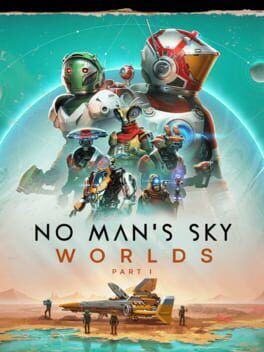

Sean Murray’s latest No Man’s Sky comments point to continued long-term support, a firm belief in free updates, and the lasting lesson of Hello Games’ turnaround.
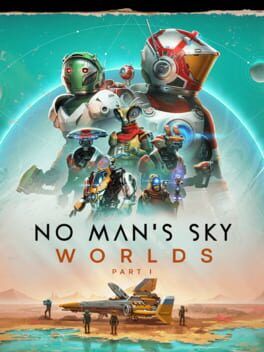
Image: IGDB
Sean Murray still talks about No Man’s Sky like unfinished work
The strongest signal from the No Man’s Sky 10th anniversary is not a new feature list. It is Sean Murray saying he could keep working on Hello Games’ space sandbox indefinitely, while admitting there is probably an end date somewhere in the distance.
In a recent GamesRadar interview reported by Rock Paper Shotgun, the Hello Games co-founder said, “If people keep playing it, I could work on this forever. I love it.” Murray framed No Man’s Sky as the kind of game he would have dreamed about as a kid, which makes the studio’s ongoing support sound less like a product roadmap and more like a craft project that keeps finding new edges.
That comes with a tension live service players will recognize immediately. No live game lasts forever, and Murray acknowledged as much, saying there “probably is some end date” for No Man’s Sky. But he also told GamesRadar that if he had been asked five years ago when support would end, he would have assumed the team would have finished by now. Instead, Hello Games is still teasing new work after a decade, including the upcoming Cosmos update mentioned in anniversary coverage from IGN and GamingBible.
So the news is not that No Man’s Sky has been saved again. That story has been told for years. The sharper development is that Hello Games is still describing the game as a living, team-driven project at a point when many live service games would be sunset, sequelized, or carved into paid expansions.
A decade later, the turnaround is still part of the product
No Man’s Sky launched on August 9, 2016, first on PlayStation 4 and PC, and its opening months remain one of the industry’s clearest examples of expectation colliding with release reality. IGN’s anniversary piece recalls the game launching to tens of thousands of negative Steam reviews, with players criticizing broken promises and a lack of meaningful content, especially around multiplayer. VGC similarly notes that the 2016 release was met with mixed reception because features players expected were not present on day one.
That history matters because the current anniversary message is built on the opposite behavior: sustained delivery over time. VGC’s reproduction of Murray’s open letter says No Man’s Sky has received 40 major updates, all free, across ten years. The letter names additions such as base-building, exocraft, settlements, mechs, pets, living ships, Expeditions, PSVR support, PS5 support, and PSVR2. DualShockers also points to battle mechs, settlements, planet overhauls, and warring alien races as examples of how far the game has moved from launch.
The Steam story is one of the measurable signals. IGN reports that No Man’s Sky climbed from an “overwhelmingly negative” user review rating after launch to “mixed” after two years, then “mostly positive” after another three, and now sits at “very positive” on Steam user reviews. That is not a clean erasure of 2016. It is a record of a game slowly earning back player confidence in public, patch by patch.
The platform footprint has widened as well. VGC lists No Man’s Sky across PS4, PC, Xbox One, Xbox Series X/S, PS5, Switch, and Switch 2. GameSpot’s platform listing likewise includes Nintendo Switch, Switch 2, PC, PS4, PS5, Xbox One, and Xbox Series X/S. For readers checking availability rather than anniversary sentiment, the practical point is simple: this is now a widely available sandbox, not a stranded launch-era curio.
The free update stance is a business choice, not an accident
Murray’s latest comments on No Man’s Sky DLC microtransactions are unusually direct for a game with this much post-launch content. Speaking to GamesRadar in comments reported by GameSpot, he said someone could probably show him a presentation proving Hello Games could have made more money with in-app purchases, DLC, or similar monetization. His response was blunt: “I never want to see that PowerPoint.”
Murray’s explanation was not framed as charity. It was about design cohesion and motivation. According to GameSpot’s report, he said the team enjoys making updates knowing every player can experience them. He added that the “journey is only possible because every update compounds.” That is a crucial phrase for No Man’s Sky. A feature added in year three can become the foundation for an idea in year eight, without the studio first asking which slice of the audience owns which expansion.
GameSpot cites Murray’s example of Xeno Arena, a turn-based creature-battle mode, as something that would not work as well “if you’re fragmenting your audience.” That is the design cost of paid DLC in a shared sandbox: even when the content is worth buying, the player base becomes harder to build around. No Man’s Sky free updates have avoided that split, at least in the sources provided here.
There is one small counting wrinkle worth keeping visible. Murray’s open letter, as reproduced by VGC, says No Man’s Sky has had 40 major updates, all free. HappyGamer and DualShockers also use the 40-update figure. Eurogamer’s interview, however, describes the game as having received over 45 major updates. Those figures likely reflect different counting methods for major releases, smaller named additions, or platform-related updates, but the source material does not define the discrepancy. The confirmed throughline is that Hello Games has released dozens of free updates over ten years and is still adding to the game.
Hello Games’ structure helps explain why support keeps happening
Long-term support usually sounds like strategy. Murray’s comments make it sound more like internal momentum. In the GamesRadar interview reported by Rock Paper Shotgun, he said Hello Games does not have much of a management structure and does not really have the ability, even if it wanted to, to make people work on things they do not want to work on. As long as the team is motivated and excited by ideas, he said, the studio is happy to keep updating the game.
That is an important distinction from the usual live service treadmill. Murray is not describing content quotas, seasonal pressure, or a monetization funnel. He is describing a small studio that keeps finding new toys to put in its cosmic workshop. For a discovery-led game, that fit matters. No Man’s Sky has always depended on curiosity: a strange planet, a better ship, a base idea that gets out of hand, a creature that looks like it escaped from a dream journal. The studio’s update philosophy mirrors that structure, at least as Murray presents it.
The Voyagers update appears to have reinforced that internal loop. Rock Paper Shotgun’s report says Murray remembered finishing Voyagers last year, seeing it do “incredibly well” in terms of the game’s highest player number since launch, and expecting the team might say it was done. Instead, he said they were “buzzing” because they had just shipped it. Eurogamer’s interview also quotes Murray saying last year brought the highest player number since launch with Voyagers, alongside awards including BAFTA, The Game Awards, and Develop recognition.
This is where Sean Murray No Man’s Sky comments feel most consequential. He is not promising infinite support. He is saying the conditions that have sustained support are still present: players are active, the team is energized, and the game’s update model lets new systems stack rather than splinter.
Cosmos is confirmed as a tease, but the details are still locked away
For players looking for the next concrete stop, Cosmos is the named update to watch. IGN reports that Murray used the anniversary to tease No Man’s Sky’s next update, Cosmos, as proof support will continue beyond the 10-year mark. GamingBible also reports that Cosmos is a 10th anniversary update and says Murray teased “big things” for the future, while noting that exact details about what is being added are currently under wraps.
That means the responsible expectation is narrow. Cosmos is coming as part of Hello Games’ continuing No Man’s Sky support, but the source material does not provide a full feature list, release date, patch notes, platform rollout order, price, file size, or performance targets. Given the studio’s decade-long pattern and Murray’s comments about free updates, players may reasonably expect it to fit the free-update tradition, but the provided reports do not include a complete Cosmos breakdown.
The anniversary stats are easier to pin down. IGN says Murray revealed players have explored less than 1% of No Man’s Sky’s planets after ten years. IGN also reiterates the game’s procedural universe contains over 18 quintillion planets, specifically 18,446,744,073,709,551,616, and cites earlier reporting that it would take 585 billion years to see them all. GamingBible similarly reports the around-1% figure.
That number is partly spectacle, but it also explains why No Man’s Sky can keep absorbing new systems. A game with that much untouched space can make room for settlements, expeditions, creature mechanics, ship customization, combat events, and odd little player-made landmarks without exhausting the map. The harder challenge is not space. It is coherence. Every new activity has to sit inside a universe that can already feel overwhelming for returning players.
The live service lesson is trust, access, and restraint
For live service players, the No Man’s Sky 10th anniversary lands at an uneasy moment for the wider market. Many ongoing games ask for patience, sell seasonal access, rotate cosmetics, and sometimes disappear after a few bad quarters. Hello Games No Man’s Sky support offers a different case study: a game that launched in trouble, avoided paid DLC and microtransactions for its major update path, and used free additions to rebuild its reputation over years.
That does not make it a universal model. Hello Games owns a very specific kind of game, one with procedural scale, an exploration loop, and a community willing to return repeatedly to see what changed. A competitive shooter, MMO, or licensed annual franchise would face different costs and pressures. Murray himself is not claiming the game can run forever without limits. His “probably is some end date” comment is the necessary dose of reality.
Still, the business restraint is part of the player-facing value. When Murray says every player can experience each update, that translates into a cleaner recommendation for anyone returning now. You do not need to map out a decade of expansions before reinstalling. The sources provided do not list paid content gates for the named major additions. If you own the game on a supported platform, the pitch is access to an accumulated sandbox rather than a menu of separate purchases.
The main reason to wait would be curiosity about Cosmos. Since its details remain unannounced in the provided reports, players who want a specific new feature should hold off until Hello Games publishes the update notes. Players who bounced off the 2016 version, or who last checked in years ago, are looking at a very different game shaped by dozens of free updates. The caveat is taste: more systems can mean more wonder, but also more noise.
No Man’s Sky’s decade-long turnaround still matters because it remains rare evidence that a live game can regain trust through craft rather than clever packaging. Murray’s latest remarks do not close the book. They suggest Hello Games still sees pages left to fill, as long as the team keeps finding ideas worth launching into orbit.