
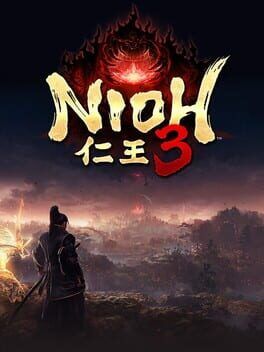

Everything our writer needs to focus on when the Nioh 3 demo hits on January 29: confirmed regions, combat systems, new mechanics, and the specific questions to answer for a definitive hands-on preview.
Nioh 3 is lining up to be the series’ biggest leap since Nioh 2, built around time-hopping across Japanese history and a much more open field structure. With the demo confirmed for January 29, this is our chance to see whether Team Ninja can keep the precise, punishing feel of Nioh inside a broader, more exploratory framework.
This assignment breaks down what is already confirmed about the demo, how the combat systems evolve the series, and the concrete questions our writer needs to answer once they get hands-on.
What’s Confirmed For The Nioh 3 Demo So Far
From the official Nioh 3 site, we know the full game follows Tokugawa Takechiyo through Edo, Sengoku, and Heian eras as he tries to stop a yokai-driven calamity called The Crucible. The demo content is not described in full on the main site, but several pillars of the experience are already locked in and should frame expectations.
The key structural change is the move toward a large, tense “open field” instead of strictly mission-based hubs. Team Ninja is promising a broader area to explore without losing the danger-per-step tension that defined earlier Nioh games. The demo will most likely give a slice of one of these wide regions, mixing traversal, yokai combat, and access to co-op.
Tokugawa Takechiyo remains the perspective character, and the demo should establish how his time-hopping is presented in moment-to-moment play. The site frames the story around encounters with historical figures across multiple eras, some allies and some enemies, all bound up in The Crucible. Any early bosses or NPCs in the demo are worth framing in that context.
Online co-op up to three players is confirmed for the full game, so the demo is almost certainly being positioned as a stress test for that networked play alongside solo runs.
Combat Systems: How Nioh 3 Evolves The Series
The big mechanical headline for Nioh 3 is the dual-style combat system. Instead of treating stances as minor adjustments within a single weapon, the game asks you to actively live in two distinct archetypes.
Samurai style is described as high-powered and heavy, emphasizing impact and commitment. This should feel closer to Nioh’s traditional mid and high stances, with deliberate swings, strong poise-breaking, and likely higher Ki costs. In the demo, we need to see whether Samurai attacks carry more poise, guard-breaking power, or access to unique weapon arts that reward timing and positioning.
Ninja style pushes speed and mobility, especially aerial movement. That is a major tonal shift for Nioh’s combat. Where Nioh and Nioh 2 flirted with mobility through certain skills and yokai abilities, Nioh 3’s description suggests routine juggling of ground and air options. The demo is where we should test if aerial attacks can be part of core combos, used to chase repositioning enemies, or leveraged for evasive defense when the arena fills with hazards.
Crucially, the site confirms instant switching between Samurai and Ninja styles. That choice could be superficial or transformative. The hands-on should focus on whether switching mid-combo opens new routes, whether different enemies heavily encourage one style over the other, and how much friction there is when moving between styles in the heat of a boss fight.
Traditional Nioh stances are not described in detail on the site, but any stance-like tweaks layered on top of Samurai and Ninja choices will be central to how expressive the system feels. If the demo shows weapon-specific stances or sub-stances, the preview should explain how they interact with the two macro styles. For example, does a katana in Samurai style still have low, mid, and high variants, or are those ideas simplified into this broader dual-style framework?
Weapons And Build Crafting
The official overview stresses the Infernal Weapons Set as a 14-weapon bonus, which implies the base game will once again support a wide weapon roster. The demo might not give access to the full list, but any weapon types that show up need clear, grounded impressions.
We should pay attention to whether classic archetypes like dual swords, axes, spears, and kusarigama return and how they map to Samurai and Ninja styles. For instance, certain weapons might feel inherently better in one style, while others maintain parity. The hands-on should test whether a weapon’s move list meaningfully changes when switching styles or if styles are mostly about speed, recovery, and Ki management.
Gear and accessories are already a big part of Nioh’s DNA, and the pre-order bonuses emphasize armor sets and netsuke charms that tweak stats and abilities. If the demo exposes even a slice of the loot treadmill, the preview should call out how generous drops feel, whether set bonuses appear early, and how much build direction players get in just a few hours.
Co-op, Partners, And Multiplayer Dynamics
Nioh 3 supports three-player online co-op, expanding beyond the two-player focus of the earlier series entries. The demo will be our first concrete look at how that scale of multiplayer changes encounter design.
We should treat co-op testing as a core part of the assignment rather than a side note. The preview should establish whether enemies and bosses gain new patterns or HP scaling when multiple players are present. It should also note if there are roles or soft synergies between Samurai and Ninja styles when multiple players bring them into the same fight, such as one player anchoring aggro with heavy Samurai strikes while another uses Ninja mobility for interrupts and back attacks.
If the demo features AI partners in any form or NPC summons in the style of previous Nioh graves and spirits, those deserve coverage. Clarify whether the game leans into partner dynamics narratively, not just mechanically. Any distinct co-op-only objectives, such as multi-path exploration or boss phases that feel tuned for multiple people, should be highlighted.
Regions And Time Periods To Watch For
The full game weaves through Edo, Sengoku, and Heian eras as part of the overarching Crucible storyline. The demo will almost certainly anchor itself in one or at best two of these time slices.
As you play, make note of which era the demo’s region belongs to and how that time period shows up visually and mechanically. Does Edo-era content lean into more urban or castle-heavy layouts, while Sengoku skews toward battlefields and war-torn villages? Are Heian segments more mythic and surreal, leaning harder into yokai and spiritual imagery?
The open field structure should also come through in how regions are layered. Pay attention to sightlines, verticality, shortcuts, and side routes. The preview needs to answer if this “open field” feels like a giant, interconnected Nioh mission or something closer to a small, self-contained open world. That distinction will drive expectations for the final release.
Key Questions Our Writer Needs To Answer
When you get your hands on the Nioh 3 demo on January 29, the goal is to come away with concrete, player-facing answers. Use the following questions as your checklist while you play.
How does the dual-style system actually feel after a few hours, and does switching between Samurai and Ninja change your mental approach to fights?
Do traditional stance ideas still exist under the hood, and if so, how are they integrated into Samurai and Ninja styles for each weapon?
Which weapons are available in the demo, and how differently do they behave between styles? Are any standouts that immediately feel like series-defining picks?
How does the open field region in the demo compare to classic Nioh missions? Is exploration interesting in its own right, or mainly a delivery mechanism for combat arenas?
Which time period or region does the demo showcase, and how strongly does the art direction communicate its place in Japanese history?
Does the difficulty curve feel fair for a series veteran and readable for a newcomer? Are there good onboarding tools, tutorials, or UI cues that teach the new style system?
What does three-player co-op look like in practice? Are fights chaotic or manageable, and do enemies clearly respond to extra players?
Are there any glimpses of buildcraft, loot rarity, and set bonuses, and how satisfying is it to start shaping a character within the demo’s limited window?
Do bosses and minibosses feel distinct from Nioh and Nioh 2 in terms of patterns and spectacle, or is this more of an incremental refinement?
How effectively does the demo establish the stakes of The Crucible and Tokugawa Takechiyo’s role, and does the writing make the time-hopping hook feel coherent?
Shape your preview around those answers. Readers should walk away understanding not just that Nioh 3 is more open and more flexible, but whether those changes preserve the precision and tension that define the series. The January 29 demo is our chance to find out if Team Ninja is successfully evolving Nioh or pulling it too far from its disciplined roots.