
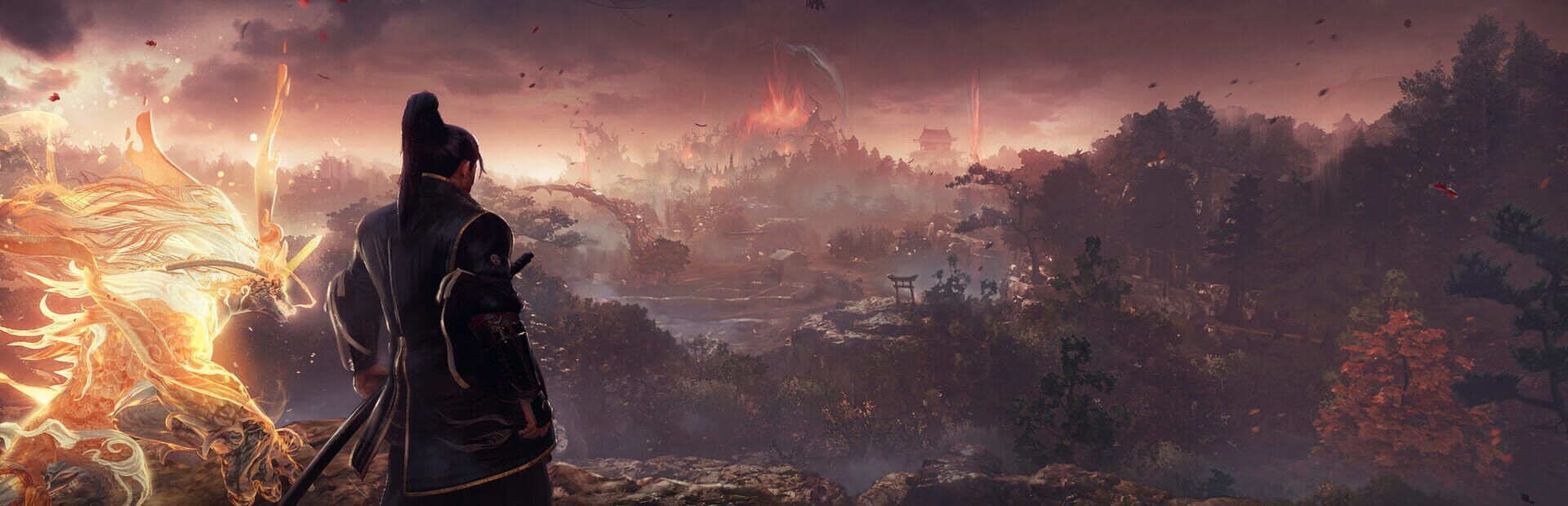

Hands-on impressions of the Nioh 3 demo on PS5 and Steam, covering new combat systems, weapon types, mission structure, performance and what both Nioh veterans and newcomers should focus on before release.
The Nioh 3 demo on PS5 and PC is a dense slice of what Team Ninja is building for the full release in February 2026. It drops you into the opening stretch of the campaign, gives you full character creation, access to multiple weapon types and yokai skills, and one big, nasty boss in the form of Jakotsu-baba. Your save carries into the final game, and clearing the demo before February 15 nets you the Twin-Snake Helmet, so there is a practical reason to dig in now beyond simple curiosity.
Below are focused, practical impressions from time with both the PS5 and Steam versions, centered on what the demo actually lets you do: combat, weapons, missions and performance. If you are a returning Nioh player this is about what has changed in the feel of the game. If you are a newcomer, treat this as a checklist of systems you should deliberately experiment with before launch.
Combat: Faster Yokai Integration And Smoother Flow
The basic loop is instantly familiar if you played Nioh or Nioh 2. You manage Ki, pick your stance, punish openings and die a lot until route, enemy placement and timing click. What changes in Nioh 3 is how aggressively the game pushes you to weave yokai abilities into that samurai shell instead of treating them as occasional power plays.
The Burst Counter equivalent is back but integrated more cleanly. The input is quicker and the game communicates red telegraphs more clearly, which makes learning enemy patterns less about guesswork and more about committing to the right response. In the Jakotsu-baba fight, this matters immediately. The boss mixes sweeping melee strings with big, obvious yokai bursts that exist specifically to teach you timing. Missing those punishes still hurts, but the window feels a touch more generous compared to early Nioh 2.
Ki management has been softened slightly without making the game easy. Ki Pulse remains central, but recovery is a bit more forgiving on mis-timed pulses, particularly in mid stance. This is most obvious when you fight multiple human enemies at once. The demo lets you be marginally sloppier than the old games while still rewarding perfect play with much faster, more aggressive strings.
New players should actively practice three things during early encounters: landing Burst counters instead of dodging every big telegraph, pulsing Ki after almost every combo until it becomes muscle memory, and watching how much stamina you lose when blocking multi-hit strings. Returning players should specifically compare how often they feel locked out due to low Ki. In Nioh 3, you are encouraged to stay in the enemy's face more consistently once you get comfortable.
New Weapon Types: Aggression With More Safety Nets
The demo does not give you a full armory, but it does showcase enough of the new weapon options to get a feel for Nioh 3's direction. Team Ninja leans into versatility and hybrid play rather than forcing you into a single niche.
There is a new segmented blade weapon that behaves like a midpoint between kusarigama and dual swords. In low stance it functions as a safe, poking tool with surprising reach perfect for learning spacing. In mid and high stance, you can commit to longer strings that snap the weapon out like a whip, tagging multiple enemies but demanding more precise Ki use. This weapon is an ideal starting point for newcomers because it offers reach, quick recovery and strong crowd control without requiring the stance discipline of classic katana-only play.
Another standout is a heavier odachi-variant built around guard pressure and poise. Early enemies bounce hard off its block, giving you chances to counter-swing as they recoil. If Nioh 2's heavier options sometimes felt like you were trading all mobility for damage, Nioh 3 gives this style more reliable gap closers and a couple of yokai-enhanced moves that let you start combos off a blocked hit rather than purely on whiff punishes.
For veterans, the important test is how quickly you can switch weapons and stances mid-combo to keep pressure without desyncing your fingers. The demo encourages this by seeding encounters with mixed enemy types that favor different answers. Try going into a mission with two very different weapons equipped and force yourself to swap frequently instead of defaulting to one comfort pick. The input timing on stance change cancels also feels slightly smoother, which opens up more expressive routing once you internalize a set of bread-and-butter strings.
New players should pick one reach-focused weapon and one simpler, shorter-range option and alternate between them in the same fight. The goal is to learn what range bands feel safest to you and how different stances change your risk. The demo is long enough that you can reach the boss with at least a basic mastery of your chosen pair.
Yokai Skills And Hybrid Playstyles
Nioh 3 doubles down on the hybrid human and yokai combat identity. Early on you gain access to a small pool of yokai abilities tied to collected cores, similar to Nioh 2, but they slot into your rhythm more naturally. Recovery animations have been shortened and hitboxes tightened, so these skills feel less like isolated specials and more like extensions of your normal combos.
The other major tweak is how yokai abilities affect positioning. Several of the early skills provide either micro dashes or quick repositioning right before or after the attack. Against Jakotsu-baba this is essential. The boss's longer-range patterns almost demand that you use yokai skills to either punish from slightly further out or correct your position after dodging a high-commit swing.
Veterans should push the system by binding yokai skills to punish very specific enemy moves. Look for opportunities where a standard heavy would whiff or be too slow and see if a yokai move can reach instead. Pay attention to how often you actually slot them into your bread-and-butter combos while under pressure. If you reach the end of the demo barely touching them, you are probably playing Nioh 3 like a traditional action game and missing a large part of its intended flow.
Newcomers should treat yokai skills as safe opportunistic tools rather than spammable damage buttons. Use them when an enemy is clearly staggered or out of stamina, not as an opener. The reduced recovery still punishes reckless use, and the demo is tuned to make that clear early.
Mission Structure: Wider Routes With Familiar Anchors
Structurally, the Nioh 3 demo confirms that Team Ninja is not abandoning the mission-based progression in favor of a single open world. You choose a mission from the map, push through a relatively compact level filled with shortcuts, enemies and loot, and then face a boss at the far end. Anyone worried that the studio's recent open-level experiments would erase the tight, almost speedrun-ready pacing can relax.
Where Nioh 3 does evolve is horizontal space and encounter layering. Early stages feel broader, with more alternate paths that loop back into the main route. Shrines are still the primary checkpoints, and they are placed generously enough that learning routes never feels like a chore. The demo's first full mission gives you a clear critical path straight through the map, but also several side alleys and elevated walkways with tougher enemies and better loot. This is where co-op shines, as branching paths let multiple players handle different pockets of resistance before reconverging near the boss.
Enemy placement in the demo is explicitly tuned to force you to think in terms of routes rather than isolated duels. You will frequently see a strong yokai guarding high-tier loot while a cluster of human soldiers patrol nearby sightlines. Breaking those pockets apart with ranged pulls or stealthy openings is often safer than charging through. For returning players, this feels like an evolution of some of Nioh 2's more devious late-game mission designs compressed into the early game, without overwhelming new players who stick to the main road.
Newcomers should spend time deliberately exploring side routes on repeat runs instead of rushing to the boss once. Mark in your mind where ladders and gates create shortcuts so you understand how levels fold back in on themselves. Veterans should test how viable rush strategies are in co-op. With coordinated partners, sprinting to bosses while skipping most combat is still possible, but enemy aggro and ranged fire seem tuned to punish mindless running more than before.
Co-op And Team Play
The demo supports up to three-player online co-op, and this is worth testing even if you plan to mostly play solo at launch. Network stability on both PS5 and PC is generally solid, with quick matchmaking and only intermittent minor latency hitches.
Co-op changes how aggressively you can apply Nioh 3's combat systems. One player can lean into a heavier tank weapon, focusing on blocking and stagger, while another runs a mobile, yokai-heavy build to capitalize on openings. The segmented blade weapon in particular thrives when a teammate keeps enemies focused elsewhere, freeing you to unfurl its longer, riskier strings.
The key thing to test during the demo is how readable enemy attacks remain amid three players spamming effects. Visual noise has been reduced compared to some of Nioh 2's late-game co-op chaos, but certain yokai skills still flood the screen with particles. If you plan to main co-op, use the demo to experiment with less visually loud skills and weapons so you can preserve clarity during the hardest fights.
Performance And Visual Options On PS5 And PC
On PS5, Nioh 3 offers performance-focused and quality-focused modes. The performance option targets a high frame rate with a dynamic resolution, while the quality mode pushes sharper image clarity and additional visual features at a lower frame target. In practice, for an action game tuned as tightly as Nioh, the performance mode is the clear recommendation.
The performance mode keeps combat fluid during dense encounters and performs well even in co-op. Input latency feels low, which is critical for Burst counters and perfect dodges. The tradeoff is slightly softer image quality, particularly in foliage and distant structures, but nothing that meaningfully harms readability. The quality mode makes the game's Sengoku vistas pop more, but you will feel the difference when you try to respond to fast enemy patterns.
On Steam, the demo is heavier than its predecessors in terms of storage and system demands, but it scales decently. With modern midrange hardware, you can reach a stable high frame rate at high settings if you are willing to compromise slightly on shadows or screen-space effects. Keyboard and mouse are technically supported, but the game is still very much built around controllers. Button prompts and camera behavior make that clear, and if you attempt serious boss practice with a mouse you will probably fight the camera as often as the enemy.
If you are on PC, use the demo to find a locked frame rate target that your rig can hold while standing in the busiest possible areas and during co-op. Avoid chasing uncapped numbers if it means stutter. Nioh's timing windows feel best when the game behaves consistently, even at a modest frame target.
What Returning Nioh Fans Should Focus On
If you have cleared the previous games, the Nioh 3 demo is less about learning whether you like the structure and more about seeing if Team Ninja's tweaks land for you. The most important things to stress-test are how the new yokai integration affects your preferred weapon style, whether stance changes feel smoother to execute under pressure, and whether the wider mission layouts still support the speedrun-style routing that defined late-game play in earlier entries.
Push yourself to play the demo in ways that your muscle memory resists. If you usually stick to katana in mid stance, pick a new weapon and lean on stance swaps and yokai skills until they feel natural. If you used to run past everything to farm bosses, try a few thorough clears of each mission instead, paying attention to how enemy grouping and patrols have evolved.
Finally, take co-op seriously. If you plan on running the full game with friends, this is the time to see how roles emerge. Heavy stagger builds, nimble stance dancers and yokai skill specialists all feel viable even this early, and the way those archetypes interact is a good preview of where Nioh 3's endgame might go.
What Newcomers Should Practice Before Launch
If this is your first Nioh, the demo can look intimidating, but it is one of the better on-ramps the series has had. Treat it like a training camp for three specific skills.
First, movement and Ki. Spend your first hour focusing on dodge timing, blocking and Ki Pulse instead of rushing through missions. Fight basic enemies several times, trying to clear encounters without fully draining your Ki bar. When you can routinely do that, the rest of the game opens up.
Second, weapon identity. Pick two different weapons and learn what range, speed and risk profile they offer. Stick with them through the entire demo so that by the time you reach Jakotsu-baba, you know exactly which tool you reach for in each situation. The game is generous enough with respec options that you do not need to worry about making a wrong choice long term.
Third, boss patience. Jakotsu-baba is tuned as an early skill check. Go in expecting to lose a few runs, but treat each attempt as pattern study. Learn which attacks demand dodging, which invite Burst counters, and which you simply block and reset afterward. You will get more value from twenty thoughtful pulls than fifty rushed ones.
If you complete the demo and still enjoy the process of iterating on your approach, not just the feeling of finally winning, Nioh 3 is probably for you.
Why The Demo Matters
Beyond the marketing bonuses and the early unlockable helmet, this demo is a strong functional slice of Nioh 3. It shows that Team Ninja is not interested in rebuilding the series into something unrecognizable, but it is also not content to simply ship more of the same.
Combat asks a little more from your ability to weave yokai abilities into traditional combos. Mission design opens sideways rather than forward-only. Co-op is more readable and expressive. Performance on PS5 and PC is solid enough that most players can focus on timing rather than frame pacing.
If you are on the fence, the demo is an honest test. Play it with intent, stress the new systems, and experiment with multiple weapons and builds. Whether you are a veteran or a newcomer, you will know by the time Jakotsu-baba falls if Nioh 3's blend of precision action and yokai chaos is something you want to live in for another hundred hours when February arrives.